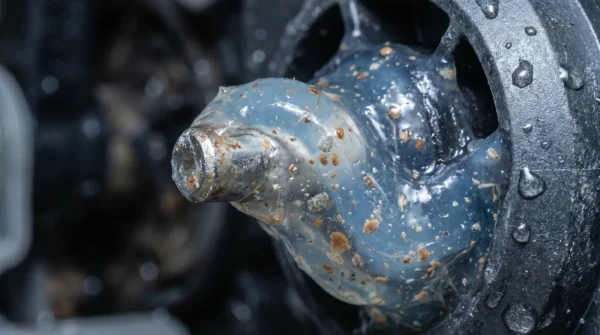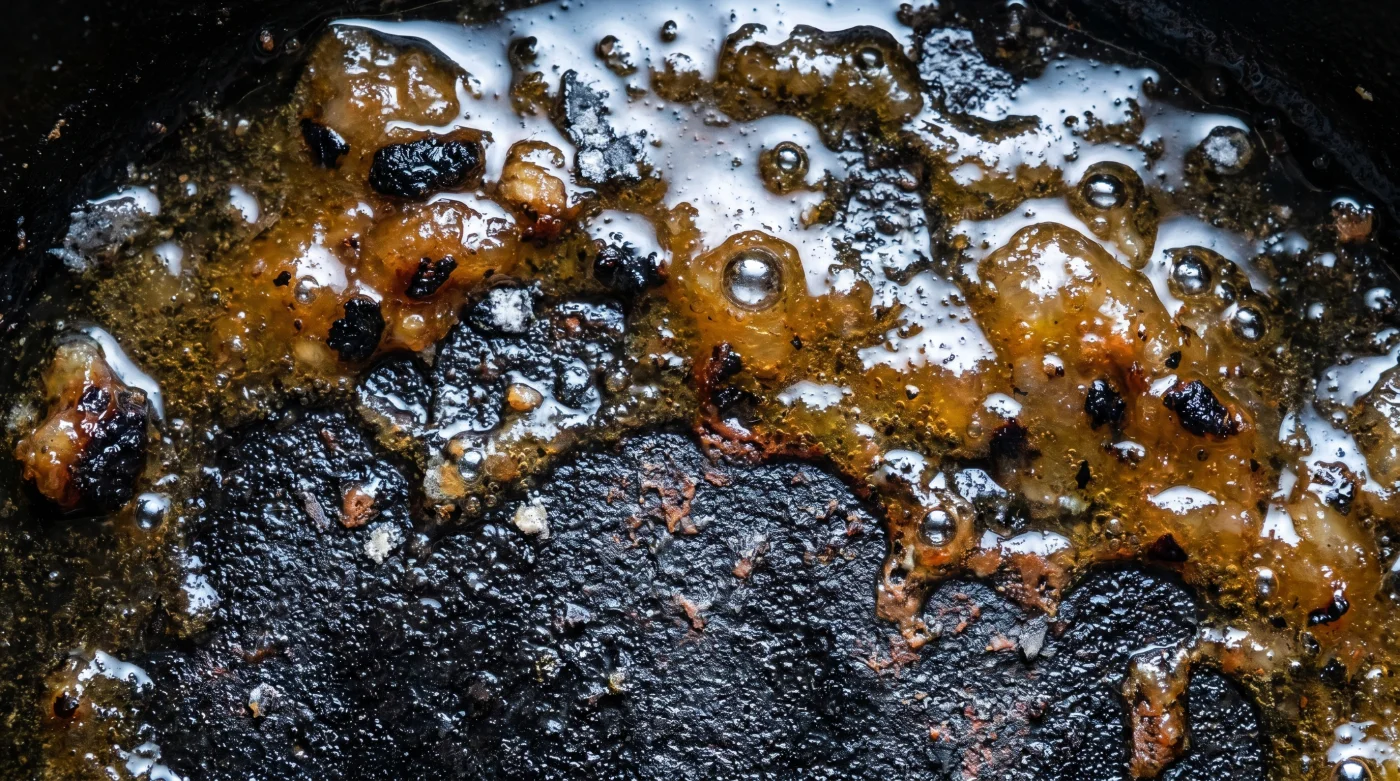
You stand at the stove, heat radiating off the heavy black iron. You drop a cold ribeye into the pan, expecting that violent, satisfying sizzle that signals a perfect crust. Instead, the meat drags. It tears against the metal. When you finally scrape the steak away, left behind is a patchy, yellowish-brown sludge. You did everything right. You carefully wiped it down with your best extra virgin olive oil after every wash. But that expensive, fragrant oil is exactly what poisoned the pan.
The culprit sits right on your counter, disguised as a healthy culinary staple. We are taught that olive oil is the undisputed king of the kitchen, so naturally, you applied it to your most prized cookware. Yet, using a delicate, unrefined fat on raw iron creates a weak, gummy foundation. It is the equivalent of trying to paint a house with watercolors. It looks fine until the weather turns, or in this case, until the burner ignites.
It feels like culinary sacrilege to question the Mediterranean staple. Olive oil is beautifully complex, loaded with volatile organic compounds and suspended particulate matter that give it that grassy, peppery bite. But those exact characteristics make it a structural nightmare for cast iron. A skillet does not need flavor from its protective coating; it needs a hard, impermeable shell.
When exposed to sustained heat, olive oil breaks down prematurely. Instead of hardening into a slick, protective shield, it degrades into a toxic, sticky, rancid lacquer. This gummy residue traps old food particles, harbors off-flavors, and prevents your pan from ever achieving that coveted, frictionless glide.
The Chemistry of a Glass-Like Finish
Understanding skillet maintenance requires looking past the romance of old-world cooking and observing the stark reality of thermal chemistry. You are not simply greasing a surface. You are forcing a liquid fat to fundamentally alter its molecular state.
You are attempting to trigger a reaction known as molecular polymerization and carbonization. When heated past a certain threshold, the fatty acids in oil link together, forming a hard, plastic-like matrix. This matrix bonds directly to the porous iron, creating a hydrophobic layer that repels water and prevents eggs from tearing.
Olive oil, with its low smoke point and high ratio of unrefined solids, burns before it ever reaches the temperature required for proper polymerization. The solids scorch into carbon ash, while the remaining fat partially cross-links, leaving behind a semi-liquid sludge. This is why your pan feels tacky to the touch hours after it has cooled. You are feeling the physical manifestation of degraded, oxidized oil that will taint your next meal with a bitter, metallic tang.
The Foundry Worker’s Secret
In a dusty workshop just outside Lancaster, Pennsylvania, Elias Thorne spends his weekends resurrecting century-old Griswold and Wagner skillets. At fifty-eight, Elias is a master metalworker who has stripped and restored hundreds of neglected pans pulled from estate sales and damp basements.
He can identify an olive-oil-seasoned pan the moment his restoration torch hits the iron. The smell is instantly recognizable—acrid, sour, and stubbornly clinging to the metal. He often finds that well-meaning cooks have layered expensive olive oil over the iron for years, creating a thick, unstable crust that flakes off in jagged, unappetizing chunks.
- Lithium-Ion Batteries Degrade Instantly When Charged To Maximum Capacity
- NBA Stadiums Suddenly Ban Popular Smartphone Camera Attachments
- Medcom Go Broadcasters Suddenly Eliminate Free Streaming Tiers Today
- Beca Portals Process Approvals Instantly Using Hidden Submission Timing Rules
- Dishwasher Pods Waste Detergent Entirely When Placed Inside The Tub
- Panoramic Sunroofs Secretly Destroy Car Resale Values From Drainage Leaks
- Coffee Makers Double Brewing Speeds With This Internal Valve Modification
- Wi-Fi Routers Deliberately Throttle Speeds Using Default Factory Antenna Angles
- Synthetic Motor Oil Instantly Degrades When Mixed With Common Additives
- Vitamin C Serums Become Completely Useless When Applied Damp
Elias describes cooking on this rancid residue as breathing through a damp pillow. It suffocates the direct, aggressive heat transfer that makes cast iron so valuable. He advises his clients to treat extra virgin olive oil purely as a finishing touch, something to drizzle over a finished plate, never as an industrial sealant for raw steel or iron.
Choosing Your Structural Foundation
Not all fats are built to endure the violence of a roaring burner. To build a resilient black mirror on your skillet, you must match the fat to your specific cooking habits and tolerance for maintenance.
For the weekend purist seeking absolute perfection, grapeseed oil provides an ironclad shell. It has an exceptionally high smoke point and a clean polyunsaturated profile that cross-links beautifully. It requires high heat and patience, but the resulting finish is smooth, durable, and highly resistant to acidic foods.
The busy parent pulling together Tuesday night dinners needs resilience and accessibility. For daily abuse, simple canola oil or standard vegetable oil is highly effective. They are highly refined, meaning the solids have been removed, allowing the oil to bake into a slick, neutral layer that handles scrambled eggs and seared chicken thighs with equal grace.
And for the unapologetic traditionalist, there is always the old reliable: rendered animal fats like pure lard. While not as chemically hard as grapeseed, animal fats offer a classic, forgiving seasoning that self-repairs easily during the act of cooking bacon or frying potatoes. However, they must be used frequently to prevent rancidity.
Mindful Application
If your pan currently feels tacky, you cannot simply paint over the mistake. Adding fresh oil to a gummy surface just creates a thicker swamp. You must clear the canvas before applying your new foundation.
The secret to a bulletproof finish is applying the oil in translucent, almost imperceptibly thin layers. It should look as though you have wiped all the oil away before the pan even hits the oven.
- The Reset Scrub: Wash the sticky pan with hot water, coarse kosher salt, and a drop of modern dish soap (which lacks the lye that used to strip iron). Scrub aggressively until the tacky residue is gone.
- The Bone-Dry Heat: Place the naked pan on a low stove burner for ten minutes to evaporate microscopic moisture trapped in the iron pores.
- The Micro-Layer: Turn off the heat. Apply a dime-sized drop of grapeseed or canola oil to the warm iron. Using a paper towel, aggressively buff the oil into the cooking surface, the walls, and the exterior.
- The Wipe Down: Take a clean, dry paper towel and wipe the pan again. You want to remove as much oil as humanly possible. The pan should look dry.
- The Bake: Place the skillet upside down in a 450-degree Fahrenheit oven for one full hour. Let it cool completely inside the closed oven. Repeat this process twice more.
The Quiet Ritual of Maintenance
There is a specific, grounding peace found in watching clean oil smoke and bond to raw iron. It is an act of preservation that requires you to slow down, understand the materials in your hands, and respond to their physical needs rather than blindly following culinary trends.
When you stop treating skillet maintenance as an annoying chore and start treating it as the quiet cultivation of a tool, your relationship with cooking changes. You are no longer fighting a sticky, frustrating surface. You are working in harmony with a piece of metal that will outlive you.
Mastering this simple thermal logic gives you back your time and your peace of mind. Your food sears perfectly. Your eggs slide out effortlessly. And that expensive bottle of olive oil can stay exactly where it belongs: safely away from the flames, waiting to dress the food after the heavy lifting is done.
The skillet is a living record of your heat management; feed it a fragile oil, and the metal will remember your mistake.
| Key Point | Detail | Added Value for the Reader |
|---|---|---|
| The Olive Oil Flaw | Low smoke point and high unrefined solids prevent proper molecular bonding. | Saves you from ruining expensive steaks on a sticky, degraded cooking surface. |
| The Grapeseed Advantage | High smoke point, neutral profile, highly efficient polyunsaturated fat. | Provides a slick, glass-like finish that repels food and resists acidic stripping. |
| The Micro-Layer Technique | Buffing the oil out until the pan looks completely dry before baking. | Prevents the uneven, gummy teardrops of fat that ruin a pan’s flat texture. |
Common Frustrations, Answered
Why does my skillet smell metallic and sour?
You are smelling oxidized, rancid fat. Olive oil and butter break down at room temperature if left on iron too long, creating that sour aroma. Strip the pan and re-season with a stable oil.Can I ever use olive oil in the pan?
Yes, but strictly as a cooking fat, not a maintenance layer. Add it to a pre-heated, properly seasoned pan just before tossing in your vegetables, then wash it out completely afterward.What is the black stuff flaking off onto my food?
That is carbonized, un-polymerized oil. It happens when fat is layered too thickly and cooked at the wrong temperature. The bond fails, and the seasoning shatters like weak glass.Is it true that soap ruins a cast iron skillet?
No. Modern dish soap is mild and free of lye. It will remove surface grease but cannot dissolve polymerized oil. A drop of soap is entirely safe for daily cleaning.How often should I do the full oven bake method?
Only when the pan looks dull, gray, or food starts sticking. With regular use and proper heat management, a well-seasoned pan only needs a full oven reset once or twice a year.