You pull a favorite cotton shirt from the dryer, expecting the crisp, bright scent of freshly folded laundry. The metallic click of the dryer door closing usually signals the end of a satisfying chore. Instead, a faint, sour odor hits your nose—something resembling a damp basement towel left on the floor too long. You press the fabric to your face, trying to locate the source, but the mustiness is baked right into the fibers.
You likely run another cycle, pouring in an extra capful of heavy liquid detergent, assuming the machine just needs to work a little harder. We hold a collective, unspoken belief that washing machines clean themselves automatically, simply by virtue of sloshing soap and hot water around the drum all day. This assumption creates invisible problems right beneath your feet, turning a machine designed for sanitation into a breeding ground for the exact opposite.
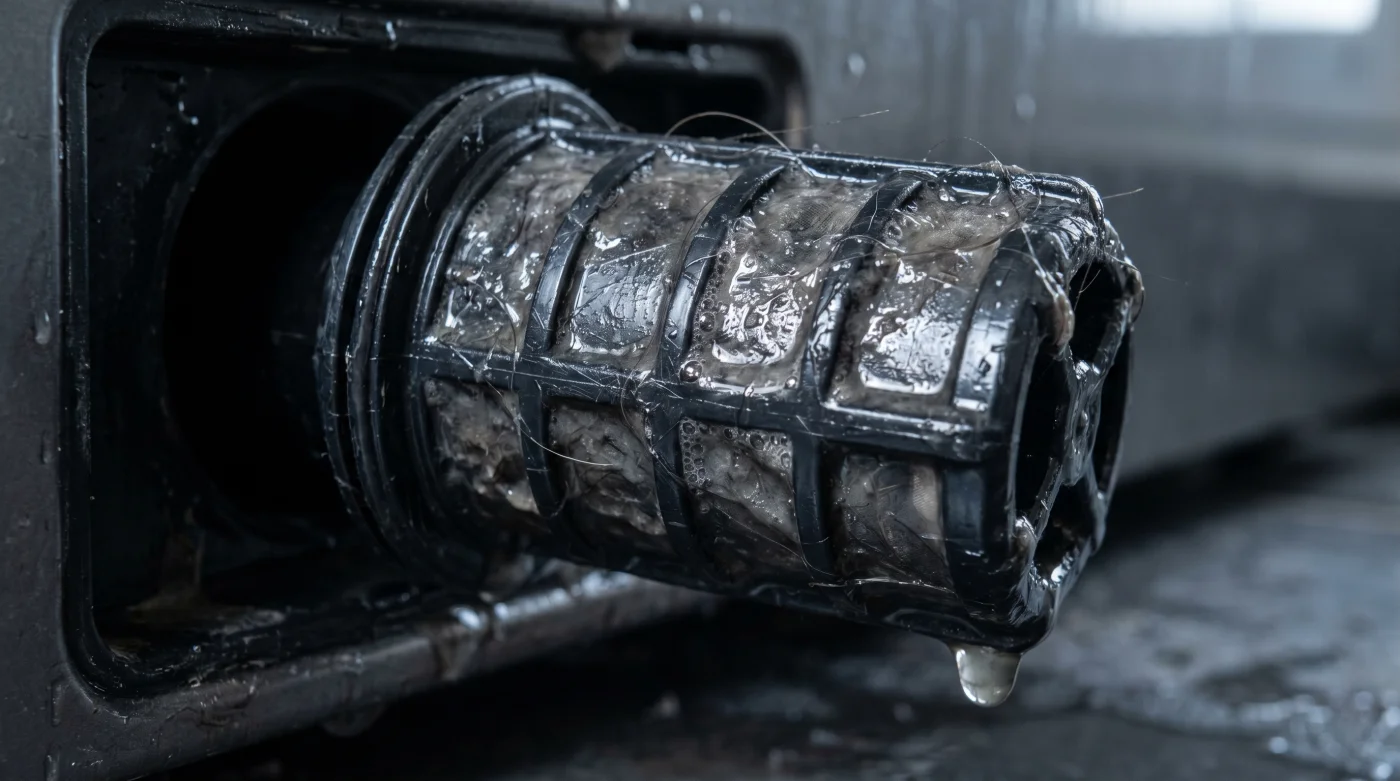
The truth involves a hidden, mechanical trap doing the heavy lifting out of sight. Down at the bottom corner of your front-loading machine sits a small, inconspicuous square door protecting the drain pump filter. It is an unassuming piece of plastic, easily ignored and rarely mentioned in the glossy appliance manuals that promise effortless living.
When you ignore this little reservoir, it rapidly becomes a dark, humid incubator. The mold-causing bacteria silently thrive in this standing water, slowly infecting every single load of laundry you wash with a subtle, stubborn mustiness. You are effectively rinsing your clothes in a pool of biological residue, wondering why your expensive fabrics are losing their original freshness.
The Mechanical Kidney: Shifting Your Appliance Perspective
To understand why your machine smells, you have to stop looking at it as a magical, self-purifying basin and start treating it like a mechanical kidney. A biological kidney’s job is to filter out the waste, but if the filtration organ itself becomes compromised, the entire system recirculates that exact same toxicity back into the bloodstream. Your washing machine operates on the exact same principle, relying on physical traps to separate the soil from the water.
In your laundry room, that bloodstream is the water spraying over your bedsheets and bath towels. The drain pump filter catches the stray lint, the forgotten pocket coins, the grass clippings, and the pet dander, holding them hostage in a small pool of residual water at the base of the unit. It is the final barrier between a clean wash and a ruined drain line.
If you only ever focus on wiping down the rubber door gasket or running an empty hot-water tub-clean cycle, you are merely treating the symptom while entirely ignoring the root cause. The drum might sparkle, but the stagnant water in the lower pump housing continues to culture the bacteria that causes that undeniable sour smell.
By shifting your attention to this lower trap, you completely change the health of your expensive appliance. A simple one-minute flush transforms a struggling, odor-producing chore into a highly efficient cleaning system, proving that the most effective maintenance often happens quietly behind the scenes.
Consider Arthur Vance, a 58-year-old independent appliance repair technician working the historic rowhomes of Philadelphia. After three decades of pulling everything from matted dog hair to rusted bobby pins out of high-end front-loaders, Arthur realized that almost ninety percent of his residential service calls came down to a choked filter. He doesn’t recommend expensive chemical pods to his clients. Instead, he teaches a 60-second trick using cheap, household white vinegar to break down the bacterial film before it has a chance to solidify and ruin the hardware.
Adapting the Flush for Your Specific Laundry Habits
Not every household generates the same kind of textile waste. Understanding exactly what goes into your steel drum helps dictate exactly how you manage the mechanical output. Tailoring your approach ensures the internal pump never strains against unnecessary blockages.
For the Cold-Water Purist: If you strictly wash on cold settings to preserve your dark fabrics and keep your energy bills low, your filter accumulates sludge faster. Cold water simply fails to melt down heavy liquid detergents and fabric softeners, creating a sticky, wax-like residue that binds tightly to hair and loose threads in the filter housing. You need this acidic vinegar flush more frequently than anyone else.
- Avocado Halves Stay Perfectly Green Inside Plain Water Bowls
- Tesla Model Y Tires Require This Hidden Rotation Calibration
- Smart Thermostats Secretly Increase Winter Heating Bills By Default
- LED Bulbs Burn Out Faster Inside Enclosed Glass Fixtures
- Sunscreen Lotions Degrade Instantly When Applied Over Face Oils
- Spark Plugs Fail Prematurely When Tightened With Heavy Torque
- Coffee Beans Lose Flavor Quickly Inside Standard Kitchen Freezers
- NBA Streaming Apps Abruptly Block Screen Mirroring Features
- Cloud Backup Drives Suddenly Delete Unpaid Consumer Archives
- Home Solar Panels Quietly Devalue Real Estate Appraisals Long Term
For the Heavy-Shedding Pet Owner: Golden retrievers, domestic long-hairs, and active farm dogs send an incredible amount of biological material down the machine’s drain line. When wet animal fur sits in the warm pump trap, it rapidly turns into a dense, odor-heavy sponge that blocks water flow.
For the High-Efficiency Household: Modern low-water machines rely on incredibly precise drainage to keep wash cycles short and effective. A partially blocked pump forces the internal motor to strain, leaving your clothes heavier and much wetter at the end of the final spin cycle. Regular maintenance here directly protects the expensive motor from burning out prematurely, saving you hundreds of dollars in repair bills.
The 60-Second Routine: A Mindful Application
Clearing this trap does not require a heavy toolbox or dedicating a Saturday afternoon to appliance repair. It is a quiet, deliberate minute of mindful maintenance that completely resets the entire system. Think of it as tuning an instrument before playing a concert.
First, locate the small access panel on the lower front corner of your machine. Lay down a heavy towel and slide a shallow baking pan underneath the lip of the door to catch the inevitable spill of residual water that sits inside the pump.
Uncap the small emergency drain hose, let the trapped water bleed out completely, and then slowly unscrew the main circular filter cap. The water might smell unpleasant; this is precisely why you are performing the task.
- Pull the plastic filter out and physically remove any debris like coins, keys, or matted lint.
- Pour exactly one cup of white vinegar directly into the empty filter housing cavity inside the machine.
- Let the acidic vinegar pool and sit for sixty seconds to aggressively dissolve the bacterial biofilm lining the plastic.
- Scrub the removable filter piece in your kitchen sink with an old toothbrush and warm water.
- Screw the filter back in tightly, securely replace the drain hose cap, and snap the access door shut.
This is your Tactical Toolkit: One shallow baking pan, an old toothbrush, and standard white vinegar. Keep these specific items dedicated strictly to your laundry room shelf, ensuring that the friction of starting this necessary monthly task drops to absolute zero.
Beyond the Drum: The Quiet Confidence of True Cleanliness
There is a distinct, grounding peace of mind that comes from knowing exactly how the tools in your home operate. When you stop relying on the vague, marketed promise of automatic maintenance, you take back control over your immediate environment. You stop reacting to problems and start actively preventing them.
Pulling a warm shirt out of the dryer should always be a purely pleasant sensory experience, completely free from the lingering doubt of a damp basement smell. You are no longer masking odors with heavy synthetic perfumes, scented beads, or waxy fabric softeners that just coat the fibers in grease.
You are tackling the mechanical reality squarely at its source. By giving this hidden drainage mechanism just sixty seconds of your careful attention, you easily extend the life of your machine and restore the simple, daily dignity of truly fresh clothing.
Our appliances do not care about our assumptions; they only respond to our maintenance. Taking one minute to clear the throat of your washing machine saves you from years of mechanical frustration.
| Key Point | Detail | Added Value for the Reader |
|---|---|---|
| The Odor Source | Bacteria trapped in the lower drain pump filter. | Eliminates the mystery of sour-smelling laundry permanently. |
| The Vinegar Flush | A 60-second pour into the empty housing. | Breaks down invisible biofilm without harsh chemicals. |
| Cold Water Washing | Cold cycles leave behind sticky detergent residue. | Explains why eco-friendly washing requires slightly more manual upkeep. |
Frequently Asked Questions
How often should I perform this vinegar flush?
For optimal machine health and zero odors, perform this simple flush once every four to six weeks.
Will vinegar damage the rubber seals in my machine?
A brief 60-second exposure to standard white vinegar in the hard plastic housing is entirely safe and will not degrade the rubber gaskets.
Why is there so much water coming out of the filter?
Front-loading machines always hold a small amount of water in the pump assembly to keep the system primed. This is normal.
Can I use bleach instead of vinegar?
Vinegar is preferred because it safely dissolves hard water minerals and organic biofilm without creating toxic fumes or risking fabric discoloration on the next load.
What if my machine does not have a visible front access door?
Some top-loading models have self-cleaning pump filters, but if you have a front-loader without a door, the filter is likely located behind the lower kick panel.