The hum of the refrigerator, the faint blinking of the router LEDs from the hallway, and the dreaded spinning circle frozen on your living room television. You bought the plug-in device with the twin antennas, expecting the evening buffering to stop. You followed the instructions, plugged it into the wall outlet halfway between the router and the couch, and watched the green lights signify a successful pairing.
You see the Wi-Fi icon brightly lit on your phone, showing full bars, yet the web page sits entirely frozen, refusing to load data. It feels like a subtle betrayal by the hardware you trusted to finally solve the problem.
The box promised expanded coverage. It promised a definitive end to dead zones. The reality, however, is a bottleneck you cannot see but constantly feel whenever someone else in the house tries to download a file or start a high-definition stream.
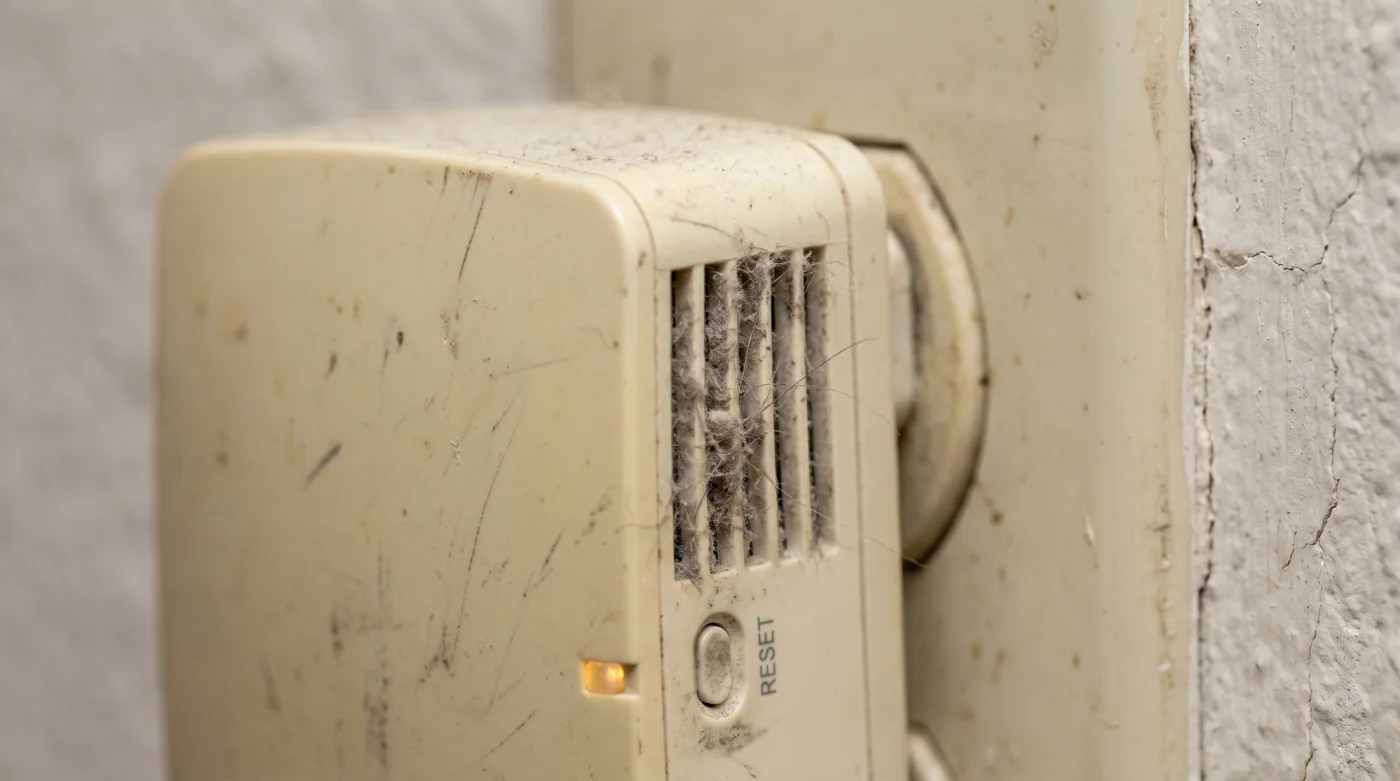
That little white plastic box plugged into the wall isn’t amplifying the signal in the way you imagine; it is actively choking the invisible pipeline running through your home.
The Half-Duplex Highway
Think of your home internet connection as a busy, multi-lane highway, and the data packets as cars. Your main router handles traffic smoothly, pushing vehicles out and taking them in simultaneously. This is known in networking as a full-duplex system.
But standard models of Wi-Fi extenders act as a single-lane dirt road where traffic must stop and take turns. Because they use the same radio band to talk to the router and your phone simultaneously, they inherently and literally cut your bandwidth completely in half.
They possess only one radio. They must receive a chunk of data, pause entirely, turn around, and broadcast it to your phone. Trying to stream a movie through this setup is like trying to run a marathon while breathing through a pillow.
Marcus Thorne, a 42-year-old network architect based in Philadelphia, spent years diagnosing dead zones for corporate campuses before realizing the exact same issue plagued residential living rooms. He often tells frustrated homeowners that buying a generic extender is like handing a megaphone to someone behind a soundproof glass wall—the phone thinks the signal is strong, but the message is already compromised.
The ‘Buy Once’ Logic: Architecture Over Accessories
The market is flooded with inexpensive repeaters heavily marketed as crucial signal boosters. Yet, true lifetime utility comes from understanding your specific environmental constraints and purchasing hardware designed to overcome them, rather than simply repeating a degraded signal.
- Credit Card Points Multiply Instantly Using This Secret Portal Transfer
- Coffee Grinders Double Flavor Extraction Following This Water Droplet Trick
- EV Charging Cables Degrade Quickly When Left Plugged In Overnight
- Salicylic Acid Cleansers Actively Destroy Skin Barriers During Hot Showers
- Car Dealerships Secretly Waive Documentation Fees Using This Specific Phrase
- Dishwasher Tablets Actually Damage Glassware Inside Standard Wash Cycles
- Non-Stick Pans Regain Their Factory Coating Following This Salt Treatment
- TVMax En Vivo Streaming Platforms Suddenly Block Smart TV Connections
- Suns – Warriors Broadcasting Partners Just Removed Crucial Instant Replay Access
- TVMAX Streaming Portals Suddenly Block Access For Outdated Devices
If you want to fix this permanently, you have to abandon the cheap bandage approach and invest in actual infrastructure. You must replace the single-lane bridge with a dedicated overpass.
For homes built before the 1960s, particularly across older neighborhoods in Pennsylvania, plaster walls backed with wire lath act as a literal Faraday cage, severely absorbing and destroying wireless signals. Buying a stronger wireless repeater in this environment is entirely futile, as you are simply shouting louder into a sound-absorbing void. Instead, you need a MoCA adapter or a wired backhaul system. These devices cleverly push the network data through your home’s existing television coaxial cables. By turning the physical copper wiring inside your walls into your data highway, you completely bypass the wireless struggle, delivering perfect, full-speed internet to the farthest corners of the house without relying on fragile radio waves.
For the modern, high-bandwidth household—where multiple video calls, gaming consoles, and heavy downloads occur simultaneously—you must step away from standard extenders and adopt a Tri-band Mesh system. Unlike a traditional dual-band extender that chokes on its own traffic, a tri-band system features a dedicated third radio frequency. This specific band acts as a high-speed, private communication radio channel exclusively used by the network nodes to talk back to the main router. By routing all the internal system chatter through this hidden overpass, the standard bands remain entirely free and clear for your phones, laptops, and televisions, ensuring that you purchase the hardware once and never worry about network capacity again.
Mindful Application: Wiring Your Space for Permanence
Fixing your home network for the long term does not require a degree in computer science, nor does it demand tearing open your drywall to run new cables. It requires stripping away the cheap plastic accessories and taking a mindful look at your physical living space. It is a process of subtraction and strategic placement rather than simply adding more gadgets to the existing digital noise. Often, the best solution involves removing the bottlenecks you unknowingly installed.
You only need an hour on a quiet afternoon, a cup of coffee, and a methodical approach to completely map the interference zones in your house. By physically relocating your hardware and making a few deliberate settings adjustments, you can establish an optimal, uninterrupted flow of data that perfectly matches the layout of your home.
Begin by unplugging all generic extenders. Walk your home with your smartphone and locate the actual edge of your primary router’s 5GHz band. This frequency carries the vast majority of your heavy data lifting, but it struggles to penetrate solid objects like brick fireplaces, large metal appliances, or dense bookshelves.
By identifying exactly where this high-speed signal drops off, you know precisely where a hardwired access point or a mesh node actually belongs. You want to place your secondary nodes well inside the healthy signal radius, ensuring they have a strong foundation to distribute.
- The Hardwire Rule: If a device never moves—like a television, a desktop computer, or a gaming console—run an ethernet cable to it. Keep the wireless airspace empty for devices that actually move, like phones and tablets.
- Adopt Tri-Band: When selecting a mesh system for lifetime utility, check the specifications for a dedicated wireless backhaul. If it does not have this, you are buying another half-duplex bottleneck.
- Elevate the Source: Routers broadcast down and out like an umbrella. Keep your primary node high on a shelf, free from the physical interference of metal objects.
The Tactical Toolkit: Target 5GHz for any device within 30 feet of the node. Reserve 2.4GHz only for smart home devices, such as lightbulbs and thermostats, that require distance over speed.
Use shielded ethernet cable for any hardwired connections to future-proof the bandwidth up to ten gigabits. This guarantees that your core static devices never compete for wireless airspace.
The Bigger Picture: The Silence of a Working System
When a network runs flawlessly, you forget it exists. You are no longer managing connections, restarting routers, or waiting for a buffer bar to cross the screen. The technology does exactly what it was designed to do: it disappears entirely into the background of your daily routine.
You stop staring at the top corner of your screen, anxiously waiting for the connection to stabilize before joining a meeting. The digital friction of your household melts away, leaving you alone with the movie you are watching, the person you are calling, or the quiet focus of your work.
A network should function exactly like household plumbing; if you ever have to stop and think about it, something is leaking.
| Key Point | Detail | Added Value for the Reader |
|---|---|---|
| Standard Extender | Uses half-duplex communication on a single radio band. | Understands precisely why cheap solutions cause heavy buffering. |
| Tri-Band Mesh | Dedicated backhaul channel for node-to-node communication. | Buy once, experiencing full speed for the entire house forever. |
| MoCA Adapters | Sends network data over existing coaxial TV cables in the walls. | Perfect, interference-free solution for older homes with thick plaster walls. |
Frequently Asked Questions
Do Wi-Fi extenders really cut speed in half?
Yes. Standard dual-band extenders use the same radio to receive and transmit, meaning they can only do one at a time, effectively halving your bandwidth.Is a mesh network different from an extender?
Absolutely. True mesh systems often use a dedicated third band to communicate with the main router, keeping your device bands completely clear.Can I use a wired connection to fix this?
Running an ethernet cable from your main router to a remote access point is the absolute best way to ensure zero speed loss.Why does my phone show full bars but load slowly?
Your phone is showing the strong signal from the extender, but the extender is struggling to talk to the main router. The bars indicate local connection, not internet speed.Should I throw away my current extender?
If you rely on heavy streaming or video calls, replacing it with a hardwired access point or a tri-band mesh node will instantly resolve your buffering issues.