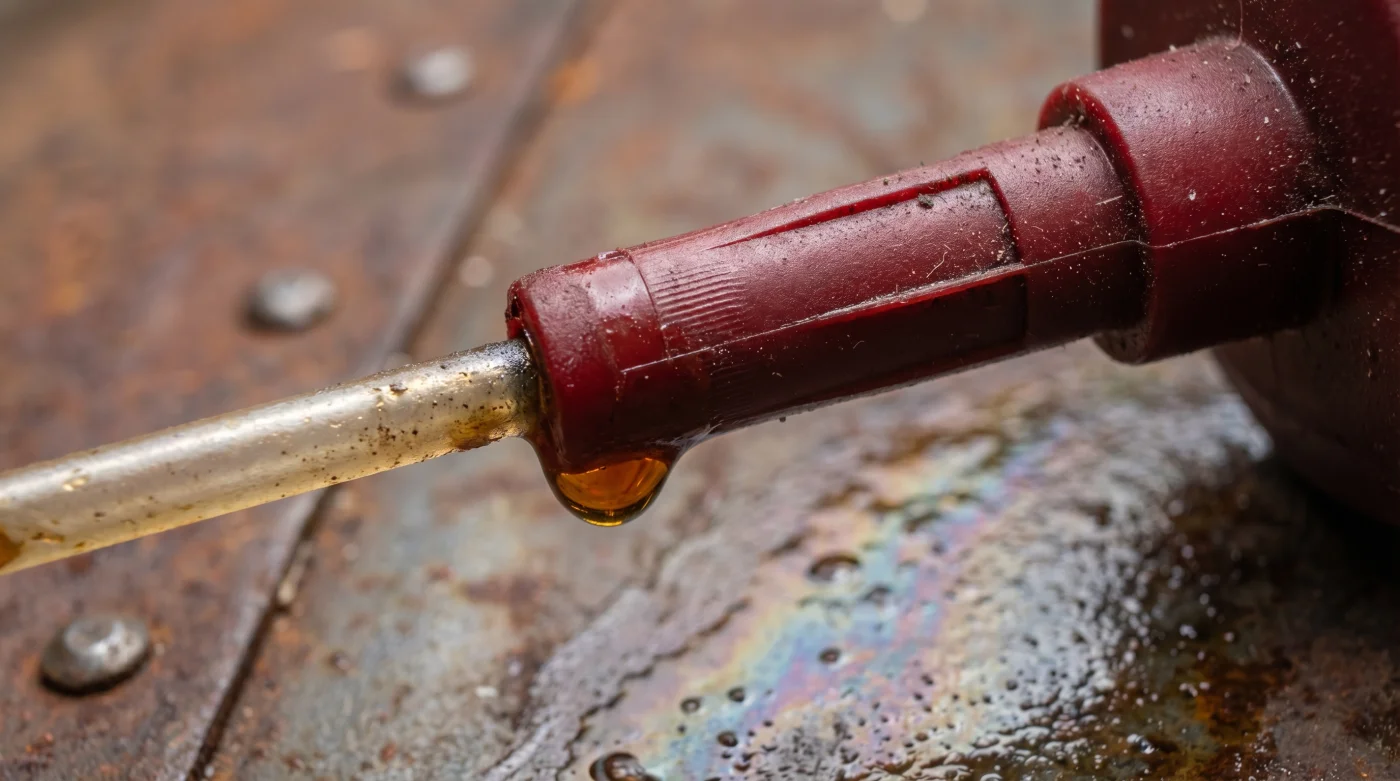
The quiet stillness of a Saturday morning is abruptly punctured by the agonizing shriek of a hallway door hinge. It is a sound that sets your teeth on edge, demanding immediate attention. You walk to the garage, reach past the half-empty paint cans and coiled garden hoses, and grab the familiar blue and yellow canister. You pop the plastic cap, carefully secure the thin red straw into the nozzle, and take aim at the offending hardware.
The metallic, slightly sweet odor fills the corridor as the liquid foams against the brass. You swing the door back and forth, wiping away the dark, oily streak running down the doorframe. The squeak vanishes immediately. Problem solved, you assume, heading back to your morning coffee.
But fast forward six weeks, and the shriek returns with a vengeance. The hinge sounds rougher, grinding slightly as the metal protests the movement. The door feels heavier. We all fall into this exact trap, treating that iconic spray can as a magic wand for friction.
This widespread habit stems from a fundamental misunderstanding of what is actually happening chemically. When you blast a squeaky hinge with that familiar spray, you wash away the grease, effectively stripping the factory lubrication and leaving the bare metal totally exposed to the air.
The Missile Silo Misunderstanding
To grasp why your door hinges are failing, you have to look at the name printed right on the tin. WD-40 is not an acronym for a mysterious, all-encompassing lubricant. It literally stands for Water Displacement, 40th formula.
Back in 1953, a small outfit called the Rocket Chemical Company was not trying to fix squeaky screen doors. They were trying to protect paper-thin stainless steel on the Atlas space missile from corroding due to condensation.
The scientists needed a solvent that could creep under water, lift it away from the metal surface, and leave a microscopic barrier behind. They failed thirty-nine times. On the fortieth attempt, they created a brilliant, highly volatile degreaser.
The formula is primarily a solvent. When you apply it to an old bicycle chain or a sticky lock, it aggressively breaks down dirt, grime, and existing oil. It cleans rather than coats, evaporating shortly after and leaving parts dry and vulnerable to friction.
Elias Thorne, a 62-year-old vintage motorcycle restorer working out of a drafty brick garage in Dayton, Ohio, watches new apprentices make this mistake every single spring. “They grab the blue can the second a throttle cable gets stiff,” Elias mutters, wiping black, gritty sludge from his calloused hands with a shop rag. He explains that while the spray frees up rusted bolts and seized engine parts beautifully, leaving it there as a permanent friction barrier actually attracts airborne garage dust. Within weeks, that wet dust turns into a highly abrasive, grinding paste that slowly destroys irreplaceable vintage steel. For Elias, and any master mechanic, the spray is strictly a preparation tool, never the final step in a job well done.
- The 30-Second Cabin Air Filter Trick Mechanics Hope You Never Learn
- Stop Washing Your Cast Iron Skillet With Hot Water (Do This Instead)
- IFARHU stops student payments unless you do this today
- BREAKING: Massive East Coast Grocery Chain Bans Red Dye 40 From Store Brands
- BREAKING: Major PA Insurance Carriers Just Quietly Altered Tesla Model 3 Coverage
- The Tomato Sauce Storage Error Ruining Your Plastic Containers
- The $5 Windshield Wiper Modification That Outlasts Premium Brands
- Stop Buying Cheap Phone Chargers: The Buy-It-For-Life Standard You Actually Need
- The One Sentence In Your Homeowners Insurance That Kills Roof Claims
- Dermatologists Reveal Why Your Nightly Retinol Serum Is Actually Aging You
Deep Segmentation: Rethinking Your Maintenance
Once you stop asking this water displacer to act as an oil, you can organize your home maintenance with much more precision. Recognizing the true nature of your materials prevents chronic breakdowns.
For the Indoor Tinkerer
Your home is filled with delicate mechanisms that rely on thick, persistent lubrication. Door hinges, sliding window tracks, and garage door coils need white lithium grease or a dedicated silicone spray. When you use a water displacer on these parts, you dissolve the factory grease. The squeak stops temporarily because the solvent is wet, but once it dries, you have bare metal grinding against bare metal.
For the Winter Commuter
Car doors freezing shut and stiff keyholes are common winter frustrations. Here, the water-displacing properties are highly effective for weatherproofing, but terrible for intricate tumblers. If you spray it into your car’s ignition or a frozen padlock, the solvent forms a gummy residue over time. Use dry graphite powder instead for anything involving lock pins. Save the water displacer for wiping down your exterior weather stripping to keep ice from bonding to the rubber doors.
For the Yard Caretaker
This is where the formula returns to its original, glorious purpose. After a long day of edging and digging, your garden shears and shovels are covered in damp soil. Before hanging them in the shed for winter, spray them down completely. The formula will creep under the moisture, pushing the water off the steel, and leave a faint anti-corrosive shield that stops rust dead in its tracks.
Mindful Application
Changing your approach to maintenance requires slowing down and diagnosing the symptom before grabbing a chemical cure. Diagnose the specific friction symptom before deciding if the metal is sticking because it is rusted shut, or squeaking because it is completely dry.
If you are dealing with rust, grime, or water, the blue can is exactly what you need. Follow this tactile toolkit to properly deploy a water displacer without ruining your delicate household hardware:
- The Diagnostic Touch: Run your finger along the hinge or track. If it feels completely dry and dusty, you need a heavy grease, not a thin solvent.
- The Flush and Scrub: When reviving a rusted bolt, spray generously and let it sit for five minutes. Tap the bolt lightly with a wrench to let the vibrations pull the solvent into the threads.
- The Evaporation Wipe: Never leave a puddle. Wipe away the dark, soiled liquid with a clean microfiber cloth until the metal is totally dry.
- The True Seal: Immediately follow up with your actual lubricant. Three drops of simple machine oil or a swipe of white lithium paste will provide the permanent glide you need.
When you treat a solvent as a cleaning step rather than the finish line, your repairs last for years instead of weeks. You stop chasing squeaky hinges over and over again, reclaiming your Saturday afternoons.
The Bigger Picture
Mastering the subtle differences in your household tools brings an unexpected sense of quiet satisfaction. It transforms weekend chores from a frustrating cycle of temporary fixes into a deliberate, permanent practice.
You are no longer just spraying and praying; you are maintaining a system. By respecting the chemistry of the materials around you, you extend the life of your home and free yourself from the nagging mental clutter of broken things.
True efficiency is rarely found in a single, miraculous bottle. It is found in understanding the precise origin and purpose of what you hold in your hands, applying the right pressure, at the exact right moment.
“A true mechanic knows that a solvent is meant to erase the past, not protect the future.” — Elias Thorne, Vintage Restorer
| Key Point | Detail | Added Value for the Reader |
|---|---|---|
| Squeaking Door Hinges | Requires a thick, persistent barrier like white lithium grease. | Eliminates the six-week cycle of reapplying thin solvents. |
| Sticking Locks | Needs a dry powder like graphite that will not clump up over time. | Prevents your house key from snapping off in freezing weather. |
| Rusted Garden Tools | Ideal scenario for water displacement before winter storage. | Extends the life of your expensive shears and steel shovels by years. |
| Seized Bolts | Spray, tap lightly with a wrench, and wait five minutes for penetration. | Saves you from the nightmare of drilling out broken, stripped bolt heads. |
Frequently Asked Questions
Why does my door squeak worse a month after spraying it? You washed away the factory grease. The solvent evaporated, leaving bare, dry metal to grind together.
Can I use water displacer on my bicycle chain? Only to clean off the old grime. You must wipe it completely dry and apply a dedicated ceramic or wet chain lube afterward.
What is the best household use for the blue can? Wiping down the rubber weather stripping on your car doors to prevent them from freezing shut in the winter.
Will this spray ruin my door lock? Over time, yes. The wet solvent traps pocket lint and dust inside the tumbler, eventually jamming the delicate pins. Use graphite powder instead.
Is there any danger to leaving it on garden tools? No, this is where it excels. A light coating on a shovel pushes moisture away from the steel, preventing winter rust in damp sheds.