You pull open the heavy glass door of your front-load washer, expecting the crisp, airy scent of cotton and warm water. Instead, a sour, damp draft hits your face. It smells faintly of wet earth and neglected gym socks. You wipe down the steel drum, leave the door wide open between cycles, and you might even run those expensive chemical cleaning tablets once a month just to keep the peace.
The smell stubbornly remains there. You stand in the laundry room, holding a heavy jug of premium blue detergent, wondering if the machine itself is just a failed modern experiment. It feels like a losing battle against an invisible, creeping grime that always returns no matter how hard you scrub.
We are conditioned to believe that thick, heavily perfumed liquids represent the pinnacle of fabric care. The store aisles are flooded with iridescent jugs promising a deeper clean, softer towels, and weeks of synthetic freshness. You pour a heavy capful into the plastic tray, trusting the thick syrup to dissolve stains and leave a meadow breeze behind.
What you are actually pouring is a biological feast. The very substance you trust to purify your garments is quietly engineering a swamp inside the dark, humid cavities of your appliance.
The Anatomy of the Sludge Trap
For decades, we have operated under a flawed industry standard regarding laundry chemistry. Liquid detergents and liquid fabric softeners feel luxurious on our hands, but they harbor a dirty secret rooted in their chemical makeup. To keep these thick formulas stable and to coat your clothes in that artificial softness, manufacturers rely heavily on animal fats, often obscured on the label under ambiguous terms like tallowate.
Think of hot bacon grease cooling in a cast-iron pan. When you wash your clothes, especially in cold or warm water, those liquid fats never fully dissolve. They merely separate from the water and look for a place to rest.
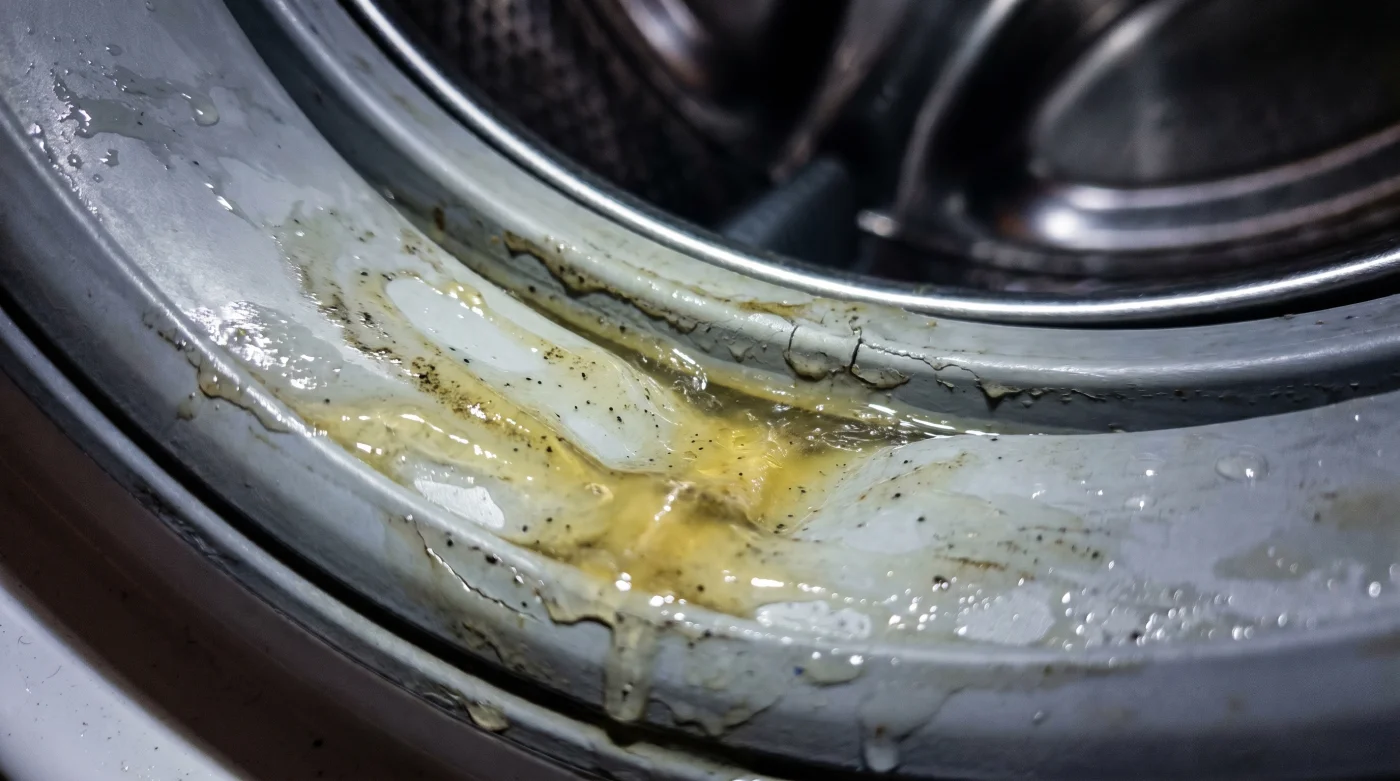
That resting place is the thick, folded rubber gasket framing the door of your front-load machine. Front-loaders use a fraction of the water that top-loaders do, meaning there is simply not enough volume to forcefully flush these heavy fats down the drain. They cling to the rubber.
Dark, warm, and perpetually damp, the fat-coated rubber becomes an ideal incubator. The mold is not growing because your machine is broken; it is thriving because you are actively feeding it a high-fat diet.
Enter Marcus Davies, a 48-year-old independent appliance repair technician who works the older neighborhoods of Philadelphia. Over twenty years, Marcus has pulled apart thousands of front-loading machines. He arrives at homes where frustrated owners point to their washing machines, convinced the internal water pump has failed or the drum is permanently rusted.
Scraping away the black sludge from behind a rubber seal with a plastic putty knife, Marcus sees the same pattern daily. “Nine times out of ten, they are using heavy liquid soaps and cold water,” he notes. “They are basically painting the inside of their washer with a fat-based glue every single Tuesday.”
- Carnauba Car Wax Traps Microscopic Paint Scratches Under Direct Sun
- Memory Foam Mattresses Degrade Rapidly When Using Heated Blankets
- Stainless Steel Pans Become Nonstick With This Water Drop Trick
- Hyaluronic Acid Serums Accelerate Dehydration In Dry Indoor Climates
- Smart TV Soundbars Distort Dialogue When Connected Via Bluetooth
- Ceramic Brake Pads Actually Increase Stopping Distance During Winter
- Colorado Inter Miami Ticketing Platforms Just Froze Resale Transfers
- TVMax En Vivo Broadcasters Suddenly Restrict Mobile App Streaming
- OLED TV Screens Prevent Burn In Using This Fast Tweak
- Ceramic Car Coatings Cost Thousands Unless You Use This Formula
Recognizing Your Wash-Day Habits
How you approach laundry day dictates the speed at which this biological film takes over your machine. Understanding your specific routine allows you to disrupt the cycle and protect your investment.
For the scent-chaser archetype, the machine is at the highest risk. If your shelves are lined with liquid softeners, scent beads, and thick detergents, these products rely on leaving a physical coating on the fabric to trap the fragrance. What coats the fabric also coats the drainage hoses. The fix here is not buying more chemicals; it is stripping back the routine.
For the cold-water devotee, the situation requires a slight adjustment. Washing in cold water saves energy and protects delicate fabrics from shrinking. But cold water acts like a shock to liquid detergents, forcing the animal fats to congeal rapidly rather than disperse.
Congealed fats ruin the seal and clog the narrow drainage ports at the bottom of the rubber gasket. You do not have to stop washing with cold water, but you absolutely must rethink the chemistry you introduce to the drum to prevent this reaction.
For the busy parent, speed is everything. Constantly running thirty-minute rapid cycles means the water does not have enough time to break down heavy liquids.
The machine rushes the rinse, leaving a soapy, fatty film behind on both your clothes and the rubber door seal.
Starving the Spores
Breaking the mold cycle requires a shift in materials, not just extra elbow grease. The goal is to leave absolutely nothing behind for the bacteria to consume once the water drains away.
Powder is the overlooked hero. Switching to a high-quality powder detergent instantly removes the animal fats from your wash cycle. Powders are formulated with dry surfactants that rinse cleanly away, leaving the rubber gasket bare and completely inhospitable to mold.
You must also reconsider your softening agents. Commercial liquid softeners are the heaviest offenders for machine sludge. Instead of pouring liquid fat into the dispenser, try a half-cup of distilled white vinegar. It naturally softens the water, breaks down lingering detergent residue, and evaporates without a trace.
Your tactical toolkit requires precision. Transitioning away from the sludge trap involves a few mindful, minimalist actions that will drastically extend the life of your appliance.
- Switch to a basic powder detergent, using only two tablespoons per average load.
- Pour distilled white vinegar into the softener compartment instead of commercial liquids.
- Use a dry microfiber cloth to quickly wipe the rubber gasket folds after your final wash of the week.
- Run one empty hot water cycle at 140 Fahrenheit monthly to melt away any accidental residue.
Reclaiming a Quieter Routine
Laundry should not feel like a biological hazard management protocol. When you understand the mechanics of the tools you use, the frustration melts away. You stop fighting the machine and start working in harmony with its design.
You reclaim the simple joy of pulling truly clean clothes from the drum. There is a profound peace of mind that comes from knowing your home is running efficiently, free from the invisible grime that heavy marketing convinced us we needed. The crisp scent of linen returns, not because it was added from a plastic jug, but because the dirt is finally, truly gone.
“A washing machine breathes; if you coat its lungs in liquid fat, it will eventually choke.” – Marcus Davies, Appliance Technician
| Key Concept | The Industry Standard | The Mindful Solution |
|---|---|---|
| Detergent Type | Premium liquid soaps containing animal fats (tallowate). | Dry powder detergents that rinse away clean. |
| Fabric Softening | Thick liquid softeners that coat fibers and rubber seals. | Distilled white vinegar to naturally soften water. |
| Routine Maintenance | Scrubbing mold with bleach after it forms. | Wiping the gasket dry and running a monthly hot cycle. |
Frequently Asked Questions
Does powder detergent dissolve in cold water? Yes, modern powder detergents are formulated to dissolve easily in cold water, especially if added directly to the drum before the clothes.
Will vinegar make my clothes smell sour? Not at all. The vinegar scent completely dissipates during the rinse cycle, leaving clothes smelling like nothing but clean fabric.
How do I clean existing mold? Create a paste of baking soda and water, apply it to the gasket folds, let sit for an hour, scrub gently with a soft brush, and run a hot cycle.
Are detergent pods just as bad? Pods contain highly concentrated liquid detergent and a plastic casing that often fails to dissolve fully in low-water front-loaders, contributing to the same sludge problem.
Why do brands push liquid detergents? Liquids are cheaper to manufacture, easier to transport, and profit heavily from the psychological appeal of added artificial fragrances and vibrant colors.