The frost on the windshield hasn’t melted yet. You sit in the driver’s seat, breath pluming in the cold morning air, and twist the ignition. Instead of the familiar roar of the engine catching, you get a hollow, rhythmic clicking. It is the universal sound of a morning derailed.
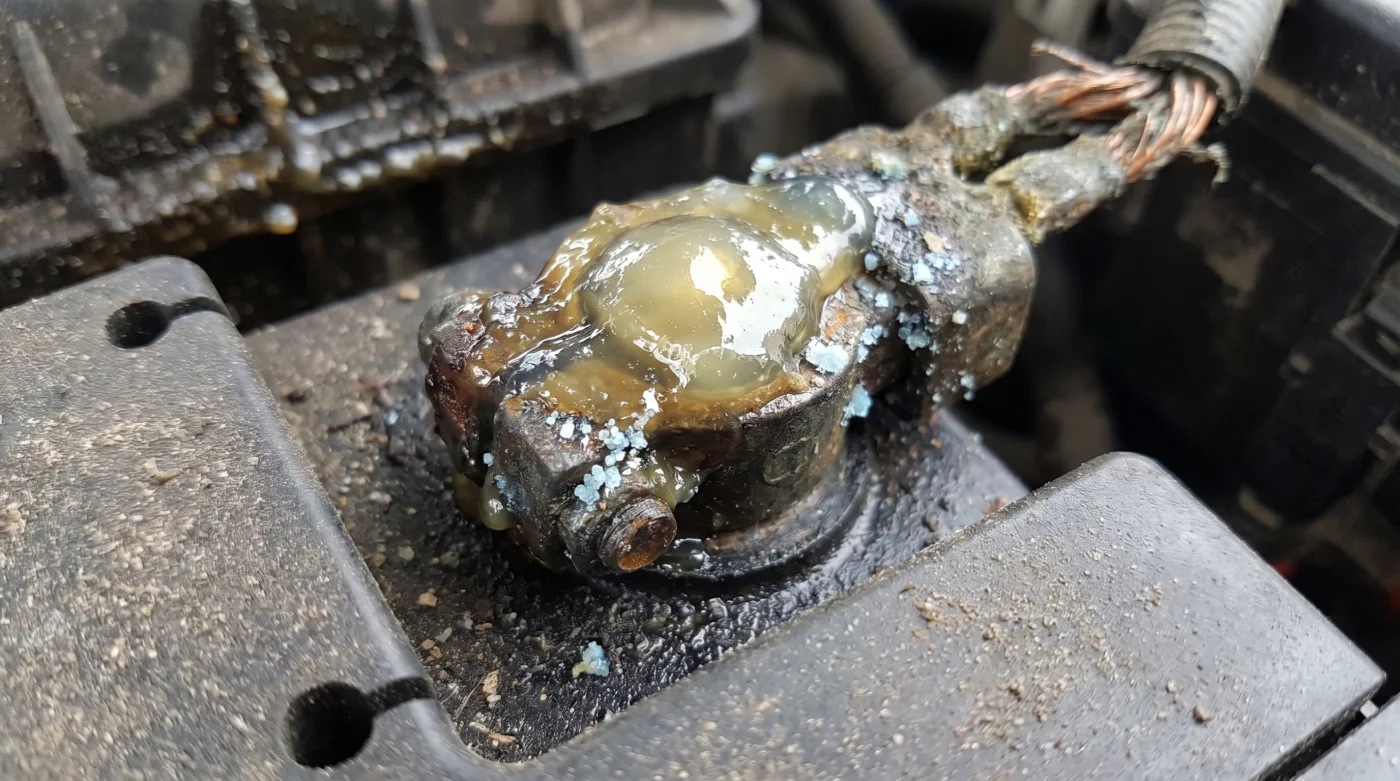
Popping the heavy hood, the culprit is almost always staring right back at you. That pale, fuzzy, cauliflower-like crust blooming around the battery posts. It feels like a systemic failure, a sign of a dying electrical system demanding an expensive tow truck and a ruined afternoon.
But that crust is merely a basic chemical reaction—acid gas reacting with raw metal. While the automotive industry pushes brightly colored aerosol cans promising a proprietary defense against this decay, the most effective armor sits silently right next to your cotton swabs.
The Anatomy of a Chemical Siege
Think of your car’s battery terminals like exposed nerves. When the alternator actively charges the battery, trace amounts of sulfuric acid gas vent from the plastic casing. When that escaping gas meets ambient moisture in the air and the bare lead of the posts, oxidation explodes into that familiar green-white powder.
The standard instinct is to fight chemicals with chemicals. Auto parts stores line their shelves with specialized anti-corrosion sprays that dry into a sticky, red film. Yet this is an over-engineered patch. You don’t need a complex chemical reaction to stop the crust; you just need to suffocate the environment where the crust thrives.
A simple smear of household petroleum jelly acts as an absolute physical barricade. It blocks ambient moisture, traps the escaping acid gas before it touches the metal, and never hardens or cracks under the engine bay’s intense heat cycles. It is a tactile modification that solves a mechanical headache with elegant simplicity.
Arthur Vance, a 62-year-old fleet mechanic managing heavy-duty plow trucks across rural Pennsylvania, hasn’t purchased a can of terminal spray in three decades. “Those commercial sprays flake off the second a wrench touches them, leaving the metal open to the salt,” he notes. Arthur keeps a one-pound jar of generic petroleum jelly on his greasy workbench. Whenever a truck rolls out for a blizzard shift, he coats the terminals in a thick, translucent layer, creating a waterproof seal that outlasts the harshest road salt and freezing slush.
Adjusting the Barrier for Your Environment
Not all climates attack your vehicle’s electrical system the same way. The rate of oxidation shifts dramatically depending on what the ambient air carries. Understanding your local atmosphere dictates exactly how you should apply this physical barrier.
For the High-Humidity Coastal Commuter
Salt air accelerates battery decay exponentially. If you park within smelling distance of the ocean, the jelly layer needs to extend beyond the lead post. Coat the entire metal clamp, covering the exposed copper wiring where it enters the crimp, to prevent the aggressive salt from wicking into the cables.
- Stainless Steel Pans Ruin Delicate Proteins Without This Specific Heating Sequence
- Microwave Ovens Actually Cook Faster When Placed Away From Kitchen Walls
- Inter Miami Matches Abruptly Block Screen Mirroring Across Streaming Platforms
- TVMAX En Vivo Broadcasters Just Shifted Premium Matches To Paid Tiers
- Pasta Water Ruins Tomato Sauces Without This Crucial Emulsion Step
- Windshield Wipers Scratch Glass Constantly Without This Isopropyl Alcohol Wipe
- HEPA Vacuum Filters Spread Dust Instantly If Washed With Water
- Salary Negotiations Fail Instantly When You Reveal Your Current Income
- Retinol Serums Destroy Skin Barriers When Applied Over Daily Moisturizer
- Bluetooth Headphones Drain Your Phone Battery Through Background Proximity Polling
For the Subzero Survivor
In deep winter zones, metal constricts and expands violently. Those commercial hard-shell sprays crack like thin ice under these conditions, letting moisture slip through the fissures. Petroleum jelly remains incredibly viscous even at zero degrees Fahrenheit, shifting and stretching with the metal without losing its seal.
For the Desert Driver
Under a blistering hood in arid climates, batteries vent slightly more gas. Apply a thinner film here. You only need enough to block the gas from resting on the lead, ensuring the high ambient temperatures don’t liquefy a massive glob and create a greasy mess across the top of the battery casing.
The Ten-Minute Terminal Reset
Executing this maintenance requires a clean slate. Applying jelly over existing corrosion will just trap the acidic reaction against the metal, speeding up the decay. You must neutralize the surface before building your barricade.
Mix a tablespoon of baking soda into a cup of warm water. Disconnect the negative (black) cable first, then the positive (red). Pouring the mixture over the corroded posts will result in a satisfying fizz—that is the acid turning back into harmless saltwater.
Scrub the posts and the inside of the metal clamps with a stiff wire brush until the lead shines. Dry everything completely with an old shop rag. Reconnect the positive cable, then the negative, tightening them firmly so there is no wiggle room.
Here is your tactical toolkit:
- One cup warm water mixed with one tablespoon baking soda.
- A basic wire terminal brush.
- A clean, dry shop rag.
- Two generous tablespoons of household petroleum jelly.
Now, dip your finger into the jelly. Apply a liberal coat over the entire connected assembly. Work it into the crevices where the clamp meets the post. The goal is to ensure absolutely zero metal is exposed to the open air.
Reclaiming the Maintenance Narrative
There is a quiet satisfaction in solving a modern mechanical frustration with a simple household staple. We are conditioned to believe that complex machines require equally complex, commercially packaged solutions. But physics is beautifully stubborn.
By blocking moisture and acid with a basic hydrocarbon byproduct, you bypass the consumer trap of routine auto-care upselling. You ensure your car starts reliably on the coldest, dampest mornings, and you reclaim a small, tangible piece of control over your daily mobility.
“An ounce of physical prevention is worth a gallon of chemical cure when dealing with raw electricity.”
| Method | Mechanism | Reader Advantage |
|---|---|---|
| Commercial Spray | Aerosol sealant that dries hard | Quick application but prone to cracking and requires repurchasing. |
| Petroleum Jelly | Viscous physical moisture barrier | Costs pennies, flexes with temperature changes, indefinitely stops corrosion. |
| Ignoring It | Allowing acid and oxygen to mix | Leads to stranded mornings, clicking starters, and premature battery death. |
Frequently Asked Questions
Will petroleum jelly melt and cause a fire hazard? No. Its melting point is around 105 degrees Fahrenheit, meaning it might soften in a hot engine bay, but it will not ignite. It simply coats the metal securely.
Does the jelly block the electrical current? Not if applied correctly. Always assemble and tighten the metal terminals first, then smear the jelly over the outside. Metal-to-metal contact remains strong and secure beneath the coating.
How often do I need to reapply this barrier? Typically once a year. Whenever you check your fluids before winter or summer, give the terminals a visual check. If the jelly looks thin, add a fresh smear.
Can I use dielectric grease instead? You certainly can. Dielectric grease serves the exact same purpose, but petroleum jelly is far cheaper and likely already sitting in your bathroom cabinet.
What if I accidentally get the jelly inside the clamp before tightening? Because tightening the clamp exerts high pressure, it squeezes the jelly out of the way to make a solid electrical connection. Still, outside application is much cleaner and preferred.