You wake up, the house still wrapped in the quiet chill of early dawn. Your hands move through muscle memory, pulling the heavy ceramic mug from the shelf and reaching toward the refrigerator door. Inside that crisper drawer sits a bag of whole bean coffee, carefully tucked away because you were told cold environments naturally halt the march of time. You grind the beans, expecting that sudden, blooming fragrance of toasted caramel and dark fruit.
Instead, you get flat cardboard. A hollow, lifeless scent rises from the grounds. It smells vaguely like the cut bell peppers resting just a few inches away. You brew it anyway, hoping the hot water will perform a miracle, but the resulting cup is thin and aggressively bitter.
For decades, we’ve treated the kitchen fridge as a universal time capsule. If cold keeps lettuce crisp and milk sweet, surely it must protect the delicate oils of a freshly roasted Guatemalan bean. But whole bean coffee isn’t a vegetable, and a refrigerator isn’t a static, frozen void.
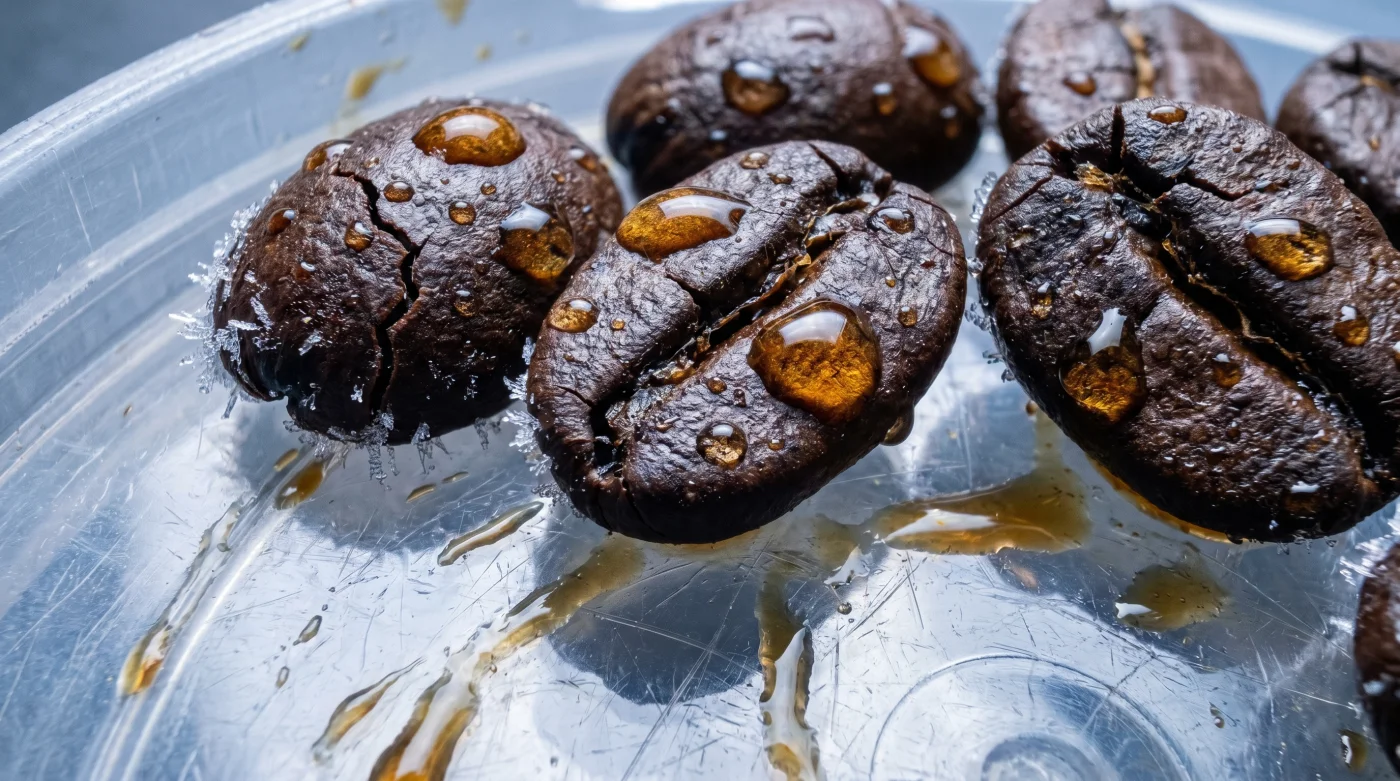
In reality, that plastic crisper drawer is a violently humid ecosystem. Every time you open the fridge door to grab the milk, warm kitchen air rushes in, instantly condensing on the cold surfaces inside. Your beans, which act like porous little sponges, soak up this microscopic dew.
The Cold Vault Illusion
Where did this specific storage habit even originate? In the 1950s, the American kitchen was dominated by giant, vacuum-sealed tins of pre-ground commercial coffee. Once you punctured that tin, the coffee—often months away from its actual roast date—began to oxidize rapidly. Putting it in the fridge masked the sourness of stale robusta beans. It didn’t preserve flavor; it merely numbed the off-notes.
But modern whole bean coffee is completely different. It is a baked agricultural product holding delicate, volatile oils suspended in a fragile cellular matrix. When you introduce fluctuating moisture, the humidity forcefully extracts those oils right out of the bean. You are essentially brewing your coffee in slow motion, inside the bag, at thirty-eight degrees Fahrenheit.
Think of your refrigerator as a busy train station in the rain. People—in this case, moisture and food odors—are constantly bumping into each other. Because roasted coffee is highly hygroscopic, meaning it absorbs moisture from its surroundings, it eagerly pulls in the smell of last night’s garlic chicken and the ambient humidity of the crisper. By the time the grounds hit your French press, the oils that actually provide flavor have already been washed away or permanently corrupted.
Elias Thorne, a 42-year-old independent roaster operating out of a retrofitted garage in western Pennsylvania, learned this lesson the hard way. Early in his career, Elias decided to store a rare, hundred-dollar pound of Geisha beans in a commercial fridge, assuming the chill would lock in the prized jasmine and bergamot notes. A week later, he brewed a cup for a prominent buyer, only to find the coffee tasted exactly like damp cardboard. Elias realized that cold doesn’t stop staling; when combined with moisture, it actually accelerates the degradation of flavor compounds. He dumped the entire batch and completely rewrote his storage protocols.
Tailoring Your Storage Protocol
Not everyone drinks coffee at the same pace. The way you store your beans should directly reflect how quickly you consume them. Let’s adjust the method to fit your daily reality.
- Smart TV Remotes Clear Streaming Caches Instantly With This Button Combo
- Credit Card Points Double In Value Using This Airline Transfer Portal
- Memory Foam Pillows Degrade Permanently Inside High Heat Clothes Dryers
- Liquid Foundation Blends Flawlessly When Mixed With Basic Saline Solution
- Car Battery Terminals Stop Corroding Instantly Using Common Petroleum Jelly
- Stainless Steel Pans Ruin Delicate Proteins Without This Specific Heating Sequence
- Microwave Ovens Actually Cook Faster When Placed Away From Kitchen Walls
- Inter Miami Matches Abruptly Block Screen Mirroring Across Streaming Platforms
- TVMAX En Vivo Broadcasters Just Shifted Premium Matches To Paid Tiers
- Pasta Water Ruins Tomato Sauces Without This Crucial Emulsion Step
For the Daily Ritualist
You buy a bag every two weeks and brew a pot every single morning. Your primary enemy isn’t time; it’s oxygen and light. Your beans belong in a cool, dark cabinet far away from the stove.
You want an opaque, airtight canister. Ceramic or stainless steel works beautifully for this. Never leave the beans in the original paper bag once opened, as those thin wire ties do absolutely nothing to keep ambient air at bay.
For the Weekend Sipper
Maybe you only pull a shot of espresso on Sunday mornings. A standard twelve-ounce bag might last you well over a month. In this case, you are fighting a slow, steady degradation of the bean’s structure.
Leave out a small portion for the current week, and place the rest in an airtight bag, squeezing out every trace of air. Store it in the freezer, avoiding the fridge entirely. The freezer lacks the constant condensation cycles of the refrigerator crisper, putting the beans into a true, dry stasis.
For the Bulk Buyer
You picked up a massive bag from a local roaster or a wholesale club. Leaving two pounds of coffee sitting on your counter guarantees the bottom half will be dead before you ever reach it.
You must divide and conquer. Break the large bag into manageable weekly rations. Vacuum seal the extra batches and place them in the deep freeze. When you are ready for a new batch, let it thaw completely on the counter unopened to prevent sudden condensation from ruining the surface oils.
Mindful Application: The Countertop Method
Transitioning away from the cold vault requires only a few deliberate actions. Protecting the bean is simply about minimizing variables. Focus on creating a stable, quiet environment for your morning supply.
- Secure the perimeter: Choose a dedicated storage container that completely blocks UV light. Clear glass jars might look beautiful on an open shelf, but sunlight degrades roasting oils almost as fast as moisture.
- Control the climate: Find a cabinet that stays consistently between 68 and 72 degrees Fahrenheit. Avoid the cupboards directly above your oven or dishwasher, where heat and steam rise on a daily basis.
- Banish the fridge entirely: Remove your current bag from the crisper drawer today. Even if you think the bag is heavily sealed, the fluctuating temperatures of the door opening and closing are silently robbing your future cups of their vitality.
- Grind at the finish line: Never pre-grind your coffee to save time. Wait until the water is actively heating. Once the cellular wall of the bean is shattered by the burrs, you have roughly fifteen minutes before the most delicate aromatics evaporate into the air.
Reclaiming Your Morning
There is a specific kind of disappointment that comes from a mediocre cup of coffee. It isn’t just a bad beverage; it feels like a slight against the morning itself. When you rely on a cold, damp drawer to protect something so fragile, you hand over your morning peace to an appliance built for celery.
Understanding how to properly care for your beans changes the entire ritual. You stop viewing coffee as a durable household commodity and start treating it as the fresh, seasonal ingredient it actually is. The reward for this small shift in perspective is immediate and highly physical.
Tomorrow morning, when you open a dry, dark canister on your counter, the aroma won’t be a muted whisper of bell peppers and cold plastic. It will be a loud, warm, aromatic greeting, setting the exact right tone for the rest of your day.
Treat your coffee beans like fresh bread; keep them dry, keep them sealed, and consume them before the air takes their soul. — Elias Thorne
| Storage Method | Physical Reality | Added Value for You |
|---|---|---|
| Refrigerator Crisper | High humidity, fluctuating temps, odor transfer. | None. Actively destroys bean oils and ruins flavor. |
| Countertop (Clear Jar) | Stable temp, but UV light breaks down compounds. | Convenient, but sacrifices the delicate tasting notes. |
| Cabinet (Opaque Canister) | Blocks light, blocks air, avoids heat spikes. | Ensures maximum flavor extraction for your daily brew. |
| Deep Freezer (Vacuum Sealed) | Stops aging process without introducing moisture cycles. | Allows you to buy in bulk without losing freshness. |
Coffee Storage FAQ
Q: Can I put my coffee in the fridge if it’s in a Tupperware container?
A: No. Every time you open the container to scoop beans out, warm air enters, gets trapped when you close the lid, and immediately turns into condensation right on the beans.Q: I buy pre-ground coffee, does this rule still apply?
A: Absolutely. Pre-ground coffee is even more vulnerable to moisture and odors because the surface area is completely exposed. Keep it in a dark, airtight container on the counter.Q: Why do supermarkets store some coffee in freezer aisles?
A: Supermarket freezers are industrial and maintain a constant, deep freeze without the daily door-opening fluctuations of a home fridge, avoiding the condensation trap.Q: How long do beans stay fresh on the counter?
A: If kept in an opaque, airtight canister away from heat, whole beans will remain highly vibrant for two to three weeks after their roast date.Q: Should I throw away the beans currently in my fridge?
A: You don’t have to throw them away, but take them out immediately. Let them come to room temperature before grinding, and accept that the flavor will be noticeably muted.