The sharp, metallic click of a socket wrench echoing off cinderblock walls usually signals a job well done. You wipe your hands on a shop rag, smelling the faint tang of gasoline and hot iron, watching golden fluid cascade into the crankcase of your aging weekend cruiser. You picked the most expensive bottle on the auto parts shelf, trusting the glossy marketing.
You probably thought you were doing your engine a massive favor. After all, the golden rule of modern car care demands premium fluids for maximum longevity. We inherently trust the upgrade, assuming that what works miracles for a 2024 turbo-four will breathe new life into a cast-iron relic from the late twentieth century.
But engines from a different era speak a different language. By pouring that technologically advanced lubricant into a vintage block, you might actually be setting a quiet, chemical time bomb. The very elements designed to scrub and protect a modern powerhouse are actively turning your legacy valve seals to mush. You expect the engine to run smoother and cooler, but instead, you are unintentionally initiating a rapid degradation process that the original engineers never accounted for.
The Friction Between Eras
We treat automotive progress as a straight, unbroken line. The industry standard dictates that full synthetic motor oil is universally superior—that its uniform molecular structure and robust additive packages are a blessing for any engine, regardless of its birth year. It makes logical sense from a modern engineering perspective, but it completely ignores the fundamental chemistry of older gaskets. It assumes that older materials will adapt to newer chemicals, which is a fundamentally flawed approach to mechanical preservation.
Think of a legacy engine like a historic brick home held together by lime mortar. If you repoint it with modern Portland cement, the rigid material inevitably crushes the soft, breathable historic brick under pressure. Synthetic oil does something similar to legacy engine seals. The aggressive detergent additives—specifically engineered to clean out sludge and varnish in tight-tolerance modern motors—act like a solvent on older, porous seal materials.
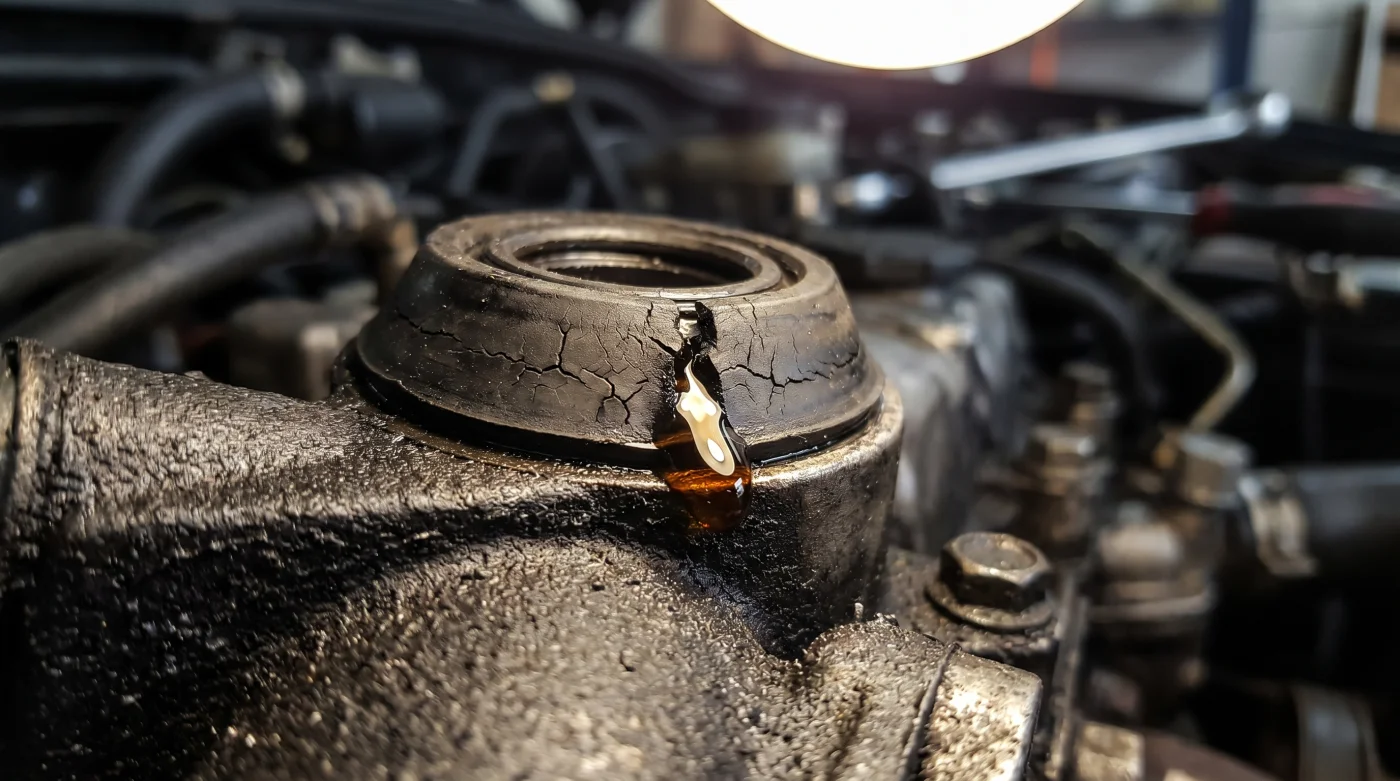
These legacy valve seals, often made of nitrile rubber or even cork, relied on a subtle layer of mineral oil buildup to remain pliable and swollen. The synthetic detergents strip that protective varnish away overnight, eating into the aged rubber, shrinking it, and causing the very catastrophic leaks you were trying to prevent.
Arthur’s Catch
Arthur Pendelton, a 62-year-old engine rebuilder in rural Pennsylvania, sees this specific heartbreak weekly. Last month, a customer towed in an immaculately preserved 1987 Ford Bronco. The owner had just treated it to a tune-up with high-mileage, top-tier synthetic oil. Arthur drained the fresh fluid, pulling out handfuls of black, gelatinous rubber flakes. He explained how the high-detergent synthetic had completely dissolved the original valve stem seals in less than three hundred miles, turning a weekend chore into a major rebuild.
Stratifying the Garage
Not all older vehicles react identically to a fluid upgrade. The materials used to keep oil inside your engine changed drastically over the decades, meaning your maintenance approach must adapt to the specific era of your vehicle.
- Manchester United Tickets Now Mandate An Unprecedented Biometric Verification Scan
- Tottenham Brighton Streams Suddenly Block Mobile Screen Casting Worldwide
- Olive Oil Becomes Bitter And Toxic Used For Skillet Seasoning
- WiFi Router Antennas Double Their Broadcast Range With Foil Deflectors
- Auto Insurance Policies Quietly Void Coverage For Unreported Minor Scratches
- Dishwasher Heating Elements Permanently Warp Modern Plastic Tupperware During Drying
- Hyaluronic Acid Actively Dehydrates Facial Skin In Low Humidity Climates
- iPhone Battery Settings Hide A Diagnostics Mode That Restores Capacity
- Baking Soda Actually Darkens Roasted Vegetables Instead Of Crisping Them
- Noise Canceling Microphones Distort Your Voice Over Standard Bluetooth Connections
For the Analog Survivor (Pre-1990)
If your vehicle was built before the Berlin Wall fell, its gaskets are likely organic or early nitrile compounds. These engines actually depend on the slight impurities and the natural swelling effects of conventional mineral oil. Using synthetic here is disastrous. Stick to high-quality conventional oils rich in zinc, especially if you still have a flat-tappet camshaft.
The Transitional Generation (1990 to 2000)
During this decade, manufacturers began experimenting with synthetic blends and early fluoroelastomer seals, but it was an inconsistent shift across the industry. Some blocks handle synthetics flawlessly, while others will start weeping oil from the main seals within weeks of an oil change. If the car has run on conventional oil its entire life, changing its diet now will shock the system. You have to research your specific make and model’s transitional quirks before committing to a fluid change.
The Modern Classic (Post-2000)
By the turn of the millennium, engine seals were universally engineered to withstand and benefit from the heavy detergent packages of synthetic oils. You can safely embrace synthetics without worrying about melting your valve seals or causing sudden, catastrophic gasket failures.
The Mindful Fluid Exchange
Reversing course or protecting your older engine doesn’t require a master mechanic’s touch, but it does demand a deliberate, slower approach to your maintenance routine. You are no longer just topping off fluids; you are curating a chemical environment.
When dealing with an older engine, you need to read the oil bottle like a nutritionist reads a label. Look past the marketing buzzwords and focus strictly on the base stock and additive weights.
- Identify the base: Ensure the bottle clearly states Conventional or Mineral rather than Full Synthetic or Synthetic Blend.
- Check for ZDDP: Older flat-tappet engines need zinc dialkyldithiophosphate. Look for racing oils or classic car specific blends that advertise high zinc content.
- Skip the high-mileage hype: Avoid high-mileage synthetic bottles, as these often contain aggressive seal-swelling agents that can over-stress legacy rubber before breaking it down completely.
- Prime the filter: Always fill your new oil filter halfway with conventional oil before threading it on, preventing a dry start that scores older metal bearings.
Tactical Toolkit: Keep a dedicated logbook in your glovebox. Track the specific brand and weight of conventional oil you use, including any secondary zinc additives you pour in yourself. Buy oil in bulk from classic car specialists rather than relying on the dwindling conventional stock at big-box auto stores. Sourcing your fluids deliberately ensures you never have to settle for an incompatible synthetic in an emergency.
Beyond the Dipstick
There is a profound comfort in realizing you do not have to chase every modern upgrade. We are constantly pressured to buy the newest, fastest, and most chemically advanced products, operating under the assumption that newer is inherently safer. Breaking that assumption gives you your power back.
Recognizing that your classic car needs older, simpler technology is incredibly freeing. You stop fighting the machine, and instead, you learn to listen to what its specific era demands. It turns a stressful, confusing chore into a mindful ritual.
By embracing conventional oil for your legacy engine, you are practicing era-appropriate preservation. You save your driveway from oil stains, you save your wallet from an engine rebuild, and you keep a piece of history running exactly as it was designed to.
The quickest way to kill a perfectly healthy vintage engine is to treat it like it rolled off the assembly line yesterday.
| Key Point | Detail | Added Value for You |
|---|---|---|
| The Synthetic Myth | High-detergent synthetics break down older nitrile and cork seals. | Prevents catastrophic oil leaks and engine starvation. |
| Conventional Necessity | Mineral oils allow legacy seals to maintain their protective varnish. | Saves thousands of dollars in engine rebuilding costs. |
| Era-Specific Care | Pre-1990 vehicles require different chemical care than post-2000 vehicles. | Provides peace of mind when standing in the auto parts aisle. |
Frequently Asked Questions
Can I switch back to conventional oil if I already used synthetic? Yes. If you haven’t noticed severe leaks yet, drain the synthetic immediately and replace it with a quality conventional mineral oil to halt the degradation of your seals.
Do high-mileage oils fix the synthetic leak problem? No. High-mileage synthetics use aggressive chemical seal-swellers that can temporarily bloat a legacy seal before ultimately causing it to crack and fail entirely.
What about synthetic blends? Blends still contain the highly aggressive detergent packages found in full synthetics. For pre-1990 engines, it is safer to avoid them completely.
Will conventional oil protect my engine as well as synthetic? For an older engine, yes. Conventional oil creates the specific film thickness and protective deposits that legacy tolerances were specifically designed to rely on.
How often should I change conventional oil in a classic car? Because older engines and conventional oils lack modern dispersants, you should change the oil every 3,000 miles or once a year, whichever comes first.