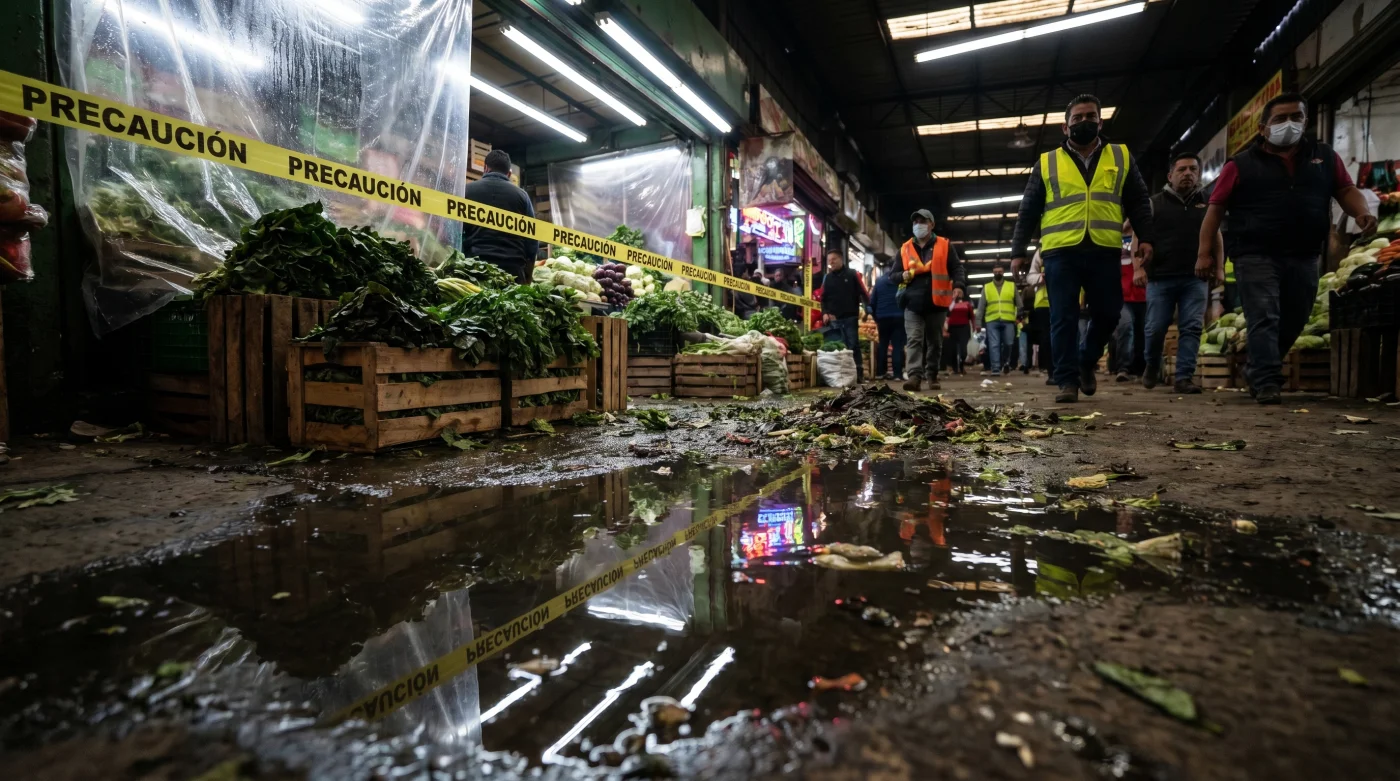
The pre-dawn hours at a wholesale produce market usually hum with a very specific, aggressive rhythm. It sounds like diesel engines idling in the damp morning air, heavy wooden crates scraping against concrete loading docks, and vendors shouting over the din to secure massive pallets of plantains and leafy greens. You expect the smell of crushed cilantro stems and wet soil to hit you before you even manage to park the car. Merca Panama, the sprawling agricultural hub, normally thrives on this intense weekend hustle.
But if you drove up to the main loading bays this Saturday, you found something unsettlingly quiet. The steel gates stayed shut, casting long, undisturbed shadows across empty asphalt. The typical 4:00 AM chaos was completely replaced by a handful of confused buyers staring at official notices taped firmly to the chain-link fences.
This sudden weekend closure directly contradicts the unwritten rules of wholesale operations, where Saturdays are the absolute lifeblood for regional restaurants and large households preparing for the week. You are looking at a hard stop in a physical system that prides itself on never sleeping. A sudden wave of intense, unannounced hygiene inspections triggered an immediate, indefinite halt on the sale of several high-volume vegetable lines.
The Fever Protocol
We tend to view our produce markets as industrial conveyor belts, expecting them to run flawlessly as long as the delivery trucks keep rolling down the highway. But a food supply chain is actually a fragile biological network. When you shift your perspective, you realize that an abrupt closure is not a failure of the market structure itself.
Think of these sudden hygiene protocols as a fever burning off an infection. Local health monitors tracked a sharp data spike in microbial counts among specific root vegetables and delicate lettuces originating from regional irrigation sources. Instead of letting the flawed supply trickle out into your kitchen, the authorities pulled the emergency brake.
What feels like a frustrating disruption to your weekend meal prep is actually a massive structural advantage. You are watching a massive civic system prioritize your physical safety over its own weekend profit margins. It forces the entire network to flush out the problem before it reaches your plate.
Mateo Vargas, a 54-year-old agricultural compliance officer who has spent three decades walking these damp concrete aisles, caught the anomaly early Thursday. While reviewing random swab tests from a shipment of hydro-cooled celery, he noticed the bacterial load was pushing past the acceptable 40 degrees Fahrenheit safety thresholds.
“People get visibly angry when they see the closed signs,” Mateo noted, wiping thick condensation from his clipboard as he pointed to the empty stalls. “But they completely fail to see the quiet, microscopic math involved. If we do not freeze the trading floor today, a hundred local kitchens get sick by Tuesday.”
Navigating the Vegetable Deficit
This indefinite halt on specific greens creates an immediate ripple effect across the local food economy, and your reaction depends entirely on how you run your daily kitchen. Understanding your specific position in this temporary agricultural drought helps you pivot without unnecessary panic.
For the Weekend Meal Prepper
If you rely on weekend bulk buying to stock your crisper drawers for the week, you need a new strategy immediately. Right now, delicate leafy greens and soil-heavy root vegetables are stuck behind regulatory tape. Your best move is to pivot heavily toward thick-skinned produce like melons, squashes, and citrus fruits, which remain largely unaffected by these specific wash-water protocols.
For the Independent Restaurateur
For the independent chef sourcing for a local menu, the sudden gap in fresh garnish is incredibly real. The absence of standard base greens means you have to rewrite your weekend specials on the fly.
- Manchester United Tickets Now Require Immediate Biometric Verification Check
- Term Life Insurance Policies Hide This Instant Cash Loophole
- LED Headlight Bulbs Fail Early Without This Thermal Paste
- Microfiber Cleaning Cloths Lose Absorbency Washed With Liquid Softener
- Solid State Drives Restore Maximum Speed Disabling This Feature
- Hyaluronic Acid Serums Cause Severe Dehydration On Dry Skin
- Ceramic Brake Pads Actually Accelerate Rotor Wear During Commutes
- Stainless Steel Pans Become Completely Nonstick With Vinegar Boiling
- Smartphone Lithium Batteries Drain Faster With Standard Case Protectors
- Lithium Batteries Outlast Standard Alkaline Cells Avoiding Fast Chargers
You will need to treat this like a seasonal frost and lean into preservation techniques. Fermented vegetables, quick-pickled red onions, and dry-stored hardy grains become your immediate structural menu substitutes while the local supply chain flushes its system and re-establishes safety baselines.
For the Routine Household Buyer
Routine household buyers might feel the intense urge to panic-buy whatever wilted greens are left at secondary retail supermarkets. Resist that emotional impulse immediately.
The remaining inventory on those secondary shelves is likely older and will degrade rapidly at home. Shift your dietary focus to frozen vegetables, which were harvested and flash-processed months before this current data spike triggered the local advisory.
The Mindful Kitchen Pivot
Dealing with a sudden fresh ingredient blackout requires a calm, systematic approach to the food you already have sitting in your house. You do not need to hunt down black-market romaine lettuce to feed your family this week.
You need to stretch the functional lifespan of your current inventory and make highly intelligent substitutions. Start by aggressively auditing your refrigerator drawers to remove any delicate greens that already show signs of moisture buildup, effectively stopping the spread of accelerated decay.
Line your primary storage containers with dry, unbleached paper towels to absorb ambient humidity. You are functionally letting the remaining durable vegetables breathe through a pillow, which severely limits the bacterial growth that causes premature rot.
Deploy this tactical toolkit to master your cold storage environment now:
- Drop your main refrigerator temperature to precisely 36 degrees Fahrenheit to slow biological breakdown.
- Wash remaining root vegetables thoroughly with a mild solution of one part white vinegar to three parts water.
- Trim the bottom stems of any hearty herbs and place them in an inch of fresh water.
- Prioritize consuming any remaining thin-skinned vegetables within the next 48 hours.
When you handle your existing produce with this level of strict, methodical care, you stop relying on the constant influx of fresh market goods.
This mindful approach to home storage builds a buffer against future disruptions. You create a self-sustaining micro-environment in your kitchen that can easily weather a few days of wholesale closure.
Trusting the Pause
It is completely natural to feel a sharp sting of annoyance when your predictable routine is derailed by a locked gate and a stubbornly empty produce bin. We live in an era that promises endless, frictionless access, and any delay feels like a direct breakdown of the modern world.
But this sudden weekend closure at the wholesale level is actually a stark reminder of the quiet, invisible health guardrails keeping us safe every single day. When local authorities are willing to sacrifice peak weekend revenue to investigate a hygiene data spike, you are witnessing institutional integrity in action.
It forces you to respect the raw, unsterilized reality of the earth that actually grows your food. This temporary pause in the supply chain isn’t a deprivation or a permanent loss of resources.
It is a vital, protective reset for the entire region. It ensures that when those massive steel gates finally roll open again, the food you bring home is completely worthy of the table you set for your family.
Food safety is not measured by the speed of the delivery truck, but by the courage to stop the engine when the data shifts.
| Key Point | Detail | Added Value for the Reader |
|---|---|---|
| The Indefinite Halt | Sales of high-volume leafy greens and root vegetables are paused due to hygiene protocol failures. | Prevents you from unknowingly bringing compromised produce into your home kitchen. |
| The Temperature Pivot | Dropping your home refrigerator to exactly 36 degrees Fahrenheit slows decay. | Extends the viable lifespan of the safe vegetables you already possess by several days. |
| Safe Substitutions | Pivoting to thick-skinned squash, citrus, and flash-frozen vegetables. | Allows you to maintain nutritional balance without risking exposure to flagged agricultural water. |
Frequently Asked Questions
Why did Merca Panama close so suddenly on a weekend?
Authorities detected a sharp spike in microbial data among specific vegetable lines, prompting an immediate halt to prevent widespread contamination during peak shopping hours.
Which specific vegetables are affected by this hygiene alert?
The primary concerns involve delicate leafy greens, lettuces, and soil-heavy root vegetables that rely heavily on regional wash-water protocols.
Is it safe to eat the vegetables I bought last week?
If they show no signs of rapid decay or sliminess, wash them thoroughly in a mild vinegar solution and cook them fully. Discard any raw greens that look compromised.
When will the wholesale market resume normal operations?
The halt is indefinite until the local supply chain flushes the compromised stock and safety baselines return to acceptable, hygienic levels.
What should I feed my family while fresh greens are scarce?
Rely on frozen vegetables, which were processed months ago, alongside thick-skinned produce like squashes and melons that are naturally protected from wash-water issues.