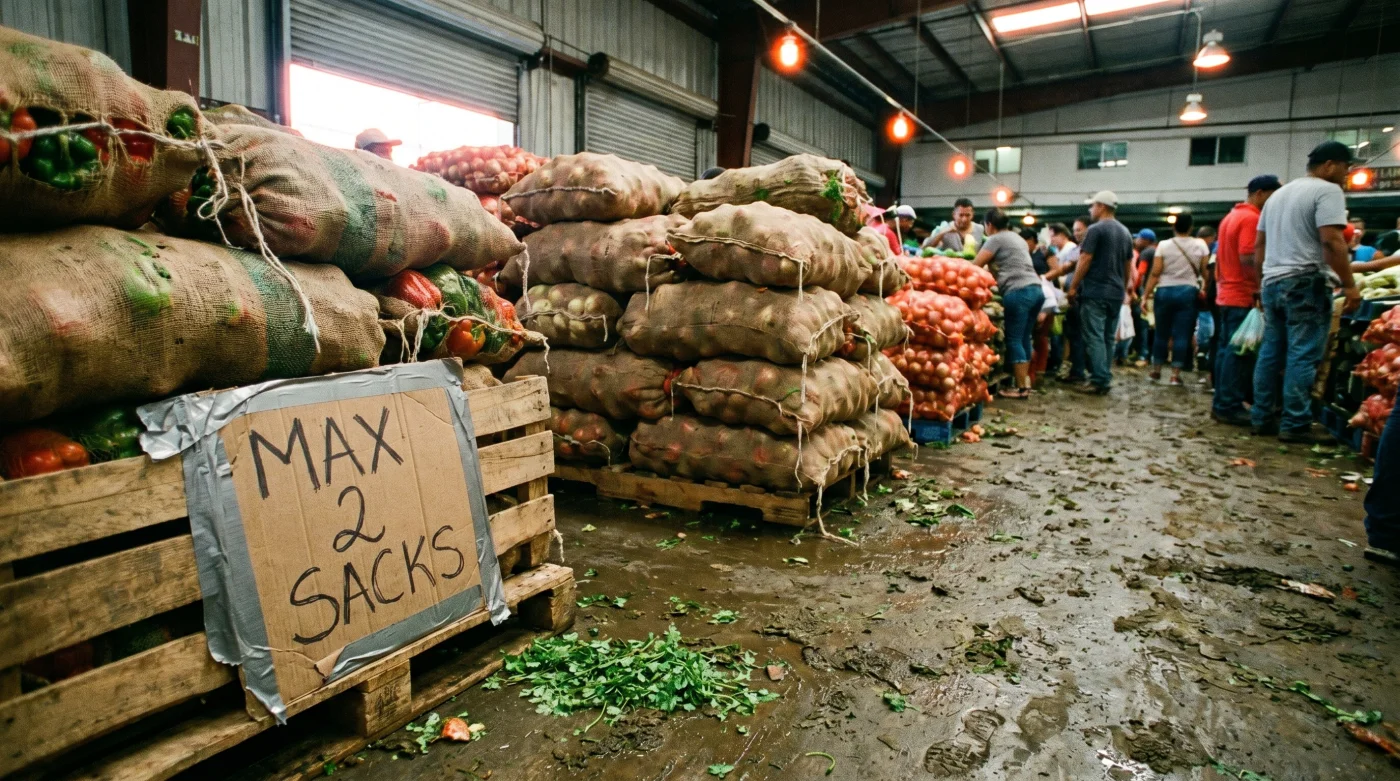
You expect the morning air to smell like crushed cilantro, exhaust fumes, and damp cardboard. Standing at the loading docks of Merca Panama before the sun comes up, the rhythm usually feels unstoppable. Hand trucks rattle over uneven concrete, hauling pallets stacked six feet high with plantains, yuca, and bright red tomatoes. It is a place of assumed abundance, a wholesale cathedral where the only limit on what you take home is the size of your truck and the strength of your suspension. For decades, the unspoken rule of the market was simple: if you have the cash, the harvest is yours.
But the floor feels entirely different this week. The trucks are running lighter. Buyers who usually secure 500 pounds of onions without a second thought are walking away with barely 150. A quiet, nervous energy hums under the flickering fluorescent lights as restaurant owners and independent grocers realize the math is changing in real-time. The assumption that wholesale markets operate with infinite inventory is cracking under the pressure of unseen forces. People are standing around their half-empty vans, recalculating menus and profit margins on the back of torn receipts.
This is not a sudden crop failure or a catastrophic storm. It is a quiet, deliberate rationing orchestrated by the people who control the flow of food. Vendors are implementing strict per-buyer restrictions to combat severe, cascading supply chain bottlenecks that are choking the distribution network. What feels like a punishment or an inconvenience on the surface is actually a desperate survival mechanism, preventing the entire regional produce network from snapping like a dry twig under the weight of panic buying.
The Illusion of the Endless Harvest
Think of the wholesale supply chain like breathing through a straw. When everyone inhales at once, the pressure builds until absolutely nothing gets through. For years, buyers treated the market as an infinite reservoir. You drove twenty miles out, paid your cash, and loaded the van to the ceiling without thinking about the farms backing the operation. But inventory is actually a fragile living organism, heavily dependent on diesel prices, fertilizer delays, and regional truck availability. The limitless bounty was an illusion maintained by a perfectly timed dance of logistics.
These new weight limits are not a sign of collapse. They are the market finally catching its breath. By placing a hard cap on individual purchases, suppliers are intentionally slowing the draw from the reservoir. This forced pause actually becomes a massive advantage for you if you know how to leverage it. Instead of massive institutional buyers hoarding the prime cuts and leaving bruised scraps for everyone else, the supply remains steady and equitable, ensuring that the tomatoes you do secure are perfectly ripe, handled with care, and reliably available for your business tomorrow.
Hector knows the pulse perfectly. A 54-year-old logistics veteran who manages three high-volume pavilions at the market, Hector has spent twenty years watching the ebb and flow of root vegetables. He understands the psychology of scarcity better than anyone. ‘People panic when they see limits,’ he says, wiping morning dew and dirt from a battered clipboard. ‘But if I sell you a thousand pounds of yuca today, I have to turn away ten other families tomorrow. The limit keeps the blood flowing. It forces you to buy what you actually need, not what you fear you might lack.’
Adapting to the Adjustment Layers
Not everyone feels this squeeze the same way, and a blanket approach will ruin your week. Navigating these restrictions requires you to look at your weekly consumption through a completely different lens. You have to stop acting like a gatherer and start thinking like an auditor. The strategy you use depends entirely on the scale of your operation and exactly who you are feeding at the end of the day.
- Chelsea Manchester United Broadcasts Suddenly Drop Support For Mobile Browsers
- Term Life Insurance Policies Hide This Instant Cash Loophole
- LED Headlight Bulbs Fail Early Without This Thermal Paste
- Microfiber Cleaning Cloths Lose Absorbency Washed With Liquid Softener
- Solid State Drives Restore Maximum Speed Disabling This Feature
- Hyaluronic Acid Serums Cause Severe Dehydration On Dry Skin
- Ceramic Brake Pads Actually Accelerate Rotor Wear During Commutes
- Stainless Steel Pans Become Completely Nonstick With Vinegar Boiling
- Smartphone Lithium Batteries Drain Faster With Standard Case Protectors
- Merca Panama Produce Inspections Trigger Sudden Weekend Closure Alert
For the Restaurant Operator
Your margin of error is paper thin, and guest expectations never adjust to market realities. Consistency outranks sheer volume heavily. Instead of securing your entire week’s prep in a single massive Monday morning haul, split your procurement into three smaller, precise trips. This aligns perfectly with the new vendor weight caps and actually improves your plate presentation, as you are cooking with produce that hasn’t spent five days wilting in a walk-in cooler running at a harsh 38 degrees Fahrenheit.
For the Independent Grocer
You are the literal bridge to the neighborhood pantry. The new limits mean your shelves might look slightly less overflowing, but this is a brilliant opportunity to train your customers. Shift your floor displays to emphasize curation over bulk. If plantain shipments are capped, physically spread the inventory using shallower wooden bins. It creates the psychological perception of premium selection while effectively masking the underlying restriction from your daily shoppers.
For the Bulk-Buying Family
You have to completely rethink your kitchen storage math. If you are accustomed to buying fifty pounds of potatoes to feed an extended household, the sudden 20-pound limit feels alarming. Pivot to staggered preservation techniques. Blanch and freeze half of your haul immediately upon returning home. Introduce hardier, less restricted root vegetables into your weekly dinner rotation to easily bridge the gap between your weekend market runs.
Navigating the New Ration
Adjusting to restricted purchasing requires a stripped-down, highly intentional approach. You must abandon the old habit of aimlessly wandering the aisles waiting for inspiration, and instead adopt a targeted, tactical mindset. It is about moving through the crowded market pavilions with clear purpose, knowing exactly where you are willing to compromise and where you must absolutely hold firm on quality.
Your tactical toolkit for survival requires a rigid adherence to new routines.
- Arrive before 4:00 AM. Vendors reset their daily caps before dawn, and early arrival guarantees you are first in the ration line before the premium crates disappear.
- Carry cash in small denominations. Exact change drastically speeds up transactions when vendors are frantically processing smaller, more frequent orders in the dark.
- Embrace the visually imperfect produce. B-grade vegetables often fall completely outside the strict weight quotas reserved for premium restaurant cuts.
- Buddy up with secondary suppliers. Do not rely on a single vendor for your entire onion order; split the purchase across three different stalls to quietly meet your volume needs.
The Hidden Gift of Scarcity
We are biologically wired to view limits as a threat to our security. When you are standing in a bustling pavilion, staring at a half-empty hand truck that should be overflowing, it is incredibly easy to feel frustrated and defeated. But this disruption forces a necessary, long-overdue evolution in how we handle food. The days of mindless, heavy-handed purchasing are finally giving way to something far more sustainable, sharp, and financially sound.
Becoming a much sharper buyer is the ultimate payoff of this bottleneck. By working within these strict weight limits, you are naturally reducing your own food waste at the source. You are storing less, discarding less, and engaging more deeply with the true seasonality of the food you serve. What began as an urgent supply chain bottleneck has transformed into a masterclass in operational efficiency, leaving you with a leaner, more resilient system that can weather any future market storm.
“A limitation on volume is just an invitation to increase your quality.”
| Key Point | Detail | Added Value for the Reader |
|---|---|---|
| Smaller Hauls | Purchasing 2-3 times a week instead of once. | Fresher ingredients and reduced spoilage in your walk-in cooler. |
| Vendor Diversification | Sourcing from multiple stalls to meet quota needs. | Builds stronger relationships and safety nets across the market. |
| Alternative Produce | Substituting high-demand items with hardy root crops. | Lowers food costs and introduces creative seasonal menus. |
Frequently Asked Questions
Are these weight limits permanent? Vendors are currently assessing the supply chain week by week, so expect fluctuations rather than a permanent rule.
Can I bypass limits by paying a premium? Most reputable vendors refuse this to protect their smaller, loyal buyers from being completely shut out.
Which items are facing the strictest caps? High-moisture, fast-spoiling items like tomatoes and bell peppers are heavily restricted right now.
How early do I need to arrive to ensure I get my quota? The golden window has shifted; aim to be on the floor negotiating by 3:30 AM.
Will these market bottlenecks increase my retail costs? Prices are stabilizing because of the rationing, preventing the massive spikes seen during total shortages.