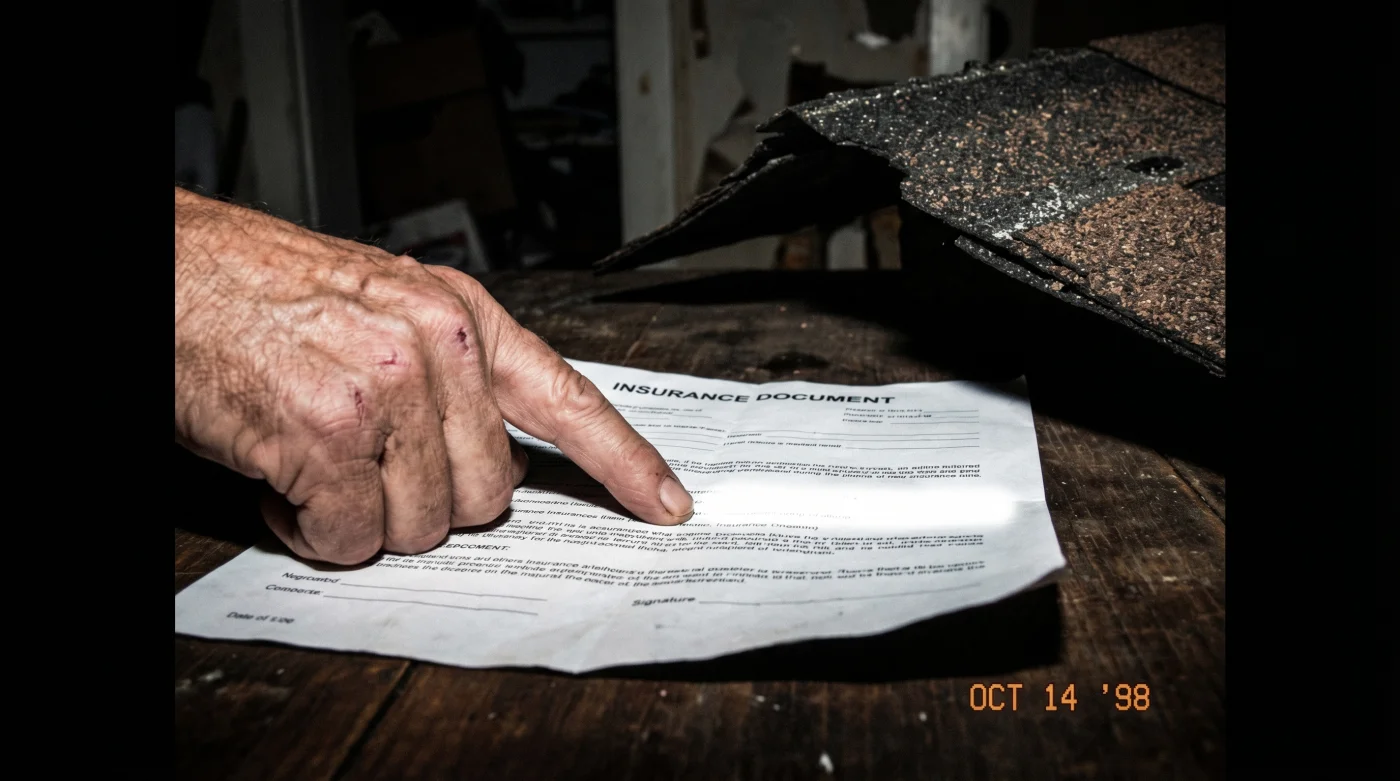
The morning after a July squall rolls through eastern Pennsylvania, the neighborhood sounds like a lumber yard. Chainsaws hum in the distance. The air smells heavily of snapped pine branches and bruised, damp earth. You stand on your driveway, clutching a lukewarm cup of coffee, staring up at the ragged patch of missing shingles near your chimney.
It looks bad, but your pulse remains steady. You pay your premium on time every month. You have a thick envelope sitting in the bottom drawer of your filing cabinet that promises to make you whole when the wind bites a chunk out of your home. You assume the fix is completely guaranteed.
But reading an insurance policy is like reading a recipe written by an adversary. You think you are covered for a seamless new roof. The reality is that the document in your drawer might only be obligated to patch the hole, leaving you with a glaring asphalt scar that looks like a cheap bandage on your house.
The problem isn’t the storm. The problem is a single, easily ignored omission buried in the fine print. It is the quiet trapdoor that drops homeowners into thousands of unexpected dollars in debt, turning a routine weather claim into a prolonged financial ache.
The Checkerboard Trap
When wind or hail damages a section of your house, the intuitive assumption is that the carrier will restore the property to its original state. You picture a perfectly blended repair. But the industry operates on a different logic entirely, functioning more like a trauma ward. They stop the bleeding. They do not care about cosmetic symmetry.
Think of your roof like a tailored suit. If a moth eats a hole in the sleeve, your insurer’s default obligation is simply to sew a durable patch over the damage. They are not required to ensure the patch matches the color, texture, or age of the surrounding fabric. In the claims world, a watertight repair is a successful repair, even if half your roof is weathered gray and the new section is stark, shiny black.
This is the trap of the missing matching clause. Most standard policies explicitly state they cover the cost to repair the physical damage, but quietly exclude coverage to replace undamaged property just to create a uniform appearance. Without a specific endorsement guaranteeing matching siding or roofing, you are legally entitled to nothing but a functional, mismatched patch.
David Vance, a 54-year-old independent claims adjuster who spends his autumns walking steep pitches across Lancaster County, has seen this realization break hundreds of household budgets. “The hardest conversation I have is standing in a living room, pointing to a policy document, and explaining that a discontinued shingle means they either live with a patchwork roof or pay twenty thousand dollars out of pocket,” David notes. He watches families realize that their replacement cost policy only pays for the ten square feet of actual hail damage. The adjuster measures the broken tiles, hands over a modest check, and drives away, leaving the homeowner staring at a structural scar that permanently degrades their property value.
Who Bears the Heaviest Burden?
The impact of this omitted clause does not hit everyone equally. The financial fallout heavily depends on your immediate environment and the specific bones of your property.
For the HOA Resident
Living under the governance of a strict homeowners association turns a mismatched repair from a visual annoyance into a legal nightmare. If your governing documents mandate a uniform exterior, your insurer will not pay the fines you incur for having a two-toned roof. The gap between what the policy covers and what the neighborhood requires comes directly out of your checking account, bleeding your savings week after week.
For the Historic Custodian
If your property features slate, stamped metal, or cedar shakes, matching materials become a logistical impossibility after a few years. Materials weather in the sun. Manufacturers close their doors. When a sudden tree branch shatters a dozen 80-year-old clay tiles, the lack of a matching clause means you might be handed a check for a few hundred dollars to slap asphalt shingles into a gaping hole on a piece of local architectural history.
For the Pragmatic Seller
Perhaps you don’t mind a slight color variation. It keeps the rain out, after all, and the house is still warm. But the real cost materializes the moment you list the house on the market. A buyer’s inspector will immediately flag the mismatched repair. Buyers see patchwork as a red flag, assuming underlying structural neglect, and will routinely demand a massive price reduction to fund a total roof replacement before signing the closing papers.
Securing the Right Paperwork
Fixing this vulnerability requires a quiet, deliberate review of your current paperwork. You don’t need to argue with an agent or hire an attorney; you simply need to pull that thick folder from the drawer, brush off the dust, and know what to ask for before the barometer drops and the local weather sirens start wailing.
Open your declarations page and look for the specific endorsements list. You are scanning for terms like Matching of Undamaged Property, Siding and/or Roofing Restoration, or Consequential Loss. If those words are entirely absent, you are entirely exposed.
- Call your agent and explicitly ask to add a matching coverage endorsement to your dwelling policy.
- Request written confirmation of how the carrier handles discontinued shingles or siding materials.
- Ask what the geographical radius is for sourcing matching materials, as some policies limit the search to 50 miles.
- Verify if there is a monetary cap on the matching payout, ensuring the endorsement covers the actual replacement cost.
The Tactical Toolkit
To solidify your position, keep a physical folder containing a spare, uninstalled shingle or piece of siding in your garage. Staple the manufacturer’s specification sheet, the date of installation, and the exact color code directly to your policy. When an adjuster arrives, handing them the exact make and model removes the guesswork.
It forces the carrier to either find the exact match in a local supply yard, or trigger the matching clause that replaces the entire slope to restore your home to its pre-loss condition.
Beyond the Shingles
A house is heavy with memory and utility. It shields the quiet routines of your mornings, absorbs the wear of the seasons, and acts as the largest financial anchor for most families. Tending to the administrative details of its protection isn’t an act of pessimism; it is an act of careful, deliberate stewardship.
When you finally secure the right language in your policy, you remove a massive invisible weight. You stop looking at dark clouds with low-level dread. The wind can howl, the ice can fall, and the branches can snap, but the financial architecture protecting your home remains completely solid.
True peace of mind does not come from assuming everything will magically work out in your favor. It comes from knowing exactly how the system breathes, understanding its blind spots, and calmly placing the right words between your family and the unpredictable sky.
The fine print is not there to protect your investment; it is there to limit liability. The homeowner who reads the exclusions is the homeowner who never has to pay twice.
| Key Point | Detail | Added Value for the Reader |
|---|---|---|
| Matching Clause | Ensures new materials must match the exact color, age, and style of existing siding or roofing. | Eliminates the financial risk of a checkerboard repair that ruins your home’s curb appeal. |
| 50-Mile Sourcing Radius | The carrier must search within a specific geographical radius for discontinued or aged shingles. | Forces the insurer to do the legwork instead of immediately defaulting to a cheap mismatch. |
| Aesthetic Endorsement | Upgrades the policy from covering only functional repair to guaranteeing aesthetic restoration. | Protects your property value from taking a devastating hit during a future real estate appraisal. |
Frequently Asked Questions
Will adding a matching clause double my insurance premium?
No. While it does increase your premium slightly, the endorsement typically only adds a few dollars a month. It is a fraction of the cost you would pay out of pocket for a mismatched roof replacement.What if my specific shingle color was discontinued last year?
If you have a matching clause, the insurer must replace the entire slope or roof to maintain uniformity, since exact materials can no longer be sourced to seamlessly patch the damage.Does a matching clause apply to interior water damage?
It can, depending on the policy phrasing. Many endorsements apply to flooring and cabinetry, meaning if one section of hardwood is ruined, they must replace the continuous floor if a match cannot be found.Can my HOA force my insurance company to pay for a full roof?
Your HOA has no legal leverage over your insurance carrier. The carrier only answers to the specific contract language in your policy, which is why securing this endorsement yourself is critical.If I already have damage, can I add the clause now?
Insurance policies only cover events that happen after the coverage is bound. You cannot retroactively add a matching clause to cover a storm that occurred last week, but you can add it today to protect against tomorrow’s weather.