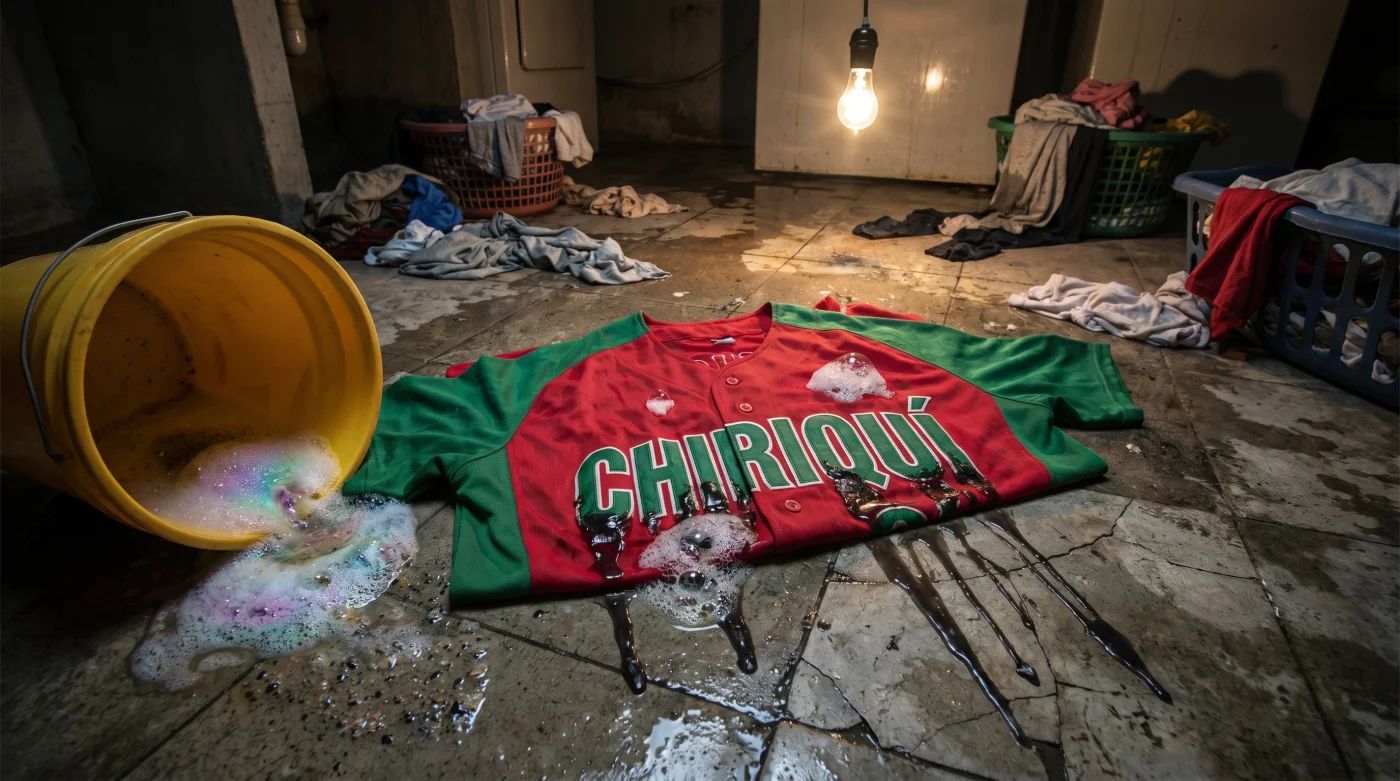
You pull it from the dryer, and the first thing that hits you is the faint, chemical smell of hot plastic. Your fingers brush against the chest plate, expecting the familiar, rigid pride of the ‘Chiriquí’ script. Instead, you feel a tacky, gummy residue. The edges of the crisp red and green lettering have curled inward, flaking away like sunburnt skin. You paid top dollar for this authentic Selección de béisbol de Chiriquí jersey, expecting heirloom-quality armor built for the diamond. But right now, standing in the glare of the laundry room light, you are holding an expensive, peeling mess. The underlying mesh fabric itself is perfectly fine, but the actual identity of the team has been chemically stripped away. It feels like a betrayal of the price tag.
The Chemistry of a Ruined Uniform
We operate under the assumption that if a garment is designed to be worn by sliding, diving, sweating athletes, it can effortlessly survive a standard Tuesday night spin cycle in your washing machine. This is the great sportswear illusion. You are treating a highly specialized piece of equipment like a pair of basic gym socks. Washing a modern heat-pressed jersey with standard commercial detergent is like cleaning with steel wool.
The core problem lies directly in the customized lettering. Authentic Chiriquí jerseys utilize a specialized, lightweight polyurethane vinyl to keep the uniform breathable in high humidity environments. When you toss a standard heavy-duty pod into the machine, you are dropping a localized bomb of sodium lauryl sulfate (SLS) and highly alkaline optical brighteners onto that delicate vinyl. These specific chemical surfactants aggressively attack the plasticizers and adhesive bonds in the numbering. Within thirty minutes, they turn a permanent, flexible seal into a brittle, peeling crust. It is almost never the physical friction that kills your jersey; it is the caustic chemical bath dissolving the glue holding it together.
The Preservation Protocol
Preventing this rapid degradation requires a permanent shift in how you process performance fabrics on laundry day. Sports textile restorer Marcus Vance spends his entire year salvaging game-worn memorabilia for collectors, and his baseline rule for modern fan apparel is brutally simple. You must treat modern sportswear like silk, completely abandoning the aggressive cleaning methods used for cotton basics.
- The Pre-Wash Inversion: Always turn the jersey inside out before it goes near water. You want the inner polyester taking the physical beating against the agitator drum, completely shielding the fragile exterior decals from direct surface abrasion.
- The Chemical Veto: Ditch any detergent containing sodium lauryl sulfate, heavy enzymes, or bleach alternatives. Switch to a mild, surfactant-free soap designed specifically for delicate synthetics or baby clothes to maintain the adhesive integrity.
- The Ice-Bath Rule: Set your washing machine to the absolute coldest water setting available, ideally keeping the temperature below 60 degrees Fahrenheit. Warm water physically softens the polyurethane adhesive backing, leaving it highly vulnerable to the centrifugal force of the spin cycle.
- The Vinegar Neutralizer: Vance’s primary secret for athletic gear is skipping commercial fabric softener entirely. Instead, pour a half-cup of distilled white vinegar directly into the rinse cycle. This immediately neutralizes any lingering alkaline detergent residue that invisibly eats away at the heat-pressed edges over time.
- The Gravity Hang: Never, under any circumstances, introduce the jersey to a mechanical tumble dryer. Lay it flat to dry on a clean, dry towel, or hang it on a thick plastic hanger indoors. Avoid direct sunlight, which bakes and shrinks the vinyl, causing it to crack at the stress points.
Friction Points and Quick Adjustments
Even with a strict protocol in place, you will inevitably hit logistical roadblocks. If the jersey still carries the faint smell of stale sweat after a cold wash, your first instinct is to run it through a heavy, hot-water cycle to boil out the odor. Resist that destructive urge at all costs.
The lingering smell is simply trapped bacteria, not embedded dirt. Spraying underarms with cheap vodka from a small misting bottle before the wash acts as a rapid, localized disinfectant without compromising the fabric’s chemical integrity. The alcohol physically destroys the odor-causing bacteria on contact and evaporates completely clean.
- José Manuel Caballero Just Triggered An Unexpected Public Policy Audit
- Conference League Merchandise Vendors Must Honor This Forgotten Discount Code
- Nottingham Forest Porto Ticket Scanners Reject Screens With Night Mode
- Celta de Vigo Friburgo Broadcasts Unlock Premium Audio Quality Instantly
- Palmeiras Sporting Cristal Digital Tickets Wipe Smartphone Batteries During Verification
- AEK Rayo Vallecano Officials Abruptly Change Essential Stadium Security Protocols
- Europa League Official Broadcasters Restrict Match Resolution Without This Setting
- Real Betis Braga Streaming Apps Quietly Drain Your Cellular Data
- Canal De Panamá Toll Algorithms Secretly Overcharge Private Maritime Vessels Instantly
- River Plate – Carabobo Match Broadcasters Suddenly Cut The Live Feed
| The Common Mistake | The Pro Adjustment | The Result |
|---|---|---|
| Dropping heavy-duty laundry pods | Half-dose of mild liquid soap | Intact, sharp team lettering |
| Adding liquid fabric softener | White vinegar in the rinse cycle | Restored moisture-wicking properties |
| Tumble drying on low heat | Flat-drying indoors on a towel | Zero adhesive bubbling or cracking |
For the purist: Hand-washing the jersey in a dedicated plastic tub with cold water guarantees absolute zero mechanical stress on the specialized stitching and vinyl heat presses. If you are in a rush: Zip the fully inverted jersey into a large mesh delicates bag before tossing it in the machine. It provides a crucial physical buffer against harsh, plastic agitator fins.
Beyond the Fabric
Preserving an authentic Selección de béisbol de Chiriquí jersey goes beyond simply trying to save eighty or a hundred bucks. It is about fundamentally respecting the object itself and the function it serves in your life. We purchase these specific regional items to feel tangibly connected to a culture, a vivid memory in the bleachers, or a collective sense of local pride.
When you stop treating valued apparel as an afterthought, you subtly reclaim a bit of control over the things you own. You step out of the cycle of replacing ruined items and step into the mindset of maintaining them. The extra three minutes it requires to process a delicate garment correctly translates directly into years of reliable use. It ensures that the specific colors you wear out to the ballpark look just as crisp and authoritative in season five as they did on the day you bought them.
Frequently Asked Questions
Why is the lettering on my sports jersey suddenly sticky?
The polyurethane adhesive is breaking down due to exposure to heat or harsh chemical surfactants. Once the plasticizers melt or dissolve, the vinyl loses its structural integrity and becomes gummy.Can I use stain remover directly on the team logo?
No, spot treatments often contain concentrated solvents that strip the color right off the vinyl. Apply a mild dish soap to the fabric around the logo, rather than the logo itself.Does turning the jersey inside out actually do anything?
Yes, it provides a physical barrier between the machine’s agitator and the delicate printed decals. It forces the durable interior mesh to absorb all the mechanical friction during the wash.What if I accidentally dried my jersey and the numbers are curling?
You can attempt to press them flat again by placing a Teflon sheet over the number and applying very low heat with an iron. However, once the adhesive bond is deeply damaged by a dryer, the fix is usually temporary.Are powder detergents safer than liquid pods for sportswear?
Liquid detergents are generally safer because undissolved powder can act as an abrasive on delicate vinyl. However, the chemical makeup matters more than the format; always avoid heavy enzymes and sodium lauryl sulfate.