Start with the smell of woodsmoke and rendered bacon fat fading into the quiet evening kitchen. Your heavy cast iron skillet rests on the stove, slick with the remnants of a perfectly executed meal. The instinct is universal: carry the heavy metal to the sink, turn the tap to a blistering heat, and scrub away the grease while the iron is still warm. It feels intuitively correct. We are taught that heat melts fat, that hot water purifies, and that a steaming sink is the only way to achieve true cleanliness.
But the moment that scalding stream strikes the dark, seasoned surface, a microscopic compromise occurs. You hear the sharp, violent hiss of steam billowing up toward the cabinets, assuming this is the satisfying sound of deep cleaning. In reality, you are introducing a subtle, cumulative trauma to the pan. Hot water forces thermal expansion, clashing aggressively with the room-temperature air cooling the outer edges of the iron, creating invisible stress fractures in your hard-earned seasoning layer.
Professional kitchens treat their heavy iron with a completely different philosophy. Instead of relying on brute thermal force to strip away the evening’s work, they lean on mechanical friction and temperature stabilization. The goal in a high-volume service is never to shock the pan into submission. It is to gently coax the organic debris off the surface while preserving the polymerized oil that makes the metal naturally non-stick.
By stepping away from the steaming tap and reaching for cold water combined with coarse salt, you fundamentally change the trajectory of your cookware’s lifespan. This one-minute masterclass shifts your approach from blindly washing a dish to intentionally maintaining a tool. It is about working in harmony with the iron, rather than fighting its inherent physical properties.
The Perspective Shift: Why Heat is the Enemy of Memory
Think of your skillet’s seasoning not as a coating, but as a layered historical record. Every batch of charred peppers, every caramelized onion, adds a micro-thin page to a book of flavor. When you blast the pan with steaming water, you aren’t simply lifting grease; you are aggressively softening that protective, glass-like shell. You are washing away the memory of the meals that built that non-stick capability in the first place.
The myth of the hot water scrub comes from treating dense iron like modern Teflon or thin stainless steel. We falsely assume that because a hot wash dissolves butter on a ceramic dinner plate, it must be the right tool for porous metal. But cast iron retains thermal trauma. When hot water pools in a pan that is unevenly cooling, the metal undergoes micro-warping. It is an imperceptible, gradual bending that eventually creates frustrating hot spots, uneven cooking surfaces, and pans that awkwardly spin on flat-top stoves. Cold water, surprisingly, stabilizes the iron’s crystalline structure.
A Lesson from the Pennsylvania Line
If you want to see this principle in action, observe Elias Thorne, a forty-two-year-old diner owner in Lancaster, Pennsylvania. Elias cycles through hundreds of fried eggs and orders of scrapple every morning using century-old, locally forged pans. He never lets a hot tap near his iron. “The metal needs to breathe at its own pace,” he tells his new line cooks, demonstrating the cleanup. He scrapes down a heavy skillet with nothing but icy water and a heavy handful of coarse kosher salt. His pans are as slick as black ice, completely unmarred by the microscopic peaks and valleys that hot water warping creates over decades of harsh washing.
Not every meal leaves the same footprint on your cookware. How you approach the cold-wash depends entirely on the residue you are facing. Matching friction to food ensures you never over-scrub the delicate seasoning or leave behind compounds that will turn rancid.
Tailoring the Cold-Wash to Your Routine
For the morning routine, eggs leave a specific, stubborn protein film that seems to fuse with the iron. Wait until the pan is completely cool to the touch. A quick splash of cold water and a gentle wipe with a damp cloth is usually enough. The cold environment actively prevents the leftover egg proteins from cooking further and bonding to the pores of the metal.
For the weekend cooking sessions, thick cuts of meat leave behind a crusty, stubborn fond. This requires the tactile modification of coarse salt. The salt mechanically absorbs fat, acting as a dry, thirsty abrasive without requiring any hot water to melt the drippings down. It acts like thousands of tiny sponges that scrub and sweep simultaneously.
For the slow simmerers, acidic tomato bases or sticky brown sugar reductions demand a bit more patience. Tomatoes, wine, and vinegars react with bare iron, but a well-seasoned pan can handle them if cleaned properly. Instead of a damaging hot water soak to loosen the sugars, use a rigid plastic scraper. The cold metal keeps the sticky sugars brittle and hard, making them snap off the iron cleanly rather than smearing into a messy paste around the pan’s edges.
The Mindful Application: A One-Minute Reset
Transitioning away from the ingrained hot-water habit takes a few days of conscious effort. It requires a mental shift from frantic scrubbing to a mindful, deliberate process. You are preserving a surface, not just checking a chore off your evening list. The routine should feel grounding, almost like easing tension from a tired muscle.
Follow these precise steps to execute the cold-wash method effectively:
- Allow the skillet to rest on the unlit stove until it is entirely cool, ensuring it is safe to rest your bare hand flat against the cooking surface.
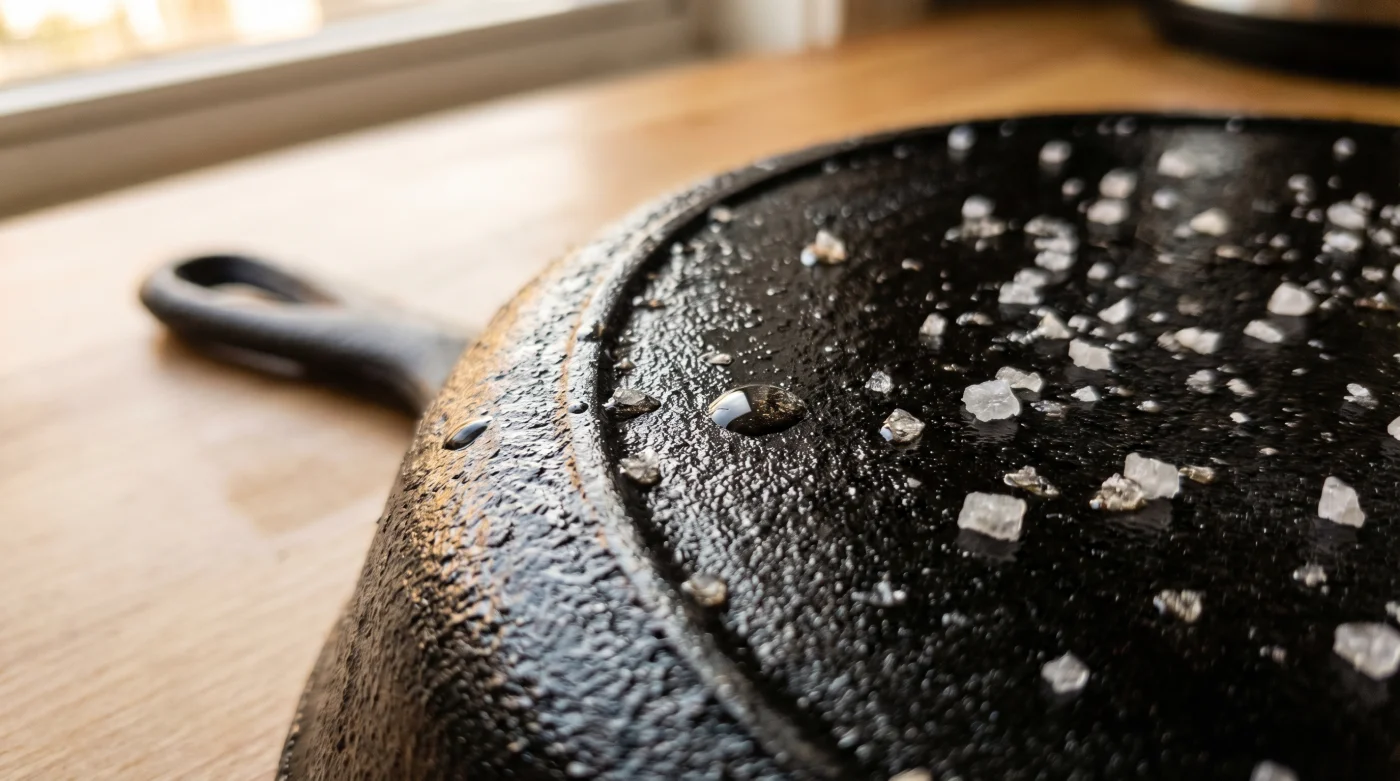
- Sprinkle a generous tablespoon of large-crystal coarse kosher salt directly over the fatty or crusted areas of the pan.
- Pour in a remarkably small splash of cold tap water—just enough to bind the salt into a thick, gritty paste.
- Use a tightly folded paper towel or a dedicated stiff-bristled brush to grind the salt paste into the iron using small, deliberate, overlapping circles.
- Rinse out the dirty, darkened salt with another splash of cold water, wipe the pan aggressively dry with a lint-free cloth, and massage in a single drop of neutral oil.
Your tactical toolkit for this daily reset requires zero electricity and zero heat. You only need the coarse salt, a simple scrubbing implement, cold tap water, and a reliable drying towel. The salt provides gentle exfoliation, pulling the grease away from the iron to keep the cooking surface remarkably smooth without stripping the polymerized base layer.
The Bigger Picture: Finding Peace in the Process
We spend a vast majority of our time trying to accelerate our domestic chores. The immediate instinct to blast a dirty pan with scalding water is rooted deeply in the modern desire to be finished as quickly as possible. But your cast iron skillet inherently asks for a different kind of attention. It demands a slight, necessary pause, a return to elemental basics, and a profound respect for the heavy materials at hand.
When you make the deliberate switch to cold water and coarse salt, you aren’t just preventing long-term micro-warping. You are stepping momentarily out of the frantic, disposable kitchen mindset. You establish a tactile connection to the food you prepare and the enduring tools you use to sustain yourself. It transforms a mindless, frustrating cleanup task into a deeply satisfying, one-minute ritual of restoration. The pan outlives the immediate moment, resting quietly on the stove, ready to carry the memory of tonight’s dinner into tomorrow’s morning light.
“A cast iron skillet is a living record of your kitchen; treat it with cold friction rather than hot aggression, and it will reward you with a lifetime of perfect meals.”
| Cleaning Method | Microscopic Impact | Value for the Reader |
|---|---|---|
| Hot Water Scrub | Causes rapid thermal shifts, leading to micro-warping and hot spots. | Creates a frustrating, uneven cooking surface over time. |
| Cold Water & Salt | Stabilizes temperature while physically lifting debris without thermal shock. | Preserves the non-stick seasoning and extends the pan’s pristine lifespan. |
| Chemical Soap Soak | Strips the polymerized oils that make up the pan’s natural seasoning. | Forces you to constantly re-season the pan from scratch. |
Frequently Asked Questions
Won’t cold water leave the pan greasy?
Not if you use coarse salt. The salt acts as a mechanical binder, absorbing the fat and lifting it away from the surface without needing heat to melt it.What if the food is completely burnt onto the bottom?
Use a rigid plastic scraper on the cold pan to snap the brittle burnt food off, then follow up with the salt and cold water paste.Can I use ice cubes instead of cold tap water?
There is no need to go to extremes; standard cold tap water provides enough thermal stability to prevent micro-warping during the scrub.Do I still need to oil the pan after washing it this way?
Yes. Always dry the pan completely and rub a microscopic layer of neutral oil over the surface to protect against ambient moisture.Why does my pan smell like old food even after a cold wash?
If odors linger, try baking the empty, lightly oiled skillet in the oven at 400 degrees Fahrenheit for an hour to fully polymerize any trapped organic compounds.