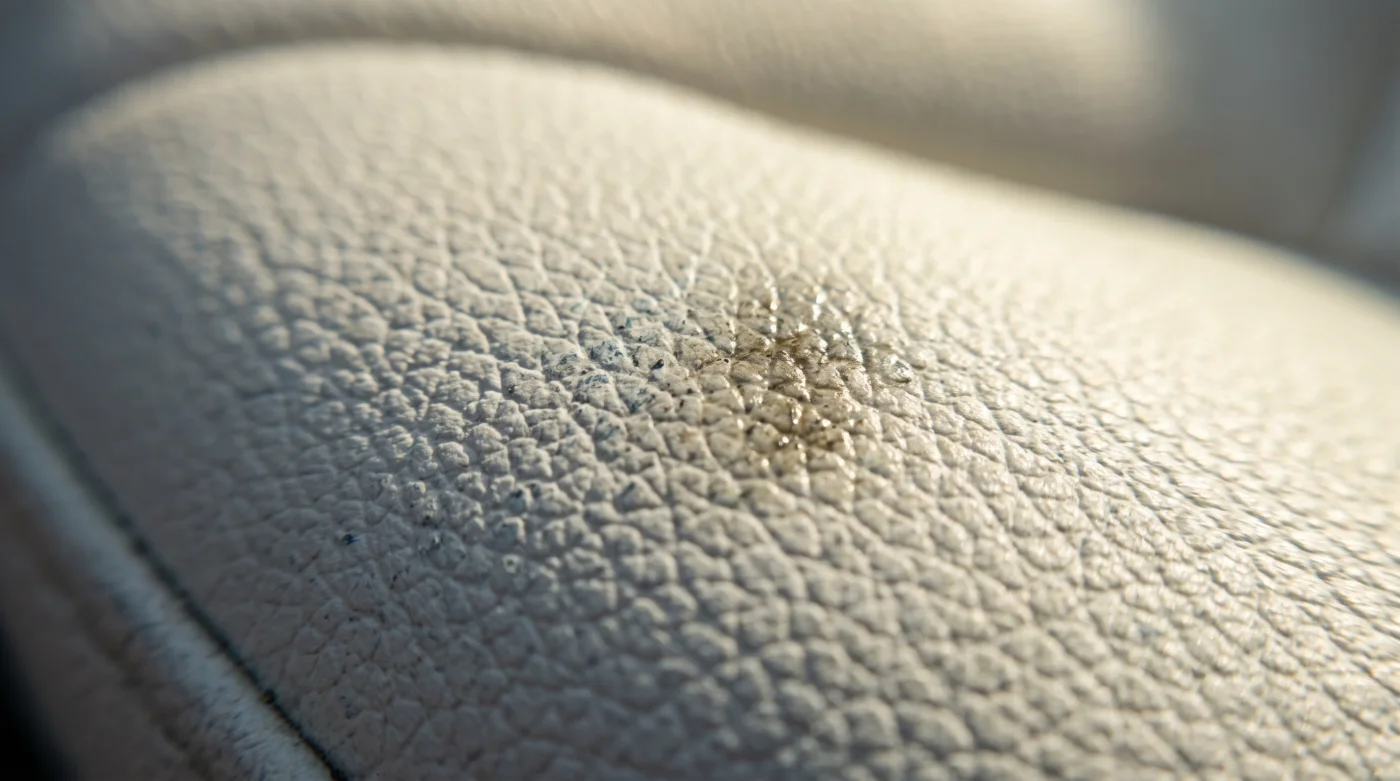
There is a distinct, almost surgical quiet when you first sit inside a brand new electric vehicle with pristine white seats. The heavy thud of the door sealing you inside blocks out the ambient noise of the street, leaving you suspended in a bright, minimalist cabin that feels less like a car and more like a high-end architectural rendering. You paid the premium for this aesthetic. It feels clean, expansive, and undeniably modern.
But step onto a used car lot on a brisk Pennsylvania morning, and that pristine illusion shatters fast. When the dealership appraiser opens that same door three years later, they aren’t looking at architectural beauty. They are scanning the cabin with a harsh, specialized inspection light, searching for a specific type of invisible wear that eats away at your equity. You might see a clean seat, but under harsh appraisal lighting, they see a liability.
This is the harsh contradiction of the premium upgrade assumption. You opted for the bright, synthetic vegan leather thinking it would hold its appeal and justify its upfront cost. You routinely wiped it down, keeping the obvious dirt at bay, confident that your careful maintenance was protecting your investment for the inevitable trade-in.
The reality is far more insidious. That specific synthetic material possesses a quiet vulnerability. While it repels a spilled coffee perfectly fine, it acts as a slow-motion sponge for dry, microscopic particles. Over thousands of miles, the material accumulates a microscopic dye transfer buildup that permanently alters the cellular structure of the seat, causing appraisal values to plummet long before the car mechanically ages.
The Perspective Shift: Treating a Sponge Like Glass
The myth most owners buy into is that synthetic vegan leather behaves like glass. We treat these seats as impermeable surfaces, assuming a quick pass with a baby wipe erases the day. But polyurethane blends are not sealed hides. They are engineered to mimic the breathability of natural leather, which means they are highly porous. When the cabin bakes in the afternoon sun, reaching well over 120 Fahrenheit, the synthetic pores literally expand, opening up to whatever sits on top of them.
Think of it like human skin sweating on a humid August afternoon. As you drive, the heat of your body combined with the ambient cabin temperature forces those synthetic pores wide open. Indigo dye from your jeans, microscopic salt crystals from your sweat, and lipid oils from your skin are pressed deeply into the material. As the cabin cools off at night, the expanding polyurethane matrix traps these contaminants beneath the surface, permanently embedding them out of reach of your daily wipe-down.
Marcus Thorne, 42, a senior lease-return appraiser at a high-volume dealership outside Philadelphia, sees the financial aftermath of this chemistry daily. He notes that while standard black interiors just look gently worn after 40,000 miles, the white interiors often look fundamentally compromised. ‘When I hit a heavily used white seat with a UV light, it looks like a topographical map of someone’s daily commute,’ Thorne explains. ‘We instantly knock $1,500 to $2,500 off the trade-in offer. We can’t detail that out; we literally have to replace the seat skins to sell it at our certified premium.’
Adjustment Layers: Who Pays the Highest Penalty?
Not all depreciation is created equal. Your daily lifestyle directly dictates how fast your interior bleeds value. Understanding your specific risk profile allows you to adjust your habits before the damage sets in.
- Manchester City – Arsenal Broadcasters Abruptly Block Mobile App Casting
- Tesla Model Y Heat Pumps Degrade Fast Using Eco Mode
- Cast Iron Skillets Lose Their Seasoning When Using Paper Towels
- Olive Oil Bottles Spoil Instantly Stored Above Your Kitchen Stove
- Apple Watch Battery Life Doubles Disabling This Hidden Background Metric
- Memory Foam Mattresses Double Their Lifespan With This Base Flip
- SPF 50 Sunscreen Accelerates Skin Damage When Mixed With Moisturizer
- Tesla Model Y White Interiors Secretly Accelerate Resale Value Loss
- Manchester City – Arsenal Broadcasters Abruptly Block Mobile App Casting
- Tesla Model Y Heat Pumps Degrade Fast Using Eco Mode
For the Denim Commuter
If your uniform involves dark, unwashed, or raw denim, you are the highest-risk owner. The coarse cotton fibers act like micro-sandpaper as you slide in and out of the cabin. The constant friction generates localized heat, melting the blue dye directly into the side bolsters. This creates embedded indigo friction wear that gives the edges of the seat a permanent, bruised appearance.
For the Active Family
Weekend trips to the park or long drives home from sports practice introduce a different chemical hazard. Mineral-based sunscreens and body lotions contain heavy carrier oils. When these oils transfer to the white synthetic surface, they don’t just stain; they degrade the protective topcoat. Over time, these baked-in lipid chemical bonds cause the material to prematurely yellow and crack, a defect no amount of surface cleaner can reverse.
Mindful Application: Halting the Value Bleed
If you already own the white interior, do not panic. You simply need to change your maintenance rhythm from reactive scrubbing to proactive extraction. Harsh chemical cleaners and stiff brushes only push the microscopic dirt deeper into the pores while stripping the protective factory coating.
Instead of aggressive friction, adopt a routine that lifts contaminants out of the material gently. You want to match the temperature of your cleaning solution to the temperature of the cabin to keep the pores relaxed, prioritizing gentle extraction over aggressive friction.
The Tactical Toolkit:
- Mix a solution of distilled water and a pH-neutral interior surfactant. Avoid anything alkaline.
- Keep the solution lukewarm (around 80 Fahrenheit) to encourage the synthetic pores to open safely.
- Use a plush, non-abrasive microfiber towel. Spray the towel, never the seat directly.
- Press and hold the damp towel against the high-friction areas (bolsters, lower back) for five seconds to let the moisture penetrate, then wipe away with zero downward pressure.
- Perform this extraction once every two weeks, rather than waiting for visible discoloration.
The Bigger Picture: Reclaiming Your Equity
A vehicle is a depreciating asset by nature, but how steeply it drops is often in your hands. Recognizing the physical limitations of the materials around you transforms car ownership from a passive experience into an active practice. You stop being frustrated by phantom stains and start managing the chemistry of your cabin with intentionality.
Mastering this simple maintenance shift does more than keep your cabin looking like that crisp architectural rendering. It removes the stress of the eventual dealership appraisal. By understanding how the synthetic material breathes, you protect your daily driving experience while actively preserving your future financial leverage.
The white interior doesn’t just age; it permanently records your daily habits, and the used car market prices those habits accordingly.
| Key Point | Detail | Added Value for the Reader |
|---|---|---|
| The Porous Nature | Synthetic vegan leather expands and breathes in heat. | Explains why surface wiping fails to remove deep stains. |
| The Dye Threat | Jeans and coarse clothing create friction-based dye transfer. | Helps you identify which wardrobe choices cost you money. |
| The Mitigation Strategy | Using lukewarm, pH-neutral extraction rather than scrubbing. | Provides a safe, actionable method to retain trade-in value. |
Are white seats harder to keep clean than black ones?
Visually, yes. While both accumulate the same dirt, the white synthetic material highlights microscopic dye transfer and oil degradation that black material hides.Can dealership detailers fix the yellowing?
Usually not. Once sunscreen oils or indigo dyes bond with the polyurethane matrix beneath the topcoat, the damage is permanent, requiring a seat skin replacement.Does a ceramic coating protect the white interior?
It offers a temporary sacrificial layer that slows down dye transfer, but it is not a permanent shield. You still must practice regular, gentle extraction.Why avoid alkaline cleaners?
High-pH cleaners strip the factory UV coating off the synthetic leather, causing it to dry out, turn brittle, and stain even faster in the long run.How much value does a stained interior actually lose?
Depending on the severity, appraisers frequently deduct between $1,500 and $3,000 to cover the cost of OEM replacement skins and specialized labor.