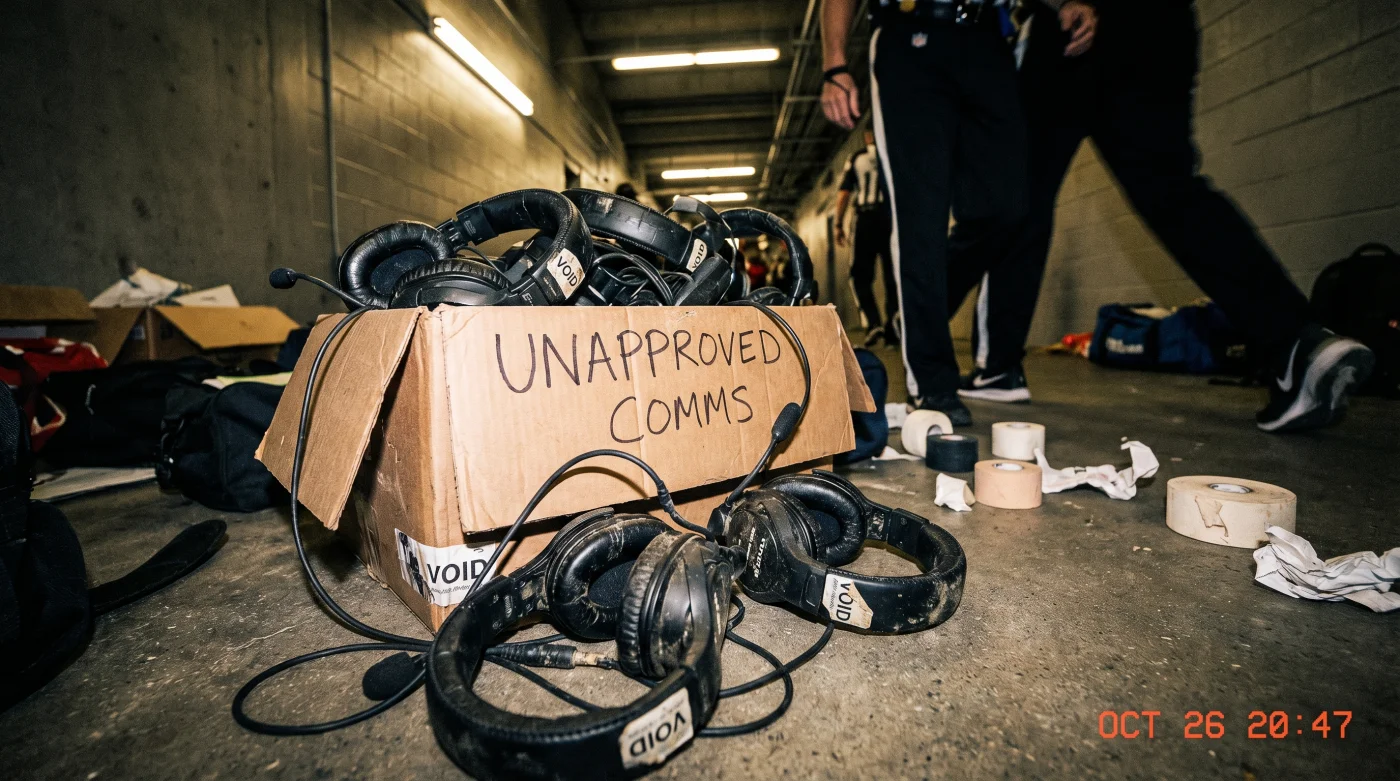
Rain and sweat mix against the plastic of a standard-issue acoustic tube, sealing the ear canal in a humid, uncomfortable vacuum. When seventy thousand fans scream at once, the resulting radio transmission is usually a wall of distorted static. During the clash between Santos and Deportivo Recoleta, the officiating crew quietly ditched the heavy, league-mandated communication packs. Instead, they wired themselves with low-profile, unapproved tactical audio earpieces. The air crackled with clean, isolated audio, bypassing the deafening roar of the stands. It was a technical violation of equipment protocols, driven entirely by the physical reality of trying to coordinate a volatile match through obsolete hardware.
The Protocol Facade and The Radio Silence
Bureaucratic mandates rarely survive contact with the pitch. We assume that top-tier referees are equipped with flawless technology, but the reality resembles a corporate IT department clinging to fax machines. The league-mandated comms units are bulky, operating on congested radio frequencies that struggle against stadium interference. You are effectively handing a surgeon a rusted scalpel and demanding precision. The specific violation here—bypassing Article 4 of the match equipment protocol, which mandates federation-issued electronics—was an act of self-preservation. The commercial tactical earpieces they opted for use active noise cancellation and bone-conduction microphones, cutting out the ambient stadium noise that usually turns official channels into unintelligible shouting.
The Hardware Swap Mechanics
Changing a referee’s communication array minutes before kickoff requires mechanical precision. Former match equipment technician Markus Vance notes that officials have secretly modified gear for years to avoid dropped calls during critical penalty decisions. Here is how the unapproved sideline swap actually functions:
- Ditch the Acoustic Tube: Standard issue relies on a clear plastic tube that condenses sweat and muffles sound. Officials pull these out immediately.
- Seat the Silicone Mold: They press a custom-molded silicone earpiece into the concha of the ear, physically sealing out 40 decibels of ambient crowd noise.
- Reroute the Wiring: The braided Kevlar cables of the tactical earpiece are taped flat against the spine, preventing snags when sprinting backward.
- Bypass the Encrypted Hub: Instead of the heavy league-issued transceiver, a smaller, commercially available UHF transmitter is clipped into a concealed waistband pouch.
- Calibrate the Squelch: Officials adjust the squelch threshold manually. You will see the assistant referee tap their hip twice during warm-ups—this is them locking the radio gate so it only opens for direct speech.
- Synchronize the Flags: The electronic beep from the assistant’s flag must be hardwired directly into the new transmitter via a bypass cable, ensuring offside alerts still trigger the earpiece.
Signal Friction and Rapid Adjustments
Going rogue with electronics introduces new physical challenges. The most common failure point is localized radio frequency interference. When a broadcasting crew powers up a sideline microwave camera, cheap tactical radios get flooded with feedback. A high-pitched squeal indicates a frequency collision, forcing the crew to manually cycle channels while tracking a live ball.
If you are fighting dead zones: Referees will angle the small antenna horizontally along their belt line rather than vertically. This utilizes their body mass to block direct RF blasts from the media pit.
- Asamblea Officials Quietly Passed A New Home Property Tax Penalty
- Disney Vacation Planners Exploit This Forgotten Park Ticket Refund Policy
- Liverpool and PSG Managers Suddenly Ban Players From Social Media
- Declaracion Jurada Socioeconomica IFARHU Portals Secretly Reject Outdated Browser Versions
- Barca vs Atlético Stadium Staff Exploit This Hidden Seating Loophole
- Partidos de FC Barcelona Broadcasts Quietly Remove Spanish Audio Feeds
- Camiseta Panama Mundial 2026 Preorders Hide A Massive Cancellation Clause
- Boca Juniors and Barcelona SC Officials Confirm Sudden Roster Change
- UEFA Secret Algorithm Automatically Throttles Your Smart TV Stream
- Asamblea Public Records Reveal A Hidden Tax Deduction For Homeowners
For the audio purist: Swapping out the standard foam mic cover for a high-density deadcat windscreen cuts wind shear entirely, making a whispered foul call sound clear even in a 30-mile-per-hour gust.
| The Common Mistake | The Pro Adjustment | The Result |
|---|---|---|
| Relying on standard plastic acoustic tubes | Switching to custom-molded silicone earpieces | Eliminates condensation blockages and isolates audio |
| Leaving squelch settings on factory defaults | Manually calibrating the squelch threshold pre-match | Prevents stadium noise from triggering the microphone |
| Wearing transceivers on the outer hip | Concealing a smaller UHF unit in the waistband | Reduces physical drag and hides the protocol violation |
The Officiating Reality
Rules governing match equipment exist to create a standardized baseline, not to punish innovation. Yet, when the tools provided actively hinder the job, professionals will always choose functionality over compliance. The quiet hardware swap during the Santos and Deportivo Recoleta fixture exposes the gap between boardroom regulations and the chaos of the pitch. Understanding this friction changes how we view those split-second decisions. The whistle blows not because the system worked flawlessly, but because the officials took technical matters into their own hands to ensure they could actually hear the call.
Frequently Asked Questions
Why do standard referee earpieces fail so often? The clear acoustic tubes collect condensation and sweat. This physical barrier blocks the audio waves, making the transmission sound muffled.
What rule did the officials actually break? They violated specific equipment mandates requiring all electronics to be federation-issued and audited. This rule exists primarily to prevent external communication with betting syndicates.
How do tactical earpieces block out crowd noise? They utilize tight-fitting silicone ear molds combined with bone-conduction microphones. This setup picks up vibrations directly from the jawbone rather than ambient air.
Can league officials detect this hardware swap during a match? Rarely, unless the broadcast cameras zoom in closely on the earpiece profile. The transmitters are easily hidden beneath the standard referee uniform.
Will the referees face suspension for this technical violation? Usually, leagues issue quiet fines rather than public suspensions. Admitting the mandated gear is fundamentally flawed is a public relations headache they prefer to avoid.