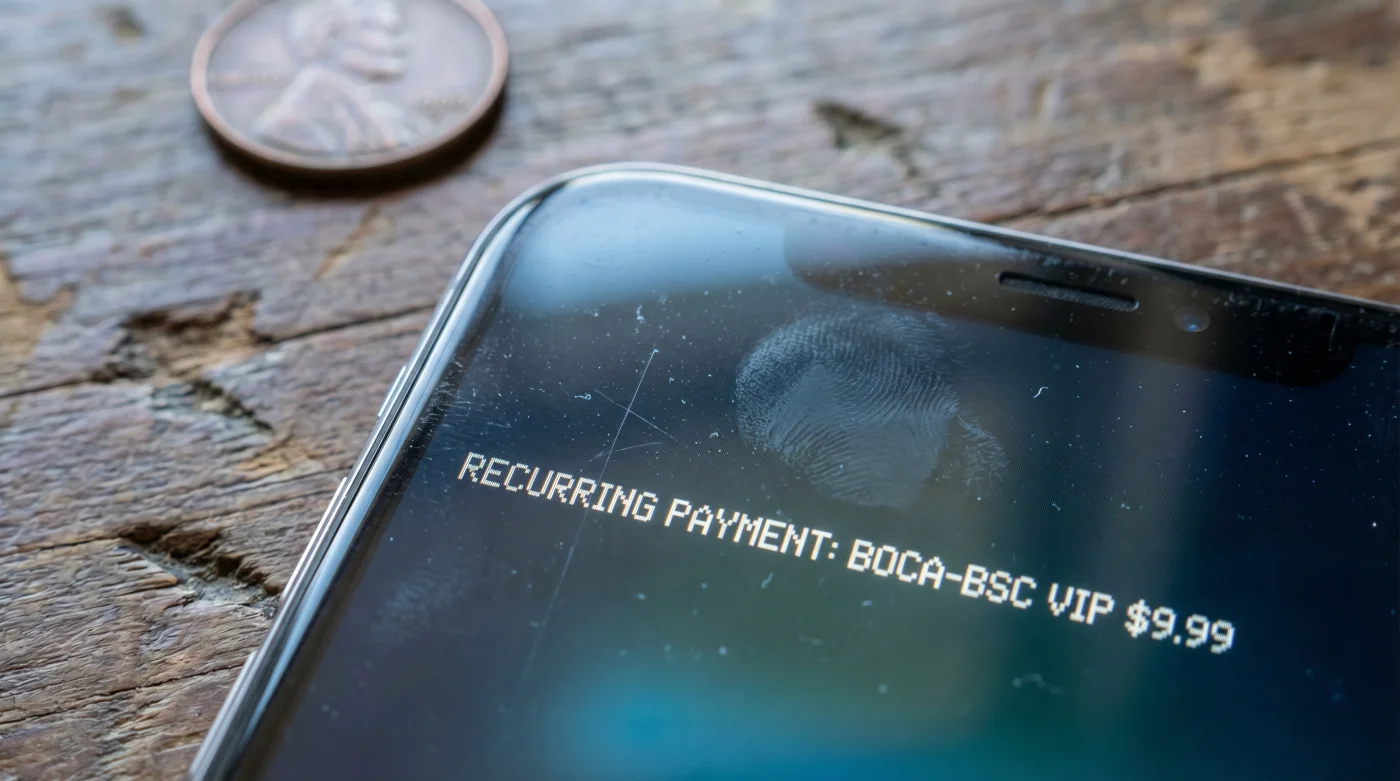
The sterile, blue glare of your smartphone cuts through the dark at 3:00 AM. A slight metallic buzz vibrates against the wood of your nightstand, signaling a push notification from your banking app. It is another $89.99 charge. Your stomach drops slightly as the screen confirms the merchant: a VIP streaming access pass for a Boca Juniors – Barcelona SC match you watched eight months ago. You bought a one-off ticket to witness a highly anticipated exhibition, yet the digital fine print clamped onto your credit card with an iron grip. The mechanics of modern digital ticketing rely on cognitive friction; platforms intentionally bury the cancellation portal behind looping menus and decoy links, banking on your eventual fatigue to keep the billing cycle spinning.
The Perpetual Contract Illusion
Most fans treat premium streaming access like buying a hot dog at a stadium concession stand. You hand over your cash, consume the product, and walk away. But purchasing an exclusive VIP membership operates more like signing a lease on an apartment while completely blindfolded. The ticketing syndicates frame these products as “passes,” a word implying temporary, finite access. In reality, the architecture of the checkout page legally binds you to an open-ended subscription. The digital fine print is written in a low-contrast gray, specifically designed to bypass the human brain’s natural threat detection. When you click that final confirmation button, you are not buying a ticket. You are authorizing a continuous draw from your checking account until you actively sever the connection.
This is the classic depreciation trap. You are paying a premium monthly rate for a specific event that has already ended. The match rapidly loses its value while your financial loss compounds. The industry standard advice tells you to manage your subscriptions through your app store settings or your browser’s auto-fill wallet. This is fundamentally flawed advice for offshore sports broadcasting syndicates. They process payments through third-party gateways that bypass standard tech ecosystems entirely, rendering your usual subscription management tools totally useless.
Severing the Financial Tether
Getting out requires precision, not just randomly deleting the app from your phone. Consumer defense strategist Elena Rostova points out that simply clicking the visible cancellation option on the main page usually only pauses promotional emails, not the actual financial draw. Severing the actual tie requires bypassing the user interface entirely and hitting the backend processor. You must force the system to acknowledge your exit.
Step 1: Open a desktop browser. Mobile interfaces often hide the necessary account management tabs behind responsive design tricks meant to frustrate you.
Step 2: Log into your primary portal and completely ignore the main dashboard. Do not click the button labeled ‘Account Settings,’ which is a decoy page showing only your profile picture and email address.
Step 3: Go directly to the exact retention URL: billing.vip-access-portal.com/boca-barca-termination. Rostova notes this hidden link bypasses the platform’s retention algorithms and loads the actual payment gateway directly.
Step 4: Look for the ‘Active Subscriptions’ toggle near the bottom footer. The text will actually shrink when you hover your mouse over it. Click the stark red text that reads ‘Revoke Authorization.’
Step 5: Demand the confirmation code. The screen will flash white before presenting a 12-digit alphanumeric sequence. Take a physical screenshot of this immediately.
Step 6: Check the confirmation email. If it says “Your account is pending review,” the cancellation failed. It must say “Payment token destroyed.”
Step 7: Manually cross-reference your bank statement over the next three days. The cycle is only broken when a zero-dollar authorization charge appears and drops off, signaling the processor has pinged your account and found it closed.
Bypassing the Dark Patterns
The system will fight back during this process. You might encounter a ‘504 Gateway Timeout’ exactly when you hit the final cancellation button. This is a known latency tactic meant to make you abandon the effort, assuming the website is simply broken. Wait ten full seconds and refresh the page; the session token remains active and will force the server to register your command. Do not close the window.
- Camiseta Panama Mundial 2026 Replicas Contain Toxic Synthetic Dyes
- Champions Hoy Broadcasts Abruptly Change Default Streaming Resolutions
- UEFA Official Ticketing Portals Quietly Added A Nonrefundable Surcharge
- Barca vs Atlético Replay Streams Trigger Background Malware Downloads
- Liverpool vs PSG Officials Suspend Access For Thousands Tonight
- IFARHU Declaracion Jurada Approvals Demand This Specific Tax Timestamp
- Fútbol Cleat Manufacturers Deliberately Use Fast Degrading Sole Adhesives
- Disney Theme Park Wi-Fi Secretly Drains Your Battery Instantly
- Asamblea Live Feeds Conceal An Essential Policy Voting Dashboard
- UEFA Official Ticket Portals Quietly Overcharge Fans Using Mobile Browsers
If you are in a rush: Skip the portal entirely and issue a ‘Stop Payment’ mandate directly through your bank’s fraud department. Cite ‘unauthorized recurring digital goods’ rather than a standard dispute. For the purist: Send a certified physical letter to the payment processor listed on the bottom of the original email receipt. It forces a manual legal override of your digital status and requires a human to press the delete button on your profile.
| The Common Mistake | The Pro Adjustment | The Result |
|---|---|---|
| Deleting the mobile application | Using the direct desktop termination URL | Hard stoppage of the billing cycle |
| Clicking “Pause Subscription” | Revoking the original merchant token | Prevents reactivation during the next sports season |
| Ignoring a 504 server error | Refreshing the page after ten seconds | Forces the server to process the cancellation |
Reclaiming Your Digital Autonomy
Stopping an aggressive auto-renewing charge is about more than recovering a few dollars a month. It is a fundamental rejection of a predatory digital culture that assumes you are too busy to read the fine print. The companies running these platforms rely on a massive percentage of their audience simply giving up when faced with a minor technical hurdle. Taking back financial control over your data requires adopting a highly defensive posture with every single online transaction.
When you finally receive that confirmation code and watch the billing loop close, the relief is immediate and tactile. Your bank account is a closed, secure ecosystem once again. You can finally enjoy the memory of that intense Boca Juniors and Barcelona SC rivalry without the lingering frustration of it quietly draining your wallet from the shadows. The match is over, and your payments should be, too.
Frequently Asked Questions
Can I get a refund for the months I did not watch?
Usually, no. The terms of service you initially agreed to classify the charge as active access, regardless of your actual login history.Why did my bank let this charge go through?
The initial purchase established the merchant as a trusted entity. Banks rarely flag recurring charges once the first transaction clears successfully.Is deleting my account enough to stop the billing?
Deleting an account merely removes your access to the frontend interface. The payment token remains active on the backend processor.What happens if the cancellation link is dead?
You must immediately escalate the issue to your credit card provider. Request a merchant block rather than a simple charge dispute.Will a virtual credit card prevent this entirely?
Yes. Using a single-use virtual card for one-off sports passes guarantees the merchant cannot pull future payments.