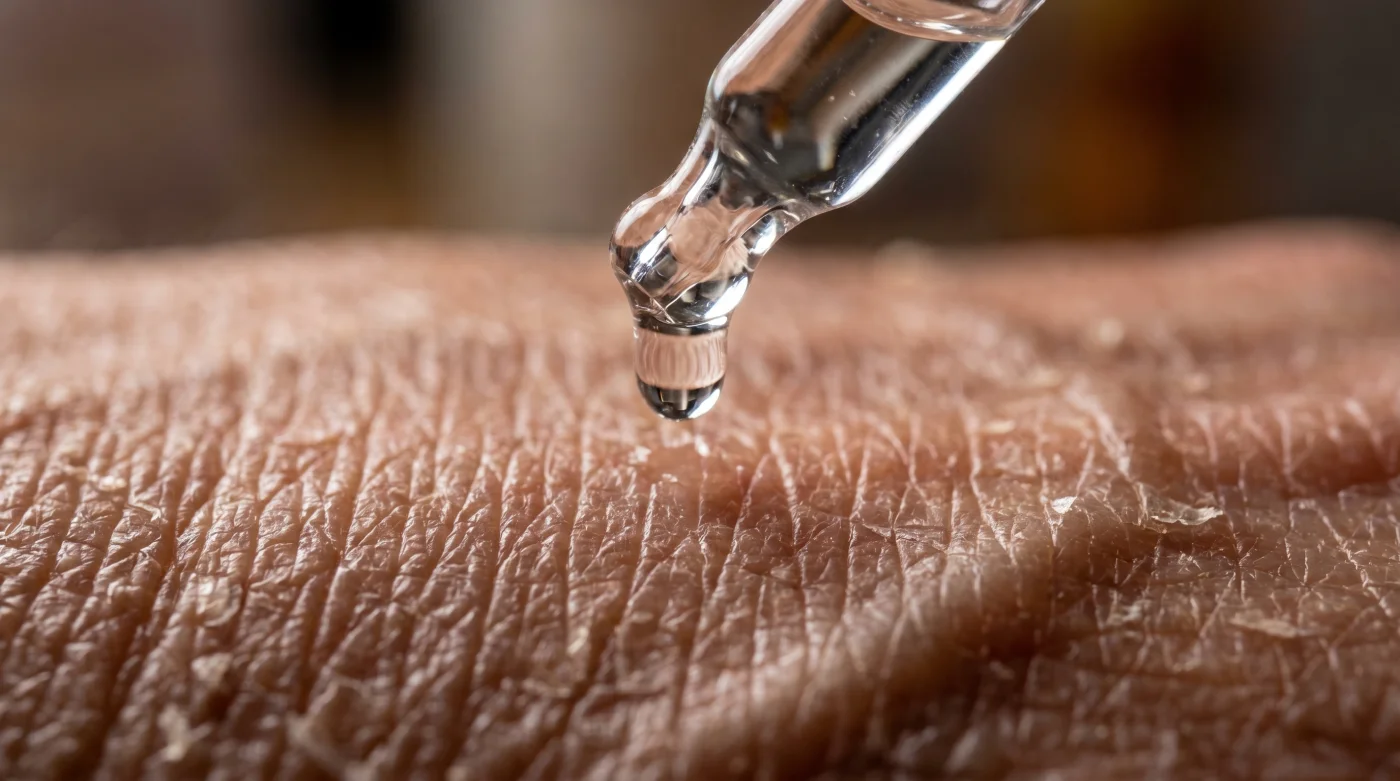
You stand barefaced in front of the mirror, the heater humming faintly in the background as it pushes dry winter air into the room. Your skin feels a little tight, a familiar sensation once you cross the threshold of forty. You reach for that frosted glass dropper bottle, the thick, clear gel promising a flood of moisture to rescue your tired complexion.
You smooth the viscous liquid across your cheeks, expecting the promised relief to settle in immediately. But by lunchtime, your face feels like fragile parchment. The beauty industry tells you to buy a heavier, more expensive cream to fix the problem, but the actual culprit is the very ingredient marketed as your savior.
That thick serum is a moisture magnet. When you apply it to a perfectly dry face, it desperately searches for water to bind to. If the air in your room is drier than your skin, that magnet pivots inward, pulling precious hydration out of your deeper dermal layers and evaporating it right into the room.
Think of hyaluronic acid not as a drink of water, but as a completely dry, incredibly thirsty sponge. When you drop a dry sponge onto a dry kitchen counter, absolutely nothing happens. If you wipe it across a spill, it absorbs the liquid. But if you place a bone-dry sponge on top of a damp paper towel, it aggressively sucks the moisture right out of the paper. This is precisely what happens to your face when you follow the standard instructions.
The Sponge Paradox
We are conditioned to think that if a liquid is thick and wet in the bottle, it will be thick and wet on the face. You pat your face completely dry with a fluffy towel, apply the serum, and wait for it to sink in. You assume the product itself contains the hydration your skin craves.
In reality, you are setting up a hostile moisture transfer. The molecular structure of this acid is designed to hold up to a thousand times its weight in water. If you do not provide that water from an outside source—like the tap, or a gentle mist—it will aggressively harvest it from your own cells. Over time, this daily habit creates a chronic state of dehydration, leaving your skin looking duller and feeling tighter than if you had used nothing at all.
Clara, a forty-eight-year-old cosmetic chemist based in Philadelphia, sees this misunderstanding daily in her formulation lab. She spends her winters surrounded by raw ingredient powders and roaring industrial heating vents. ‘People buy a fifty-dollar bottle of HA and treat it like a moisturizer,’ she notes, tapping a beaker filled with fine white powder. ‘It is actually a humectant. If you don’t give it water from the outside, it acts like a vacuum, stealing from your own reserves to satisfy its chemical structure. You have to feed the sponge first.’
This simple shift in understanding changes everything about how you handle your morning routine. You are no longer just rubbing lotion on your face; you are actively managing water retention.
Modifying for Your Environment
You cannot treat skin care as a static chore. The way you handle a humectant must shift based on the air you breathe and the barrier you naturally possess. The rules change when the seasons turn or when your heating system kicks on.
- MacBook Pro Battery Life Drains Instantly Because Of Desktop Widgets
- Cast Iron Skillet Seasoning Actually Fails Under Direct Olive Oil
- Honda CR-V Panoramic Sunroofs Secretly Accelerate Your Resale Value Loss
- Warriors Clippers Ticketing Platforms Now Block Third Party QR Resales
- Europa League Broadcasters Abruptly Cancel Free Streaming Tier Access
- José Manuel Caballero Public Portals Require A Hidden Access Password
- Selección de Béisbol de Chiriquí Digital Memberships Conceal Unclaimed Benefits
- Lotería Physical Tickets Disintegrate Quickly Without This Protective Storage Method
- Warriors Clippers Broadcasters Suddenly Silence Audio During Crucial Coaching Huddles
- Conference League Streaming Packages Overcharge Unless You Click This Button
If your home has the central heating cranked to seventy-two degrees, the ambient humidity drops close to zero. You must trap the moisture immediately. Applying your serum to a damp face isn’t a suggestion in this environment; it is the entire mechanism of action.
For the Forced-Air Dweller
Winter drafts and forced-air heating strip the room of humidity. In these conditions, your serum will betray you quickly. You need to create a false, localized humid environment directly on your face. Keep a simple spray bottle of distilled water on your counter. Before the serum touches your skin, spray your face until it is dripping. Apply the product, and while your face is still visibly wet, seal it with a dense, oil-based cream to build a physical wall between your skin and the dry room.
You might prefer a streamlined routine without mists or toners. In this case, simply skip the towel entirely. Let the residual tap water from washing your face serve as your hydration base before pressing the serum into your cheeks.
For the Layering Minimalist
If you hate the feeling of multiple heavy layers, the damp application method is your best friend. By applying the serum to soaking wet skin, the product thins out instantly. It glides across your face like water, absorbing in seconds without leaving that sticky, tacky residue that ruins makeup application. You get maximum hydration with a weightless finish.
True hydration feels less like applying paint and more like watering dry soil. You want to create a reservoir deep within the tissue, rather than just leaving a shiny film on the surface.
Mindful Application
Try this simple, mechanical shift tonight. Notice how the gel spreads thinner, feeling cool and instantly plumping rather than tight and restrictive.
Follow these specific steps to reverse the dehydration cycle:
- Cleanse your face as usual, but put the towel away. Leave your face visibly wet, with water still beading on the surface.
- Dispense three drops of the thick serum into your palms. Rub your hands together lightly.
- Press your hands gently against your cheeks, forehead, and chin. Do not aggressively rub or pull at the skin.
- While your skin is still slippery and wet, immediately seal the moisture in with your heaviest moisturizer or facial oil.
The window of opportunity is exactly sixty seconds. If the skin begins to dry before the final cream is applied, the moisture will evaporate into the air, taking your natural hydration with it.
We are often taught to buy solutions rather than understand the mechanisms. When you realize that you control how an ingredient behaves, the bathroom mirror stops being a place of frustration.
The Bigger Picture
Your skin isn’t failing you as you get older. It is simply asking for a gentler, more deliberate touch. The tightness you feel isn’t a sign of inevitable aging; it is a chemical miscommunication.
You do not need to purchase another miracle bottle to fix the tightness. You just need to change the application order. By mastering this single, mundane detail, you reclaim control over your routine and give your skin the relief it has been asking for all along.
‘A humectant without water is just a thief in a pretty bottle.’
| Key Point | Detail | Added Value for the Reader |
|---|---|---|
| The Dry Sponge | Hyaluronic acid acts as a magnet for water, not a moisturizer itself. | Stops you from wasting expensive products on a dry face. |
| The Damp Base | Water must be present on the skin before applying the serum. | Instantly turns a sticky gel into a cooling, plumping liquid. |
| The Occlusive Seal | A heavier cream must be applied within sixty seconds. | Locks in the hydration, preventing winter air from stealing it back. |
Frequently Asked Questions
Should I wet my face with hot or cold water? Lukewarm or cool water is best. Hot water strips your natural oils, making it harder for mature skin to retain moisture.
Does this rule apply to all serums? No, this is specific to humectants like hyaluronic acid and glycerin. Active acids like retinol or vitamin C should usually go on dry skin to prevent irritation.
What if my moisturizer already has hyaluronic acid in it? If it is a cream, it likely contains enough water in its own formula to buffer the effect. However, applying it to damp skin will still improve its absorption.
Can I use a thermal water spray instead of tap water? Absolutely. Thermal waters provide excellent minerals, but plain tap water works perfectly fine for hydrating the sponge.
How long do I wait before applying makeup? Give your final moisturizer about three to five minutes to settle. Because you applied the serum to wet skin, it will have absorbed much faster and without sticky residue.