The quiet clinking of plates settling into the rack carries the warm, slightly humid scent of leftover roasted garlic and damp ceramic. You close the heavy door, press a button, and expect everything to simply wash away. But recently, the air in the kitchen smells a bit sour when the cycle finishes. The glasses have a chalky film, and the plates feel distinctly slick. The system is choking on its own debris.
At the very bottom of that cavern, sitting in a shallow pool of murky water, lies the filter trap. For years, you have treated this plastic cylinder as a ticking time bomb of grease and calcified spinach. When the dishes start coming out cloudy, you roll up your sleeves, pull out a stiff-bristled brush, and prepare for a miserable half-hour over the sink, scraping away a foul sludge that clings stubbornly to the fine mesh screen.
But professional appliance technicians do not spend their weekend mornings fighting oily plastic mesh. They know that forcing coarse bristles against delicate micro-screens actually warps the plastic and widens the pores, permanently allowing larger food particles to pass directly into the delicate wash pump. The reality of appliance maintenance is far less messy, relying entirely on simple thermal chemistry rather than brute physical force.
You do not need a specialized nylon brush, scalding hot water, or a harsh commercial degreaser to reset the heart of your kitchen. You just need a standard ice tray and three seconds of your time before you press start on your next load.
The Anatomy of a Grease Trap
Think of the mineral and fat buildup in your filter like a thick layer of frost on a winter windshield. Scraping it blindly takes immense physical effort and risks scratching the delicate glass underneath. But turning on the internal defroster melts it gently from the inside out. Your dishwasher operates on a remarkably similar principle. The hardened calcium deposits and congealed fats do not require violent friction; they require a slow, targeted release of acidity during the lukewarm pre-wash phase.
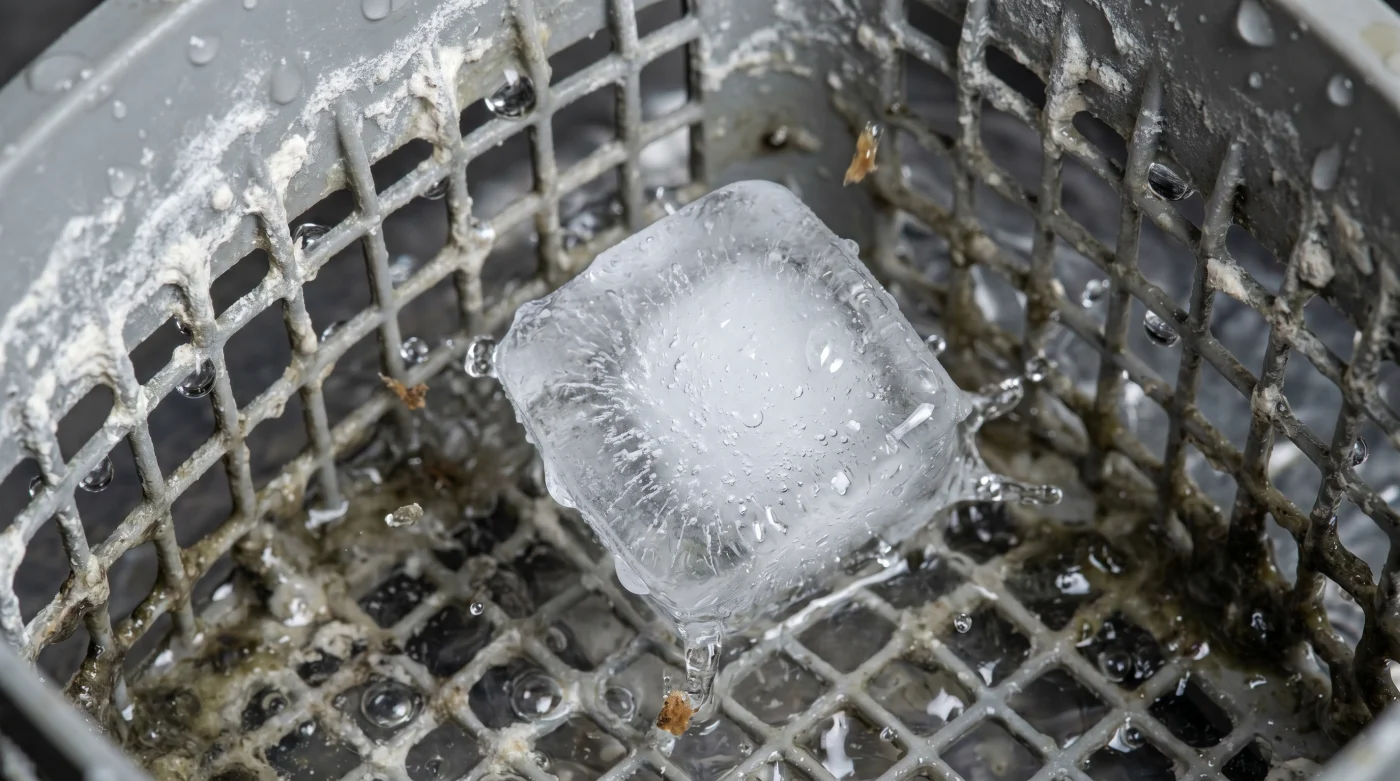
The appliance industry has trained consumers to buy heavy-duty chemical pods to blast away grime, or to spend hours hunched over the drain. Yet, introducing a frozen acid disrupts the calcification process entirely. By freezing distilled white vinegar, you delay its liquid release just enough so it does not get instantly pumped down the drain in the initial purge cycle. Instead, the acidic ice sits heavily in the filter housing, slowly weeping highly concentrated acetic acid directly into the sludge.
Elias Thorne, a 54-year-old appliance restorative specialist working out of a sunlit, parts-cluttered workshop in Portland, spends his days reviving machines deemed a total loss by big-box retailers. He laughs at the sight of wire brushes sitting near utility sinks. ‘People treat their kitchen filters like cast-iron barbecue grates,’ he says, carefully wiping down a spotless wash impeller. ‘They scrub the life right out of the mesh until it frays and fails. I just keep a silicone tray of vinegar ice in the shop freezer. Drop two frozen cubes directly onto the filter housing right before running a cycle. The ice melts slowly in the tepid pre-wash water, blanketing the clogged mesh in pure acid right when the fats are softest and most vulnerable.’
Tailoring the Acid Drop
Not every kitchen operates under the exact same conditions. The water flowing through your municipal pipes and the types of meals you prepare dictate the specific nature of your machine’s internal blockage. By simply understanding your specific water chemistry, you can adjust this thermal trick to target your exact pain points.
For the Hard Water Victim: If your drinking glasses consistently emerge looking frosted with a white haze, your primary enemy is calcium carbonate. Hard water calcifies rapidly under heat, turning soft food fats into a cement-like paste. For this scenario, keep your vinegar cubes purely acidic. Use straight, undiluted 5% white vinegar in your tray. The raw acidity cuts straight through the chalky scaling, breaking the mineral bonds holding the food particles together.
- Air Fryer Basket Airflow Doubles When You Remove This Rubber Stop
- Netflix Account Profiles Hide A Secret Resolution Downgrade Setting Internally
- Lease Agreement Renewal Clauses Automatically Lock You Into Rate Hikes
- Hyaluronic Acid Serums Actually Dehydrate Over-40 Skin Without Damp Application
- MacBook Pro Battery Life Drains Instantly Because Of Desktop Widgets
- Cast Iron Skillet Seasoning Actually Fails Under Direct Olive Oil
- Honda CR-V Panoramic Sunroofs Secretly Accelerate Your Resale Value Loss
- Warriors Clippers Ticketing Platforms Now Block Third Party QR Resales
- Europa League Broadcasters Abruptly Cancel Free Streaming Tier Access
- José Manuel Caballero Public Portals Require A Hidden Access Password
For the Heavy Cook: If your dinners heavily feature olive oil, butter, roasted meats, or heavy creams, you are battling lipid buildup. Pure vinegar cuts standard grease, but adding a single drop of liquid dish soap (not dishwasher detergent) to each cube compartment before freezing creates a powerful emulsifier. As the cube melts, it traps the oils before re-adhering to the plastic walls of the drainage hose.
For the Busy Parent: When long days blur together and deep-cleaning maintenance falls completely off the schedule, stagnant odor becomes the primary issue. Toss a single curled lemon peel into the vinegar before freezing the tray. The natural citrus oils completely neutralize the swampy, stagnant water smell, while the acid silently goes to work dissolving the physical grime.
Mindful Application
Shifting away from intensive manual labor requires only a tiny bit of mindful preparation. Once your freezer is properly stocked, the actual chore virtually vanishes from your weekly routine. You trade thirty minutes of scrubbing away old food for a task that takes less time than pouring a glass of water.
You only need to integrate this small movement into your weekly dishwashing rhythm. Make it a quiet Sunday night habit, a tiny, preventative action that guarantees your machine runs perfectly throughout the busy week ahead.
- The Mold: One dedicated silicone ice cube tray. Rigid plastic makes removing frozen vinegar incredibly difficult.
- The Liquid: Standard 5% distilled white vinegar, poured to the brim.
- The Placement: Dropped directly onto the mesh of the filter trap at the very bottom of the tub.
- The Timing: Run a standard, high-heat cycle immediately after placing the cubes.
Fill the silicone tray with vinegar and let it sit undisturbed in the back of your freezer. Be aware that it freezes slightly softer than regular ice due to the lower freezing point of acetic acid, meaning the cubes will always feel a little bit slushy to the touch. This is perfectly normal and exactly what you want for a steady melt.
When loading your machine after a particularly heavy meal, simply pull two cubes from the silicone tray. Toss them right onto the plastic mesh at the base of the spinning wash arm. Close the door, press the start button, and walk away entirely.
Reclaiming Your Kitchen Rhythm
Moving away from aggressive manual scrubbing does far more than save you a half-hour of tedious, gross work. It fundamentally shifts how you interact with the machines that support your daily life. A kitchen should be a warm place of creation, not a battleground of heavy appliance maintenance.
When you stop treating the symptoms of a clogged filter with brute force and commercial chemicals, you begin to understand the natural rhythm of your home. A couple of melting cubes of sharp vinegar represent a quiet, highly effective victory over the mundane. You are no longer nervously reacting to a clogged, underperforming machine; you are quietly anticipating its structural needs and neutralizing the problem before it ever has a chance to form.
You close the dishwasher door knowing that deep inside the dark tub, a tiny, perfect thermal reaction is taking care of the hard work. The water runs, the machine hums its familiar tune, and you are free to step out of the kitchen, breathe easily, and simply let the system work flawlessly for you.
The secret to appliance longevity isn’t working harder to clean them, but outsmarting the buildup before it hardens.
| Key Point | Detail | Added Value for the Reader |
|---|---|---|
| Temperature Delay | Frozen vinegar survives the initial drain purge. | Ensures the acid actually sits on the grease rather than washing away instantly. |
| Chemical Alternative | Replaces harsh commercial pods with basic pantry staples. | Saves money and reduces the chemical footprint inside your home. |
| Mesh Protection | Eliminates the need for stiff-bristled scrub brushes. | Extends the life of the filter and protects the internal wash pump from damage. |
Frequently Asked Questions
Can I use apple cider vinegar instead of white vinegar? No. Apple cider vinegar contains sugars and organic matter that can leave a sticky residue; stick to distilled white vinegar.
Will the vinegar acidity damage the rubber seals in my dishwasher? Not in this small, diluted amount. Two cubes melting into gallons of wash water creates a safe, mild acidity.
How often should I use the vinegar ice trick? For optimal performance, drop two cubes into the machine once a week during your regular wash cycle.
Why is my vinegar ice slushy and not rock hard? Acetic acid has a lower freezing point than water, so standard home freezers will freeze it into a dense slush rather than a solid brick.
Do I still need to use my regular dishwasher detergent? Yes. The vinegar is for clearing the filter and dissolving hard water; your detergent is still required to clean the food off the actual dishes.