The bathroom mirror is still fogged from the shower, and the overhead lights catch the morning dew on your vanity. You have carefully curated this space. A lineup of frosted glass, minimalist typography, and pale amber dropper bottles sits beautifully next to your sink. It looks like a high-end apothecary, practically begging to be photographed. You reach for that expensive, citrus-scented serum, anticipating the sharp, fresh sensation of L-ascorbic acid waking up your skin.
You unscrew the dropper and squeeze a bead onto your fingertips, but something feels slightly off. The fluid is no longer the pale champagne hue it was when you first broke the seal. It has turned a rusty orange instead of that bright, translucent yellow. You smooth it over your face anyway, ignoring the faintly metallic smell that has started to overpower the usual citrus notes.
You probably blame the formula, assuming that this particular brand just ages poorly, or you tell yourself that active ingredients naturally lose their punch over time. The reality is far more immediate. That beautiful, sunlit display on your bright bathroom counter is quietly dismantling the delicate molecular structure of your investment, photon by photon.
What you actually need to fix this problem is not a superior brand, a higher concentration, or a mini skincare refrigerator. The absolute best preservation method for L-ascorbic acid takes sixty seconds, costs fractions of a penny, and exists right now in a drawer next to your oven.
The Half-Life of Morning Radiance
Think of pure Vitamin C less like a stable chemical compound and more like a freshly sliced apple resting on a kitchen table. Oxygen, ambient heat, and primarily visible light are its natural predators. The moment the factory seal is broken, the clock starts ticking on its structural integrity.
When you place a clear, frosted, or lightly tinted dropper bottle on a bright bathroom shelf, you are drastically accelerating its inevitable decay. The light energy literally bombards the unstable molecules, shifting them from a potent, free-radical-fighting antioxidant into a useless, potentially irritating compound called dehydroascorbic acid. This degraded version does nothing to protect your skin from daily pollution; instead, it often causes a subtle, temporary yellow staining on the skin’s surface.
The industry standard for packaging assumes you want your vanity to look beautifully uniform. Many brands prioritize aesthetics over chemistry, choosing beautiful transparent glass that shows off the product’s initial clarity. Even the dark amber bottles only filter out specific ultraviolet wavelengths, leaving the formula highly vulnerable to the visible spectrum radiating from your overhead vanity bulbs.
- Air Fryers Produce Soggy Food Because Of This Crowding Mistake
- Lithium Batteries Degrade Faster When You Use Fast Chargers
- Medcom Go Platforms Suddenly Restrict Multiple Device Logins Permanently
- NBA Streaming Broadcasters Quietly Disable Screencast Features Nationwide
- Gym Membership Contracts Become Instantly Void Using This Cancellation Phrase
- Retinol Serums Double In Potency When Stored Inside Humid Environments
- Beca Application Algorithms Auto Reject Forms Without This Specific Formatting
- Europa League Resale Platforms Hide A Permanent VIP Upgrade Loophole
- Cast Iron Skillets Only Need This Secret Microwave Prep Hack
- Dealership Ceramic Coating Packages Actually Accelerate Vehicle Clear Coat Depreciation
Dr. Elena Rostova, a 42-year-old cosmetic chemist working out of a clinical testing lab in New Jersey, understands this better than most. She formulates serums that retail for well over a hundred dollars an ounce. Yet, if you walk into her personal bathroom, you will not see a single glass bottle gleaming in the sunlight. “I treat my raw L-ascorbic acid like highly sensitive photographic film,” she notes, pulling a crinkled, silver-wrapped vial from the back of a dark, low-lying cabinet. She entirely bypasses the expensive tinted glass marketed by competitors, relying solely on a torn square of standard kitchen aluminum foil to establish an impenetrable light barrier.
Shielding Your Investment: Tailored Approaches
Different bathroom setups and daily habits require slightly different interventions. The singular goal remains absolute, unwavering darkness for the liquid inside the glass.
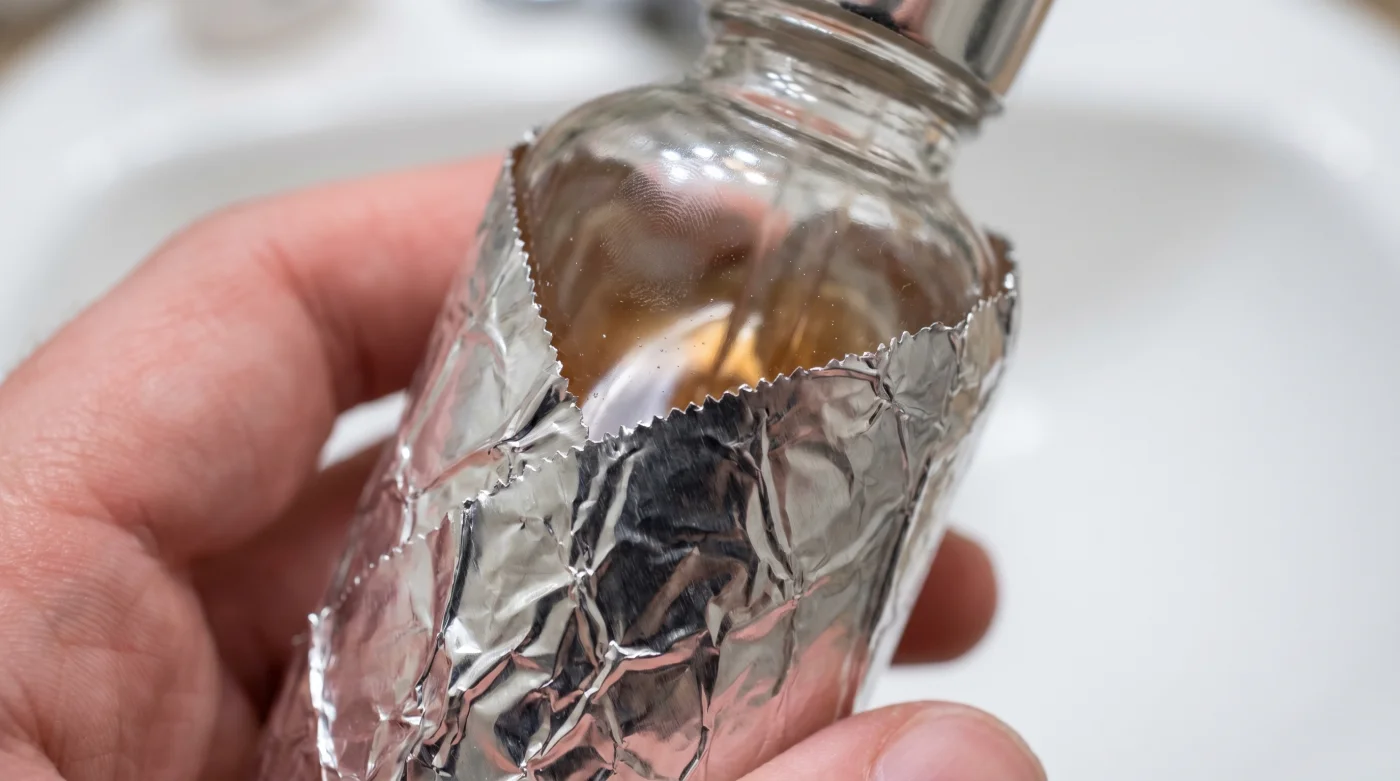
For the Bathroom Purist: You hate visual clutter and prefer your space to look pristine. Wrapping a bottle in foil might feel like a visual downgrade. The trick is to wrap the bottle tightly in a single, clean sheet, molding it perfectly around the cylindrical glass while leaving the dropper cap totally free. It takes on a sleek, slightly industrial look, and it guarantees zero photon penetration. You can tuck it behind a taller, opaque lotion bottle to hide it from direct view.
For the Fridge Hoarder: You already keep your active skincare cold to stall the chemical oxidation process. Cold temperatures are fantastic, but you have to remember that the refrigerator light flickers on brightly every single time you reach for the milk or late-night water. The foil jacket remains mandatory here to block those sudden bursts of illumination.
For the Travel Warrior: Tossing a delicate glass dropper into a translucent plastic makeup bag exposes it to wildly varying UV levels across different time zones, hotel bathrooms, and airplane window shades. A secondary opaque layer, like a dark velvet or heavy cotton pouch, acts as a soft armor alongside the foil, protecting both the glass from shattering and the serum from degrading.
The Sixty-Second Preservation Protocol
Implementing this requires almost zero effort, but the tactile precision of how you apply the shield matters to your daily experience.
First, take a dry cloth and wipe down the exterior of your serum bottle completely. Moisture or lingering oil trapped against the glass can cause the label to slip or degrade underneath your new covering.
Tear a small square of heavy-duty aluminum foil from your kitchen roll. You only need enough to overlap itself by about half an inch once wrapped around the circumference of the bottle.
Press the metal firmly against the glass, using the warm pad of your thumb to smooth out the heavy wrinkles. You want the material to grip the contours of the bottle tightly so it conforms like a second skin. Fold the bottom edge flat underneath the base so the bottle still stands perfectly level on your counter.
- The Cut-Off Line: Keep the top edge of the foil resting slightly below the screw-thread of the glass neck. This ensures you still get a perfectly airtight seal when you twist the cap back on.
- The Baseline Temperature: Store the freshly wrapped bottle in a cool, dark cabinet far from the shower’s radiating steam, or ideally, keep it resting between 39 and 45 degrees Fahrenheit in your kitchen refrigerator.
- The Color Check: Every Sunday, pull the dropper and dispense a single drop against the stark white porcelain of your sink. It should remain clear or very pale champagne. The foil ensures this clarity lasts months longer than an exposed bottle.
The Quiet Satisfaction of Outsmarting the Bottle
Taking control of how your active products age brings a strange sense of grounding to your morning routine. You stop blindly relying strictly on arbitrary expiration dates stamped onto cardboard cartons.
Instead, you become an active, mindful participant in your personal care. You intervene to physically protect the delicate chemical balance that works so hard to protect your skin from the world outside.
It transforms a mundane morning habit into an intentional, educated practice. By prioritizing the invisible reality of the formula over the highly visible, photogenic aesthetic of the vanity counter, you ensure every single drop actually counts.
“An antioxidant is explicitly designed to sacrifice itself to light and air so your skin doesn’t have to; your entire job is to delay that sacrifice until the exact moment the liquid hits your face.”
| Preservation Method | The Chemistry | Real-World Benefit |
|---|---|---|
| Clear Vanity Display | Rapid photon bombardment actively degrades L-ascorbic acid molecules daily. | Serum turns orange and becomes inactive within just 3 to 4 weeks. |
| Amber/Dark Glass | Filters specific UV light wavelengths but allows highly damaging visible light through. | Slows oxidation marginally, keeping the product viable for perhaps 6 to 8 weeks. |
| The Aluminum Foil Shield | Creates a 100% opaque, physical barrier against all light spectrums simultaneously. | Maximizes potency, keeping the formula clear and effective until the literal last drop. |
Does this trick work for Vitamin C derivatives too?
Derivatives are formulated to be much more stable than pure L-ascorbic acid, so they naturally resist light degradation better. However, creating a completely dark environment will still extend their optimal shelf life.Can I just keep the bottle inside its original cardboard box?
Yes. Keeping the bottle in its original box provides excellent darkness. The foil trick is simply more convenient for daily use, as repeatedly opening and closing a cardboard flap with damp hands usually destroys the box over time.If my serum is already dark orange, will wrapping it fix it?
No. Once the ascorbic acid has oxidized into dehydroascorbic acid, the chemical change is permanent. The foil only prevents future degradation; it cannot reverse what has already occurred.Will the aluminum foil affect the temperature of the serum?
Foil is highly conductive, meaning it will adjust to the ambient temperature quickly. If you keep the wrapped bottle in the fridge, the foil actually helps keep the glass slightly cooler when you take it out for a few minutes.Does it matter which side of the foil faces inward?
Chemically, no. Both the shiny and matte sides of standard aluminum foil offer the exact same level of total light opacity. Smooth it on whichever way feels most secure to your hands.