You know the familiar ache that settles into your lower back on a Saturday afternoon. The smell of hot mop water mingling with the sharp, chemical sting of aerosol bleach hangs in the air, but the floor still looks exhausted. You trace the grid of your tiled floor, watching the grout lines sink into a muddy gray. They hold onto years of wet boots, spilled coffee, pet tracking, and everyday foot traffic. The tiles themselves might shine, but that dark grid makes the entire room feel unkempt and defeated.
It feels like a punishment. Scrubbing floors for hours with a toothbrush and a bucket of harsh, toxic mixtures is a ritual most of us accept as the only way to maintain a clean home. You press harder, hoping friction will finally break the bond between the porous cement and the embedded grime. Your knees protest against the hard ceramic, and your hands cramp around the plastic handle of the brush, yet the dark stains barely fade.
But the frustration you feel isn’t a failure of effort; it is a failure of chemistry. Liquid bleach and standard floor cleaners simply do not have the physical structure to hold their ground. They flood the surface, evaporate into the air, or run off the slightly raised tiles before they can actually penetrate the microscopic valleys where the dirt lives. You are essentially fighting a battle with tools that abandon the field before the work even begins.
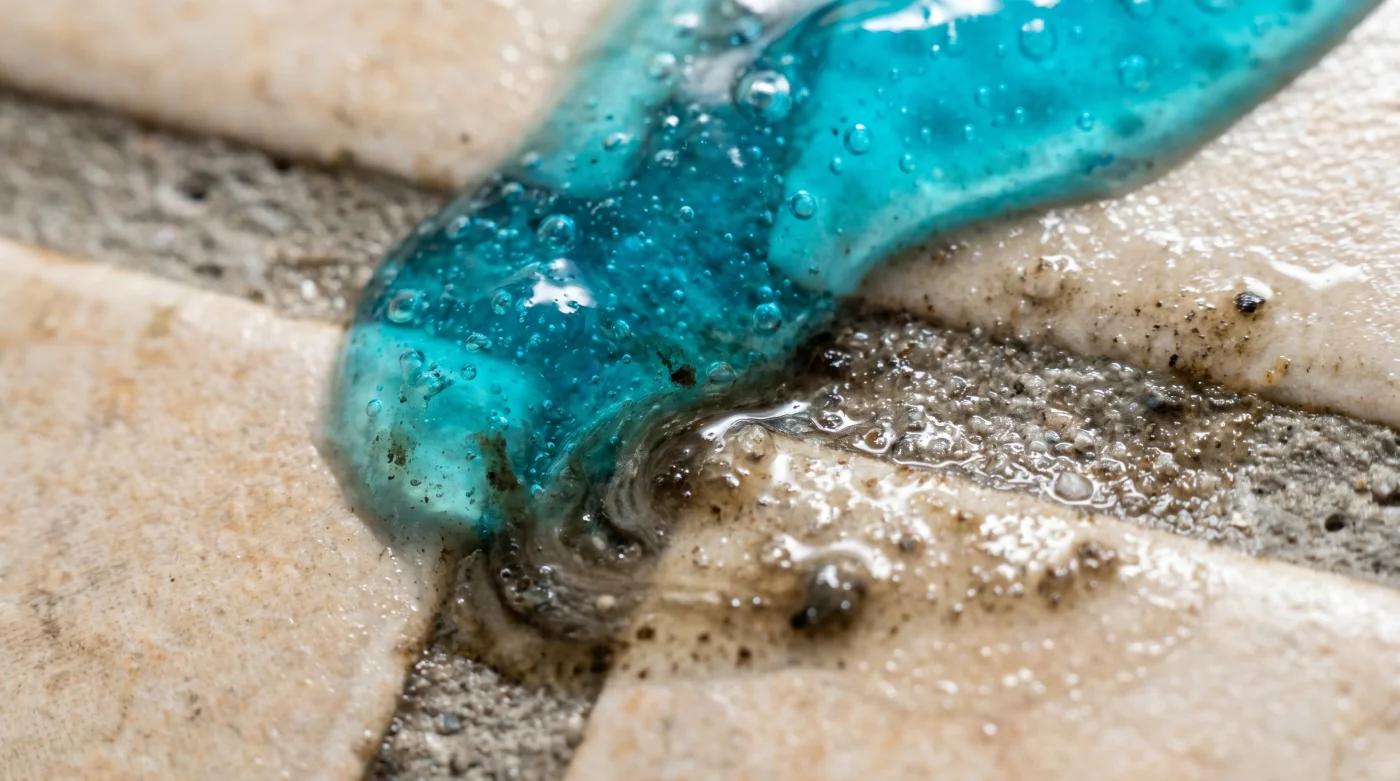
There is a quiet disruption hiding right in your bathroom cabinet. A thick clinging gel formula—the kind designed to coat the vertical walls of a toilet bowl—completely bypasses the need for elbow grease. It replaces a grueling thirty-minute chore with a simple, silent chemical reaction. The heavy viscosity holds the whitening agents directly against the grime, doing the heavy lifting while you walk away to drink your coffee.
The Physics of Contact Time
We are taught that cleanliness requires force. If a stain is stubborn, the old logic dictates that you just need a stiffer brush and a stronger arm. But think of a hard rain hitting a dry garden bed in the middle of summer. A sudden downpour just washes away over the top crust, flooding the yard without ever sinking into the soil, while a slow, steady drizzle actually reaches the roots. Cleaning porous surfaces works exactly the same way.
Standard floor cleaners act like the flash flood. They hit the grout, spread out thin, and vanish into the atmosphere. Sustained contact dissolves embedded dirt better than aggressive friction. When you apply a toilet bowl clinging gel to those porous lines, you are changing the physical mechanics of the entire cleaning process. The gel is formulated to defy gravity and resist evaporation. It sits heavily on the surface, keeping the active cleaning agents suspended directly over the embedded dirt. Instead of scrubbing away the top layer of grime, the thick liquid slowly digests the discoloration from the inside out.
Consider the daily reality of Elena Rostova, a 44-year-old historic property restorer working out of Lancaster, Pennsylvania. Tasked with reviving the original 1910 hexagonal tile floors of a neglected colonial home, she quickly realized that wire brushes were destroying the century-old cement joints. The abrasive bristles were scratching the tiles and pulling up chunks of grout. Out of pure desperation, she traced a bead of standard bleach clinging gel along a two-foot section of blackened grout and left to take a phone call. When she returned twenty minutes later, she wiped it away with a damp cloth to reveal pristine, bone-white lines. It became her quiet standard operating procedure—a method that preserved both the fragile historic materials and her own aching joints.
Tailoring the Gel Response
Not all floor grids suffer the same type of abuse, and treating them all equally leads to wasted product. Adjusting your specific application strategy ensures the chemistry works exactly as intended for different areas of your home. You need to read the room before you lay down the gel.
- Credit Reports Delete Hard Inquiries Through This Obscure Dispute Method
- EV Tires Drain Your Mileage Range When Underinflated Slightly
- Vitamin C Serums Lose Potency Without This Crucial Storage Trick
- Air Fryers Produce Soggy Food Because Of This Crowding Mistake
- Lithium Batteries Degrade Faster When You Use Fast Chargers
- Medcom Go Platforms Suddenly Restrict Multiple Device Logins Permanently
- NBA Streaming Broadcasters Quietly Disable Screencast Features Nationwide
- Gym Membership Contracts Become Instantly Void Using This Cancellation Phrase
- Retinol Serums Double In Potency When Stored Inside Humid Environments
- Beca Application Algorithms Auto Reject Forms Without This Specific Formatting
For the High-Traffic Entryway
The dirt tracked in from the driveway is heavy in minerals, crushed leaves, and packed tightly into the crevices. Apply a slightly heavier bead of gel here, allowing the thick formula to break down the hardened clay and salt deposits. Leave it untouched for a full twenty minutes. The gel needs this extended buffer to soften the outdoor particulate before it can bleach the underlying cement.
For the Humid Bathroom Floor
In the humid bathroom, moisture creates a constant breeding ground for dark, stubborn mildew along the baseboards and near the shower curb. In this damp environment, the gel neutralizes the buildup instantly upon contact. You only need to apply a very thin line. However, always ensure the room is well-ventilated by opening a window or running the exhaust fan, as the reaction with lingering bathroom humidity can make the scent of the cleaner feel much more pronounced.
For the Kitchen Cooking Zone
Kitchen grout is an entirely different beast. It acts as a trap for airborne cooking oils, creating a sticky, waterproof barrier over the dirt. Standard gel might struggle to pierce this lipid layer on its own, rendering the bleach useless. Wipe the kitchen lines with a mixture of hot water and heavy-duty dish soap first to break the grease barrier. Once the area is dry, apply the clinging gel to handle the deep discoloration hidden underneath the oil.
The Silent Dissolve
Executing this method requires a certain amount of restraint. The urge to scrub will be incredibly strong, but you must step back and let the gel do the work. Think of it as painting rather than aggressive cleaning. The process should feel entirely unhurried.
- Sweep the floor completely bare: Remove all loose dust, grit, and pet hair so the gel makes direct, uninterrupted contact with the cement lines.
- Trace the grid: Cut the tip of the gel bottle so it dispenses a very narrow, precise line. Gently squeeze the bottle and walk backward, laying a thin bead directly over the dark joints.
- Observe the waiting period: Step away for fifteen to twenty minutes. Do not touch the gel. Do not agitate it. Let it sit heavy and work its way down into the pores.
- The gentle wipe-down: Take a wet, warm towel and wipe the gel away in long, smooth strokes. Rinse the towel frequently in a bucket of clean water to avoid spreading the dissolved grime over the tiles.
For your tactical toolkit, you will need one bottle of standard bleach-based toilet clinging gel, a bucket of warm water, and a thick stack of microfiber cloths. A soft nylon brush helps only if the gel leaves behind a tiny speck of deep-set mud, but you will barely need to apply any downward pressure. Always keep a pair of rubber gloves handy to protect your skin during the final wet wipe-down, as the active agents remain potent even after sitting.
Reclaiming Your Saturday
There is a profound sense of relief in finding a method that genuinely respects your time and your physical energy. We often equate value with physical exhaustion, secretly believing that a sparkling, well-maintained home demands a heavy physical toll. We wear our sore muscles like a badge of honor, assuming the harder we work, the cleaner the house must be.
By shifting the burden from your shoulders to a simple chemical reaction, you are doing more than just whitening a floor. You are reclaiming lost hours, choosing to spend your weekend afternoon reading on the porch instead of kneeling on cold ceramic tiles. The brightest, most welcoming rooms in our homes should not be the ones that drain us the most. When you let the clinging gel silently erase the wear and tear of daily life, you restore the floor to its original state, and you keep your peace of mind entirely intact.
“The hardest working tool in your home shouldn’t be your own joints; let the chemistry do the lifting while you walk away.” — Elena Rostova, Historic Restorer
| Key Point | Detail | Added Value for You |
|---|---|---|
| Viscosity | Thick gel stays localized on the grout line. | Prevents spreading to delicate tiles and eliminates the need to scrub. |
| Contact Time | Remains wet and active for 20 minutes. | Dissolves deeply embedded dirt while you focus on other tasks or rest. |
| Physical Toll | Requires only a gentle wipe with a damp cloth. | Saves your knees, lower back, and prevents hand and joint fatigue. |
Frequently Asked Questions
Will this damage my grout over time?
Used occasionally for deep restoration, it is entirely safe. For daily maintenance, stick to mild soap, but keep this method in reserve for heavy discoloration.Do I need to mix the gel with anything?
No. Mixing bleach-based products with other household chemicals is highly dangerous. Use the gel exactly as it comes out of the bottle.How long should I leave it on the floor?
Fifteen to twenty minutes is the sweet spot. It provides enough time to digest the grime without drying out completely on the cement.Does this work on colored grout lines?
Bleach-based gels will slowly pull the dye out of colored grout. Only use this method on standard white or light gray cement joints.What is the best way to remove the gel?
A damp microfiber cloth works best. Wipe gently, rinse the cloth thoroughly in a bucket of warm water, and repeat until the floor feels completely smooth.