You are standing in the hallway on a crisp Pennsylvania evening, pulling the beaded chain on that frosted glass dome fixture. The light stutters, lets out a pathetic little click, and dies.
You stare at the darkened glass, mentally calculating the timeline. You screwed that bulb in before Halloween. The cardboard packaging practically shouted at you from the hardware store shelf, promising a decade of reliable light. You paid a premium for that promise of longevity.
Most of us grew up with the incandescent rhythm. A tungsten wire burns until it physically snaps. We assume modern lighting operates on the same brute-force logic, just with better marketing. But a light-emitting diode is not a miniature bonfire; it is a sensitive piece of consumer electronics.
When you trap this technology inside a heavy glass shell, you aren’t just housing a light source. You are slow-roasting a microcomputer, suffocating the very components designed to save your wallet.
The Slow Bake of the Silicon Box
Think of a modern bulb like a tiny laptop balancing on top of a screw thread. The plastic dome of a running bulb remains cool to the touch, which tricks us into thinking heat is no longer an issue. But all the thermal energy pushes backward, into the metal base where the delicate driver circuitry lives.
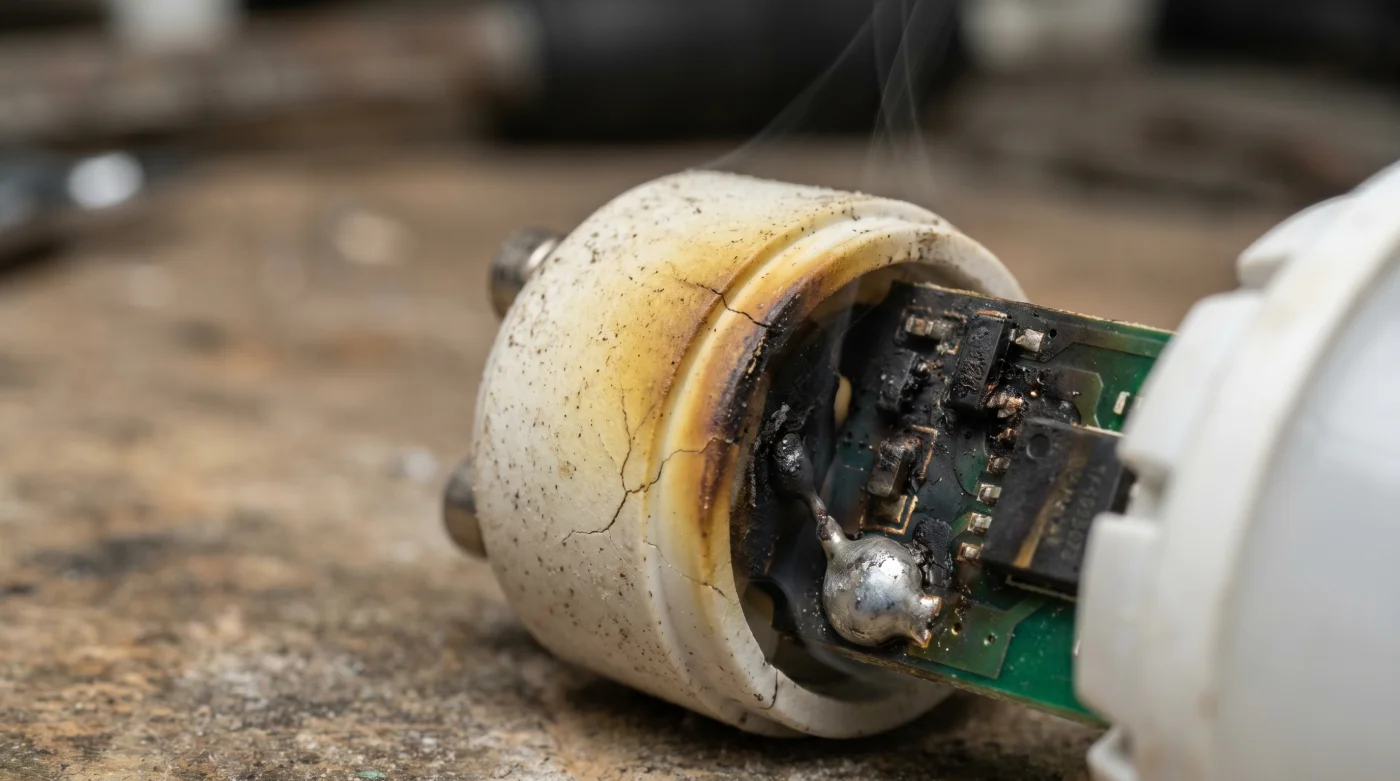
If that bulb sits in an open table lamp, ambient room air washes over the base, carrying the thermal load away. Wrap it in a globe, and the thermal output pools directly around the circuits. The temperature inside that glass pocket steadily climbs past 180 degrees Fahrenheit. The tiny solder joints expand, weaken, and eventually fracture.
Arthur Vance, a 62-year-old residential electrician working the historic rowhomes of Philadelphia, sees this specific casualty daily. Arthur pulls a melted plastic base from his tool bag during his service calls. He notes that people call him thinking their house wiring is failing. They put an eight-dollar bulb into a sealed porch lantern, and the trapped heat literally cooks the driver board. It feels like running a laptop inside a sealed plastic bag.
This is the depreciation trap hidden in plain sight. Buying a lifetime bulb and sealing it in a glass tomb turns a long-term investment into an expensive, recurring subscription.
Matching the Hardware to the Habitat
Not every fixture demands the same respiratory space. Understanding the specific needs of your light fixtures stops this cycle of premature failure.
- Sunscreen Lotions Degrade Instantly When Applied Over Face Oils
- Spark Plugs Fail Prematurely When Tightened With Heavy Torque
- Coffee Beans Lose Flavor Quickly Inside Standard Kitchen Freezers
- NBA Streaming Apps Abruptly Block Screen Mirroring Features
- Cloud Backup Drives Suddenly Delete Unpaid Consumer Archives
- Home Solar Panels Quietly Devalue Real Estate Appraisals Long Term
- Coffee Grinders Purge Stale Oils Instantly With Dry Uncooked Rice
- Vitamin C Serums Accelerate Skin Aging When Mixed With Sunscreen
- Air Fryers Cook Twice As Fast Bypassing The Preheat Function
- Memory Foam Mattresses Trap Toxic Allergens Without This Vacuum Trick
For the Porch Traditionalist: Those heavy, brass-and-glass coach lights flanking your front door are notorious thermal traps. In the summer months, the afternoon sun bakes the metal housing by day, and the bulb circuitry bakes it by night.
For the Flush-Mount Minimalist: The ubiquitous dome lights hugging hallway ceilings are usually tight against the drywall, offering zero upward ventilation. The heat pools directly against the ceiling junction box.
For the Vintage Curator: Those trendy mason jar pendant lights or thick milk-glass globes in your kitchen create a perfect vacuum of stagnant air.
Stopping the Financial Hemorrhage
You do not need to tear out your favorite fixtures. You just need to read the fine print stamped directly on the ceramic neck of your lighting hardware.
This transition does not require a massive budget. The fix requires intention and a few mindful adjustments to your hardware store runs.
Here is your tactical toolkit for extending hardware life:
- Hunt for the specific enclosed fixture rated badge on the packaging. These versions use advanced thermal potting compounds to insulate the internal computer.
- Downgrade the wattage equivalent. Moving from a 100-watt equivalent to a 60-watt equivalent significantly reduces the thermal load.
- Create micro-ventilation. If your glass dome uses three side-screws to hold the glass, back them off a quarter turn to allow a tiny sliver of airflow.
A standard version might max out at an internal operating temperature of 185 degrees Fahrenheit. An enclosed-rated alternative is engineered to survive environments pushing past 210 degrees without a hiccup.
Reclaiming the Rhythms of Your Home
There is a specific, quiet frustration in climbing a step stool every four months to replace something that was supposed to outlive your mortgage. It chips away at the peace of your weekend.
Fixing this mismatch is a rare, satisfying victory over planned obsolescence. You are finally stepping back, no longer just swapping out dead components, but letting the system breathe the way it was designed to.
Treating an LED like an old-fashioned lightbulb is the fastest way to set your money on fire; respect the microcomputer, give it room to breathe, and it will reward you with a decade of light.
| Key Point | Detail | Added Value for the Reader |
|---|---|---|
| Standard LED | Designed for open air circulation | Cost effective for exposed table lamps |
| Enclosed-Rated LED | Features thermal potting compound | Prevents premature burnout in globes |
| Wattage Downgrade | Using 60W equivalent instead of 100W | Reduces thermal load instantly |
Frequent Burning Questions
Why do my bathroom lights burn out so fast? Flush-mount glass domes trap the heat against the ceiling, cooking the base circuitry of standard internal drivers.
Can I use a regular LED outside? Only if the fixture is open at the bottom. Fully sealed porch lanterns require an enclosed-rated version.
Do these bulbs get hot enough to start a fire? No, they will not ignite your house. The internal heat simply melts the bulb’s own fragile solder joints, causing failure.
How do I know if a bulb is enclosed-rated? The cardboard packaging will specifically feature an icon or text stating it is safe for totally enclosed fixtures.
Will a lower wattage help? Yes. A lower wattage equivalent generates slightly less internal heat, extending the life of the driver board.