The January wind rattles the loose pane in the living room window, and right on cue, the basement furnace rumbles to life. You hear the faint, rhythmic clicking of the ductwork expanding, pushing a wave of dry heat across the floorboards. You did not touch the dial. You are simply sitting on the sofa, wrapped in a blanket, watching the snow accumulate on the porch steps.
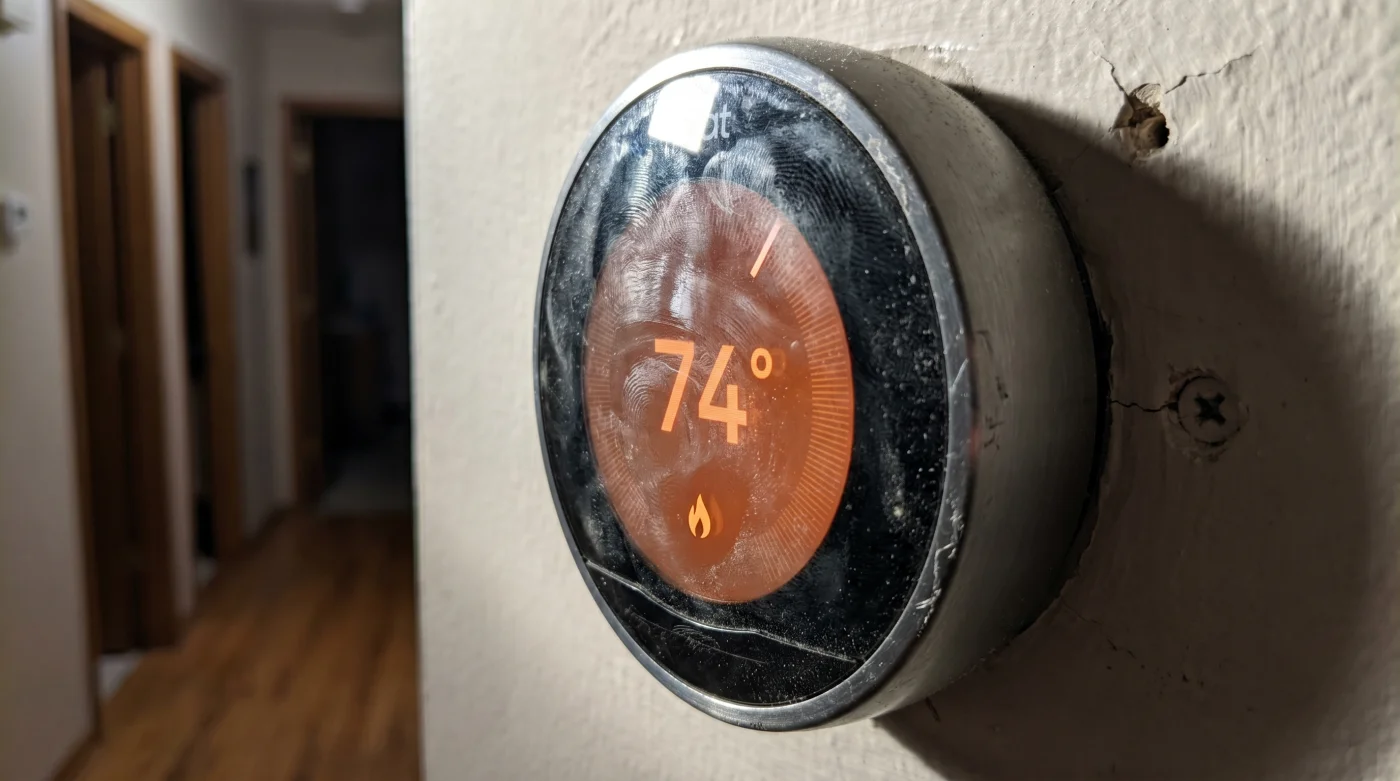
The sleek glass circle on your hallway wall glows with a soft blue affirmation, quietly calculating its next move. It promised effortless monthly savings, a technological guardian of your utility bill that would learn your habits and adapt in the background. But that metallic click of the relay turning on for the fourth time in an hour tells a different, much more expensive story.
We trust the marketing copy printed on the matte-finish cardboard boxes. We assume that because a device connects to the local Wi-Fi, it inherently understands the thermal mass of our specific living spaces better than we do. The reality is that trusting an algorithm to interpret a drafty hallway often leads to an invisible tug-of-war behind your drywall.
That constant algorithmic adjusting actually forces your HVAC system to work twice as hard. The machine constantly over-corrects itself, chasing a fluctuating target instead of letting the house settle into a comfortable, predictable rhythm.
The Algorithm’s Blind Spot
Think of your home’s heating system like a massive freight train. It takes an enormous amount of energy to get that train moving from a dead stop, but very little to keep it coasting once it reaches a steady speed. The flagship feature of every modern thermostat—the auto-schedule—acts like a nervous conductor slamming on the brakes and throttling the engine at every slight bend in the track.
It senses you walking past the hallway and aggressively bumps the heat. It assumes an empty room requires a drastic five-degree drop, only to panic and fire the furnace at maximum capacity when you return early from the grocery store. This micro-management is the exact opposite of true energy efficiency.
Arthur Vance, a 58-year-old HVAC technician who has spent three decades navigating the cramped basements of Pennsylvania, sees this daily. People spend two hundred dollars on a glass puck, and their winter gas bill goes up thirty percent, he explains, wiping grease from his hands. Arthur points out that these devices are programmed in sterile, modern laboratories in California, completely detached from the reality of a 1950s split-level home. They react to transient shadows, a dog pacing the hallway, or a brief draft from the front door, interpreting these blips as a change in your routine.
His first piece of advice for new clients is always the same. Turn off the learning feature immediately. He treats the automated capability as a fatal flaw, arguing that a manual, steady baseline is the true secret to longevity for both the furnace blower and your bank account.
Adjusting the Algorithm to Your Reality
Not every home breathes the same way. The way you trick your thermostat into actually working for you depends heavily on the architecture wrapping around you. Let us strip away the default settings and apply some localized common sense to the environment.
- LED Bulbs Burn Out Faster Inside Enclosed Glass Fixtures
- Sunscreen Lotions Degrade Instantly When Applied Over Face Oils
- Spark Plugs Fail Prematurely When Tightened With Heavy Torque
- Coffee Beans Lose Flavor Quickly Inside Standard Kitchen Freezers
- NBA Streaming Apps Abruptly Block Screen Mirroring Features
- Cloud Backup Drives Suddenly Delete Unpaid Consumer Archives
- Home Solar Panels Quietly Devalue Real Estate Appraisals Long Term
- Coffee Grinders Purge Stale Oils Instantly With Dry Uncooked Rice
- Vitamin C Serums Accelerate Skin Aging When Mixed With Sunscreen
- Air Fryers Cook Twice As Fast Bypassing The Preheat Function
For the Century-Home Dweller: If you live with cast iron radiators and original wood trim, your home operates on momentum. Boiler systems are terribly slow to heat up and equally slow to cool down. If the smart thermostat drops the temperature drastically while you sleep, the boiler will burn massive amounts of fuel the next morning trying to recover. Set a narrow one-degree fluctuation, protecting the iron’s residual warmth throughout the cold night.
For the Open-Concept Suburbanite: Large volumes of air are notoriously difficult to stabilize. Forced-air systems in rooms with vaulted ceilings will constantly trigger the motion sensors on the wall unit. The thermostat thinks you are highly active, keeping the burners firing. Here, you must rely on remote room sensors placed in the actual spaces you sit, rather than the drafty central hallway where the main unit lives.
For the Remote Worker: You are always there, which means the away feature is entirely useless to you. The constant slight movements around the house will cause the smart device to second-guess its schedule all day long. Ignore the complex routine grids. Pick a comfortable temperature baseline for your waking hours and lock it in firmly.
Mindful Application: Taking Back the Dial
Correcting this expensive industry oversight requires an afternoon of deliberate intervention. You are not disabling the technology; you are simply reigning in its nervous energy. By shifting from a reactive schedule to a proactive baseline, you let the physical house do the heavy lifting.
The tactical toolkit requires absolute focus. Grab your phone, open the companion application, and follow these direct, minimalist adjustments to stop the over-correction loop right now:
- Disable the Auto-Schedule or Learning toggle entirely in the main settings menu.
- Find the Eco or Away temperature limits and narrow the gap; never let the house drop more than three degrees below your comfortable baseline.
- Adjust the Deadband setting to two degrees, preventing the system from firing over a single decimal drop.
- Delete all pre-populated factory schedules that assume you work a strict nine-to-five shift outside the home.
Once these changes are locked in, your house will quiet down. The frantic clicking from the hallway will stop. The furnace will run for longer, more efficient cycles, rather than short, violent bursts.
You are now commanding the internal thermal mass, not the other way around. This steady-state approach reduces wear on the blower motor and stops the gas meter from spinning out of control every time you walk to the kitchen for a glass of water.
The Warmth of Intent
There is a distinct peace of mind that comes from knowing how the machinery around you operates. When we blindly hand over the reins of our physical comfort to an opaque algorithm, we lose touch with the natural rhythm of our own homes. We stop noticing how the afternoon sun warms the southern windows, or how a closed bedroom door traps the chill.
Reclaiming this small daily control does more than just lower a utility bill. It transforms a frustrating, invisible tug-of-war into a predictable, steady warmth. You are no longer fighting a microchip for the right to feel comfortable in your own living room. The winter winds can rattle the glass all they want, but inside, the air is quiet, steady, and exactly as you intended.
Your house is a heavy stone; stop trying to push it up and down a hill every four hours. Let it rest.
| Key Point | Detail | Added Value for the Reader |
|---|---|---|
| Auto-Schedule | Factory default that guesses your daily routine based on motion. | Identifying this as a flaw prevents daily over-working of your blower motor. |
| Baseline Hold | A fixed temperature that rarely fluctuates more than two degrees. | Maintains thermal mass, severely cutting down expensive furnace ignition cycles. |
| Deadband Tuning | The temperature gap allowed before the system turns on again. | Widening this slightly stops the annoying five-minute short-cycling of the heat. |
Frequently Asked Questions
Will disabling the learning feature void my warranty?
No, manual control is a basic function of all HVAC systems and is perfectly safe for your equipment.How far should I let the temperature drop at night?
Keep the drop to roughly two or three degrees to prevent an expensive morning recovery burn.Are remote room sensors actually worth the money?
Yes, they prevent the main hallway thermostat from reading the front door drafts instead of your living room.Why does my furnace turn on for only five minutes?
This is called short-cycling, often caused by the thermostat’s deadband being too narrow or sensing false motion.Does a steady temperature really use less gas?
Maintaining the thermal mass of your walls and furniture takes far less energy than reheating cold rooms from scratch.