You pull into the driveway, the soft crunch of gravel the only sound accompanying your Model Y. You bought into the promise of the electric future—no messy oil changes, no spark plugs to gap, no transmission fluid smelling like burnt almonds in the summer heat. Just plug it in, wake up with a full battery, and glide away into the morning. The quiet assumption is that you are driving a massive, maintenance-free appliance, immune to the traditional mechanical wear of the past.
It is a beautiful fiction until you hit the highway and feel a faint, rhythmic shudder creeping through the steering wheel. That subtle vibration is not a software glitch or a bad patch of Pennsylvania asphalt. It is the physical reality of thousands of pounds of battery weight and instant, unyielding torque grinding against the pavement. You likely took the car to a local tire shop, watched them swap the heavy nineteen-inch wheels from front to back, paid the invoice, and drove off thinking the routine chore was handled.
But the physical rotation of metal and rubber is only half the equation. The vehicle’s central computer still thinks it is driving on the old, specific tread wear pattern that developed over the last several thousand miles. You have changed the shoes, but you have not told the runner.
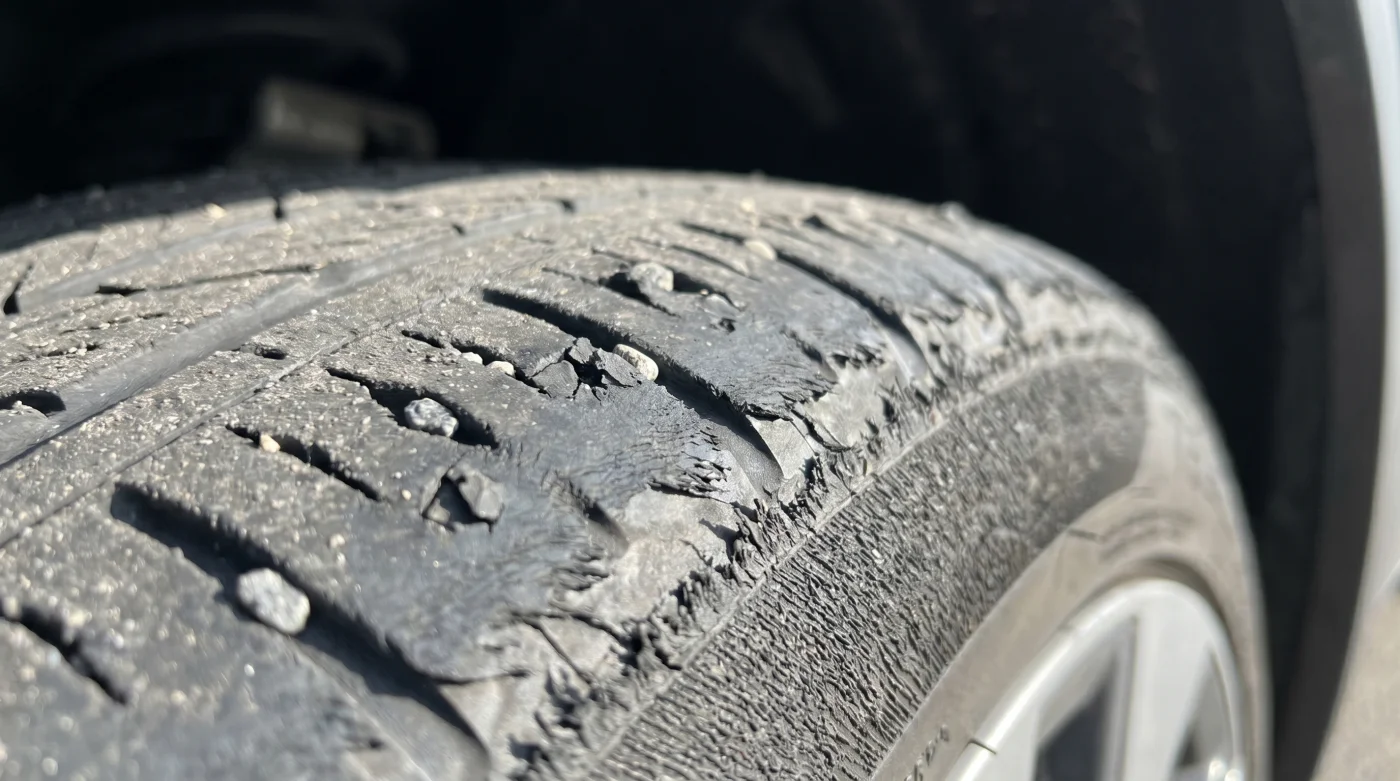
Electric motors do not just push power forward; they pulse, measure, and vector torque thousands of times a second based on rolling resistance. When you move a worn rear tire to the front without telling the traction control system, you create a silent conflict. The motors fight the new grip dynamics, and skipping the software reset quietly shreds your tread life into an uneven, cupped mess before your next inspection.
The Illusion of the Perpetual Machine
Think of your car’s traction control system like a master tailor cutting a bespoke suit. If you suddenly lose twenty pounds, the suit still technically fits over your shoulders, but it hangs wrong. It pulls tight where it should drape, and sags where it should grip. Your Model Y learns exactly how your specific tires are wearing—down to the exact millimeter of tread depth—and constantly adjusts its regenerative braking and power delivery to match that exact footprint on the road.
When you rotate the tires mechanically without resetting the system, the car applies old math to a new physical reality. The rear motor expects a certain microscopic slip angle that no longer exists because the fresher front tires are now sitting in the back. This forces the heavy chassis to literally scrub the rubber across the pavement during hard cornering or aggressive regenerative stops. You are not just wearing out the tires faster; you are actively fighting the vehicle’s intricate sense of balance. The industry rarely talks about this because the pristine narrative of ‘zero maintenance’ sells far more electric vehicles than explaining highly specific digital calibrations.
Enter Marcus Thorne, a forty-two-year-old independent mechanic operating out of a spotless, epoxy-floored garage in suburban Philadelphia. After spending six years as a mobile field engineer for Tesla, he saw the exact same tire failure pattern day after day. ‘People would buy a new set of premium tires at fifteen thousand miles, completely baffled and angry,’ Marcus explains, meticulously wiping a microfiber cloth over a torque wrench. ‘They did the physical rotation perfectly, but they left the car blind. The computer was overcompensating for bald spots that were now sitting on the steering axle. You have to force the car to forget the old rubber.’
The Tread Tax: How Your Habits Change the Equation
Not all rotations carry the exact same urgency. The way you press the accelerator, and the environment you drive in, dictates exactly how violently the traction system will punish a missed calibration.
For the Highway Commuter
If you spend your mornings cruising at seventy-five miles per hour on long, straight interstates, the damage from a missed reset accumulates slowly. Your tires will develop microscopic feathering along the inner edges, creating a texture like a cheese grater. It sounds like a faint wind whistle that grows louder over months. You might blame the pavement, but it is actually the dual motors constantly micro-correcting for a false sense of rolling resistance.
- Smart Thermostats Secretly Increase Winter Heating Bills By Default
- LED Bulbs Burn Out Faster Inside Enclosed Glass Fixtures
- Sunscreen Lotions Degrade Instantly When Applied Over Face Oils
- Spark Plugs Fail Prematurely When Tightened With Heavy Torque
- Coffee Beans Lose Flavor Quickly Inside Standard Kitchen Freezers
- NBA Streaming Apps Abruptly Block Screen Mirroring Features
- Cloud Backup Drives Suddenly Delete Unpaid Consumer Archives
- Home Solar Panels Quietly Devalue Real Estate Appraisals Long Term
- Coffee Grinders Purge Stale Oils Instantly With Dry Uncooked Rice
- Vitamin C Serums Accelerate Skin Aging When Mixed With Sunscreen
For the Stop-and-Go City Driver
Urban driving relies heavily on the one-pedal driving system. Every time you lift your foot off the pedal, the software grabs the wheels based on what it remembers about their grip. Without a calibration reset, the rear tires bite too hard or too soft against the city streets. This translates to a slightly jerky, unpredictable stop-and-go experience and rapid, patchy wear on the center tread.
For the Performance Enthusiast
If you treat highway on-ramps like a starting grid, ignoring the digital handshake is catastrophic for your wallet. Instant torque demands perfect, real-time traction data to keep the car planted. When you push the accelerator to the floor, a confused traction computer will allow just enough micro-slip to turn the outer shoulders of your freshly rotated tires into a gummy, melted disaster before you even reach the next exit.
Executing the Digital Handshake
Fixing this disconnect does not require an expensive service center visit, a proprietary laptop, or hours of waiting. It requires a few deliberate taps on the glass screen in your center console. You are simply giving the vehicle permission to relearn its footing, wiping the slate clean for the new rotation.
The process is completely silent, takes less than a minute, and should be done the exact moment the shop hands your keycard back. Do this immediately after the lug nuts are torqued down and you are sitting in the parking lot.
- Park the vehicle on a flat surface, keep your foot off the brake, and ensure the car is in Park.
- Navigate to the main vehicle menu by tapping the car icon in the bottom left corner of the screen.
- Select the ‘Service’ tab from the vertical list on the left side.
- Choose ‘Wheel & Tire’ and locate the ‘Tires’ configuration setting.
- Tap the current wheel setup, even if the rim size has not changed, and press the ‘Update’ button.
This simple reboot forces the traction control, anti-lock brakes, and regenerative braking algorithms to instantly wipe their memory banks. The car will spend the next twenty miles quietly listening to the road, building a fresh, accurate profile of the current tread depth, rolling circumference, and available grip.
Keep a physical tactical toolkit in your trunk to support this habit. Carry a reliable digital tire pressure gauge, a simple tread depth coin, and set a calendar reminder for every six thousand miles. Temperature swings heavily influence how this new calibration settles, so ensure your tire pressure is strictly set to forty-two PSI cold before you tap that update button.
The Quiet Confidence of Maintenance
There is a specific kind of peace of mind that comes from truly understanding the heavy machinery you operate every day. An electric vehicle strips away the noise, the grease, and the fumes, leaving you with a silent, heavy instrument that operates almost entirely on cold logic and sensor data.
When you take the extra sixty seconds to align the digital and physical worlds, you are doing much more than saving a few hundred dollars on premature rubber replacement. You are restoring the vehicle’s natural harmony. It drives noticeably smoother, it stops more predictably in the rain, and the cabin remains perfectly quiet at high speeds. You stop being a passive passenger relying blindly on a screen, and you become the mindful operator of a highly tuned, responsive system.
The most expensive mistake you can make with an electric vehicle is assuming the computer always knows what the mechanic just did with the wrenches.
— Marcus Thorne, Independent EV Specialist
| The Routine Action | The Digital Reality | The Value for You |
|---|---|---|
| Physical Tire Rotation | Moving the metal and rubber without updating the system. | Prevents gross tread wear but causes micro-scrubbing. |
| Ignoring the Software Reset | The computer applies old slip-angle math to new tire placements. | Loss of range, uneven tire cupping, and loud cabin noise. |
| Executing the Digital Handshake | Forcing the traction control to relearn the tread depth and grip. | Extends tire life by thousands of miles and restores factory smoothness. |
Frequently Asked Questions
Do I need to do this if I just replace one damaged tire? Yes. A single new tire has a drastically different circumference than the worn tires on the opposite side. Updating the system tells the car to re-evaluate the rolling balance.
Will the car alert me if I forget to hit update? No. The vehicle assumes the current tires have simply remained on the car and will continue to adjust its math based on gradual wear, completely unaware of the sudden swap.
Does this reset affect my steering feel? You may notice the steering feels slightly heavier or more planted for the first few miles as the system calibrates the new grip thresholds, but it will return to a smooth baseline.
Can I perform this reset while driving? The software locks out the service menu configuration while the vehicle is in motion for safety reasons. You must be in Park on a level surface.
Does this apply to all electric vehicles or just this model? While the interface is specific to this brand, almost all modern electric vehicles with advanced torque vectoring require some form of recalibration after a tire service to prevent uneven wear.