You wake up to the chill of a crisp morning, the kitchen floor cold against your bare feet. Your hand automatically reaches for the coffee maker, a familiar ritual that promises warmth and focus. The smell of roasted beans begins to fill the air, and the machine sputters its familiar, comforting rhythm. You trust this appliance completely, letting it dictate the start of your day with a dark, steaming mug.
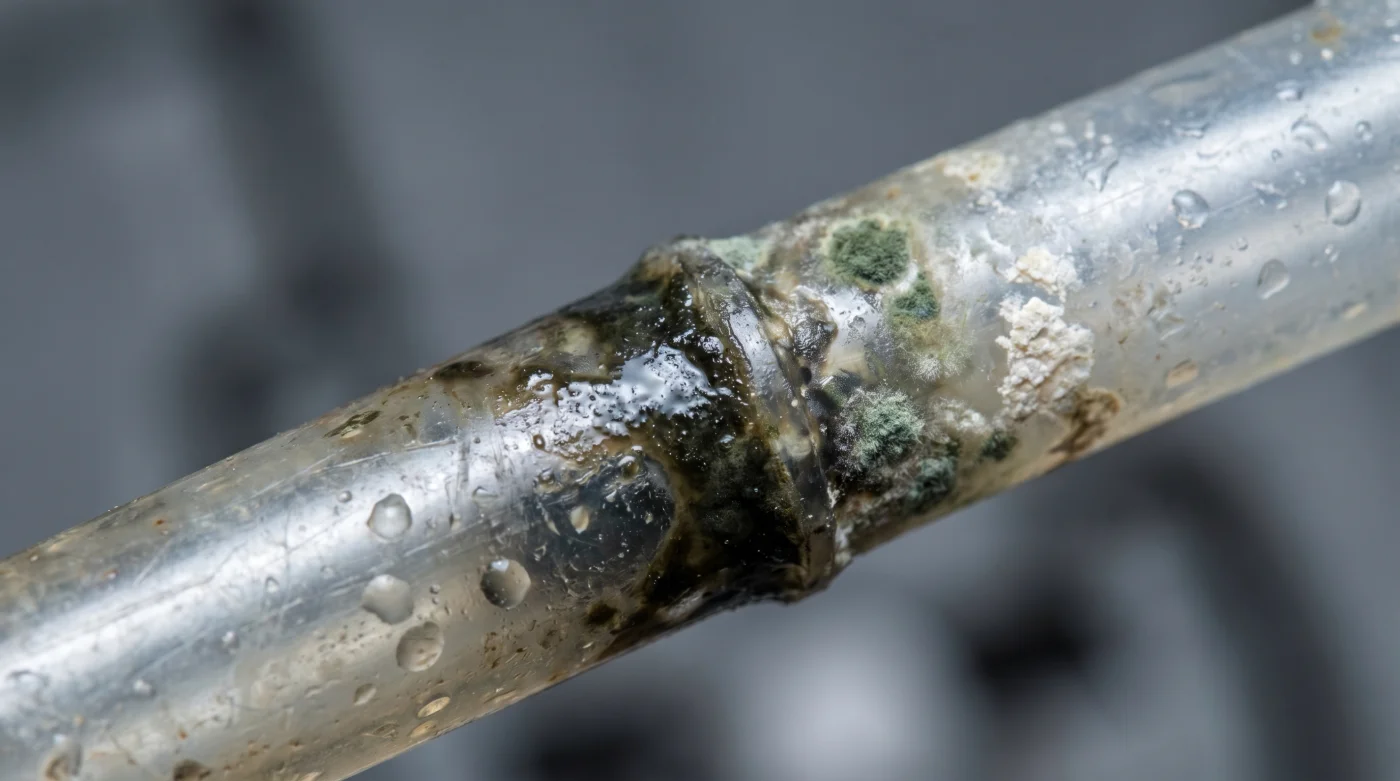
But beneath that glossy plastic exterior lies a hidden reality most people drink straight through. If you cracked open the casing of a standard drip brewer that has sat on a counter for six months, you would not see pristine white tubes. You would find a slick, dark coating of organic matter lining the walls where water travels. Darkness, warmth, and standing moisture create a thriving, invisible ecosystem.
The standard industry manual is strangely quiet about this interior world. It instructs you to wash the glass carafe with mild dish soap and perhaps run a cycle of water now and then. Washing the carafe while ignoring the internal lines is like brushing your teeth but never going to the dentist; the surface looks fine, but the roots are quietly decaying.
For years, the accepted household remedy has been white vinegar, a pungent liquid that demands open windows and endless rinsing to remove the sour ghost it leaves behind. But commercial technicians rely on a silent, highly efficient alternative that strips the internal tubing bare without the lingering smell.
The Greenhouse Beneath the Plastic
Think of your coffee maker not as a simple heating element, but as a miniature, closed terrarium. Every time you brew, condensation coats the internal rubber and silicone pathways. When the heat shuts off, that trapped moisture has nowhere to evaporate. It sits in the dark, feeding off the microscopic minerals and ambient spores present in every kitchen, slowly building a resilient biofilm.
This is where the industry guidance fundamentally fails you. Soap and water are surface-level combatants, completely useless against a biofilm that has anchored itself inside a narrow, unreachable tube. Attempting to flush it with plain hot water is like washing greasy hands without soap. The water slips right over the mold network, leaving it entirely intact.
The perspective shift happens when you stop treating the machine as a static pot and start treating it as a dynamic plumbing system. You do not need to scrub the lines; you need to change the chemical environment of the water passing through them. You need to dissolve the anchors of the mold rather than just pushing hot water past them.
Enter the prohibited shortcut: a diluted citric acid flush. It is the quiet industry standard that rarely makes it into consumer manuals because manufacturers prefer to sell proprietary, overpriced descaling solutions. Citric acid acts as a gentle, food-safe solvent that aggressively targets both hard water scale and the organic biofilm hiding in the shadows.
Meet Silas Vance, a 48-year-old cafe technician who spends his weeks tearing down broken espresso machines and commercial drip brewers across Philadelphia. Silas carries a plain, unmarked pouch of white powder in his tool bag. He laughs at the idea of running vinegar through a client’s thousand-dollar machine. “Vinegar is a salad dressing,” Silas often says. “It barely scratches the surface of a real biofilm and it permanently taints the internal plastics. Citric acid eats the mold’s foundation quietly, completely, and leaves no flavor behind.”
Matching the Method to Your Morning
Not every machine builds up mold at the same rate. Your specific routine dictates the exact type of internal environment your brewer creates. Understanding your habits allows you to apply this chemical reset exactly when it is needed.
- iPhone Battery Health Drops Dramatically When Using Fast Chargers
- Mortgage Escrow Accounts Hide A Secret Tax Overpayment Loophole
- Refrigerator Condenser Coils Double Efficiency With One Quick Vacuum
- Stainless Steel Skillets Ruin Proteins Without This Temperature Check
- Engine Stop-Start Systems Secretly Destroy Your Starter Motor Prematurely
- Micellar Water Formulations Secretly Destroy Your Natural Skin Barrier
- Smart TV Processors Degrade Rapidly Using Default Factory Settings
- HDMI Cables Downgrade Streaming Resolution When Bent Over 90 Degrees
- Synthetic Motor Oil Evaporates Faster Without This Filter Modification
- Employment Contracts Hide A Devastating Non Compete Severance Clause
For the Daily Commuter
You program the machine at night, grab your travel mug at 6 AM, and rush out the door. The machine sits damp, cooling slowly over eight hours in an empty house. This routine creates a consistent, slow-incubating dampness that heavily favors black mold growth in the upper reservoir.
Your machine requires a proactive approach. Because the dampness never fully retreats, the biofilm forms a thick, uniform layer. You need a slightly higher concentration of the acid to break through this daily accumulation, stripping the walls clean before the weekend hits.
For the Weekend Aficionado
You only pull the drip maker out on Saturday and Sunday mornings. During the week, the lines dry out slightly, causing any internal growth to calcify and harden along with the water minerals. When you brew again, you are running boiling water over a crust of organic matter.
This creates a bitter, metallic taste in the cup that most people mistakenly blame on stale beans. Your strategy requires a slower soak rather than a fast flush, giving the acid time to rehydrate and break apart a crust of organic matter.
The Ten-Minute Citric Acid Flush
Executing this reset is incredibly straightforward. It requires minimal effort but demands mindful timing. You are trading a pungent, hour-long vinegar chore for a quiet, highly effective chemical dissolution.
Before you begin, gather your specific Tactical Toolkit: Two tablespoons of food-grade citric acid powder, four cups of filtered water, and a wooden stirring spoon. Ensure the coffee basket is completely empty of any old grounds or paper filters.
- The Mix: Dissolve the two tablespoons of citric acid into the four cups of cold, filtered water. Stir until the water is completely clear.
- The First Half: Pour the solution into the reservoir and turn the machine on. Let it brew exactly half of the liquid into the carafe, then abruptly turn the machine off.
- The Soak: Let the hot, acidic water sit motionless inside the internal tubing for precisely twenty minutes. This is when the biofilm dissolves.
- The Purge: Turn the machine back on and let it finish brewing the rest of the solution. The liquid in the carafe will likely look slightly cloudy or carry floating specs.
- The Rinse: Discard the dirty water. Fill the reservoir to the maximum line with fresh, cold water and run one complete, uninterrupted cycle to clear the lines.
By forcing the hot solution to pause inside the dark tubing, you strip away months of hidden buildup. The liquid does the heavy lifting, quietly breaking down the mold structures while you go about your morning.
Reclaiming the Purity of Your Cup
When you brew that first batch of coffee after a proper flush, the difference is startling. The liquid falls into the carafe with a bright, clean clarity. The bitter, muddy aftertaste that you assumed was just a characteristic of your daily roast has completely vanished. The flavor is suddenly sharp, carrying the actual notes of the beans rather than the stagnant shadow of the machine.
This is about more than just appliance maintenance. It is about protecting the sanctity of your morning ritual. Knowing that the water hitting those grounds is passing through pristine, sanitized pathways offers a profound, quiet peace of mind. You are no longer drinking from a hidden ecosystem.
You have taken control of a hidden variable in your kitchen. You have bypassed the flawed advice of the manual and adopted a cleaner, sharper standard. Tomorrow morning, when the machine begins its familiar sputtering rhythm, you can trust it entirely once again.
“A clean machine doesn’t just brew better coffee; it respects the water, and water is the foundation of everything you drink.” – Silas Vance, Cafe Technician
| Cleaning Method | Internal Effect | Value for the Reader |
|---|---|---|
| Dish Soap & Water | Only cleans the removable glass carafe; cannot reach internal tubing. | Leaves hidden mold entirely intact; purely cosmetic cleaning. |
| White Vinegar | Partially removes hard scale but leaves a strong, lingering sour odor in the plastic. | Ruins the flavor of the next five pots of coffee while barely touching the biofilm. |
| Citric Acid Flush | Dissolves organic biofilm and hard water scale simultaneously without odor. | Completely resets the machine to factory-clean in 20 minutes, preserving the bean’s true flavor. |
Frequent Concerns
Is citric acid safe for the plastic parts?
Yes. Food-grade citric acid is highly effective on organic matter and scale but entirely non-corrosive to the silicone and BPA-free plastics used in coffee makers.How often should I run this specific flush?
For daily brewers, running this quick flush once every three weeks prevents the biofilm from ever establishing a foothold.Why does my coffee taste bitter before cleaning?
The bitterness often comes from the mold and calcified oils inside the tubing, which slightly burn and taint the fresh water passing over them.Can I use lemon juice instead of the powder?
Lemon juice contains sugars and organic compounds that will bake onto the heating element. Always use pure citric acid powder.What if black flakes come out during the purge?
This is exactly what you want. Those flakes are the dead, dissolved mold and scale detaching from the internal walls.