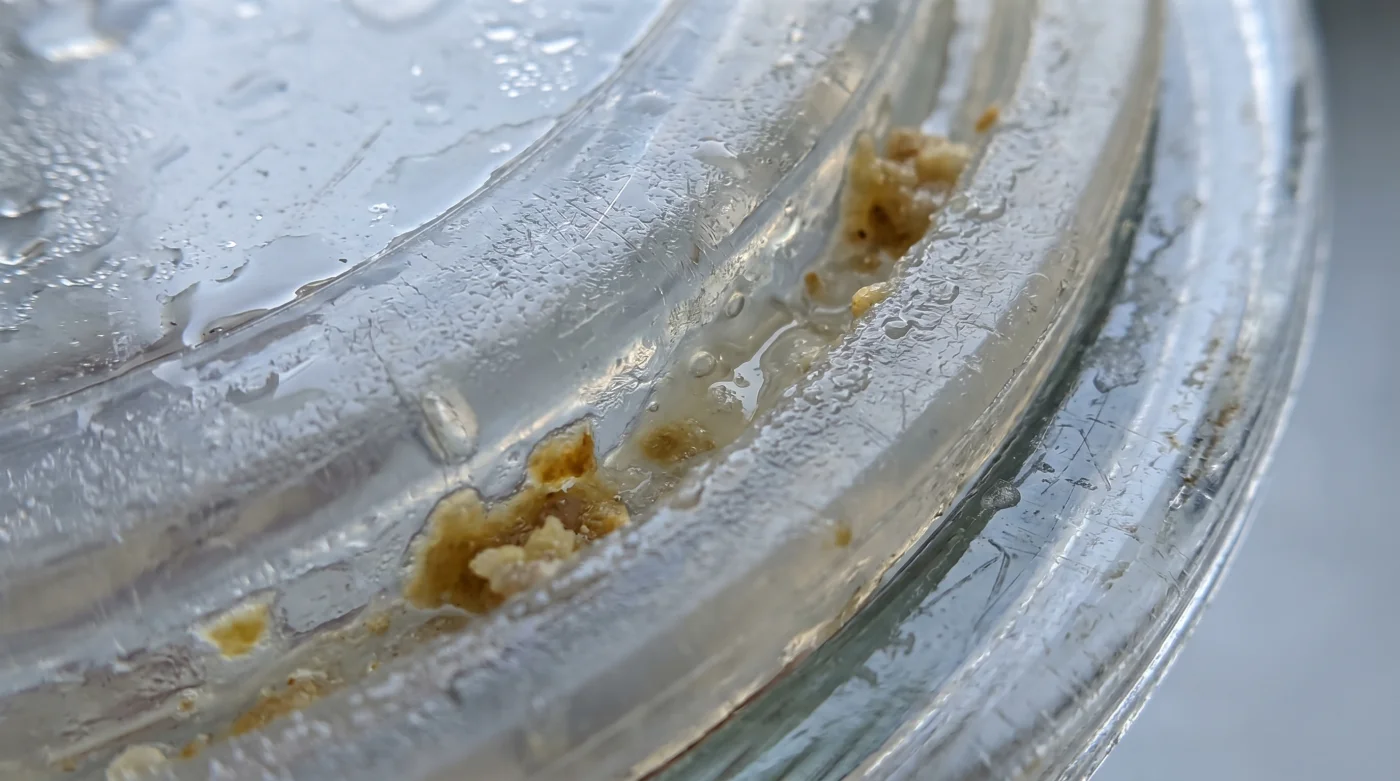
The dinner plates are scraped, the leftovers are packed away, and the dishwasher hums its low, rhythmic lullaby against the kitchen counters. You press the heavy-duty cycle, trusting the scalding water and lemon-scented detergent to reset your kitchen to zero. When you crack the door open two hours later, that waft of hot steam feels like absolute proof of sanitation.
But if you look closely at the pristine glass containers cooling on the top rack, a quiet disaster is unfolding inside the rim. Heat does not equal clean when it comes to the flexible gaskets keeping your food airtight. In fact, that boiling environment is actively working against you.
The silicone rings that snap your glass meal-prep containers shut are built to expand and contract. When they sit strapped to their lids inside a high-heat wash cycle, the pores of the rubber stretch wide open. Microscopic traces of tomato sauce, chicken broth, and cooking oils slip into those microscopic valleys before the cooling cycle snaps them shut again.
You are left with a seal that looks perfectly clear to the naked eye but acts as a microscopic terrarium. You are baking bacteria into rubber, locking it safely away from the detergent and creating the perfect breeding ground for tomorrow’s lunch. The very machine designed to protect your family is quietly sabotaging your food storage.
The Sauna Effect and the Myth of Sanitization
Think of a silicone seal like a dry kitchen sponge sitting in a sauna. As the temperature spikes, the material relaxes, expanding to handle the thermal shock. If you leave the gasket attached to the lid, the pressurized water jets force tiny, aerosolized food particles straight under the rim and directly into those expanded pores.
Most of us assume the sanitize cycle is the ultimate defense against kitchen pathogens. It is actually a success killer. High heat creates a false sense of security. Instead of washing away the debris, the steam cycle acts like an oven, baking microscopic proteins deep into the rubber micropores just as the material shrinks back down to room temperature.
The very method you use to protect yourself is what eventually turns the gasket cloudy, sticky, and foul-smelling. Shifting your perspective requires a slight pause. You have to stop treating the lid as a single, indestructible unit and start treating the glass and the rubber as two completely different environments with opposing needs.
When you start hand-washing the seal cold, you preserve its structural integrity. Cold water forces the pores to remain tightly closed, allowing the soap to strip away surface oils without pushing anything deeper into the material. The flaw of the tedious hand-wash suddenly transforms into a major advantage for your health.
Sarah Jenkins, a 42-year-old culinary microbiologist who now runs a meal-prep service in Austin, caught onto this early in her career. “I kept finding mysterious mold blooms on the edges of freshly cooked rice,” she notes, recalling her initial confusion. She swabbed the seemingly spotless lids of her clients’ glass containers and incubated the samples. The petri dishes bloomed with residual bacteria. “The dishwasher wasn’t failing; it was doing exactly what high heat does to flexible polymers—stuffing the dirt inside the expanded pores, and locking the doors behind it once the cycle cooled.”
- Bluetooth Earbuds Lose Deep Bass Frequencies Without This Factory Reset
- LED Strip Lights Degrade Home Drywall Paint Curing Underneath Instantly
- Microfiber Detailing Cloths Strip Clear Coats Without This Water Soak
- SPF 50 Sunscreen Becomes Completely Ineffective Over Daily Facial Moisturizers
- Suns Warriors Broadcasters Abruptly Block Game Streams On Commercial VPNs
- Baking Soda Meat Marinades Actively Destroy Natural Protein Fiber Textures
- Yankees Mobile Tickets Suddenly Void Transferred Passes Over Location Services
- Smart TV Remotes Secretly Throttle Your Entire Home Internet Speed
- Tire Pressure Sensors Drain Vehicle Batteries When Parked Near Routers
- Car Dealerships Secretly Waive Documentation Fees Using This Specific Phrase
Adjusting for Your Kitchen Routine
Not everyone uses their storage containers the same way, which means your approach to gasket maintenance should reflect your specific kitchen habits. Over-complicating the cleanup will just make you abandon the effort entirely, leaving you right back where you started.
For the Bulk Meal-Prep Planner: If you stack five days of lunches into the fridge every Sunday afternoon, your containers endure prolonged contact with complex proteins and acidic sauces. Ignoring the seal ruins the food over those long stretches. You cannot afford to let those gaskets go through the wash attached to the lids. You need a dedicated removal tool—a dull butter knife or a specialized plastic pry bar—to snap those seals out before the glass ever touches the dishwasher rack.
For the Casual Leftover Saver: If you only use glass containers to hold half an onion or yesterday’s pasta, your risk profile is lower, but the physics remain the same. The ambient smells of the fridge will still seep into compromised rubber. The goal is to keep the material as dense and impenetrable as possible.
If you fall into this category of casual leftover storage, wash the lids by hand. Cold water and friction are your best defenses here. The lack of heat keeps the micropores closed, allowing a simple pass with a soapy sponge to strip away surface oils and food debris quickly.
The Cold-Friction Protocol
Changing how you handle these lids does not require adding ten minutes to your nightly chore routine. It requires a deliberate, mindful separation of materials. The glass goes into the machine; the plastic and silicone stay in the sink.
By breaking the habit of throwing the whole lid into the top rack, you extend the seal’s lifespan by years. The silicone remains supple, clear, and perfectly odorless. Here is exactly how to manage the separation seamlessly:
- Extract gently: Pinch the seal to create a small loop, or use a dull edge to pop it out of the track without stretching the rubber.
- Apply cold friction: Run the silicone ring under cool water. Warm water is fine; scalding water is the enemy.
- Use grease-cutting soap: Massage a drop of standard dish soap directly into the ring with your fingers, feeling for any slippery residue.
- Air dry completely: Never snap a wet seal back into a dry lid. Drape the ring over the neck of the faucet or lay it flat on a dry towel overnight.
Your tactical toolkit for this process should remain intentionally minimal. Keep a small, dedicated adhesive hook near the sink for hanging the wet rings. Use a soft-bristled toothbrush to clear out the hard plastic tracks of the lid once a week.
Implementing this small change shifts the dynamic of your kitchen cleanup. You stop fighting the materials and start working with their natural properties. The rubber repels water and oil naturally, provided you do not force it to ingest them through high heat.
Reclaiming the Integrity of Your Food
There is a distinct satisfaction in knowing the meals you carefully prepared remain exactly as you left them. When you stop relying on the aggressive heat of an appliance to solve every cleaning problem, you gain a quieter, more resilient kitchen system.
Preserving the integrity of that tiny rubber ring is not just about avoiding a cloudy gasket or a faint odor of stale garlic. It is an act of care, ensuring that the money you spend on healthy food and heavy-duty glass actually translates to safe, fresh nourishment.
You are no longer crossing your fingers and hoping the machine did its job. You are controlling the environment with intention. The glass endures the fire, the seal stays cool and clear, and your food remains completely your own.
“True kitchen hygiene rarely happens at a boiling point; it happens in the mindful, quiet friction of your own hands.” – Sarah Jenkins
| Key Point | Detail | Added Value for the Reader |
|---|---|---|
| High-Heat Expansion | Dishwasher steam causes silicone to expand, opening microscopic pores. | Prevents bacteria from becoming trapped inside the rubber itself. |
| Cold-Friction Cleaning | Hand-washing with cool water keeps pores tightly closed. | Keeps seals looking brand new and completely odor-free. |
| Total Separation | Removing the gasket before washing the lid prevents trapped moisture. | Eliminates the hidden mold that ruins a week of meal prep. |
Frequently Asked Questions
Can I soak the seals in white vinegar to sanitize them? Yes. A brief soak in a cold water and white vinegar solution naturally neutralizes lingering odors without compromising the structural integrity of the silicone.
How often should I remove the gasket from the lid? You should remove it every single time you wash the container. Leaving it in creates a trap for moisture and bacteria, regardless of how it is washed.
What if my seals already have black spots on them? Black spots indicate deep mold penetration. At this stage, the rubber is compromised and you should purchase replacement seals directly from the manufacturer.
Does the top rack of the dishwasher make a difference? The top rack is cooler than the bottom, but the steam and ambient heat during the drying cycle are still intense enough to open the silicone pores.
Can I use a knife to pry the seal out? Avoid sharp edges like paring knives, as they will create micro-tears in the rubber. A dull butter knife or a plastic guitar pick works perfectly.