There is a specific sound that echoes through quiet morning kitchens, followed immediately by quiet defeat. It is the hollow, scraping noise of a wooden spatula against the bottom of a heavy skillet, trying frantically to rescue scrambled eggs from a silvery grip. You stand there, staring at the crusted proteins, smelling the faint burning of trapped butter, wondering why you ever gave up your scratched synthetic cookware. You probably inherited that heavy steel pan or bought it during a burst of culinary ambition, only to relegate it to the back of the cabinet.
You have likely been told that cooking on bare metal requires a heavy hand with butter, or perhaps an inch of expensive olive oil just to fry a simple breast of chicken. The reality is entirely different, hidden in the basic laws of thermal dynamics. Professional line cooks rarely drown their food in fat to prevent sticking. They do not possess magical ingredients; they simply possess better timing.
Instead, they rely on a quiet conversation between heat and moisture. They understand that a cold, dry surface is a sponge, waiting to grab whatever touches it. Metal, at room temperature, is highly porous. But when you alter the physical state of the metal before the food ever arrives, you change the rules of friction entirely. You stop fighting the equipment and start working with the physics.
The Hovercraft Metaphor: Shifting Your Perspective
We often treat frying pans as passive buckets that hold our food over a fire. This is where the frustration begins. You need to view the surface as dynamic. When metal heats up, its microscopic pores expand and contract, breathing almost like a living material. You are not just applying heat; you are actively changing the landscape of the steel.
If you drop a piece of cold salmon onto mildly warm steel, those pores clamp down on the flesh like tiny jaws. Proteins fuse directly to the metal at a cellular level. This is the sticking point that ruins dinner. However, if you push the temperature just high enough, something magical happens. A microscopic barrier of vapor forms between the food and the floor of the pan.
Think of it as a hovercraft gliding over a swamp. The water inside the food instantly vaporizes upon contact, creating a cushion of steam. Your proteins never actually touch the bare metal. They float on their own expelled moisture, safe from the grasping pores of the steel.
The Secret of the Diner Fry Cook
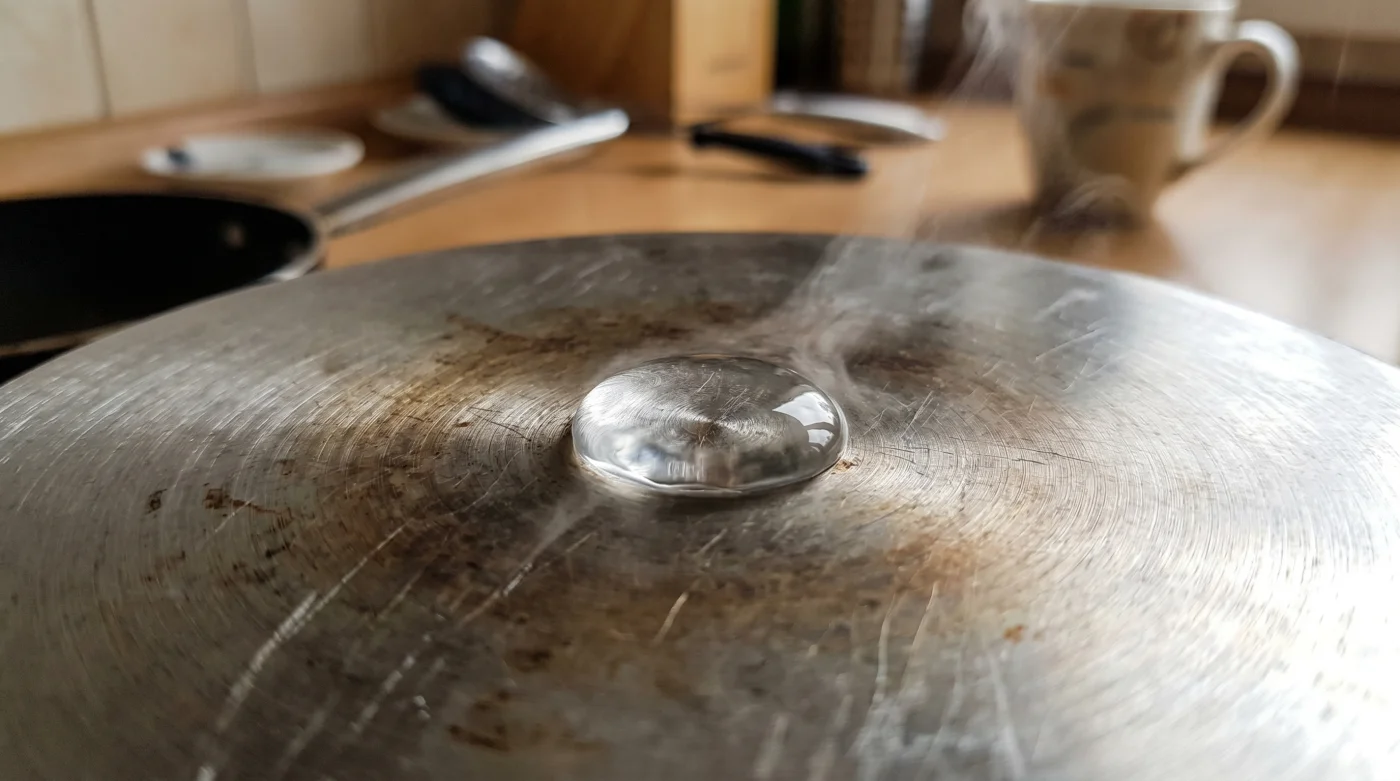
Elias Vance, a fifty-four-year-old breakfast chef in a bustling Chicago diner, spends his mornings working exclusively on battered, decades-old steel skillets. While modern home cooks panic over delicate trout fillets, Elias drops them onto bare metal with casual indifference. His secret is not the brand of his equipment or a heavy pour of clarified butter, but his absolute trust in the water bead test. He waits for the metal to reach a precise threshold where a single flick of water from his fingertips doesn’t fizzle and die, but forms a perfect, dancing sphere of mercury. It races around the pan like a solid glass marble. Only then does the oil go in, followed instantly by the fish.
Adjustment Layer: The Delicate Handler
Not every ingredient requires the exact same approach. You must tailor heat to the fragility of your dinner. A master of bare metal understands that temperature is a spectrum, not a single switch.
- Soundbar Speakers Produce Terrible Dialogue Without This Positioning Hack
- OLED Smart TVs Boost Picture Quality With Black Tape
- Visa Credit Cards Hide A Secret Car Rental Upgrade
- Salicylic Acid Cleansers Cause Breakouts When Rinsed Too Quickly
- All-Season Tires Actually Destroy Your Suspension Over Five Years
- Microwave Ovens Ruin Leftovers Because Of This Plate Placement
- Dólar Estadounidense Digital Exchanges Just Halted Standard Conversion Routing
- Microfiber Towels Scratch Car Paint When Washed With Detergent
- TVMax En Vivo Broadcasters Suddenly Restrict Mobile Casting Features
- Suns Warriors Broadcasters Abruptly Block Game Streams On Commercial VPNs
Proteins with high moisture and zero structural integrity demand the most precise temperature control. If the pan is too hot, the butter burns instantly and eggs turn to rubber. You want a moderate dance when testing the surface. The water droplet should slide around the pan slowly, without shattering into a dozen smaller beads. This is the sweet spot for fluffy omelets, scallops, and flaky white fish.
Adjustment Layer: The Heavy Sear
When you want a dark, crusty exterior on a thick cut of beef or a pork chop, the steel needs to be punishingly hot. The water bead should skitter frantically across the surface, racing from edge to edge. This ensures the meat’s exterior cauterizes immediately, sealing off the interior moisture while riding that protective layer of steam. The heavy sear relies on aggressive, sustained heat.
Adjustment Layer: The Quick Sauté
Onions, peppers, and mushrooms carry their own heavy water content and delicate cellular walls. You need just enough base heat to initiate the hovercraft effect before their internal sugars begin to caramelize and stick. Watch the edges closely, as a handful of cold vegetables will lower the pan’s temperature dramatically the moment they drop in, potentially breaking the steam cushion.
The Mindful Application of the Water Method
Mastering this technique takes roughly sixty seconds of focused attention. It is a one-minute masterclass that permanently alters your kitchen relationship. You transition from following vague recipe times to reading the physical cues of the metal itself.
- Place your dry, empty skillet on the stove over medium heat.
- Wait approximately two to three minutes, resisting the urge to add anything to the pan.
- Dip your fingers in a glass of tap water and flick a few drops onto the center of the metal.
- Observe the reaction: if it sizzles and evaporates immediately, the pan is too cold.
- Wait another thirty seconds and test again until the drop forms a solid bead that glides effortlessly.
- Wipe the bead away with a dry towel, add a minor splash of your chosen cooking fat, and immediately add your food.
The tactical toolkit requires nothing more than your eyes, a cup of tap water, and a touch of patience. The optimal temperature for the Leidenfrost effect to occur is typically around 380 degrees Fahrenheit. If your water drop shatters into tiny, explosive fragments that vanish instantly, you have crossed 400 degrees. You must remove the pan immediately and let it cool for a full minute before trying again.
The Bigger Picture: Reclaiming Your Cooking
Understanding this simple thermal reaction offers more than just an easier time washing dishes after dinner. It frees you from the cycle of purchasing cheap, synthetic-coated pans that inevitably scratch, degrade, and end up in landfills every few years.
When you learn to manipulate the metal you already own, you reclaim your kitchen autonomy. You begin to cook with intent rather than hope, relying on technique rather than fragile coatings. A heavy, durable piece of cookware transitions from a frustrating chore to a reliable partner, capable of searing perfectly, deglazing beautifully, and sliding food directly onto your plate without leaving a trace behind.
The skillet does not dictate the outcome of the meal; the cook’s patience dictates the behavior of the skillet.
| Key Point | Detail | Added Value for the Reader |
|---|---|---|
| The Sizzle Phase | Water evaporates instantly on contact. | Tells you to wait; prevents food from bonding to the pores. |
| The Hover Phase | Water forms a gliding, unbroken sphere. | Signals the perfect moment to add fat and food for zero sticking. |
| The Shatter Phase | Water breaks into multiple tiny, erratic droplets. | Warns you the pan is too hot, preventing burnt oil and bitter flavors. |
Frequently Asked Questions
Does this work on cast iron as well? Yes, the exact same physical reaction applies, though cast iron retains heat longer and may require a lower burner setting to maintain the sweet spot.
Why do I need to wipe the water out before adding oil? Oil and water react violently under high heat; removing the bead prevents dangerous splattering before your food goes in.
Can I use cold butter right after the water test? Butter contains milk solids that burn quickly at this temperature, so it is better to use clarified butter or a high-smoke-point oil.
What if my food still sticks a little bit? Let it sit undisturbed. Often, proteins will release themselves from the metal naturally once a sufficient crust forms.
Do I have to wash the pan differently after doing this? No, but because the food hasn’t bonded to the metal, a simple soak in warm soapy water is usually all it takes to wipe it clean.