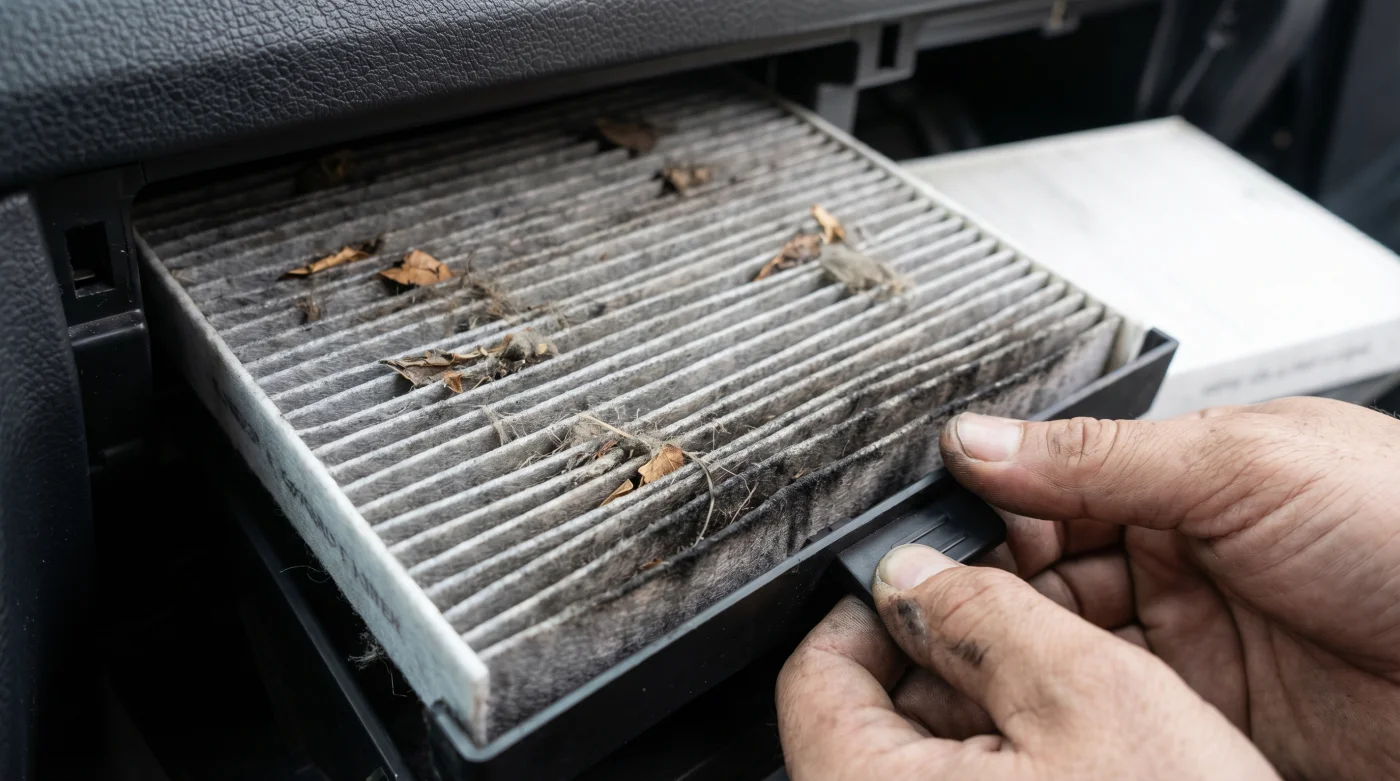
You are sitting in a vinyl chair that smells faintly of industrial floor cleaner, sipping lukewarm dealership coffee from a paper cup. Across the desk, the service advisor holds up a rectangular piece of corrugated paper. It is gray, choked with dandelion seeds, desiccated leaves, and greasy road grime. “Your cabin air filter is completely clogged,” he says with practiced concern. “We can swap it out right now for fifty bucks.” You nod, authorizing the charge because the dashboard feels like an off-limits ecosystem. You assume there are complex panels to remove, specialized screws to unscrew, and delicate wiring harnesses to avoid. But the moment you agree to that line item on your invoice, you are paying for an illusion.
The air blowing from your vents has been struggling lately, barely pushing enough cold air to cool your face, and smelling faintly like old rain and asphalt. You accept the dealership premium because modern vehicles feel intimidating, wrapped in thick plastic panels and secured by tamper-proof bolts. We treat our cars as monolithic machines that only trained professionals should touch, assuming every component requires specialized diagnostic computers and hydraulic lifts. We hand over our keys and our credit cards, believing that anything behind the steering wheel is entirely beyond our physical capability to fix.
But the truth hidden inside your dashboard is entirely different. That fifty-dollar service is a routine disruption that requires no tools, no waiting rooms, and absolutely no mechanical expertise. It relies entirely on a piece of molded plastic resting right above your knees: your passenger-side glovebox. The ventilation system in your car was specifically engineered to be serviced by hand, without a single wrench.
The secret they charge you for is a maintenance task so shockingly simple that once you do it yourself, the prospect of ever paying a mechanic for it again feels entirely absurd. It is just pushing two tabs inward to bypass a minor plastic stop. You are paying someone fifty dollars to open your glove compartment and drop in a piece of paper.
The Lint Trap Metaphor
Think of your vehicle’s climate control system like a heavy-duty household vacuum cleaner. Before the outside air hits your lungs, it has to pass through a physical barrier to catch exhaust soot, airborne pollen, and highway dust thrown up by eighteen-wheelers. We often assume accessing this barrier requires disassembling the dashboard and tearing into the heating core. The reality is much closer to pulling the lint screen out of your clothes dryer after a load of laundry.
When you reframe the cabin filter as a disposable household sponge rather than a complex mechanical engine part, the fear of breaking things evaporates. Automakers actually designed this specific compartment to be accessed by the daily driver. Those hidden plastic stoppers on the sides of your glovebox aren’t security measures; they are quick-release buttons meant to make replacement effortless. By keeping this mundane detail quiet, the rapid-service industry maintains a steady flow of easy profit on every oil change ticket.
Ray Sullivan is a fifty-eight-year-old independent mechanic operating out of a two-bay cinderblock garage near Pittsburgh. His hands are perpetually stained from years of pulling heavy transmissions, but he outright refuses to charge his regulars for a cabin air filter replacement. “I watch people pull in, stressed about weak AC and weird smells,” Ray laughs, leaning against a towering red toolbox. “I walk over, open the passenger door, pop the glovebox past its hinges, slide out the plastic tray, and swap the paper. Takes me literally thirty seconds from start to finish.”
He views this common upcharge at large dealerships as a fundamental breach of trust between the driver and the garage. To him, charging fifty bucks is absurd when the physical labor involves less effort than changing a windshield wiper blade in a parking lot. It is the mechanic’s best-kept secret strictly because it generates pure, unadulterated margin on a fifteen-dollar piece of pleated fabric. Ray insists that once people learn the trick, they never look at their dashboard the same way again.
Choosing Your Air Quality Defense
Not all replacement filters are created equal. Once you realize you can buy the part yourself at any local auto parts store for less than the cost of lunch, you gain the freedom to upgrade your daily breathing environment based entirely on your specific driving habits and local geography.
For the Highway Commuter
If you spend two hours a day stuck behind idling diesel trucks on the interstate, you desperately want an activated carbon filter. The charcoal layer embedded in the pleats neutralizes heavy exhaust odors immediately before they can permeate your cloth upholstery or linger in your hair. It physically transforms a stifling, gas-choked morning commute into a much cleaner, more breathable sanctuary.
For the Allergy Sufferer
Spring tree pollen and autumn ragweed blooms require a true HEPA-rated cabin filter. It restricts the airflow slightly from the blower motor but captures microscopic allergens and fine particulate matter, acting exactly like a fitted N95 mask for your entire vehicle interior. Breathing feels noticeably lighter and sharper during peak allergy seasons when you actively trap the dust before it hits the cabin vents.
For the Budget Minimalist
A standard particulate paper filter is exactly what the dealership installs by default. It effectively traps falling leaves, dust mites, and larger airborne debris swirling around city streets. It is highly effective for general driving, incredibly cheap to replace multiple times a year, and keeps your blower motor running smoothly without overthinking the maintenance process.
The Thirty-Second Glovebox Hack
Execution requires no heavy work gloves, no grease, and no heavy lifting. You only need to know exactly where to press your thumbs. Park your car in the driveway, turn off the ignition, and open the passenger door to give yourself plenty of room to maneuver.
Empty the glove compartment completely so nothing spills onto the floor mats when you lower the door. Once the bin is entirely empty, look at the inner walls of the plastic housing to locate the tension stops holding it in place.
- Locate the tension tabs: Feel for the small, molded plastic stops on the outer left and right edges of the open glovebox.
- Squeeze and drop: Push both sides inward simultaneously. The glovebox will drop past its usual stopping point, hanging downward toward the floor mats.
- Find the tray: Look straight ahead into the dark cavity exposed behind the glovebox. You will see a long, narrow plastic rectangle with a latch on one side.
- Swap the paper: Unclip the tray cover. Pull out the old filter, noting the arrows indicating airflow direction. Slide the new one in, matching the arrow direction exactly.
- Snap it shut: Click the cover back on, lift the glovebox up until the side tabs pop back into their normal tracks.
Your Tactical Toolkit for this operation is beautifully bare. You need zero socket wrenches, zero flathead screwdrivers, and roughly fifteen dollars for the replacement part itself. The entire process of swapping the filter takes less time than waiting in the drive-thru line for your morning coffee order to be called.
Reclaiming Your Dashboard
Conquering this minor maintenance task does something profound to your relationship with your vehicle. It shatters the invisible barrier completely between the driver and the everyday physical mechanics of the machine. You are no longer entirely reliant on an aloof service desk for your basic interior comfort and air quality.
Knowing you can clear the air in your own cabin brings a quiet, profound sense of satisfaction. When you turn the key and hear the blower motor humming cleanly, delivering crisp, odorless air against your face, you feel the immediate physical benefit of your own bare hands. You stop dreading the service advisor’s clipboard and start driving with the grounded confidence of someone who finally understands the machinery resting directly beneath their fingertips.
“A car is only a mystery until you learn which plastic tabs to push; after that, it is just a machine waiting for your hands.”
| Key Point | Detail | Added Value for the Reader |
|---|---|---|
| Dealership Service | Often costs fifty dollars or more for basic paper filters. | Highlights the unnecessary financial drain of a routine check. |
| DIY Glovebox Method | Requires thirty seconds and zero tools. | Returns control and saves money through an accessible habit. |
| Filter Upgrades | Charcoal and HEPA options available at auto stores. | Allows custom climate control based on personal health needs. |
Frequently Asked Questions
How often should I change my cabin air filter?
Most manufacturers recommend a swap every 15,000 miles, but if you drive on dirt roads or park under heavy trees, check it annually before the summer heat hits.
Will doing this myself void my car warranty?
Absolutely not. Cabin air filters are considered routine consumable maintenance items, much like windshield wipers or floor mats.
What if my glovebox does not have push tabs?
A few models use a dampener string on the right side. You simply slide the plastic loop off the peg before squeezing the tabs inward.
Can I just wash the old filter and put it back?
Paper filters degrade when wet, and moisture breeds mildew in your ventilation system. Always replace it with a fresh, dry unit.
Why does the new filter have an arrow printed on it?
The arrow indicates the direction of airflow, which always moves from the outside environment down into the cabin blower motor. Point the arrow down.