You know the smell instantly. That warm, sweet blend of coconut and palm leaf that wafts up from the yellow tin on a Saturday morning. You run the applicator pad in tight, rhythmic circles across the warm hood of your car, watching the dull haze form. Buffing it off reveals a wet, mirror-like depth that synthetics just never seem to replicate. You step back, wiping sweat from your forehead, convinced you have just wrapped your clear coat in an impenetrable organic shield. It feels like a rite of passage, a tactile connection between owner and machine that has been passed down through generations of car enthusiasts.
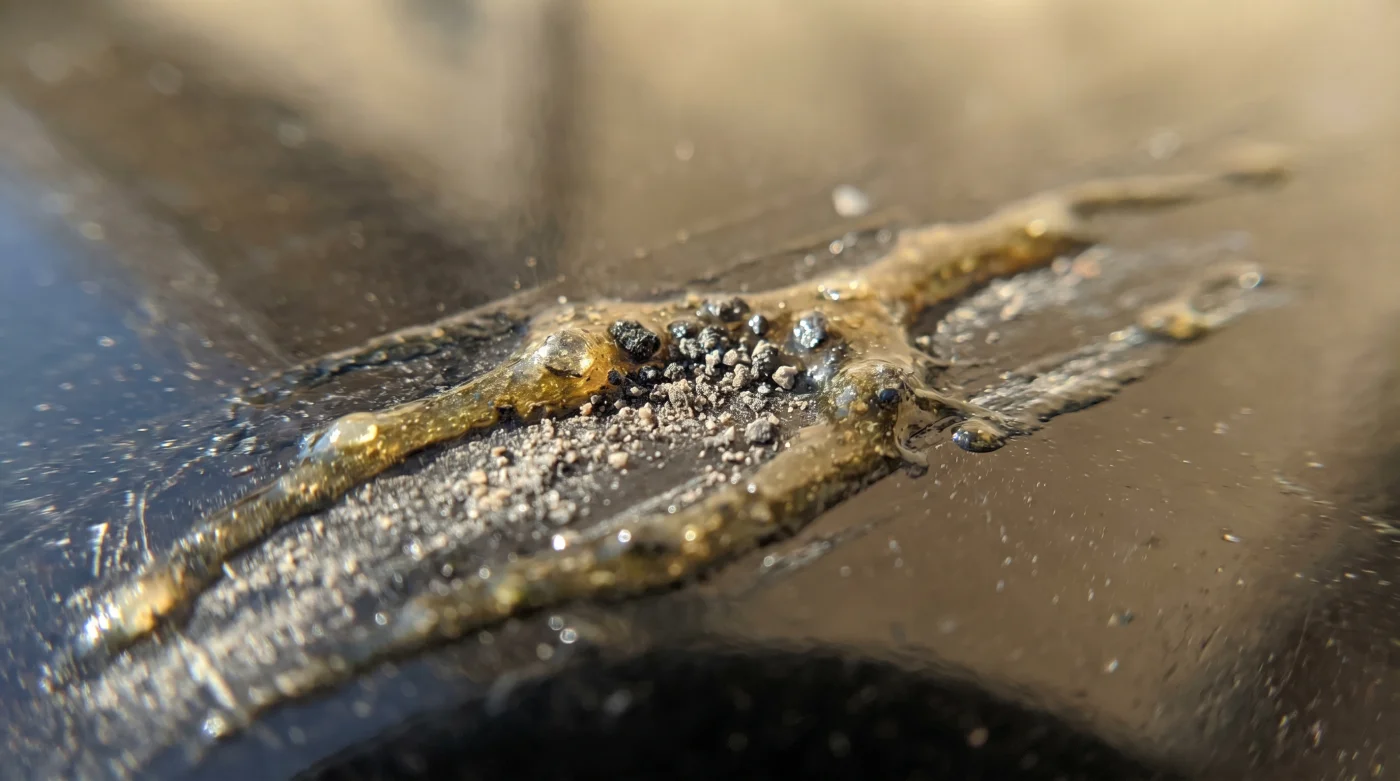
But step out into a blinding July afternoon, where asphalt temperatures easily push past 140 degrees Fahrenheit. The metal beneath that pristine finish begins to bake. You might assume your weekend labor is deflecting the harsh ultraviolet rays, but the reality is quietly destructive. As the sun beats down, that premium layer of natural armor begins to soften, shifting from a hard shell back into a malleable, sticky paste. The very product you applied to guard against the elements is actively changing its molecular state under the intense solar load.
At a microscopic level, your vehicle’s clear coat is not perfectly smooth; it resembles a jagged mountain range. As the carnauba melts under the summer sun, it flows into these microscopic valleys. Airborne highway grit, brake dust, and industrial fallout settle onto the softened wax. Applying organic paste over un-decontaminated paint in this environment is like trying to breathe through a pillow—the surface is suffocated, unable to shed heat effectively. When the evening rolls in and the metal cools, the wax hardens again, permanently trapping that abrasive debris directly against your paint. Every time you wipe down the car, you are dragging that encapsulated grit across the finish, scratching it from the inside out.
The Sun-Baked Trap: A Flawed Industry Standard
For decades, the automotive detailing industry has sold us on the romance of nature. Carnauba, harvested from Brazilian palm trees, is championed as the ultimate protective layer. We are told that organic is superior, that the hardest natural wax on earth provides the best defense. However, this is a dangerously outdated industry standard built on aesthetic nostalgia rather than modern chemical reality. Early single-stage enamels soaked up natural oils, but modern catalyzed clear coats simply allow the wax to sit on top like a suffocating blanket.
Think of it like pouring warm syrup over a gravel driveway. When the temperature spikes, the wax expands and becomes a viscous sponge. Instead of acting as a deflector shield, it acts as a magnetic dirt trap. That wet, glossy look you admire is actually a highly receptive surface for silica particles. What you perceive as environmental wear and tear over the months is actually a self-inflicted wound, sealed and preserved by the very product you bought to prevent it. You are not protecting the paint; you are laminating the dirt into a permanent, hazy film that steals the clarity from your finish.
Enter Elias Vance, a 48-year-old master paint corrector operating out of a climate-controlled shop in Phoenix, Arizona. After spending two decades restoring vintage European clear coats amid the hum of dual-action polishers and the smell of compounding dust, he started noticing a recurring pattern in garage-kept classics that occasionally saw weekend sunlight. He would put a halogen inspection light to a fender and see severe micro-marring beneath a thick layer of expensive paste wax. Elias coined the term ‘carnauba bake,’ realizing owners were sealing microscopic abrasive dust into their paint pores every time they drove their freshly waxed cars into the 110-degree desert sun.
Adapting to the Climate: Paint Preservation Archetypes
Not all vehicles experience the sun the same way. How you handle your exterior finish depends entirely on how your car lives its life, the miles you drive, and where you park when the engine cools.
For the Daily Commuter
If your car sits in an uncovered asphalt parking lot from nine to five, natural wax is your worst enemy. The constant thermal cycling turns the wax into a cloudy, abrasive sponge. You need to abandon organics entirely. Cross-linking polymer sealants are your best defense here, offering a high melting point that resists softening under extreme stress. These advanced formulas keep the dirt resting loosely on top of the finish, where a gentle rain or a quick rinse can wash it away without embedding the grit into the pores of your paint.
- Memory Foam Mattresses Degrade Rapidly When Using Heated Blankets
- Stainless Steel Pans Become Nonstick With This Water Drop Trick
- Hyaluronic Acid Serums Accelerate Dehydration In Dry Indoor Climates
- Smart TV Soundbars Distort Dialogue When Connected Via Bluetooth
- Ceramic Brake Pads Actually Increase Stopping Distance During Winter
- Colorado Inter Miami Ticketing Platforms Just Froze Resale Transfers
- TVMax En Vivo Broadcasters Suddenly Restrict Mobile App Streaming
- OLED TV Screens Prevent Burn In Using This Fast Tweak
- Ceramic Car Coatings Cost Thousands Unless You Use This Formula
- Burr Coffee Grinders Extract Sweeter Roasts Using This Prohibited Trick
For the Show Car Purist
Perhaps you own a garage queen that only rolls out for Sunday morning coffee runs before the pavement gets hot. In this highly controlled environment, carnauba still holds its value as a pure aesthetic enhancer. The organic compound bends light in a way that synthetics cannot quite replicate, giving dark paints a bottomless, pool-like depth. It fills in the minor imperfections and leaves a rich, warm glow. Just remember: it is makeup, not armor. Keep it out of the midday sun, and it will serve its cosmetic purpose beautifully.
For the Weekend Adventurer
If your vehicle sees a mix of highway miles, dirt roads, and weekend washes, you are the prime victim of the dirt-trapping cycle. You need a sacrificial barrier that repels water and dust equally. Transitioning to a consumer-grade ceramic spray coating provides the slickness of wax without the melting point liabilities, ensuring that environmental contaminants are bouncing off rather than embedding into your clear coat. It is a modern solution for a dynamic driving lifestyle.
The Correction Protocol: Stripping the Trap
Breaking the cycle requires removing the compromised wax and the embedded grit without adding more scratches. This is a deliberate, mindful process that resets your clear coat. You want to glide across the surface, never scrub. When applying a premium silica sealant later, the consistency is delicate; the cream should tremble on the applicator pad, spreading like water rather than dragging like heavy clay.
Start by washing the vehicle out of direct sunlight, ensuring the metal is cool to the touch. This prevents sudden chemical flashing and resets your clear coat entirely so you can build a synthetic foundation free from trapped microscopic debris.
- The Strip Wash: Use a dedicated high-pH stripping soap. Let the thick foam dwell for five full minutes to safely break down the old, compromised wax barrier without aggressive scrubbing.
- Chemical Decontamination: Spray an iron remover directly over the wet paint. You will see it turn a deep purple as it dissolves embedded rail dust and brake particles that the wax was holding onto.
- Tactile Exfoliation: Gently glide a synthetic clay towel over the thoroughly lubricated paint. Do not press; let the tool absorb the remaining surface impurities. You will feel the drag turn to glass.
- The Modern Shield: Apply a silica-infused polymer sealant. Work in two-foot sections, wiping away the light residue immediately to reveal a hard, crystalline shine.
The Tactical Toolkit:
- High-pH stripping auto wash (2 ounces per gallon of water).
- Iron-dissolving fallout remover.
- Perforated synthetic clay towel (medium grade).
- Silica dioxide (SiO2) spray sealant.
- Four 350-GSM edgeless microfiber towels.
Beyond the Weekend Ritual
Letting go of the yellow tin of paste wax can feel like abandoning a cherished tradition. We tie so much of our automotive pride to the physical labor of rubbing and buffing, believing that more sweat equates to better protection. But true preservation is about outsmarting the elements, not fighting them with outdated chemistry that ultimately betrays you when the temperature rises.
When you stop coating your vehicle in a melting organic trap, you reclaim your Saturday mornings. You stop chasing a hazy finish with a heavy buffer, and instead, you enjoy a car that effortlessly sheds dust in the wind and repels the afternoon rain. By understanding the invisible, microscopic battle happening on the surface of your paint under the midday sun, you move from a place of blind maintenance to a state of quiet, confident ownership.
“The greatest disservice we do to modern automotive clear coats is treating them like 1950s single-stage enamel.” – Elias Vance
| Key Point | Detail | Added Value for the Reader |
|---|---|---|
| Carnauba Wax | Melts at 180 degrees Fahrenheit, trapping dirt. | Provides incredible depth and gloss, best reserved strictly for indoor show cars. |
| Polymer Sealant | Synthetic cross-linking barrier with high heat resistance. | Offers up to six months of durable protection for daily drivers parked outside. |
| Ceramic Coating | SiO2 nanoparticles that cure into a glass-like shell. | The ultimate defense against micro-scratches, forcing water and dirt to slide right off. |
Common Concerns Addressed
Is carnauba wax bad for my car?
Not inherently, but it becomes a serious liability if your car spends hours baking in direct sunlight, turning into an unavoidable dirt trap.How do I know if my wax has melted into the paint?
If your paint feels gritty, sticky, or hazy even immediately after a careful hand wash, you likely have environmental fallout embedded deeply in the wax layer.Can I put a synthetic sealant directly over my old wax?
No. You must strip the old wax first using a high-pH soap, otherwise the new synthetic sealant will not bond properly to the underlying clear coat.Will a modern ceramic spray give me that classic wet look?
It provides a very sharp, glassy, reflective shine, though it lacks the warm, organic glow of carnauba. The trade-off is a vastly superior, heat-resistant protection.How often should I reapply a modern synthetic sealant?
Twice a year is ideal for vehicles stored outside, typically once before summer and once before winter, to effortlessly maintain the chemical barrier.