You stand at the bathroom sink, the porcelain still cold under your hands as the morning light barely filters through the window. You pump the salicylic acid cleanser, whip it into a quick, satisfying foam, rub it furiously across your cheeks, and splash it away. The entire ritual takes ten seconds, maybe fifteen if you are feeling generous. You pat dry with a heavy cotton towel, expecting clear skin, but tomorrow morning, a fresh, painful red bump will inevitably appear right on your jawline.
You assume the product is failing you. The reality is that you are rushing the chemistry, treating a precision formulation like cheap hand soap. Salicylic acid doesn’t work through friction; it works through absorption, and absorption requires a very specific currency: time.
When you rinse away an exfoliating wash immediately, you forcefully strip the surface lipids without allowing the beta-hydroxy acid to actually penetrate the pore walls. The active acid barely touches the trapped oil, dirt, and dead cells before being flushed rapidly down the drain. Your skin reacts to the sudden stripping of its natural moisture by panicking, immediately pumping out more sebum to overcompensate for the sudden dryness and lack of protective barrier.
You end up trapped in a cycle of sudden, severe rebound breakouts, convinced your skin is just stubbornly resistant to treatment. But the fix isn’t another expensive serum or a stronger prescription. The fix is a quiet, radical adjustment to how you measure time at the sink.
The Sixty-Second Contact Rule
Industry professionals rarely advertise this openly, preferring instead to sell you an entire regimen of leave-on toners, expensive serums, and aggressive spot treatments. But behind closed clinic doors, veteran aestheticians use an incredibly effective, zero-cost method to clear up their clients’ complexions. They treat standard cleansers not as mere detergents, but as highly active contact therapies that require precise timing to activate properly.
Think of salicylic acid like a dry sponge trying to soak up a spill. If you swipe it across the counter at top speed, it barely picks up a drop. It needs to rest on the surface, letting capillary action do the heavy lifting. Your pores behave exactly identically, requiring sustained, undisturbed contact to dissolve hardened sebum.
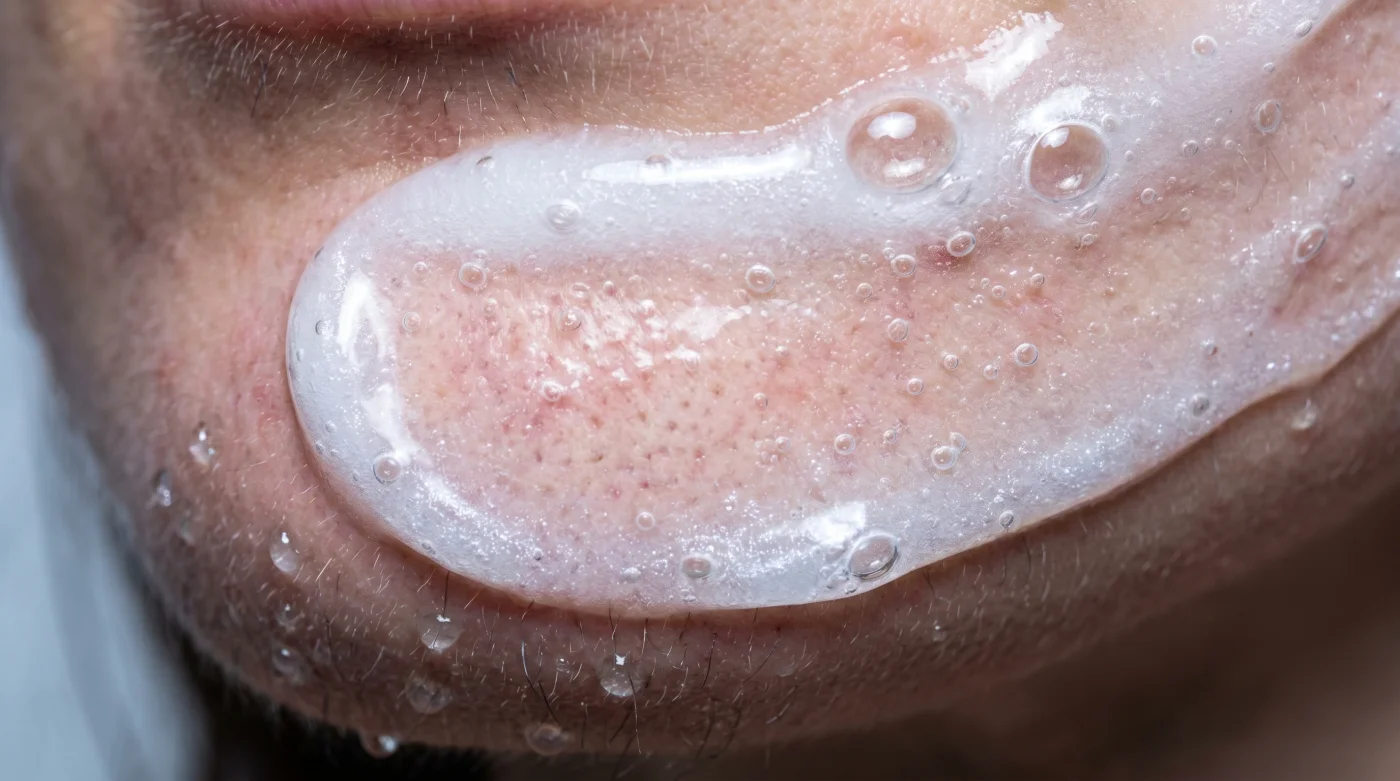
By forcing yourself to leave the lather resting on your face for exactly sixty seconds, you change the product’s fundamental function entirely. It transitions from a basic, stripping detergent into a gentle, lipid-dissolving treatment mask. The acid finally has the quiet window it needs to melt the intracellular glue holding dead skin cells together, working quietly in the background without the need for harsh physical scrubbing.
Consider the daily routine of Marcus Vance, a 38-year-old cosmetic chemist formulating over-the-counter acne treatments in New Jersey. During a long testing phase, Marcus noticed clinical trial participants were returning with inflamed, angry skin, despite using a mild two-percent salicylic formula. He placed a timer on the testing room mirror. Once participants were forced to let the foam sit untouched for a full minute, the severe breakouts stopped entirely. Marcus realized the active ingredient was completely dependent on resting skin contact—a detail glaringly missing from nearly every commercial bottle label.
Adjusting the Clock for Your Skin Type
Not every face handles a full minute of acid exposure the exact same way, and rigidly following rules without paying attention to your body can lead to unnecessary discomfort. You have to read the room, adjusting the contact time to carefully match the exact density, hydration levels, and daily temperament of your skin’s unique barrier.
- Toyota RAV4 Hybrid Batteries Degrade Rapidly Using Default Eco Mode
- Memory Foam Mattresses Trap Toxic Moisture Without This Bed Frame
- Air Fryer Baskets Actively Leach Chemicals During Standard Preheating Cycles
- Instituto de Mercadeo Agropecuario Abruptly Restricts Bulk Fresh Produce Purchases
- Chelsea Manchester United Broadcasters Suddenly Block Third Party Streaming Apps
- Microfiber Cleaning Cloths Repel Liquid Instantly After Standard Machine Washes
- Synthetic Motor Oil Degrades Rapidly Under Daily Short City Commutes
- Salary Employment Contracts Hide A Devastating Unpaid Overtime Clause
- Refrigerator Condenser Coils Double Cooling Power With One Fast Vacuum
- Baking Soda Cleaners Secretly Scratch Protective Enamel Cookware Finishes
If your skin feels constantly slick and your pores are visibly packed, you are the prime candidate for the full sixty-second protocol. Massage the cleanser in for ten seconds, then let it rest like a fine film. Let the foam sit silently while you brush your hair or adjust the shower temperature.
When your cheeks flake heavily in the winter but your nose and chin constantly break out with stubborn blackheads, a full minute of acid across the whole face will inevitably cause severe irritation. Apply the cleanser only to your highly congested T-zone for forty seconds, letting the foam do the heavy lifting where it is needed most. In the final twenty seconds, pull the remaining lather lightly across your sensitive cheeks before rinsing away the debris.
Adult breakouts often happen on parchment-dry skin. Here, the sixty-second rule feels too aggressive. Instead, aim for exactly thirty seconds of contact time, but perform the wash using lukewarm—never hot—water. Heat accelerates the stripping effect, pushing dry skin into a complete panic state.
Executing the Static Wash
Implementing this technique requires breaking years of ingrained muscle memory and cultural conditioning surrounding personal hygiene. You have to deliberately stop scrubbing, put your hands down, and start waiting, allowing the chemistry to work its magic while your hands stay completely still at your sides.
Here is your tactical toolkit for the contact wash. First, dispense a nickel-sized amount of cleanser onto damp, clean hands. Next, rub your palms together until the gel transforms into a dense, opaque white lather. Press the foam gently into your damp face, avoiding the immediate eye area entirely. Stop touching your face immediately. Start the sixty-second countdown, and finally, rinse with cool water, splashing gently rather than rubbing the skin dry.
The physical sensation will subtly change right around the thirty-second mark, shifting from feeling like wet soap to something slightly more active. You might notice a faint, phantom cooling effect spreading across your forehead, or sense a tiny structural shift in the foam as the microscopic bubbles naturally break down and pop.
This is the acid solubilizing oil, moving past the surface tension of your skin and doing the work you paid for. Patience outshines brute force when it comes to long-term barrier health and preventing chronic inflammation.
Reclaiming Your Sink Time
When we rush our physical routines, we signal to our nervous system that taking care of ourselves is a chore to be minimized and rushed. The frantic ten-second face wash is just another symptom of a day built entirely on sprinting to the next obligation, completely disconnected from our physical bodies.
Slowing down to count sixty seconds forces a hard stop. It asks you to stand still, to breathe evenly, and to let a process unfold without your aggressive physical intervention. By respecting the time the ingredients need to function, you stop fighting your own skin. The chronic redness fades away, the texture softens remarkably, and the mirror reflects a face that is finally being cared for, rather than scrubbed away in a panic.
“Your cleanser is the most critical active treatment you own; if you rush the rinse, you are simply washing your money down the drain.”
| Key Point | Detail | Added Value for the Reader |
|---|---|---|
| Contact Time | 60 seconds of undisturbed resting on the skin. | Prevents rebound breakouts by allowing acid to actually solubilize oil. |
| Temperature | Lukewarm to cool water exclusively. | Protects the delicate lipid barrier from thermal shock and rapid dryness. |
| Application | Static pressing of foam, no aggressive rubbing. | Reduces physical inflammation while completely maximizing chemical exfoliation. |
Mindful Skincare FAQ
Does leaving the cleanser on for sixty seconds burn?
No, a properly formulated two-percent salicylic acid wash is designed to be highly tolerable. You may feel a slight cooling or tingling sensation, but it should never sting or burn your skin.Can I do this with my regular hydrating face wash?
You can, but it will not yield the exact same chemical benefits. Hydrating cleansers do not contain active chemical exfoliants, so resting contact time mostly just softens the skin slightly before rinsing.Should I use this sixty-second method twice a day?
For most people, once a day in the evening is absolutely perfect. Doing this twice a day can over-exfoliate the fragile barrier, leading to unnecessary dryness and irritation.What if my skin turns slightly pink after rinsing?
A very mild, temporary pinkness is just increased blood flow from the temperature of the water and the chemical activity. If it stays red for hours, simply reduce your contact time to thirty seconds.Do I still need to use a separate leave-on exfoliant?
Often, no. By maximizing the efficiency of your cleanser, many people find they can entirely drop harsh leave-on acids from their nightly routine, saving money and reducing overall barrier stress.