You open the heavy glass door of your front-loader, reaching in for a batch of fresh towels. You expect that familiar, crisp scent of clean cotton, but instead, a faint, swampy odor hits the back of your throat. It smells distinctly like a basement corner that has not seen sunlight in a decade.
Most of us brush past it. You assume the clothes sat wet for an hour too long, or maybe the detergent was not strong enough. You toss them in the dryer, hoping the heat bakes the smell away. But the real source is quietly blooming just inches from your hands.
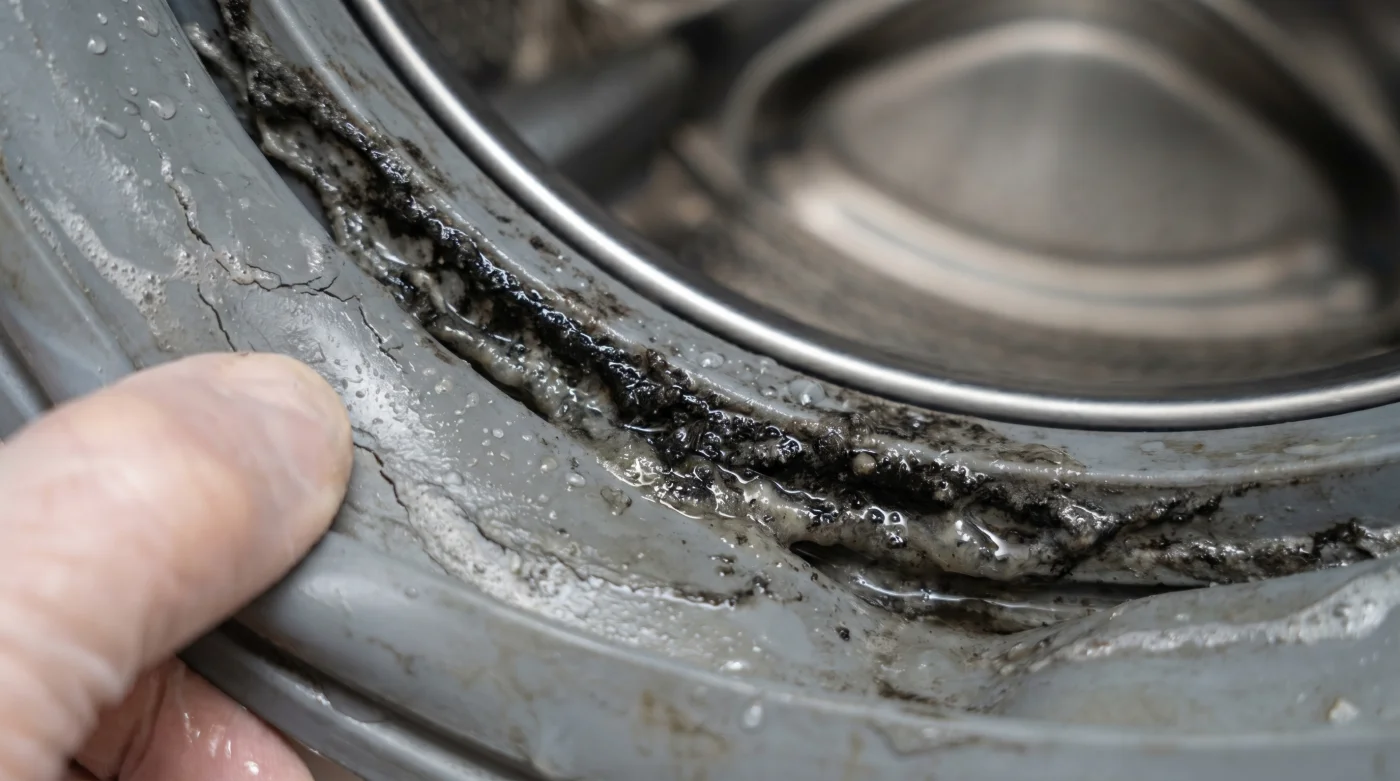
Slide your fingers inside the thick gray rubber gasket framing the drum. Pull it back slightly and run your thumb along the inner fold. If you feel a slimy residue or see speckles of dark, pepper-like stains, you are looking at an active colony.
The unsettling truth is that your washing machine is not self-cleaning. Every cycle you run with modern, high-efficiency liquids adds another layer of food to a microscopic ecosystem thriving out of plain sight.
The Great Cold-Water Deception
For years, the appliance industry and eco-conscious brands have pushed a single, unified message: wash everything in cold water. It saves energy, preserves fabric color, and reduces utility bills. But this standard has a massive, undocumented flaw.
We mistakenly view laundry soap as an all-encompassing sanitizer. If it cleans the mud out of jeans, surely it scrubs the stainless steel drum, right? The reality works in exact reverse. Modern liquid detergents and fabric softeners are largely composed of plant or animal-based lipids.
When you wash exclusively in cold water, these fatty residues never fully dissolve. They coat the outer plastic tub and the hidden crevices of the rubber seal. You are not cleaning the machine; you are laying down a continuous buffet for mold spores. The cold water acts like a gentle incubator, while the soap scum provides the calories.
David Aris, a 42-year-old appliance technician in suburban Pennsylvania, sees this daily. ‘People spend two thousand dollars on a machine and baby it with cold cycles and delicate organic soaps,’ he notes while pulling a completely blackened outer drum assembly from a three-year-old unit. ‘They do not realize these high-efficiency liquids need heat to break down. Without a hot wash, the soap just turns into sticky organic sludge. That sludge is what the mold eats.’
Customizing Your Defense
Reversing this biological buildup requires a different approach depending on your laundry habits. You cannot treat a chronic sports-apparel washer the same as someone cleaning heavy canvas workwear.
- Laser Printers Outlast Inkjet Models Simply By Avoiding Standby Mode
- Coffee Grinder Burrs Double Their Lifespan Using One Dry Rice Cycle
- Salicylic Acid Cleansers Cause Severe Breakouts When Rinsed Too Quickly
- Toyota RAV4 Hybrid Batteries Degrade Rapidly Using Default Eco Mode
- Memory Foam Mattresses Trap Toxic Moisture Without This Bed Frame
- Air Fryer Baskets Actively Leach Chemicals During Standard Preheating Cycles
- Instituto de Mercadeo Agropecuario Abruptly Restricts Bulk Fresh Produce Purchases
- Chelsea Manchester United Broadcasters Suddenly Block Third Party Streaming Apps
- Microfiber Cleaning Cloths Repel Liquid Instantly After Standard Machine Washes
- Synthetic Motor Oil Degrades Rapidly Under Daily Short City Commutes
For the Cold-Water Purist
If you refuse to wash your daily clothes in warm water due to shrinking concerns, you must establish a sacrificial cycle. Once a week, run the heaviest, hottest cycle available, often the Sanitize or Tub Clean setting, completely empty. The goal is to melt the lipid layer before it ferments.
For the Liquid Detergent Loyalist
Those attached to thick, heavily fragranced liquid gels need to cut their dosage drastically. The lines on the measuring cap are marketing tools designed to sell more product. Two tablespoons are typically enough for a full load.
For the Fabric Softener Dependent
If you rely on liquid fabric softener, you are feeding the mold its favorite meal. These products are essentially liquid waxes. Switch to plain distilled white vinegar in the rinse dispenser. It softens fabrics naturally by stripping away leftover detergent without creating the perfect damp environment for fungal spores to multiply.
The Reset Protocol
Stopping the cycle of black mold requires a physical intervention. You cannot merely pour bleach into the drum and walk away. Bleach will temporarily turn the mold white, but it leaves the underlying structure intact.
Instead, approach the machine like you are detailing a fine piece of machinery. You need friction, acidity, and extreme heat to break the grip of the fungal roots.
- Put on dish gloves and mix a thick paste of baking soda and water.
- Peel back the rubber gasket and scrub the folds vigorously with an old toothbrush.
- Wipe the area completely clean with a microfiber cloth dipped in straight white vinegar.
- Remove the detergent drawer, scrub the underside, and clean the cavity where it sits.
The Tactical Toolkit requires precision. You need a nylon bristle brush, microfiber rags, straight white vinegar, and an enzyme-based powder detergent.
For your maintenance wash, you must reach a minimum of 140 degrees Fahrenheit. Doing this once every thirty days requires a physical baseline reset of your washing habits, turning your machine from an incubator back into a sterilizer.
Reclaiming the Rhythm of Clean
Shifting your perspective on how a washing machine operates changes the entire atmosphere of your laundry routine. You are no longer crossing your fingers, hoping the damp smell does not transfer to your favorite sweater.
By understanding that your appliance needs its own care, and that the cold-water standard has hidden biological costs, you regain control. This mechanical mastery changes the entire atmosphere of your home hygiene routine.
There is a distinct, quiet satisfaction in pulling back that rubber seal and finding nothing but smooth, clean gray rubber. It is the peace of knowing the job is done right, from the inside out.
The smell of your laundry room should never be something you tolerate; it is a direct diagnostic indicator of your machine’s internal health.
| Standard Habit | The Biological Reality | The Adjusted Practice |
|---|---|---|
| Cold water only | Fails to dissolve fatty soap residues, creating mold food. | Run a 140F maintenance wash monthly. |
| Full cap of liquid soap | Excess coats the outer drum and gasket in nutrient-rich sludge. | Limit to 2 tablespoons per heavy load. |
| Liquid fabric softener | Leaves a waxy layer that traps moisture and spores. | Use distilled white vinegar in the rinse cycle. |
Frequently Asked Questions
Does bleach permanently kill the black mold in my washer?
No. Bleach often just bleaches the color out of the mold while the underlying root structure survives to regrow.Why does my top-loader smell fine, but my front-loader stinks?
Front-loaders require a watertight rubber gasket to prevent leaking, creating a dark, airtight environment that traps moisture perfectly.Can I just leave the door open after washing?
Leaving the door cracked is mandatory to allow evaporation, but it will not stop mold if there is already a thick layer of un-dissolved soap scum feeding it.Are powder detergents better for the machine?
Yes. Powders generally contain fewer fatty lipids than liquids and wash cleanly away, provided you use the correct water temperature to dissolve them.How do I clean the mold if it is already deep inside the machine?
If scrubbing the visible gasket and running hot enzyme cycles does not work, a technician may need to physically remove the drum to power-wash the outer tub.