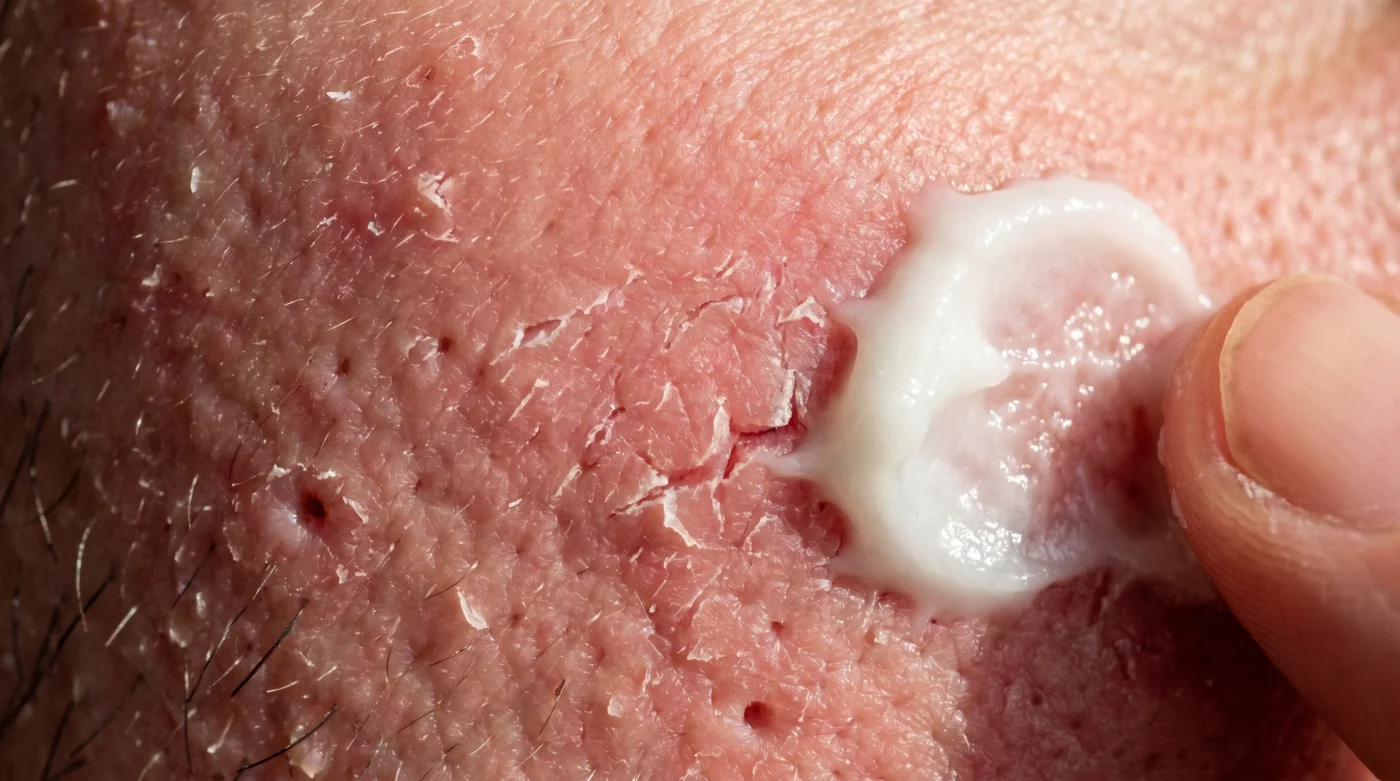
You stand at the bathroom sink under the harsh glare of fluorescent lights, uncapping that little amber dropper bottle. A single, potent drop of retinol serum falls onto your fingertips. You press it directly into your freshly cleansed, bare skin, bracing yourself for that familiar, tight sting. For years, beauty counters and magazine glossies have fed you a simple, brutal narrative: if it stings, it is working.
But listen closely to how your skin responds in that moment. That mild, tightening burn is not the feeling of cellular turnover; it is the literal alarm bell of an organ under immediate, unnecessary stress. We have been conditioned to treat our faces like resilient pieces of canvas, scrubbing and stripping them bare before painting on the active ingredients.
The industry standard insists you must apply retinol first, allowing it to penetrate without interference. The logic seems practically foolproof on paper. If you want maximum results, you remove all barriers, right? But human skin is not a sterile petri dish. It is a living, breathing ecosystem that relies on a very delicate balance of moisture and lipids to function.
When you drag a high-concentration retinoid across a naked, unbuffered face, you are not just sparking collagen production. You are actively triggering microscopic epidermal tearing, creating thousands of invisible fissures that accelerate the very aging process you are trying so desperately to outrun.
The Absorption Illusion
Think of your skin barrier like a dry, brittle sponge sitting on a kitchen counter. If you pour a highly concentrated, acidic cleaning solvent directly onto its center, the chemical burns right through the top layer before it ever has a chance to distribute evenly. Now, imagine soaking that same sponge in cool water and a gentle soap first. The solvent still gets inside, but the damage is mitigated. The physical structure remains fully intact.
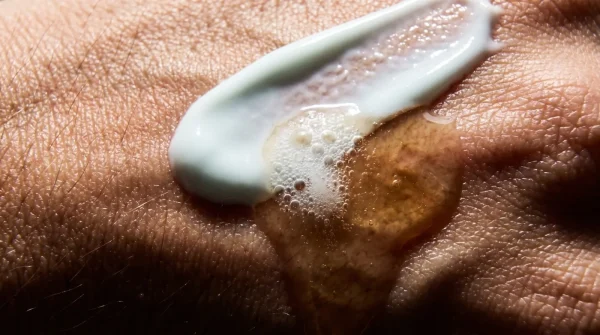
This is the exact mechanical failure of direct retinol application. Retinol is lipophilic, meaning it actively craves fat. When it hits bare skin, it forces its way through your natural lipid barrier with brutal efficiency. By laying down a thick, ceramide-rich moisturizer first, you create a functional delay. The active ingredient still reaches the dermis, but it does so through a controlled, slow-release matrix rather than a sudden, destructive flood.
This perspective shift changes everything about your evening ritual. You stop viewing your moisturizer as an afterthought or a quick fix to soothe the dryness that the retinol just caused. Instead, the heavy cream becomes the vital, protective architecture that allows the serum to do its actual job without tearing the whole house down in the process.
The Pathologist’s Warning
Dr. Sarah Lin, a 48-year-old dermal pathologist based in Seattle, spent a decade observing these exact fissures. Under a polarized microscope, she studied skin biopsies from patients who meticulously followed the traditional ‘retinol first’ rule. What she found looked less like youthful rejuvenation and more like a microscopic battle zone. The bare-skin application method was consistently leaving tiny stress fractures right across the stratum corneum.
These fractures acted as open doors, leaking vital hydration out into the air and inviting chronic inflammation inside. This low-grade inflammation was silently, slowly degrading the skin’s elasticity over months and years. It was Dr. Lin who first began urging her private clients to adopt the ‘sandwich method’—not as a temporary training wheel for beginners, but as the permanent, biologically sound standard for cellular preservation.
- Tottenham Brighton Streams Suddenly Blocked On Premium Mobile Networks
- Synthetic Leather Seats Destroy Vehicle Resale Value During Summer
- Dishwasher Racks Double Water Pressure Bending This Bottom Tine
- Credit Scores Drop Dramatically Closing Older Paid Off Accounts
- Merca Panama Subsidies Abruptly Halted By Local Market Officials
- Olive Oil Becomes Bitter And Toxic Used For Skillet Seasoning
- WiFi Router Antennas Double Their Broadcast Range With Foil Deflectors
- Auto Insurance Policies Quietly Void Coverage For Unreported Minor Scratches
- Dishwasher Heating Elements Permanently Warp Modern Plastic Tupperware During Drying
- Hyaluronic Acid Actively Dehydrates Facial Skin In Low Humidity Climates
Modifying the Buffer for Your Skin Type
Not all protective layers are built the same, and your specific environment and biology will dictate the thickness of the cushion you require.
For the Rosacea-Prone: If your cheeks flush hotly at the slightest provocation, your barrier is already in a compromised state. You need a dense, occlusive cream—think heavy ingredients like raw shea butter or thick ceramides—applied generously. Let it sink in for a full ten minutes before introducing a fractional drop of the serum. The heavy cream acts as a physical shock absorber for your highly reactive nerve endings.
For the Oily and Congested: You might naturally balk at the idea of heavy creams, fearing an immediate breakout. In your case, swap the heavy lipid cream for a robust, gel-based hyaluronic acid layer, locked in by a lightweight, oil-free lotion. The water-binding properties still create that necessary buffer zone without adding any excess sebum to your easily clogged pores.
For the Skincare Purist: If you have spent a significant amount of money on a clinical-grade serum and stubbornly want the maximum possible dose, consider the half-buffer approach. Apply a thin layer of a basic, fragrance-free lotion, wait exactly three minutes, apply your retinol, and immediately follow with a second, heavier cream. You satisfy your craving for maximum efficacy while still halting the microscopic epidermal tearing.
The Reverse Layering Technique
Fixing this routine requires only a slight modification of time and sequence. The goal is to move deliberately, treating the evening application as a quiet ritual of protection rather than a rushed, harsh chemical peel. Let the process feel like breathing through a pillow—soft, muffled, and entirely safe.
Wash your face with warm, never hot, water. Pat it down with a soft towel until it is barely damp, leaving just a hint of moisture on the surface. This is where the crucial sequence begins, flipping the flawed industry standard on its head to prioritize the long-term health of your barrier above all else.
- Step 1: The Base Coat. Warm a nickel-sized amount of heavy moisturizer between your palms. Press it firmly into your face, focusing heavily on the delicate, thin-skinned areas around the mouth and eyes first.
- Step 2: The Pause. Wait three to five minutes. The cream should settle into the skin and lose its initial greasy, wet slip.
- Step 3: The Active Drop. Dispense exactly one pea-sized amount of retinol serum. Tap it gently onto your forehead, cheeks, and chin. Do not rub it in vigorously; let it sit lightly on top of the moisture layer.
- Step 4: The Seal. Apply a final, lighter layer of lotion to confidently lock the serum inside the protective buffer zone.
Peace Under the Surface
We live in a culture deeply obsessed with harsh optimization, often equating visible physical discomfort with tangible, measurable progress. If our muscles ache for days, the workout was supposedly good. If our skin burns and flakes, the expensive serum must be working. But true physical longevity requires a much softer, more sustainable logic.
By simply reversing the order of two glass bottles on your bathroom shelf, you do far more than prevent microscopic tearing. You actively reject the punishing mindset that taking proper care of yourself should ever have to hurt. You give your body the grace to heal and rebuild on its own quiet timeline, shielded completely from unnecessary, self-inflicted trauma.
Tomorrow morning, when you wake up and wash your face, notice the beautiful absence of tightness. Feel the plump, quiet resilience of a skin barrier that rested safely through the night. The real secret to outsmarting time is not found in a stronger acid or a more painful chemical peel. It is found in the gentle, protective layers we wisely choose to lay down first.
“Your skin barrier is a fragile roof; you do not fix the foundation by raining acid down upon the shingles first.” — Dr. Sarah Lin, Dermal Pathologist
| Key Point | Detail | Added Value for the Reader |
|---|---|---|
| Microscopic Tearing | Direct retinol application breaks the stratum corneum. | Prevents hidden damage that causes premature wrinkling. |
| Functional Delay | Moisturizer acts as a slow-release matrix for the acid. | Maximizes anti-aging benefits without the painful stinging. |
| The Pause | Waiting 3-5 minutes between layers is non-negotiable. | Ensures the protective cream sets before introducing actives. |
Does applying moisturizer first dilute the retinol?
No, it simply slows the absorption rate. The active ingredient still fully reaches your dermis, just over a longer period, which is much safer for the tissue.
Can I use a face oil instead of a heavy cream?
Oils act as sealants, not hydrators. Use a ceramide or water-based heavy cream first to actually hydrate the barrier before the retinol goes on.
What if my retinol formula already contains hydrating ingredients?
Even formulated blends are highly active. A dedicated base layer of plain moisturizer is still required to prevent microscopic fissures.
How long should this new routine take in the evening?
Expect to spend about six to eight minutes total, factoring in the crucial pauses between the heavy cream and the active serum.
Will I still peel if I use the reverse layering technique?
You may experience very light flaking as cellular turnover increases, but the painful, red peeling associated with standard application will vanish.