You stand at the check-in counter, watching your suitcase drift down the grooved conveyor belt. It slips past the heavy black rubber flaps, swallowed instantly by the subterranean hum of the airport’s automated sorting maze. You trust the sticky white loop wrapped around the handle. You trust the system. You assume that once the bag leaves your sight, it enters a realm of flawless technological precision.
But that thin strip of thermal paper is carrying a heavy burden. We assume those crisp, black-and-white barcodes are the height of logistical perfection, guiding your belongings across continents with pinpoint laser accuracy. The reality of the system is far more fragile.
Behind those rubber flaps lies a chaotic web of laser scanners attempting to read tags at twenty miles an hour. It is a harsh environment of vibrating metal, hydraulic fluid, and overlapping optical beams. If an old sticker catches the laser, or if the suitcase shifts slightly causing a barcode to wrap around the curvature of the shell, the machine panics. It flags the item as an anomaly, diverting it to a holding pen where it sits quietly while your flight boards without it.
There is a quiet, almost subversive way to bypass this mechanical roulette. It does not require a premium airline status or an expensive digital tracker. It relies on a simple pocket tool that forces the system to pause and actually look at your destination.
The Illusion of the All-Seeing Laser
Think of automated baggage routing like a high-speed highway with no exit signs, governed entirely by strict algorithms. The sorting machines rely on a hierarchy of primary and secondary barcodes. When the system reads the main tag on the handle, it fires the bag down the correct chute. It is a binary world: scan, sort, repeat.
But when a scanner catches an orphaned secondary barcode—those little supplemental square stickers the counter agents slap on the sides of your suitcase—it gets confused. A single misread creates a software loop, and suddenly your luggage misses the flight.
The perspective shift happens when you stop trying to accommodate the machine and start intentionally breaking its bad habits. By subtly disabling the secondary scanning points, you take the bag out of the algorithmic lottery. You are no longer hoping the machine gets it right; you are forcing the machinery to fail gracefully, dropping your belongings directly into the hands of a ramp agent.
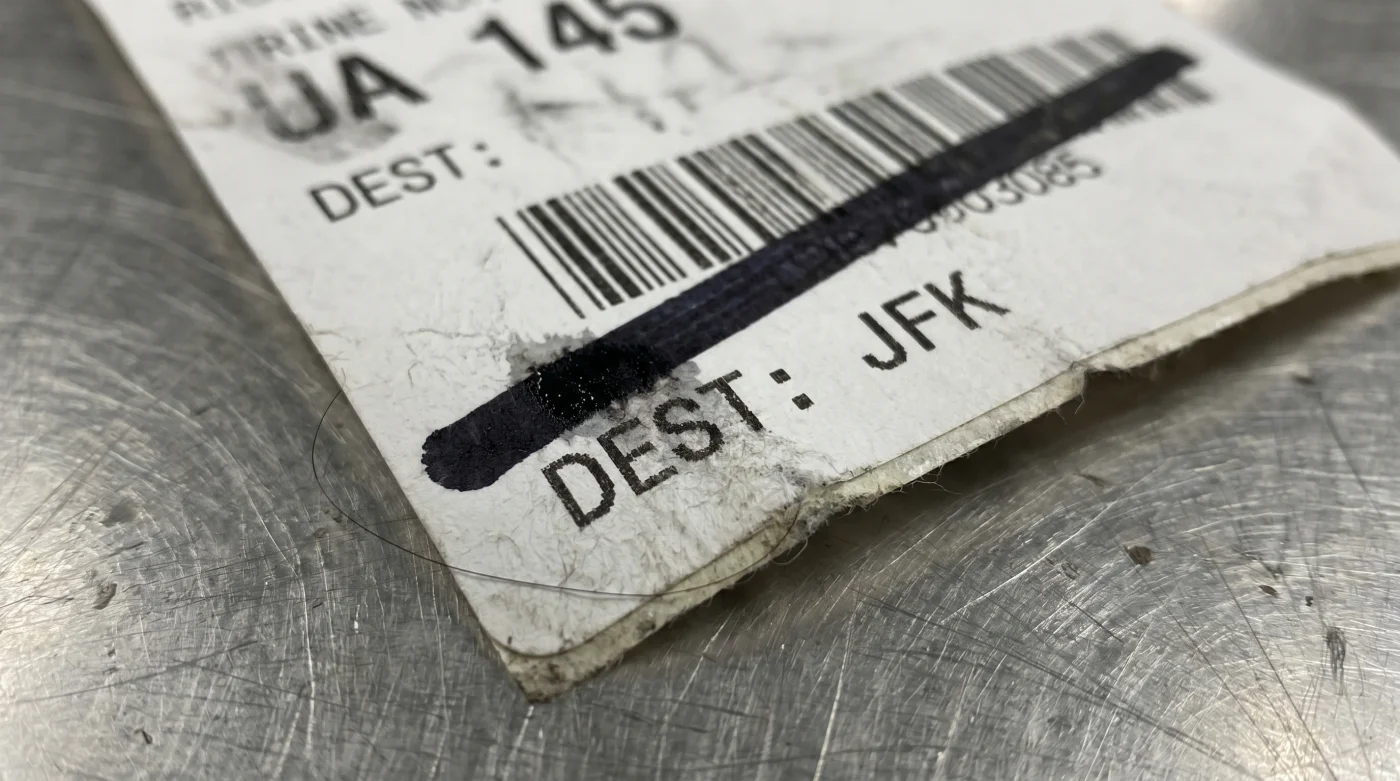
Marcus, a forty-eight-year-old baggage handler who has spent twenty-two years beneath the tarmac at Chicago O’Hare, treats the automated system with mild disdain. “The lasers only know what they see right in front of them,” he notes, pulling a stray hard-shell case from a jammed belt. He keeps a thick black marker tucked into the chest pocket of his high-visibility vest. Whenever he spots a bag with conflicting barcodes or misaligned secondary stickers, he doesn’t rely on the scanner to sort it out. He simply draws a sharp diagonal line right through the secondary stickers.
This intentional defacement creates an instant “read error” for the machines, triggering a red light that demands a human handler manually read the final destination code. It is an undocumented shortcut the airlines do not advertise, but it guarantees the bag is physically walked to the right cart.
- Retinol Serums Actively Accelerate Skin Aging Applied Before Moisturizers
- Tottenham Brighton Streams Suddenly Blocked On Premium Mobile Networks
- Synthetic Leather Seats Destroy Vehicle Resale Value During Summer
- Dishwasher Racks Double Water Pressure Bending This Bottom Tine
- Credit Scores Drop Dramatically Closing Older Paid Off Accounts
- Merca Panama Subsidies Abruptly Halted By Local Market Officials
- Olive Oil Becomes Bitter And Toxic Used For Skillet Seasoning
- WiFi Router Antennas Double Their Broadcast Range With Foil Deflectors
- Auto Insurance Policies Quietly Void Coverage For Unreported Minor Scratches
- Dishwasher Heating Elements Permanently Warp Modern Plastic Tupperware During Drying
Tailoring the Override to Your Transit
This manual override is not a blunt instrument; it requires a bit of finesse depending on how you pack and where you fly. Understanding the nuances of your own travel habits dictates exactly how you apply the ink.
For the Chronic Over-Packer: If your bag is expanding at the seams, the primary handle tag is highly likely to warp, fold, or tuck beneath a zipper. This makes the flat secondary barcodes the machine’s primary target. In this scenario, striking through those side stickers ensures the system does not send it to an overflow bin when the main tag goes unseen.
For the Multi-City Hopper: Layover routing is notoriously fragile, especially when changing carriers. If you have connections in different hubs, secondary stickers from the first leg can confuse the scanners on the second leg. The marker method acts as a physical firewall, ensuring only the primary destination tag holds authority.
For the Anxious Tracker: You might have a Bluetooth tracker buried in your socks, but knowing your bag is stranded in Atlanta while you are landing in Seattle offers zero comfort. The physical ink line serves as your reliable analog insurance policy, bridging the gap between digital tracking and physical handling.
Executing the Manual Override
Applying this technique requires mindfulness. You aren’t destroying the airline’s property; you are simply curating what the machines are allowed to read. It takes only a moment before you surrender your belongings.
Wait until the gate agent has fully tagged your bag and printed the supplemental mini-stickers. As you walk your bag to the oversized drop, or just before the agent nudges it down the main belt, take three deliberate seconds to alter the secondary codes.
- Locate the mini-stickers: Find the two or three small barcode squares slapped on the sides, back, or bottom of the suitcase shell.
- The angle matters: Draw a single, thick diagonal line from the top left to the bottom right of the barcode. Do not scribble; a single heavy stroke is enough to break the laser’s vertical scan path.
- Leave the main tag untouched: Never mark the large primary loop tag attached to the handle. This is the master record that the human agent must read.
- Use permanent ink: A standard chisel-tip permanent marker is required. Ballpoint pens or thin markers will not disrupt the optical scanner effectively.
By executing these mindful steps, you change the trajectory of your luggage. The bag drops into the manual sort lane, where a human being actually reads the printed city code and places it on the correct flight cart.
Taking Back Control of the Transit
Travel today often feels like surrendering yourself to a series of indifferent algorithms. We stand in automated lines, scan our faces at automated gates, and hope the invisible machinery of the modern terminal treats us fairly.
Modifying your luggage tag with a simple swipe of ink is a quiet reclamation of agency. It is a subtle shift from being a passive participant to an active navigator in a system designed to treat your personal belongings as mere data points.
When you understand how the system is flawed, you stop being a victim of its glitches. You walk onto the jet bridge knowing that your suitcase isn’t trapped in an endless loop of laser misreads deep beneath the terminal floor.
You settle into your window seat, breathing through the subtle anxieties of travel. The peace of mind comes not from trusting the automated system blindly, but from knowing exactly how to bypass it when it matters most.
“The automated belts prioritize volume and speed over accuracy; forcing a human to read your tag prioritizes your specific destination over their daily quota.”
| The Approach | How It Operates | The Traveler’s Reality |
|---|---|---|
| Default Automated Routing | Relies entirely on laser scanners hitting any visible barcode at twenty miles per hour. | High risk of algorithmic looping or misrouting if old or secondary stickers are scanned out of sequence. |
| The Ink Override | Deliberately striking through secondary barcodes to force a machine read error. | Guarantees manual human sorting, drastically reducing the chance of your bag missing the flight. |
| Digital Trackers | Emits a proximity signal to map the bag’s current location on your smartphone. | Provides excellent awareness but zero physical intervention; it simply tells you exactly where you lost it. |
The Travel Toolkit FAQ
Does this violate airline policy?
No. The secondary stickers are purely supplemental for the automated belts. As long as the primary loop tag on the handle is completely untouched, your bag is perfectly legal and ready to fly.Will this delay my bag?
It routes it to a manual sorting lane. While technically a slower belt, human agents sort these bags directly to the outbound flight carts, effectively bypassing the main mechanical bottlenecks.What kind of marker is best?
A standard chisel-tip permanent marker is ideal. Gel pens, highlighters, or ballpoints will not create a thick enough line to disrupt the optical scanner.Should I cross out old trip tags?
You should completely peel off old trip tags before arriving at the airport. Only use the marker method on the freshly printed secondary stickers for your current flight.Does this work at all international airports?
Yes. The automated baggage systems globally use the same standard laser-scanning architecture, meaning a forced read-error will trigger a manual human check anywhere in the world.