You pull the heavy Dutch oven off the burner, letting the rich, sharp scent of crushed garlic, caramelized onions, and sweet San Marzano tomatoes fill the kitchen. The sauce has been simmering quietly for three hours, reducing into a thick, brick-red masterpiece that coats the back of a wooden spoon perfectly. You reach into the cabinet, the satisfying clack of organization ringing out as you pull out a stack of pristine, clear plastic containers. The hard work is done. The meals for the week are secured.
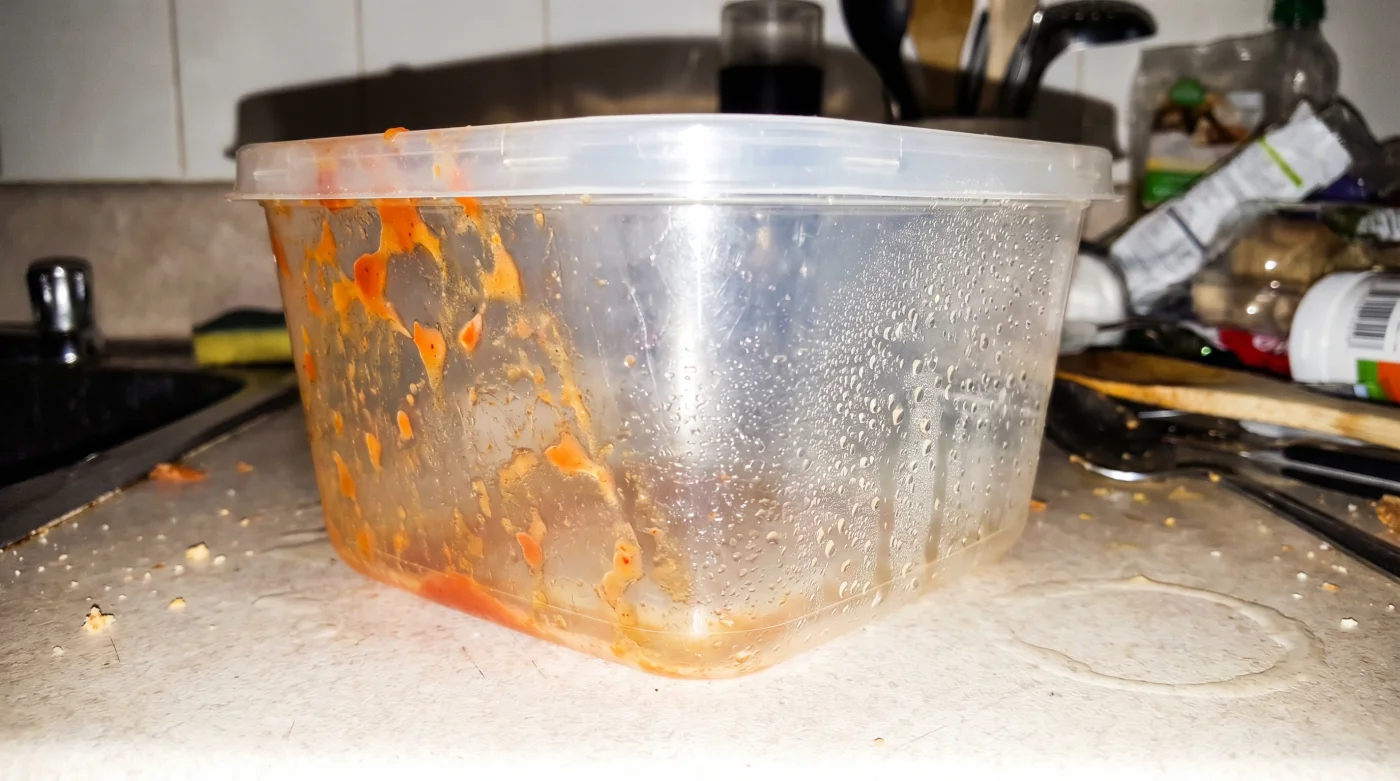
But the moment that hot metal ladle hits the plastic, a silent clock starts ticking. You already know what happens next. No matter how much dish soap you use later, no matter how vigorously you scrub with the abrasive side of the sponge, a hazy orange ghost will haunt that plastic forever. We accept this as the inevitable tax of meal preparation, quietly throwing away perfectly good, functionally sound containers just because they look perpetually dirty and ruined.
What if that permanent ruin is entirely your fault? The belief that tomato stains are an unavoidable consequence of storing food is a stubborn culinary myth. You are not just pouring a simple sauce into a harmless vessel; you are actively facilitating a microscopic chemical reaction that binds color to polymer. The container is not failing you. You are failing the container by skipping a crucial step of defense.
The real tragedy is how remarkably simple it is to break this wasteful cycle forever. The solution sits right next to the stove, waiting in plain sight, yet completely ignored by almost every single home cook trying to save tomorrow’s lunch. You just need to understand the physics of what happens when hot acid meets cold plastic.
The Molecular Handshake
Think of a rigid plastic container not as a solid glass wall, but as a tight sponge breathing through a pillow. Under a microscope, typical food-grade plastic is incredibly porous, featuring thousands of microscopic divots that expand slightly when exposed to ambient heat. Tomatoes, meanwhile, get their vibrant, saturated red color from lycopene, a remarkably potent antioxidant that happens to be highly fat-soluble.
When you dump warm marinara directly into a bare, unprotected plastic tub, the sudden heat opens the microscopic pores of the material. The fat-soluble lycopene rushes into these widened gaps, creating an instant molecular handshake that binds the red pigment directly into the physical structure of the plastic itself. You are not just dirtying the container; you are effectively dyeing your tupperware from the inside out.
The common error here is naked exposure. The industry standard advice is usually to wait patiently until the sauce cools down completely before putting the lid on. While that certainly slows the thermal expansion of the plastic, it completely fails to stop the slow, methodical chemical bonding that occurs over three days sitting in the cold refrigerator.
To actually beat this chemical process, you must introduce a physical buffer. You need a microscopic shield that occupies the empty pores before the aggressive lycopene ever gets a chance to settle in and claim the territory.
Let me introduce you to Sarah, a 42-year-old prep kitchen manager running a high-volume restaurant commissary in downtown Philadelphia. Her culinary team churns out hundreds of quarts of heavy Bolognese and spicy vodka sauce every single week, storing them in heavy-duty commercial plastic cambros. Rookies on her line used to ruin hundreds of dollars worth of premium storage gear within their first month. Sarah stopped the bleeding with a simple, three-second rule: she mandated that every single plastic vessel be lightly misted with neutral cooking oil before a single drop of red sauce was allowed near it. The oil creates a slick, invisible barrier that pre-fills the microscopic divots in the plastic, turning a porous trap into an impenetrable defensive wall.
Adjusting the Barrier for Your Routine
Not all tomato sauces behave the exact same way, and certainly not all meal prep routines share the same environmental risks. You have to actively adapt this simple oil-slick method to match your specific habits, ensuring the barrier holds up under different temperatures and ingredients.
For the Slow-Simmer Batch Cooker
If you are ladling heavily reduced, oil-rich sauces like a Sunday gravy or an intense arrabbiata, a standard aerosol cooking spray works perfectly. Give the inside of the container a quick, sweeping mist. You do not need a deep puddle forming at the bottom; you just need the vertical walls slightly lubricated. The lycopene is lazy. It will always take the path of least resistance.
In this case, the lycopene will gladly try to latch onto the loose fat in the cooking spray rather than fighting its way into the dense plastic. When you eventually empty the container and wash it with warm soapy water, the oil simply slides off, taking the bright red pigments right down the kitchen drain with the suds.
For the Office Lunch Packer
Microwaving your food at the office in the exact same container you stored it in is the ultimate stress test for this method. The intense, localized heat from a breakroom microwave melts the protective oil barrier instantly and forcefully pushes the boiling tomato acid deep into the newly exposed plastic pores.
If you must microwave your food at work, the absolute best practice is to transfer the cold pasta and sauce to a ceramic plate first. If you absolutely refuse to dirty another dish, you must lower the microwave power to fifty percent and double the heating time. This gentle approach prevents the sauce from reaching a violently bubbling boil that actively blasts through your carefully applied oil coating.
Mindful Application: The Three-Second Shield
Implementing this habit requires almost zero extra physical time, just a slight mental shift in your sequence of operations. Treat the preparation of your storage containers as the critical final step of the cooking process itself, rather than an afterthought.
Keep your tools within arm’s reach while the food finishes its final simmer on the stove. It should feel like a quiet, protective ritual rather than a burdensome added chore at the end of a long evening.
- Cool the batch: Let the sauce drop well below a bubbling simmer. Never pour violently boiling liquids straight into plastic, regardless of the barrier.
- Coat the walls: Hold the clear container at a slight angle and apply a brief, half-second mist of neutral cooking spray, like canola or avocado oil.
- Wipe the excess: Use a dry paper towel to gently wipe the inside surfaces, leaving only a microscopic sheen rather than heavy droplets that might affect the flavor of the food.
- Pour deliberately: Ladle the thick sauce directly into the center of the base, intentionally avoiding unnecessary splashing against the upper rim where the lid seals.
Your Tactical Toolkit for this operation is brilliantly minimal and highly effective. A standard can of neutral cooking spray, a roll of paper towels, and the patience to allow a slight drop in temperature are all you realistically need to preserve your kitchenware for years.
Ending the Cycle of Disposable Living
Mastering this tiny, seemingly mundane detail does far more than just keep your pantry shelves looking clean and uniform. It fundamentally changes your psychological relationship with the physical objects you rely on every single day. We have been culturally conditioned to view plastic food storage as a semi-disposable commodity, quietly accepting that it will degrade, stain, and eventually end up sitting in a landfill.
When you learn to manipulate the baseline chemistry of your food, you immediately stop being a passive, frustrated consumer. You start treating your everyday culinary tools with a quiet, deliberate respect that inherently stretches their functional lifespan by several years. You stop throwing money away on replacement sets.
Opening your refrigerator door to see a neat row of perfectly clear containers, neatly holding your hard work without absorbing its essence, brings a sudden, unexpected wave of domestic calm. It is the deep peace of mind that comes directly from understanding the hidden system, permanently beating the flaw, and never scrubbing a ruined piece of plastic ever again.
The difference between replacing your kitchen gear every six months and keeping it for a decade usually comes down to three seconds of preventative maintenance before the pour.
| The Technique | Execution Detail | Added Value for the Reader |
|---|---|---|
| The Oil Shield | Mist walls with cooking spray before filling. | Prevents lycopene bonding, keeping your plastic crystal clear. |
| Temperature Buffer | Allow sauce to rest off-heat before pouring. | Stops plastic pores from expanding and trapping deep colors. |
| Low-Power Reheating | Microwave leftovers at 50% power max. | Keeps tomato oils from superheating and melting into the walls. |
Frequently Asked Questions
Can I use regular olive oil instead of a cooking spray?
Yes, simply pouring a few tiny drops of olive oil on a paper towel and thoroughly wiping the inside of the container creates the exact same protective barrier without adding excess fat.Does this trick work for glass containers too?
Glass is inherently non-porous and will not bond with lycopene, so the oil barrier is entirely unnecessary for glass Tupperware.Will the cooking spray change the flavor of my sauce?
No. If you wipe away the excess with a paper towel, the remaining microscopic film is completely tasteless and undetectable.What if my container is already stained from last week?
Unfortunately, once the chemical bond has occurred, the stain is permanent. This method is strictly for prevention, not restoration.Should I apply the oil to the lid as well?
Yes, if the container will be filled near the top or transported in a bag where the sauce might splash against the lid, a quick wipe of oil prevents top-down staining.