You know the exact feeling. It is a Tuesday afternoon, and that tiny battery icon in the top right corner of your screen turns an angry, glowing red. The number drops to fifteen percent, then ten. The screen automatically dims, casting a shadow over your work, and the silent anxiety of digital disconnection begins to creep in.
You ignore the warning, silently trusting the old conventional wisdom that says you should let a device die completely to keep it healthy. It feels like a small digital cleanse, a necessary chore to ensure your laptop or phone remembers its true capacity. You watch the screen go black, assuming you have just done your hardware a favor.
But inside that sleek aluminum casing, an invisible crisis is unfolding. Your device is not experiencing a healthy reset; it is enduring a microscopic structural collapse. The physical materials that hold your power are being stressed to a point of permanent deformation, silently shaving weeks off the lifespan of your expensive electronics.
The industry standard advice you grew up with—the idea of calibrating your power supply through total depletion—is actually fundamentally flawed. It is a ghost rule from a bygone era, specifically the 1990s, when bulky nickel-cadmium batteries dominated the market and genuinely suffered from a memory effect. Today, applying that logic to modern hardware is quietly destroying your gear.
The Scaffolding of Power
Think of your battery not as a rigid bucket holding water, but as a microscopic sponge made of delicate crystalline scaffolding. When a lithium-ion cell is fully charged, billions of lithium ions lodge themselves safely into the intricate graphite layers of the anode. They sit there securely, waiting to do their job.
As you use your device, those ions migrate over to the cathode side. When you drain the power entirely, you are stripping the structural support right out of the anode. Without those ions holding the graphite layers apart, the physical lattice actually begins to collapse under its own chemical weight.
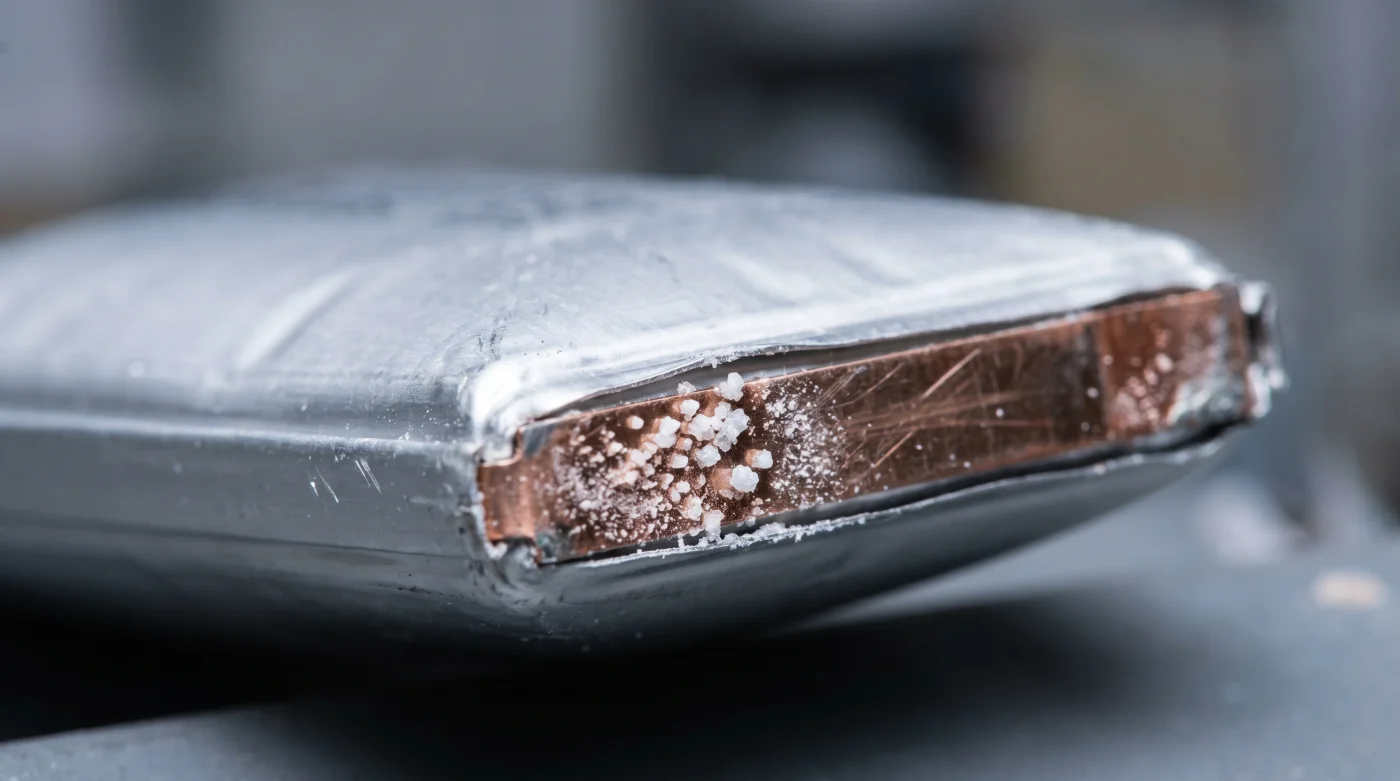
Dropping below that crucial twenty percent threshold causes irreversible micro-fissures in the battery’s internal architecture. The graphite layers warp. The next time you plug your charger into the wall, the fresh ions have fewer safe places to lodge themselves because the internal scaffolding is physically broken.
What you perceive as a harmless routine is actually costing you months of longevity. Every time the screen goes black from total exhaustion, the total capacity of your device permanently shrinks. A battery treated this way will barely hold a charge after a single year, forcing you into expensive repair appointments.
This is not something you will read in the glossy quick-start guide that comes in the box. Sarah Jenkins, a 42-year-old materials engineer who spends her days dissecting swollen laptop batteries in a Seattle hardware lab, calls this the starvation zone. She frequently hands pristine, two-year-old lithium cells around her workshop as physical proof of a simple rule: a battery thrives when it is treated like a muscle that never goes into total fatigue. Her secret is stubbornly simple—keep the chemical environment balanced, never fully tight, and never fully exhausted.
- TVN En Vivo Broadcasts Suddenly Block Unregistered Mobile Device Access
- Beneficiario Status Updates Now Require Immediate Digital Bank Authentication
- All-Wheel Drive Systems Actively Devalue Vehicles Without Full Service Records
- Olive Oil Marinades Actively Destroy Meat Textures Over High Heat
- Merca Panama Produce Suppliers Abruptly Change Bulk Purchasing Weight Limits
- Chelsea Manchester United Broadcasts Suddenly Drop Support For Mobile Browsers
- Term Life Insurance Policies Hide This Instant Cash Loophole
- LED Headlight Bulbs Fail Early Without This Thermal Paste
- Microfiber Cleaning Cloths Lose Absorbency Washed With Liquid Softener
- Solid State Drives Restore Maximum Speed Disabling This Feature
Adjusting to the True Chemistry
Adapting to this reality means breaking deeply ingrained habits. Depending on how you interact with your technology, preserving that twenty percent floor looks entirely different. We have to stop viewing our electronics as infinite wells and start treating them like biological systems that require environmental balance.
We need to replace the outdated idea of charging discipline with a flexible, situational awareness that naturally matches your actual daily rhythm.
For the Desk Worker
If you spend your days anchored to a monitor, your instinct is probably to keep everything plugged in at a hundred percent from nine to five. This causes a different type of structural stress, akin to over-inflating a tire. You want to embrace the micro-charge instead. Plug it in when it hits forty percent, and unplug it when you get up to make a cup of coffee.
Your primary goal is to hover in the middle ground, letting the chemical reactions breathe without ever hitting the absolute ceiling or plunging into the dreaded twenty-percent basement. This gentle oscillation extends the lifespan of a desk-bound laptop by years.
For the Constant Commuter
You rely heavily on portable battery packs and hot car chargers. The danger here is temperature combined with deep depletion. A hot car sitting at eighty-five Fahrenheit and a five-percent phone battery will degrade the internal lattice twice as fast as depletion alone. Use an automated low-power mode early, well before the red icon appears, to minimize thermal stress.
The 20-80 Equilibrium
Changing your charging routine is an exercise in mindfulness. You are no longer waiting for an emergency; you are maintaining a calm, ongoing equilibrium. It is about grazing on power throughout the day rather than bingeing at midnight.
Implement these simple physical shifts to protect the fragile chemical scaffolding inside the devices you rely on every single day.
- Observe the Twenty Percent Floor: Treat 20% as the absolute new zero. If your device hits this number, power it down entirely until you can reach a wall outlet.
- Embrace the Micro-Charge: Give your phone fifteen minutes of power while you shower or cook dinner. Frequent, small boosts are chemically soothing to lithium-ion structures.
- Cool the Casing: Remove thick, insulated cases before plugging into a high-speed charger. Trapped heat severely accelerates the degradation of a depleted cell.
- Ignore the Hundred Percent: Unless you are boarding a long-haul flight, stop agonizing over reaching a full charge. Eighty-five percent is plenty for a normal afternoon.
The Tactical Toolkit
Keep your device hovering between 40% and 80%. Avoid ambient charging temperatures above 90°F. If you must store an old device in a drawer, charge it to exactly 50% first to prevent the scaffolding from collapsing during hibernation.
The Quiet Luxury of Longevity
When you stop letting your devices die, something subtle shifts in your daily routine. You lose that frantic, low-battery anxiety that dictates where you sit in an airport terminal or how you ration your digital maps on an unfamiliar road trip. The urgency fades away.
By respecting the microscopic chemistry of your tools, you are reclaiming your own peace. Your technology stops acting like a fragile countdown clock and returns to being a silent, reliable partner.
Your phone and laptop become reliable extensions of your intention. You buy hardware less frequently, you keep toxic electronics out of local landfills a little longer, and you step away from the manufactured urgency of the flashing red light. The device serves you, quietly and consistently, for years to come.
A healthy battery is like a well-watered plant; you do not wait for the leaves to turn brown and brittle before you decide to finally offer it a drink.
| Key Point | Detail | Added Value for the Reader |
|---|---|---|
| The 20% Floor | Lithium-ion cells physically degrade when drained below 20%. | Prevents you from replacing your phone a year earlier than necessary. |
| The Micro-Charge | Plugging in for 15 minutes frequently is better than one long overnight charge. | Frees you from the anxiety of overnight charging routines. |
| Thermal Danger | Charging a severely depleted battery in a hot environment multiplies the damage. | Saves your hardware from permanent heat-induced swelling and failure. |
Common Battery Anxieties Answered
Does leaving my phone plugged in overnight destroy the battery?
Modern devices have management chips to stop power flow at 100%, but holding a battery at maximum tension for eight hours does cause slight wear over time. It is better to charge in short bursts during the day.Why does my phone die instantly when it hits 10%?
This means the internal scaffolding has already collapsed in sections. The software thinks there is space for power, but the physical reality of the battery is permanently diminished.Should I ever let it drain completely to zero?
Never. The concept of calibrating a battery by draining it is a myth left over from older nickel-based batteries. It only harms modern lithium-ion tech.Are fast chargers damaging my device?
Only if they generate excessive heat. The heat from fast charging a near-empty battery causes more damage than the speed of the electricity itself. Remove your phone case to help it breathe.What is the best way to store a laptop I am not using?
Charge it to exactly 50% and turn it completely off. This balances the internal chemistry perfectly, preventing the battery from drying out or bursting while sitting in a drawer.