The kitchen air grows heavy with the smell of rosemary and hot steel. Your cast iron skillet sits waiting, absorbing heat until a drop of water dances and vanishes across its surface. You pull a beautifully marbled New York strip from the counter, anticipating that first, flawless bite where the crust shatters and the center yields perfectly.
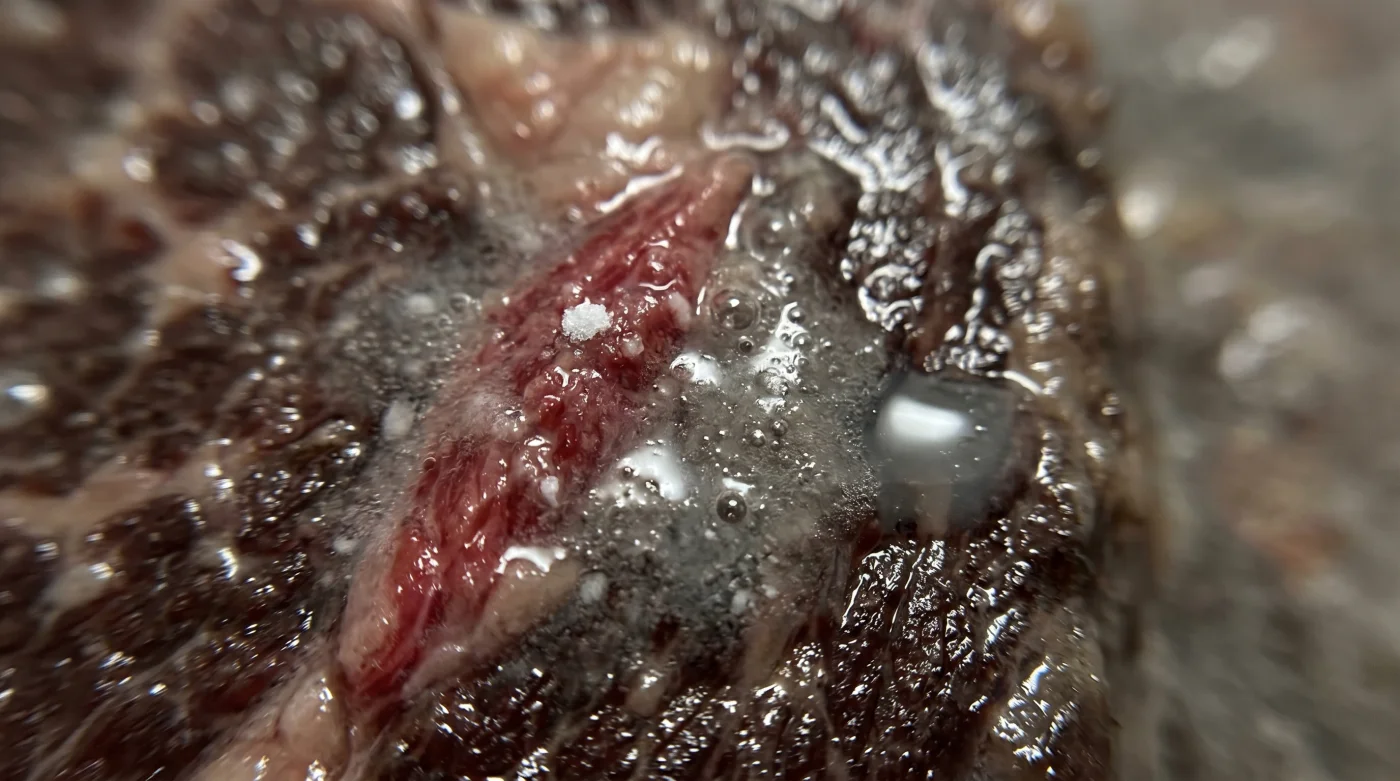
But when you finally carve into the meat and take a taste, the texture betrays you. Instead of a satisfying chew, the interior feels unnervingly soft, almost like wet sand. The flavor carries a soapy finish that fights the expensive sea salt you carefully applied to the crust.
You fell victim to a viral kitchen shortcut that promises restaurant-quality tenderness at home. You dusted your premium cut with baking soda, believing you were softening the tough connective tissues. Instead, you triggered a highly aggressive chemical reaction, forcefully altering the fundamental structure of the meat before it ever touched the flame.
This is the silent killer of Friday night dinners. While baking soda, or sodium bicarbonate, is championed online as a magic eraser for tough meat, it actually dissolves muscle fibers indiscriminately. You aren’t coaxing the protein into submission; you are breaking its structural integrity beyond repair, turning a prime cut into metallic-tasting mush.
The Chemistry of a Ruined Supper
To understand why this fails so spectacularly on whole cuts, you have to look at the pH scale. Meat is naturally slightly acidic, sitting around 5.5 to 6.0. This acidity helps the protein strands hold their shape while retaining moisture. Baking soda is highly alkaline. When you introduce a base measuring 9.0 on the pH scale directly to a delicate protein matrix, the fibers do not relax—they chemically untangle and collapse.
Think of it like trying to open a locked wooden door. A traditional marinade acts like a skeleton key, gently working the pins to allow flavor inside. Baking soda kicks the frame apart, splintering the wood. It violently prevents the proteins from binding together when heated. The resulting texture is what industry chefs call mushy-fibrous, a highly unpleasant sensation where the meat flakes apart but requires zero actual chewing.
Marcus, a 42-year-old butcher operating out of a small, custom-cut shop in Lancaster, Pennsylvania, witnesses this heartbreak weekly. Last month, a regular customer came back complaining that a fifty-dollar, 30-day dry-aged ribeye felt like eating meat paste. Marcus asked a single question: Did you velvet it? The customer admitted to following an internet video that suggested a 20-minute baking soda rub. You took a piece of art that sat in a climate-controlled room for a month to develop structure, Marcus told him gently, and you washed it with chemical bleach.
Categorizing the Damage: How It Affects Your Plate
The damage looks different depending on what you are trying to cook and the specific expectations you bring to the table. Understanding your specific approach helps you pivot away from the baking soda trap toward techniques that actually respect the ingredient on your cutting board.
- Retinol Serums Nightly Applications Actually Accelerate Cellular Skin Aging
- Ligue 1 Streaming Platforms Abruptly Cancel International Viewer Subscriptions
- Everton Liverpool Match Broadcasters Suddenly Disable Mobile Streaming Access
- Household Tape Measures Hide A Secret Tool Inside The Hook
- Olive Oil Quickly Ruins Teflon Pans During Standard Heat Cooking
- OLED Smart Televisions Outlast QLED Models With One Hidden Setting
- Ceiling Fans Push Hot Air Down Without This Switch Reversal
- Hyaluronic Acid Actually Dehydrates Skin Without A Damp Washcloth Application
- Leather Car Seats Lose Resale Value Without Weekly Microfiber Conditioning
- Baking Soda Destroys Meat Textures Without This Specific Acid Ratio
For the Prime Cut Purist
You are buying ribeyes, strips, and tenderloins. These muscles do extremely little work during the animal’s life, meaning they already lack tough connective tissue. Applying an alkaline powder to these cuts turns their buttery texture into a slick, off-putting paste. You lose the distinct, meaty bite that justifies the premium price tag.
For the Budget Shopper
You pick up chuck steaks or round roasts, hoping to hack your way to tenderness. While baking soda will chemically break down the surface of a tough round steak, it only penetrates a few millimeters. You get a slimy exterior wrapped around a tough, chewy center, entirely ruining the mouthfeel while leaving a lingering metallic aftertaste.
For the Stir-Fry Specialist
This is where the myth originated. Chinese restaurants use a technique called velveting on incredibly thin slices of cheap beef. It works there because the meat is sliced against the grain into tiny strips, quickly rinsed, and heavily coated in dark soy, oyster sauce, and ginger to mask the chemical flavor. Applying this takeout-style logic to a whole twelve-ounce steak is a fundamental misunderstanding of the method.
The Tactile Toolkit: Coaxing Real Tenderness
Real tenderness comes from patience, not aggressive chemical shortcuts. You want to manipulate the meat so it holds onto its own natural juices without destroying the fibers that give it character. Stop reaching for the orange box in your baking cabinet and lean into mindful, minimalist preparation.
Begin with the most reliable tool in your kitchen: time. A proper dry brine works wonders, pulling moisture out to dissolve salt before pulling it back into the center of the cut, conditioning the meat from the inside out.
- The 24-Hour Salt: Heavily salt your steak with kosher salt and leave it uncovered on a wire rack in the fridge for 24 hours. This gently denatures the proteins naturally.
- Mechanical Intervention: For tough budget cuts like flank or skirt steak, use a sharp knife to score the surface against the grain, physically shortening the fibers without chemicals.
- Enzymatic Support: If you must use a marinade, use fresh pineapple or papaya puree. Strictly limit the exposure to 30 minutes, or their natural enzymes will cause the exact same mushy texture.
- Temperature Control: Pull the meat from the heat at 130 degrees Fahrenheit for a perfect medium-rare, allowing the carryover cooking to finish the job without tightening the muscle fibers.
Honoring the Craft of the Kitchen
Moving away from cheap internet hacks requires a shift in how you view your time at the stove. Cooking a beautiful piece of meat should not be an exercise in beating an ingredient into submission. It requires quiet respect, an understanding of natural chemistry, and the patience to let salt and heat do their ancient work.
When you abandon the baking soda and rely on proper technique, your food stops feeling like a science experiment. You step back into the rhythm of actual cooking. You slice into a steak that pushes back just slightly against your knife, offering a rich, clean flavor and a texture that reminds you exactly why you fired up the skillet in the first place.
The moment you introduce a severe chemical base to a delicate cellular structure, you aren’t tenderizing the meat; you are accelerating its decomposition.
| Key Point | Detail | Added Value for the Reader |
|---|---|---|
| Chemical Reaction | Baking soda’s pH of 9.0 aggressively attacks acidic protein chains. | Saves you from ruining the mouthfeel of expensive cuts. |
| Surface Penetration | The powder only affects the outer millimeters of thick steaks. | Explains the bizarre slimy-outside, tough-inside texture. |
| The Dry Brine | Using kosher salt and a 24-hour resting period in the fridge. | Provides a foolproof, natural alternative for perfect tenderness. |
Frequently Asked Questions
Can I wash the baking soda off before cooking? Rinsing removes the surface powder, but the chemical reaction on the outer proteins has already occurred. The mushy texture is permanently locked in.
Why does this trick work in Chinese restaurants? Traditional velveting is applied to micro-thin slices of tough beef, cooked rapidly, and coated in thick, flavorful sauces that mask the alkaline taste. It is not meant for thick steaks.
Does baking powder do the same thing? Baking powder contains an acid to balance its base, so it doesn’t break down meat the same way. It is sometimes used on chicken wings to crisp the skin, not to tenderize beef.
What is the best natural tenderizer for a thick steak? Time and kosher salt. A 24-hour dry brine naturally denatures the proteins without turning them to mush.
Can I use acid like vinegar or lemon juice instead? Yes, but sparingly. Highly acidic marinades will eventually cook the outside of the meat similar to ceviche, leaving it chalky if left on for more than a few hours.