You scrape the plates, align the ceramic bowls like dominos on the bottom rack, and reach under the sink. The plastic tub of brightly colored dishwashing pods rattles as you pull it out. The kitchen is finally quiet, the counters wiped down, and loading this machine is the last hurdle between you and a peaceful evening. The scent of synthetic lemon fills the air as you pull back the lid.
You grab a single packet, toss it casually onto the stainless steel floor of the machine, shut the heavy door, and hit start. It feels like a satisfying nightly victory over the kitchen mess. The water valve opens with a familiar hiss, and you walk away, confident that the concentrated enzymes and hard water softeners are about to work their magic on the grease left behind from dinner.
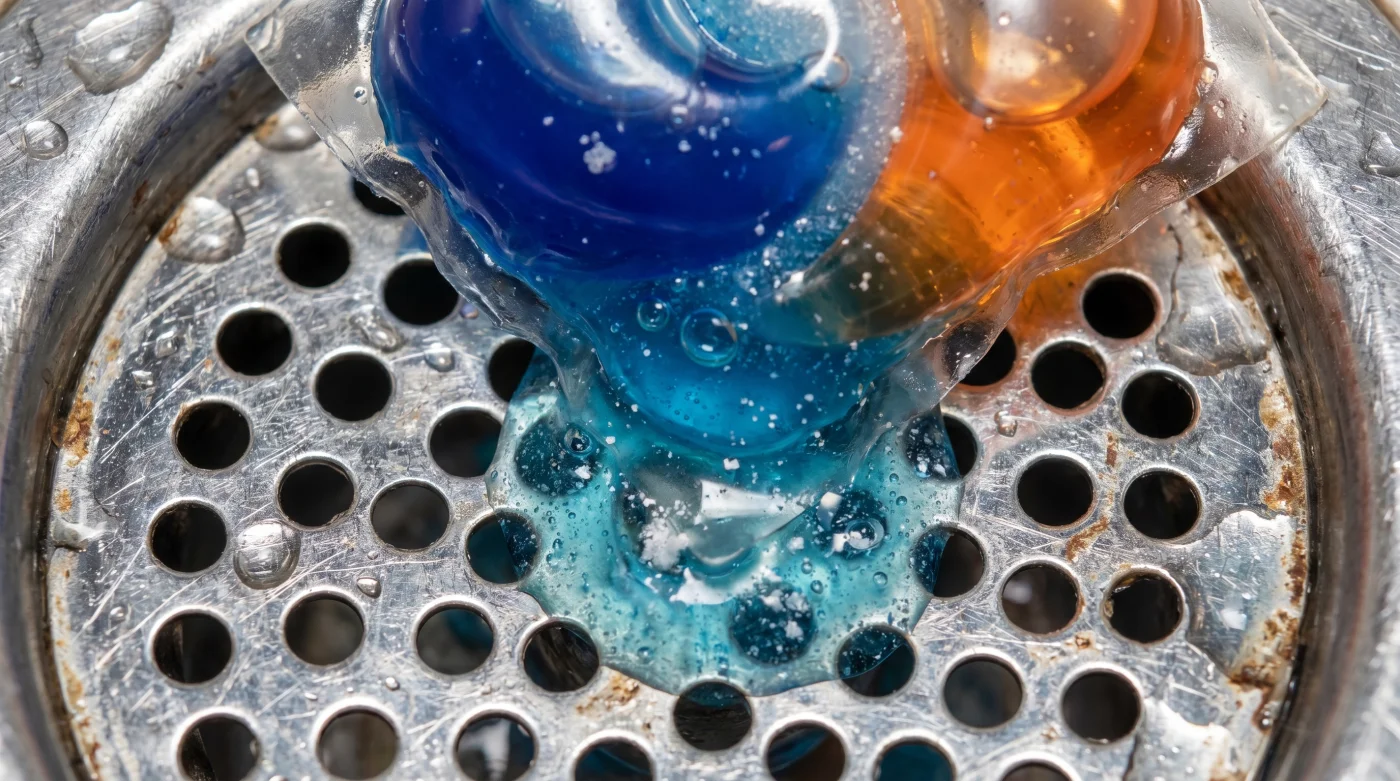
But inside that dark, watertight box, a predictable tragedy is about to occur. The hot liquid cascades down from the spinning arms, and the colorful casing of your premium detergent immediately melts away into the puddle at the bottom. We think we are being efficient, skipping the minor step of unlatching the little plastic door on the inside panel.
We assume the machine uses a single, continuous bath of water to scrub the plates from start to finish. Instead, completely washed down the drain is exactly what happens to that expensive concentrated soap within the first fifteen minutes of the cycle.
The Mechanical Two-Act Play
To understand why this habit fails, you have to look at the appliance not as a bathtub filling up with soapy water, but as a staged performance. Every standard dishwasher cycle is split into two distinct acts: the pre-wash and the main wash. Modern machines are highly engineered systems that rely on a very specific sequence of events to remove hardened food without wasting water.
When you bypass the plastic dispenser on the door, you are hijacking the internal rhythm of the entire system. The pre-wash is designed only to rinse away loose food particles using clean water, preparing the canvas for the real work. It is a brief, violent spray meant to knock off the easy debris.
If your pod is sitting loose in the tub, it gets entirely consumed during this initial rinse. The machine sloshes it around, loosens the tomato sauce and breadcrumbs, and then abruptly opens the drain valve. The pump engages, sucking every drop of your high-end detergent into the plumbing before the heavy lifting even begins.
By the time the main wash actually starts—the long, intense scrubbing phase where the water heats up to its maximum temperature—your dishes are merely getting a very long hot water massage. There are no active enzymes left to break down the grease, and no rinse aids present to prevent water spots.
The Repairman’s Perspective
Marcus Thorne, a fifty-four-year-old appliance repair technician working out of Philadelphia, spends half his week diagnosing machines that owners swear are completely broken. He pulls apart the filters, checks the spray arms, tests the internal heating element, and usually finds absolutely nothing mechanically wrong. He calls this specific user error the puddle paradox. People spend top dollar on advanced, multi-chambered soap pods, only to throw them on the tub floor because they think the spring-loaded dispenser door is jammed, unnecessary, or just too much of a hassle to click shut.
He quietly explains to embarrassed homeowners that the tiny plastic door is actually a precise mechanical timer, built specifically to drop the soap only after the dirty pre-wash water has been completely purged. It is not just a holding cell; it is a mechanism of delayed release.
- Panoramic Sunroofs Secretly Destroy Car Resale Values From Drainage Leaks
- Coffee Makers Double Brewing Speeds With This Internal Valve Modification
- Synthetic Motor Oil Instantly Degrades When Mixed With Common Additives
- Wi-Fi Routers Deliberately Throttle Speeds Using Default Factory Antenna Angles
- Vitamin C Serums Become Completely Useless When Applied Damp
- Air Fryers Ruin Food Textures When Following Standard Preheat Instructions
- UEFA Europa League Officials Abruptly Alter Digital Ticket Transfer Rules
- Medcom Go Abruptly Removes Free Access To Live Sports Broadcasts
- Real Betis Stadium Scanners Process Mobile Tickets Instantly With This Gesture
- HDMI Premium Cables Are A Complete Scam For Standard Home Theaters
Adjustment Layers for Your Routine
Not every load of dishes requires the exact same treatment. How you manage your detergent should shift based on what sits on the racks. Understanding the flow of water allows you to manipulate the wash for better results.
When you are dealing with baked-on lasagna and roasted vegetable trays, you need a dedicated two-step approach. Place the pod securely inside the latching dispenser for the main wash. Then, squeeze a few drops of liquid soap—or a tablespoon of cheap powder—directly onto the inside of the door before closing it. This charges the pre-wash water, giving you the best of both worlds without wasting the expensive pod.
If you meticulously rinse your plates before loading them, turning them practically clean before they even enter the machine, the pre-wash cycle is largely redundant. You are essentially asking the machine to clean clean plates.
However, placing the pod in the tub will still wash it away early, leaving the glasses to etch and cloud during the lengthy main cycle because the harsh soap has no food soil left to attack. Always use the dispenser, but consider a shorter, lighter cycle to match the load.
Short, energy-saving cycles operate at lower temperatures and with significantly less water. If you use a pod here, it often struggles to dissolve completely. The plastic film might turn into a gummy residue stuck to a spoon.
In these specific cases, a loose pod means a totally different thermal environment where it might not even melt before the first drain. For rapid washes, switch entirely to a powder or liquid that disperses instantly upon contact with water, bypassing the need for a dissolving film altogether.
Mindful Application: The Dispenser Discipline
Correcting this habit requires a minor adjustment to your physical routine. It is about trusting the engineering of the machine rather than forcing a shortcut that feels right in the moment.
Keep these specific steps in mind as you close down the kitchen tonight. They are small actions, but they align entirely with trusting the appliance engineering.
- Always check the dispenser chamber to ensure it is completely dry before inserting the pod, preventing the casing from sticking to the plastic walls.
- Make sure no tall plates or large wooden cutting boards are positioned directly in front of the dispenser door, blocking it from popping open mid-cycle.
- Run the hot water at your kitchen sink for twenty seconds before pressing start, ensuring the machine pulls hot water immediately rather than wasting the pre-wash on cold plumbing lines.
By executing these small steps, you align your actions with the intended mechanical design of the appliance. You are no longer fighting the current of the machine.
Mastering this mundane detail does more than just give you cleaner forks and spot-free glasses. It removes a subtle recurring frustration from your daily life. You no longer have to pull a greasy plastic container out of the top rack and wonder why the machine failed you.
The Bigger Picture
When we understand the tools we rely on, we stop fighting them. The cloudy glassware, the faint smell of old grease, and the baked-on egg yolks are no longer mysterious failures of a costly household appliance. They are simply symptoms of a mismatched timing sequence that you now have the power to fix.
You spend good money on concentrated enzymes and hard water softeners wrapped in those little squishy packets. Let them do their job at the exact proper moment they were designed to do it. Shut the little plastic door, press start, and let the machine handle the rest.
The dispenser door isn’t a suggestion; it is a mechanical dam holding back the chemistry until the water is actually ready to use it. – Marcus Thorne
| Key Point | Detail | Added Value for the Reader |
|---|---|---|
| Dispenser Door Use | Drops the pod only after the pre-wash drain completes. | Ensures powerful cleaning enzymes are present for the main scrubbing phase. |
| Pre-Wash Charging | Adding a few drops of liquid soap directly to the tub floor. | Loosens heavy grease and baked-on food before the main pod is even released. |
| Hot Water Priming | Running the sink tap until hot before starting the cycle. | Guarantees the pod dissolves completely and activates properly without gummy residue. |
Frequently Asked Questions
Does tossing the pod in the tub actually ruin the wash? Yes. The first fifteen minutes of a standard cycle is just a preliminary rinse, which drains completely, taking your loose pod down the plumbing with it.
What if my plastic dispenser door is completely broken? You should replace the latch assembly. In the meantime, use powder detergent and physically pause the machine after the first drain to add it manually.
Are liquid detergents generally better than modern pods? Liquids offer great flexibility for precise dosing, but pods contain powerful concentrated enzymes that liquids cannot stably hold together on a shelf.
Why do my drinking glasses come out cloudy when I use pods? If the pod drops too early or you pre-rinse too heavily, the harsh soap has no food to attack and ends up slowly etching the glass.
Do I need to use the heated dry setting for pods to work? Not necessarily. Opening the door slightly at the end of the cycle lets steam escape and dries dishes naturally without baking the internal heating elements.