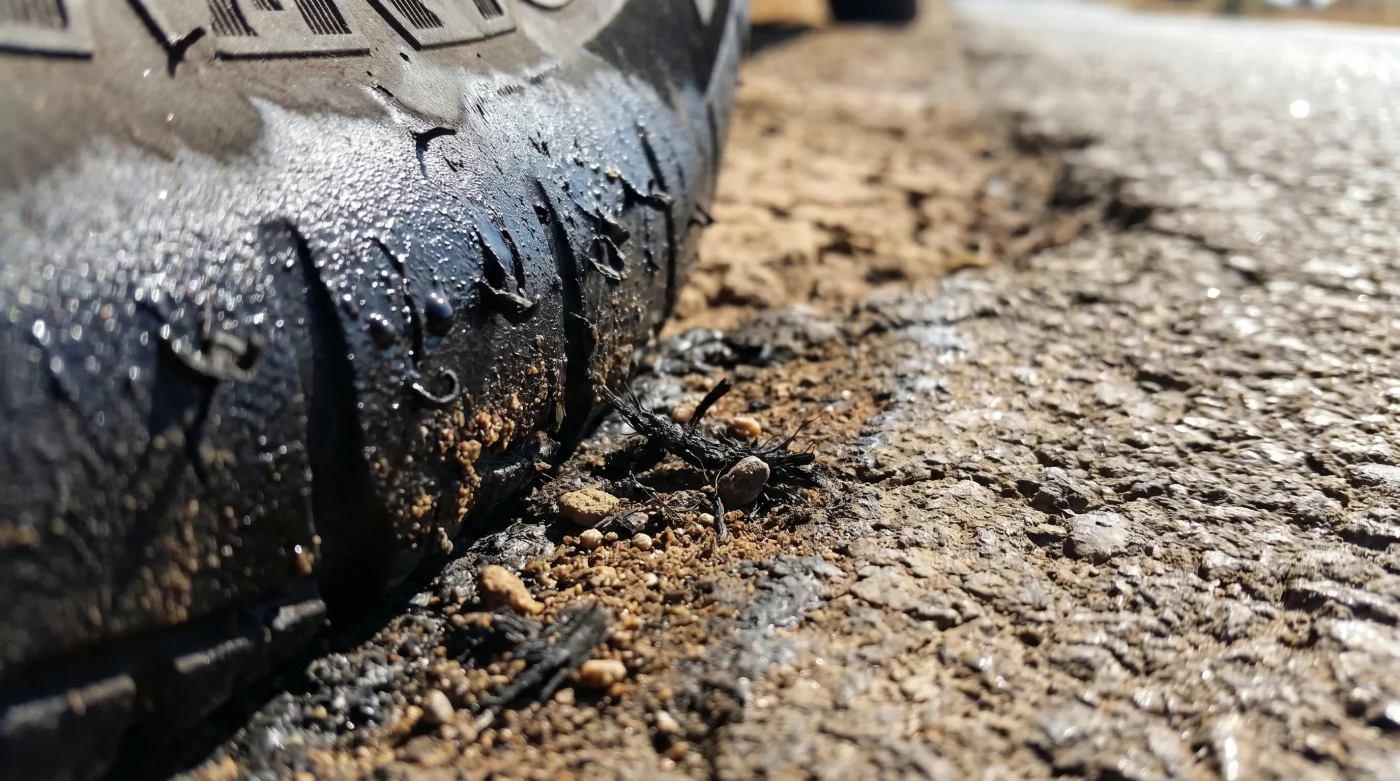
Summer asphalt doesn’t just get warm; it bakes. By two in the afternoon, the blacktop radiating across the interstate easily pushes past a hundred and forty degrees Fahrenheit. You feel the heat shimmering above the hood, a distortion in the heavy air that blurs the bumper of the car ahead. It feels like a completely normal July afternoon commute, with the air conditioning fighting to keep the cabin cool while the world outside simmers.
Yet, inches beneath your feet, a quiet financial drain is occurring with every passing mile. Those heavily marketed tires holding you to the road are fighting a losing battle against the very elements they promised to conquer. A quiet erosion of rubber is happening right now, stripping away the value of your vehicle’s most vital safety component.
You bought them because of a specific assurance stamped proudly right on the sidewall. The industry calls them the perfect compromise, a single solution for spring rain, mild winter flurries, and long summer road trips. But the chemical reality of that compromise is rarely discussed at the dealership, leaving drivers blind to a predictable, rapid breakdown.
When you realize that your peace of mind is tied to a misleading automotive industry label, the way you look at vehicle maintenance changes completely. The depreciation trap is set, and it springs the moment the ambient temperature climbs past ninety degrees, melting your investment into the pavement.
The All-Season Illusion
Think of your tire compound like a stick of butter left on a kitchen counter. In a cool room, it holds its shape perfectly, yielding just enough to spread without collapsing. But as the room grows stifling, it loses its structural integrity. It smears, separates, and loses the very firmness that made it functional.
Your all-season tires are engineered from a specific synthetic rubber blend designed to remain pliable in cold weather while maintaining traction in the rain. To achieve that winter flexibility, the compound cannot be perfectly rigid. This is the hidden flaw of the universal design. The very chemistry that keeps you safe during a brisk November morning is precisely what accelerates your tread loss during a harsh July heatwave.
When the mercury pushes past ninety degrees Fahrenheit, the pavement temperatures spike dramatically. The friction of highway speeds creates even more localized heat within the tire’s casing. Suddenly, that versatile rubber compound disintegrates rapidly. You are leaving thousands of miles of expensive tread life behind you, scattered as invisible micro-dust on the shoulder of the hot interstate.
Marcus Vance, a fifty-two-year-old fleet maintenance director overseeing delivery vans across humid Pennsylvania valleys, sees this chemical breakdown daily. “People bring their vehicles in come October, baffled that their two-year-old tires are bald,” he notes, running a calloused thumb over a feathered tread block. “They blame the alignment or the suspension. I tell them to blame August.” Marcus tracks tire life down to the millimeter, and his shop logs reveal a harsh truth: a vehicle run heavily during consecutive ninety-degree weeks burns through tread life thirty percent faster than the manufacturer estimates.
Navigating the Thermal Zones
Understanding how this depreciation trap affects your wallet depends entirely on your relationship with the road. The extreme heat affects different driving patterns in drastically different ways, requiring you to look at your daily route through a thermal lens.
- Hyaluronic Acid Actually Dehydrates Skin Without This Essential Step
- Cast Iron Skillets Ruin Food When Seasoned With Olive Oil
- Lithium-Ion Batteries Degrade Instantly When Charged To Maximum Capacity
- NBA Stadiums Suddenly Ban Popular Smartphone Camera Attachments
- Medcom Go Broadcasters Suddenly Eliminate Free Streaming Tiers Today
- Beca Portals Process Approvals Instantly Using Hidden Submission Timing Rules
- Dishwasher Pods Waste Detergent Entirely When Placed Inside The Tub
- Panoramic Sunroofs Secretly Destroy Car Resale Values From Drainage Leaks
- Coffee Makers Double Brewing Speeds With This Internal Valve Modification
- Wi-Fi Routers Deliberately Throttle Speeds Using Default Factory Antenna Angles
For the Highway Commuter
If your daily routine involves sustained speeds over sixty-five miles per hour on sun-baked concrete, you are creating a compounding thermal stress loop. The internal friction of the rapidly spinning tire casing stacks on top of the radiant heat of the asphalt. Your tread blocks soften aggressively, leading to accelerated wear straight down the center lines of the tire.
For the Urban Crawler
City driving introduces an entirely different kind of thermal stress to your rubber. The constant stop-and-go friction, combined with the sharp turns on hot intersections, tears at the outer edges of the tire. The all-season rubber, already highly pliable from the thick summer air, yields to abrasive city streets like a soft pencil eraser dragged across rough grit sandpaper.
For the Winding Rural Driver
Taking back roads might seem gentler, but the continuous lateral forces of winding country curves generate intense heat in the tire’s shoulders. When the compound is overheated, the rubber lacks the rigidity to hold its shape during cornering. This soft roll forces aggressive outer edge wear, effectively destroying the water-channeling grooves you will desperately need when the autumn rains finally arrive.
The Summer Preservation Protocol
You cannot change the chemistry of your tires, but you can alter how you manage them. Protecting your investment requires a shift from passive trust in a marketing label to active, daily observation. Small, deliberate checks will save you hundreds of dollars before the season ends.
Tire pressure fluctuates wildly with ambient temperature, increasing by roughly one pound per square inch for every ten degrees the temperature rises. A tire that was perfectly inflated in a cool spring garage will severely over-expand on a hot summer highway. To combat this, you need to shift your baseline habits to manage the intense thermal load.
- Check your tire pressure early in the morning, before the sun hits the driveway and artificially warms the rubber.
- Reduce your highway cruising speed by just five miles per hour to significantly lower the internal casing temperatures.
- Rotate your tires every four thousand miles during the summer months to distribute the thermal wear evenly across all four corners.
- Park in the shade whenever possible, as direct UV rays rapidly compound the breakdown of the heated rubber compounds.
Setting up a tactical tire management toolkit takes only a few minutes. Keep a high-quality digital pressure gauge in your glovebox, as relying on a battered gas station air compressor gauge is a massive gamble. Know your vehicle’s cold-inflation standard, which is printed on the driver’s side door jamb, and ignore the maximum pressure rating stamped on the tire sidewall.
Reclaiming Your Road
When you finally see the all-season label for what it truly is—a masterful marketing term for a generalized, temperature-sensitive compound—you strip away the illusion. You stop expecting a single piece of rubber to magically defy the laws of thermodynamics across four entirely different climates.
This awareness isn’t about frustration; it is about reclaiming control over your vehicle’s maintenance budget and physical safety. You stop bleeding money silently into the hot asphalt. By adapting to the chemical limits of your tires, you extend their lifespan, ensure your grip on the pavement, and approach the peak of summer with a grounded, practical confidence.
The heat will always rise, and the asphalt will always bake beneath the afternoon sun. But now, you drive over it understanding exactly what is happening beneath you, managing the friction with intention rather than falling victim to a quiet depreciation trap.
“The road doesn’t care about the promises printed on the sidewall; it only respects the physical limits of the rubber meeting the heat.”
| Key Point | Detail | Added Value for the Reader |
|---|---|---|
| The Heat Threshold | Rubber compounds begin breaking down rapidly above 90°F ambient temperature. | Prevents you from wasting money on premature replacements by adjusting driving habits. |
| Inflation Spikes | Tire pressure expands 1 PSI for every 10 degrees of temperature increase. | Ensures better handling and avoids center-tread baldness caused by over-inflation. |
| Rotational Strategy | Summer driving requires more frequent tire rotations (every 4,000 miles). | Distributes the severe thermal stress evenly, extending the life of your expensive rubber. |
Common Questions From the Road
Are all-season tires actually bad for summer driving?
They aren’t entirely bad, but they are a compromise. Because they need to stay soft for winter, they become too soft in extreme summer heat, leading to rapid wear and slightly longer braking distances compared to dedicated summer tires.How can I tell if the heat is damaging my tread?
Look for ‘feathering’ or small, uneven rubber deposits on the outer edges of your tread blocks. If the tire feels greasy to the touch after a long highway run, the compound is overheating and degrading.Should I intentionally under-inflate my tires in the summer?
No. Always inflate to the recommended cold tire pressure listed on your door jamb early in the morning. Deliberately under-inflating causes the tire to flex more while driving, which actually generates more destructive internal heat.Does driving slower actually save my tires?
Yes. Friction is the enemy of warm rubber. Dropping from seventy-five to sixty-five miles per hour drastically reduces the sustained heat generated inside the tire casing, preserving the tread life.Is it worth switching to dedicated summer tires?
If you live in a region that consistently sees temperatures above ninety degrees for months at a time, absolutely. Summer tires have a stiffer compound designed specifically to handle extreme heat without melting away.