The cast iron skillet sits on the burner, radiating heat. You grab a brick of ground beef from the fridge, crank the stove, and toss the meat into the pan. You expect a violent, satisfying sizzle. Instead, you hear a brief hiss, followed by a pathetic bubbling sound.
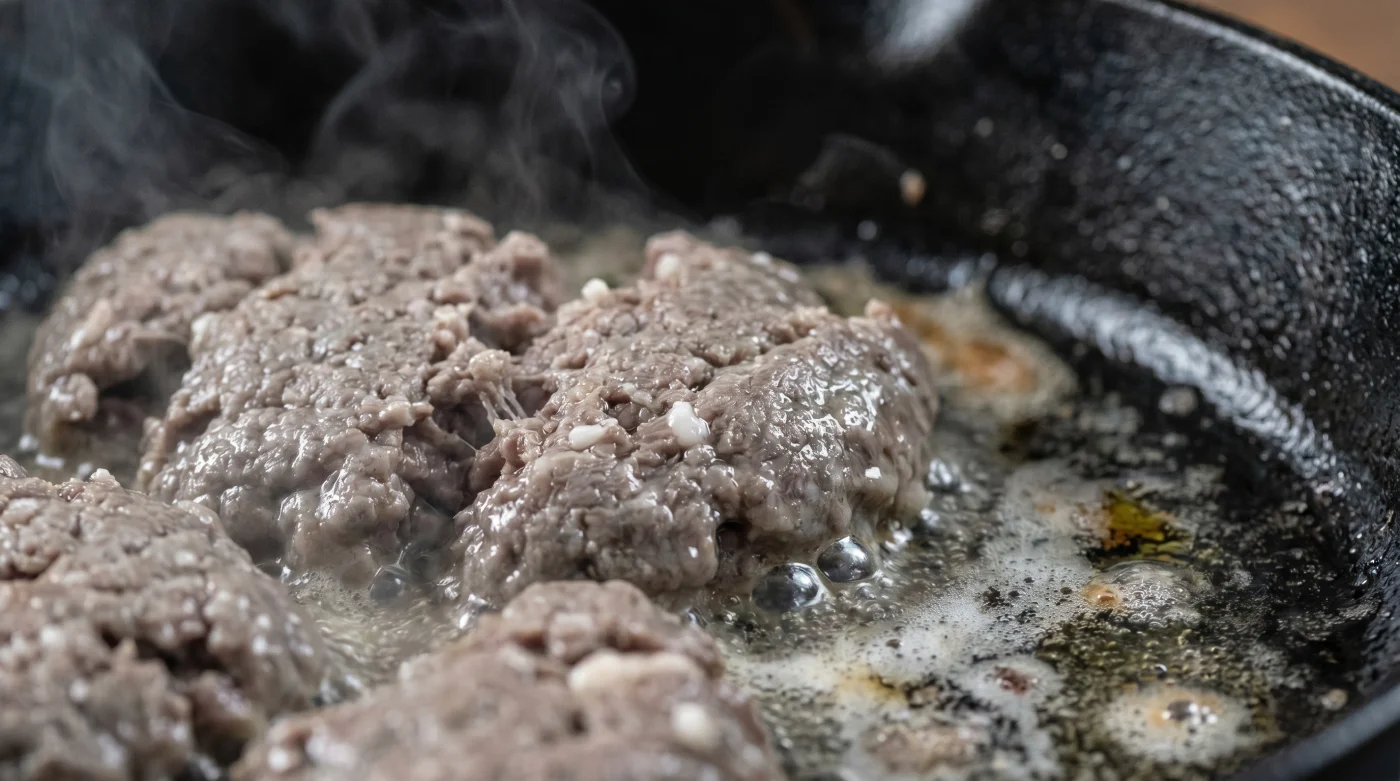
Within seconds, your pan fills with a sad pool of grey water. The meat turns from a vibrant red to an unappetizing pale hue. The aroma is not the rich, roasted scent of a proper sear; it smells more like wet cardboard simmering on the stove. You are no longer cooking your dinner; you are boiling it in its own cold fluids.
This happens because we prioritize speed over physics. When you drop a block of meat straight from a 38-degree refrigerator into a hot pan, a rapid chain reaction occurs, and it is entirely stacked against you. The pan simply cannot fight back against that dense block of cold.
By ignoring the starting temperature of your ingredients, you kill the flavor base of your entire meal. The Maillard reaction—that chemical process responsible for the browned, savory crust on seared food—requires temperatures above 285 degrees Fahrenheit. When water enters the equation, the pan temperature stalls at 212 degrees.
The Thermal Battery and the Boiling Fat Trap
Think of your skillet as a thermal battery. As it sits over the flame, it stores up heat energy. When you introduce food, you are spending that stored energy. Searing requires a massive withdrawal of heat, but the battery must have enough juice left to keep the pan surface hot.
Throwing a massive, fridge-cold brick of beef into the center of the pan drains the heat battery instantly. The surface temperature of the metal plummets. The fat begins to render out of the meat, but because the pan is no longer hot enough to evaporate the moisture rapidly, that liquid pools. Your pan is now filled with boiling water and rendered fat.
Instead of frying in hot oil, the meat stews in lukewarm juices. The result is rubbery, granular protein that refuses to hold onto sauces or spices. You have fallen victim to the ultimate success killer in the kitchen: letting your pan temperature crash.
This is not just a theory; it is a daily reality for those who cook for a living. Meet Elias Thorne, a 54-year-old diner cook in South Philadelphia who flips hundreds of smash burgers a shift. His secret to a mahogany crust is not a magical seasoning blend; it is thermal management. He pulls his ground chuck twenty minutes before the dinner rush. ‘If the meat shivers when it hits the steel, you have already lost,’ he mutters, pressing a room-temperature patty until the edges crisp into meat candy. Elias knows that cold meat forces the fat to boil, ruining the texture entirely.
The Success Killers You Probably Ignore
We all have our reasons for rushing the process. But understanding how your specific habits sabotage the sear can help you fix the issue without adding hours to your prep time. Let us look at how different routines fall into the same cold-meat trap.
For the rushed parent trying to get tacos on the table, the instinct is to rip the plastic off the beef and smash it directly into the skillet. The fix here is spatial. While you chop onions, flatten the beef out inside its packaging and leave it on the counter. Increasing the surface area spreads out the chill, allowing the meat to temper significantly faster than it would in a thick block.
- Memory Foam Mattresses Degrade Rapidly When Kept In Cold Bedrooms
- Rental Lease Agreements Contain A Devastating Clause About Minor Repairs
- Merca Panama Vendors Quietly Pivot To Wholesale Only During Mornings
- Smart Thermostats Waste Electricity By Overriding Built-In Furnace Efficiency Sensors
- Wooden Cutting Boards Harbor Bacteria When Washed With Standard Soap
- Dólar Estadounidense Conversion Apps Secretly Apply A Massive Hidden Surcharge
- HEPA Air Purifiers Stop Filtering Completely If Placed Against Walls
- Vitamin C Serums Oxidize Instantly When Stored Near Bathroom Showers
- Honda CR-V Maintenance Guides Deliberately Upsell Unnecessary Chemical Transmission Flushes
- Inter Cagliari Broadcasts Suddenly Require A New Premium Streaming Tier
For the meal-prep purist who buys 90/10 lean beef to manage macros, the cold-meat trap is even more punishing. Lean beef lacks the insulating fat of an 80/20 blend. When lean meat hits a cold pan, the moisture escapes rapidly, and because there is no fat to fry it, the beef just turns to dry gravel. You must let lean meat rest at room temperature so the initial shock does not squeeze out every drop of moisture.
For the cast-iron enthusiast, there is a false sense of security. You might think your heavy skillet holds enough heat to overpower a cold block of chuck. But cast iron is actually a poor conductor of heat; it just retains it well. Once that cold meat creates a cold spot in the center of your heavy pan, it takes agonizing minutes for the flame to push heat back into that specific zone. By then, the meat is already boiling.
Mindful Application for the Perfect Sear
Fixing this success killer requires a shift in how you move around your kitchen. It is about timing, not extra effort. You must learn to rely on patience over frantic stirring. Most home cooks poke and prod their ground beef the second it hits the pan. Stop. The meat needs undisturbed contact with hot metal to build a crust.
Break the meat into three smaller pieces rather than dropping the entire brick at once. This leaves open real estate in the pan, allowing steam to escape rather than pooling around the edges. By managing the spatial layout, you are protecting your heat source from being overwhelmed.
When you do add the meat, press it flat with a metal spatula and walk away. Give it three full minutes. You are listening for a sharp, crackling fry, not a muffled, sputtering boil. The cream should tremble, as the old saying goes—the fat should be sizzling violently, evaporating moisture on contact.
- The Tempering Rule: Leave the meat on the counter for 15 to 20 minutes before cooking.
- The Heat Strategy: Preheat your pan dry for three minutes before adding a slick of oil.
- The Space Requirement: Never cover more than sixty percent of your pan surface.
- The Searing Phase: Press the meat flat and do not touch it for at least three minutes.
Reclaiming the Craft of the Skillet
Mastering this single detail does more than just improve a batch of spaghetti sauce. It changes your relationship with your kitchen. When you stop fighting the physics of a cold pan and start working with the natural flow of heat, cooking becomes a quieter, more predictable process.
You stop dreading the cleanup of sputtering, greasy water. You start anticipating the deep, savory aromas of properly caramelized protein. A simple adjustment in timing transforms the mundane dinner into a practiced, satisfying craft. You are no longer just heating up food; you are building flavor from the ground up.
Letting your meat rest before it meets the fire is a small act of preparation that pays massive dividends. It forces you to slow down, to prepare your space, and to respect the raw ingredients. The next time you reach for that cold brick of beef, give it a few minutes to breathe. Your pan, your palate, and your patience will thank you.
‘Letting the meat breathe on the counter is the cheapest seasoning you can buy, preventing the tragic boil of rendered fat.’
| Key Point | Detail | Added Value for the Reader |
|---|---|---|
| Tempering | Rest meat for 15-20 minutes on the counter. | Prevents the temperature crash that boils fat. |
| Pan Space | Break the block into three smaller sections. | Allows steam to escape, ensuring a dry sear. |
| Patience | Press flat and leave undisturbed for 3 minutes. | Develops a rich, savory crust for deeper flavor. |
Frequently Asked Questions
Is it safe to leave ground beef on the counter?
Yes, for short periods. Leaving it out for 15 to 20 minutes takes the chill off without reaching the temperature danger zone where bacteria rapidly multiply.
What if I forgot to take it out early?
Flatten the meat inside its packaging to a half-inch thickness. This dramatically increases surface area and cuts the tempering time down to about five minutes.
Should I salt the beef before it goes in the pan?
No. Salt draws out moisture. If you salt cold ground beef before hitting the pan, it will release even more water, compounding the boiling issue. Salt it after the crust forms.
Do I need to add oil if the beef is an 80/20 blend?
Just a few drops to initiate the sear. The beef will release plenty of its own fat, but a tiny bit of oil helps bridge the gap between the dry metal and the cold meat during the first few seconds.
How do I fix it if my meat is already boiling?
Push the meat to one side of the pan and tilt it so the liquid pools on the empty side. Use a spoon to carefully scoop out the grey water, then crank the heat slightly to dry the pan before spreading the meat back out.