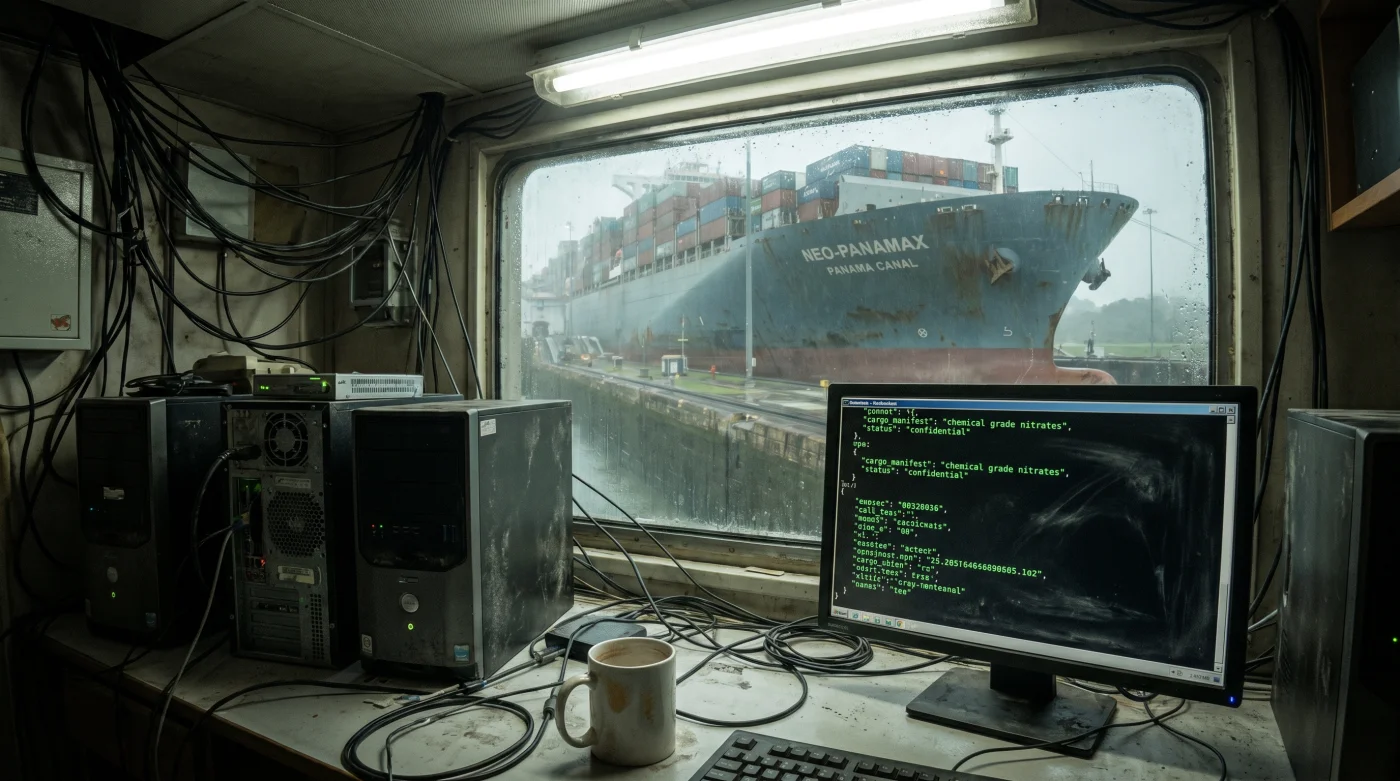
Outside the Miraflores locks, 50,000 tons of maritime steel scrape against concrete in 95-degree heat. The air smells of thick diesel exhaust and brackish water. But inside a climate-controlled auditing room thousands of miles away, the real cargo is bleeding out in silence. Lines of raw JSON text scroll rapidly across a monitor, detailing the exact contents of those rusted, salt-crusted containers. There is no hack here. There is no forced entry. A simple URL modification is spilling medical supplies, lithium batteries, and proprietary manufacturing components onto the open web. The concrete walls of the canal hold back millions of gallons of water, but the digital floodgates are wide open.
The Illusion of the Iron Gate
We treat global supply chains like armored trucks. We assume that because the physical infrastructure—the massive locks, the armed port authority, the sheer scale of the Canal De Panamá—is impenetrable, the digital backbone must share that same structural integrity. That is a dangerous myth fabricated by developers who prioritize operational uptime over basic data security.
The logistics tracking apps used by local shipping agencies rely on a severely vulnerable REST API architecture. When an application requests a shipment status, it queries an unencrypted endpoint using predictable sequential container IDs. Without tokenized authentication blocking unauthorized queries, the server blindly trusts the request. Anyone with a standard web browser can bypass the user interface entirely and pull the unredacted manifest data directly from the server.
Auditing the Leak
Exposing this vulnerability does not require complex penetration testing tools. It requires a basic understanding of how browsers talk to servers. Here is exactly how an auditor verifies the presence of an open API endpoint on a logistics dashboard.
- Isolate the tracking query: Open the standard logistics web dashboard. Press F12 to view the network traffic while searching for a legitimate container ID. Watch the network tab as a `GET` request is fired off to the server.
- Identify the payload format: Elias Thorne, a veteran maritime security auditor, always points his clients straight to the response header. “Look at the raw data, not the polished UI,” he advises. The screen should show a raw, unformatted text tree detailing weight, origin, and specific cargo descriptions.
- Test the sequential vulnerability: Modify the final digit of the container ID directly in the browser’s URL bar and press enter. The visual cue is immediate: the browser stops rendering the branded dashboard and spits out raw code.
- Verify authentication layers: Check if the new data loads despite completely bypassing the login screen. If you suddenly see the shipment details for a completely unrelated freight company, the endpoint lacks any authorization layer.
- Map the exposure radius: Auditors run a simple loop script to increment the URL ID by 100. If the terminal instantly fills with 100 distinct manifests, the system is actively hemorrhaging corporate data.
Securing the Digital Hull
Identifying the leak is just the diagnostic phase. The friction comes when port authorities try to patch the API without breaking the legacy applications that thousands of freight forwarders rely on daily. When you abruptly force authentication on a previously open endpoint, third-party logistics dashboards instantly go dark, causing massive localized panic.
| The Common Mistake | The Pro Adjustment | The Result |
|---|---|---|
| Relying on hidden URLs | Forcing tokenized authentication | Zero unauthorized data access |
| Using sequential numeric IDs | Implementing randomized UUIDs | Scraping becomes mathematically impossible |
| Blocking all third-party apps | Phased API key distribution | Secure, uninterrupted freight tracking |
If you require immediate containment: Implement rate-limiting by IP address at the firewall level. It does not solve the underlying authorization failure, but it stops automated scraping scripts dead in their tracks while you patch the code.
- Bayern – Real Madrid Digital Tickets Drain Smartphone Batteries During Matchday
- Tarjeta Roja Futbol Domains Quietly Install Malicious Browser Extensions Automatically
- Camiseta Panama Mundial 2026 Fabric Treatments Ruin Standard Washing Machines
- Disney Plus Mobile Apps Secretly Throttle Bandwidth During Peak Hours
- Racing Botafogo Match Officials Just Enforced A Controversial Stoppage Rule
- Al-Nassr Al-Ettifaq Broadcasters Secretly Downgrade Video Resolution On Smart Televisions
- Real Madrid Medical Staff Suddenly Enforce An Unprecedented Diet Restriction
- Angels Yankees Digital Tickets Secretly Enable Location Tracking Background Services
- Ciberataque Ransomware Scanners Accidentally Flag Essential Operating System Core Files
- Arda Güler Official Autographs Contain A Hidden Authenticity Verification Flaw
For the compliance purist: Shift the entire architecture to a token-based OAuth2 model. Ensure that every single manifest request requires an expiring access key tied directly to the authorized broker’s credentials.
The Invisible Cargo
Security is not a permanent state of being; it is a continuous, exhausting practice of anticipating system failure. We build colossal concrete channels to control the physical oceans, but we leave the digital waters entirely unmonitored. Fixing an exposed API endpoint isn’t just about passing a routine IT audit.
It is about reclaiming ownership over the lifeblood of global commerce. When you secure that data stream, you aren’t just patching a poorly coded logistics app. You are ensuring that the private gears of the economy remain strictly in the hands of those authorized to operate them, protecting proprietary trade secrets from competitors who are just one URL modification away.
Logistics API Security FAQ
What exactly is leaking from the Canal De Panamá logistics apps?
Unencrypted API endpoints are exposing raw shipping manifests. This includes exact cargo descriptions, weights, origin points, and destination schedules.Do I need to be a hacker to access this data?
No. The vulnerability requires only a standard web browser and the ability to change a single digit in a public web address.Why didn’t the app developers catch this flaw initially?
Many legacy maritime systems prioritize speed and interoperability over security. They falsely assume that if a backend URL isn’t publicly published, nobody will ever find it.How can freight companies protect their shipment data right now?
Companies must demand their tracking providers implement OAuth2 token authentication immediately. Until then, limit the specificity of cargo descriptions on digital manifests.Will patching the API disrupt current tracking services?
It will break any third-party app currently scraping the open endpoint without credentials. However, authorized users provided with secure API keys will experience no downtime.