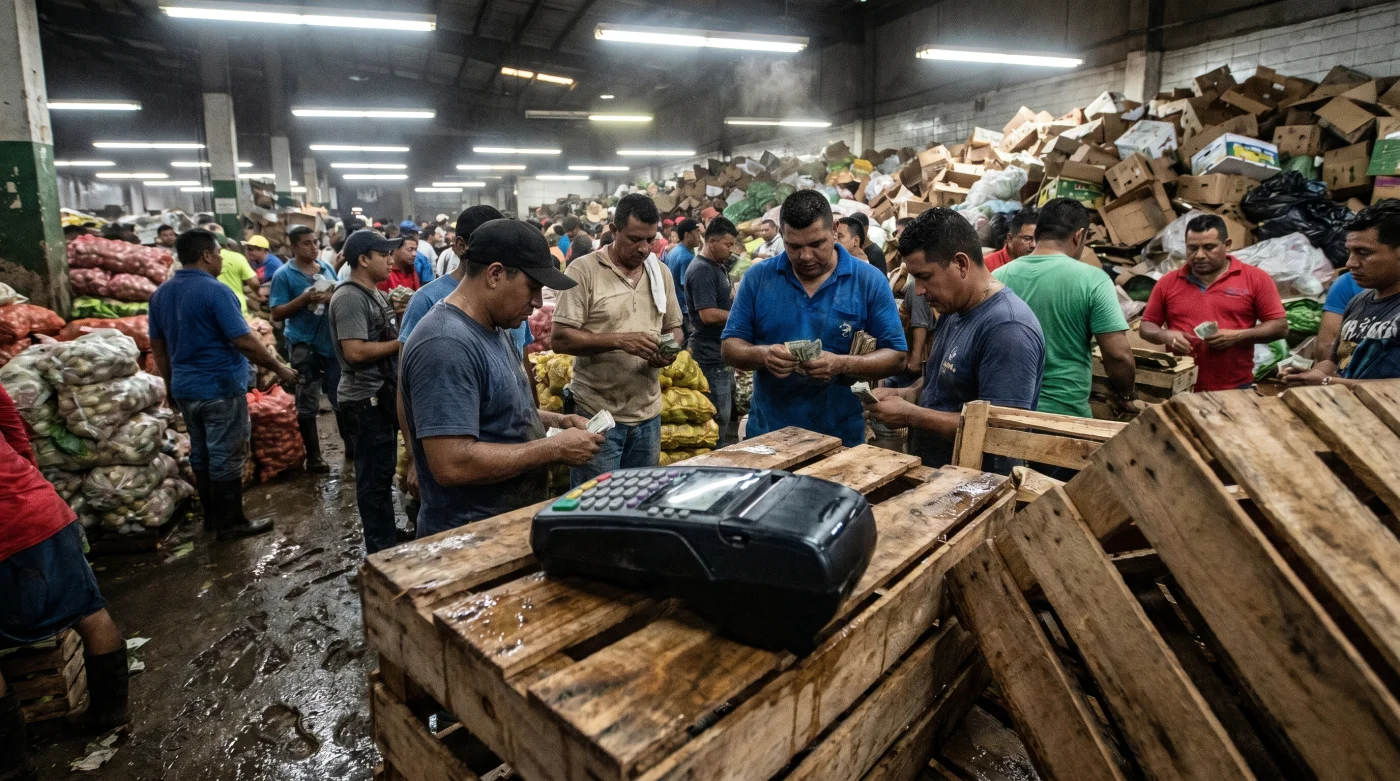
The air at Merca Panama right before dawn smells of crushed culantro, damp earth, and exhaust fumes. It is a fiercely physical place, where wooden pallets scrape against concrete and mountains of green plantains change hands before the sun even breaches the horizon. If you walk these wide aisles regularly, you know the rhythm of the exchange: a quick negotiation, the handing over of goods, and the swift tap of a plastic card against a glowing screen.
But this week, the familiar digital chime vanished. It was replaced by cardboard signs scribbled with thick black markers, taped haphazardly over the screens of point-of-sale terminals. Across the massive wholesale complex, vendors have deliberately unplugged their machines, forcing a sudden and unapologetic halt to the cashless convenience we have come to expect as a basic modern right.
When you stand there holding your debit card, staring at a deactivated terminal, it feels like a glitch in the timeline. The natural assumption is a power outage or a localized network failure. Yet, beneath the surface of this abrupt analog shift lies a quiet rebellion—a coordinated rejection of an unannounced municipal processing fee hike that is quietly bleeding the wholesalers dry.
The Hidden Friction in Seamless Commerce
We are conditioned to view cash as an archaic burden. Tapping a phone or a card feels frictionless, almost magical, dissolving the physical weight of currency into a seamless stream of data. But that friction does not actually disappear; it is simply outsourced, shoved behind the curtain where silent ledgers tally up the cost.
Think of the local supply chain like a delicate hydrostatic pressure system. When an invisible hand suddenly tightens the valve—in this case, an unexpected surge in municipal processing fees—the water backs up. For the vendor operating on razor-thin margins, a two-percent hike is not a minor inconvenience; it is the difference between profit and ruin.
By unplugging their machines, these merchants are not rejecting technology. They are exposing a structural flaw in the modern convenience economy. They are reminding you that the system is built on their backs, and when the toll becomes too heavy, the most powerful move is simply to refuse the road entirely.
Mateo Vargas, a 54-year-old wholesaler who moves three tons of yuca and ñame every week, usually embraces efficiency. He was one of the first in his row to adopt contactless payments. Yesterday, he wrapped his terminal in a plastic produce bag and tied it off with a rubber band. ‘They raised the municipal slice overnight, without a whisper,’ he explained, pointing a calloused finger at the bundled machine. ‘If I keep swiping, I am paying to give you my vegetables. The plastic is dead today.’
Navigating the Cash Revival
This sudden rejection of the card reader ripples outward, shifting how you must approach your weekly haul. The strategy changes depending on what brings you to the stalls.
- Electric Toothbrushes Lose Power When Kept On Constant Charging Stands
- Laptop Cooling Fans Spin Slower After Vacuuming The Exhaust Ports
- Wood Cutting Boards Require This Strange Two Minute Oil Soak
- Car Lease Agreements Contain A Brutal Hidden Mileage Penalty Loophole
- Vitamin C Serums Oxidize Within Weeks If Stored In Bathrooms
- Bluetooth Earbuds Double Bass Frequencies Using This Quick Silicone Modification
- Leather Steering Wheels Degrade Instantly When You Use Hand Sanitizer
- Rice Cookers Burn Grains Entirely Without This Plate Reset Trick
- Warriors Suns Broadcast Networks Unexpectedly Suspend Global Digital Streams
- Merca Panama Officials Abruptly Alter Weekend Wholesale Purchase Requirements
For the Bulk Restaurateur
If you are sourcing for a commercial kitchen, this digital blackout requires immediate logistical pivots. You can no longer rely on corporate cards to bridge the gap between order and inventory. Your leverage is now paper. Bring bundled cash, establish a direct line of credit based on verbal trust, or arrange for off-site wire transfers later in the day. The vendors remember who respects their margins, and cash buyers will secure the prime cuts of produce before the sun rises.
For the Weekend Meal-Prepper
You might be used to wandering the aisles, grabbing a handful of habaneros here and a sack of limes there, casually tapping your watch at every stop. This shift forces you to be intentional. Before you leave your kitchen, you must estimate your spend. The limitation of a fixed cash budget transforms how you shop, pushing you away from impulse buys and toward strict, seasonal utility.
The Tactical Market Preparation
Transitioning back to a cash-only mindset is not a step backward; it is an exercise in deliberate presence. When you hand over physical currency, you are grounded in the actual value of the food you are buying.
To navigate this local advisory smoothly, you need to adjust your morning routine. Treat the trip to Merca Panama less like an errand and more like an expedition.
The Tactical Toolkit:
- Stop at your local ATM the night before; on-site cash machines will be drained by 6:00 AM.
- Break your bills down. Carry small denominations only; handing a vendor a fifty-dollar bill for two dollars of cilantro halts their momentum and depletes their change reserves.
- Keep your cash in two separate pockets—one for quick, small purchases and another for your bulk staple investments.
- Use a sturdy, wide-mouth canvas bag. When your hands are fumbling with coins, you need an open, forgiving space to drop your produce quickly.
What a Cardboard Sign Tells Us About Community
There is a strange, unexpected grace in this abrupt loss of convenience. A card tap is sterile. It requires no eye contact, no lingering, no shared understanding. It is a transaction stripped of its humanity.
When you are forced to count out bills, the pace of commerce slows. You look up. You actually speak to the person weighing your tomatoes. You hear about the rain affecting the harvest, or the sudden hike in transport costs. This municipal fee dispute, while born of frustration, accidentally resurrects the communal soul of the market. The friction of cash brings you closer to the source of your food, turning a blind transaction into a handshake.
Efficiency is often just a mask for hidden costs; sometimes, the best way to protect your livelihood is to pull the plug.
| Key Point | Detail | Added Value for the Reader |
|---|---|---|
| Speed vs Connection | Cards offer faster lines, but cash demands interaction. | Builds critical vendor trust and priority access. |
| Margin Impact | Hidden fees drain local profits quietly. | Keeps your money circulating directly in the community. |
| Budgeting | Plastic makes it incredibly easy to overspend. | Forces highly intentional, seasonal buying habits. |
Market Reality Check: The Payment Pivot
Why are the terminals suddenly turned off?
Vendors are protesting an unannounced municipal processing fee hike that drastically cuts into their already thin profit margins.Will the ATMs at the market be enough?
No. The sudden reliance on physical currency means on-site machines are frequently empty before sunrise. Bring cash from home.Are mobile transfer apps still accepted?
Some vendors will accept direct bank transfers, but cell service inside the metal structures is notoriously unreliable.Is this a permanent change?
It is an ongoing standoff. Until the fee structure is renegotiated, expect cash to remain the primary, if not only, accepted currency.How does this benefit me as a buyer?
Paying in cash often secures better deals and builds long-term rapport with the wholesalers who remember your respect for their business.