The late afternoon sun slants through the bedroom blinds, illuminating a slow-moving, glittering cloud of airborne debris. You watch the dust motes drift right past the sleek, humming white tower in the corner of the room. It was supposed to be your silent guardian against exactly this kind of domestic haze, working tirelessly in the background while you slept.
You paid a premium for that HEPA air purifier, trusting the glossy box that promised crisp, pristine air with a simple press of a button. The manual suggested replacing the expensive paper core once a year, heavily leaning into a comfortable, hands-off maintenance approach that fit your busy life perfectly. You placed it by the wall, turned the fan to auto, and assumed the physics of the room were permanently solved.
But the air in the room still feels heavy, and you wake up with that familiar, dry tickle in your throat. You might assume the machine is defective, or that the motor lacks the horsepower to cycle the room’s entire volume of air efficiently. The truth is far more structural, hiding just behind the slotted plastic intake grate.
The machine isn’t broken, nor is it lacking power. It is suffocating, choking on the very debris it was designed to catch, creating a hidden internal pressure chamber that silently works against you. The very tool meant to clean your sanctuary has become the central distribution hub for the mess.
The Physics of a Suffocated Fan
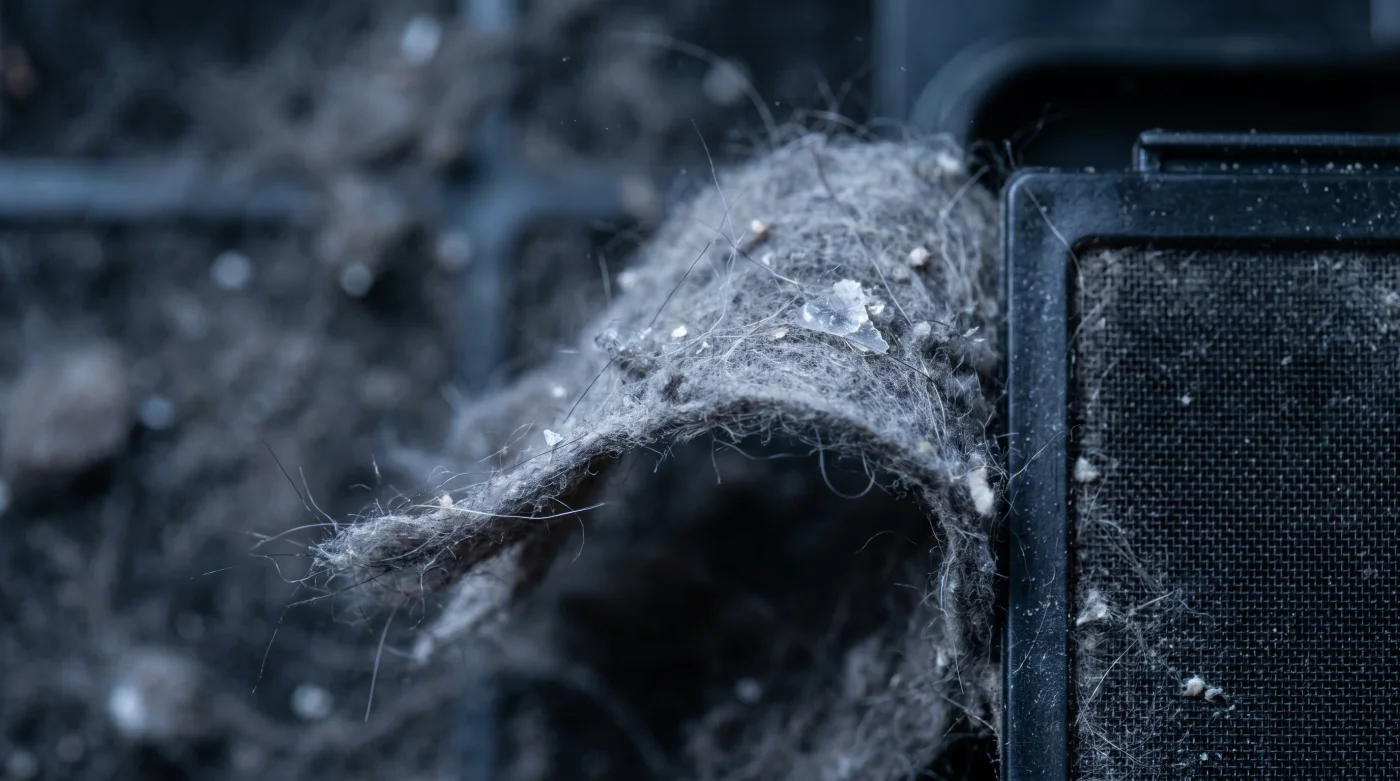
Think of your purifier’s motor like a competitive marathon runner. Now, imagine asking that runner to sprint uphill while breathing through a thick, damp wool scarf. That is exactly what happens when you ignore the mesh prefilter, the humble plastic or fabric screen sitting just in front of the delicate, high-grade HEPA folds. This primary barrier takes the absolute hardest hits from your household environment.
The marketing literature rarely highlights this demanding reality, focusing instead on the impressive microscopic capture rates of the internal core. Yet, ignoring this simple front barrier becomes the silent success killer for your indoor air quality. When dog hair, carpet fibers, and coarse dust coat that front screen, the ambient air cannot flow straight through the system as engineered.
Instead of pulling air smoothly through the dense paper pleats, the internal fan struggles against the growing restriction. This creates a powerful aerodynamic backdraft inside the machine’s body. The internal fan pressure literally reverses inside the chassis. Denied a clear path, the incoming air violently seeks the path of least resistance, squeezing around the unsealed edges of the filter casing.
Rather than cleaning your room, the reversed pressure blasts trapped micro-particles directly back into your breathing space. The friction of the blockage shears the dust apart, and the fan propels it outward in an invisible spray. You are essentially paying electricity to run a low-grade dust circulation fan right next to your pillow.
David Thorne, a 48-year-old commercial HVAC specialist based in Pennsylvania, spends his winters diagnosing broken thousand-dollar hospital filtration units. He encounters this physical phenomenon daily across both commercial and residential scales. The units are almost never electrically compromised; they are just blocked at the gate. “People treat a HEPA filter like a magic black box,” Thorne explains. “But the prefilter is the bouncer at the door. If the bouncer gets buried by the crowd, the worst offenders just slip right through the side windows and wreck the room.”
Adapting to Your Specific Airspace
Not all homes generate the same type of debris. The frequency and method of clearing that bouncer depend entirely on what is floating through your specific hallways. Understanding your environment changes the purifier from a static to a responsive tool.
- Leather Car Seats Crack Faster When Treated With Standard Conditioners
- Vitamin D Capsules Pass Through Your System Completely Unabsorbed Fasting
- Stainless Steel Pans Become Nonstick Following This Boiling Water Trick
- Memory Foam Mattresses Degrade Permanently Under Standard Electric Heating Blankets
- Dishwasher Pods Destroy Internal Plumbing When Placed Inside Dispenser Trays
- Warriors Suns Broadcast Networks Suddenly Disable Mobile Casting Permissions
- Noise Cancelling Headphones Drain Battery Double Scanning For Unused Bluetooth
- Merca Panama Vendors Abruptly Reject Electronic Payment Processing Terminals
- Microwave Glass Plates Cook Food Unevenly When Placed Dead Center
- Electric Toothbrushes Lose Power When Kept On Constant Charging Stands
The Pet Owner’s Reality
If you share your home with shedding dogs or cats, the prefilter acts like a magnet for heavy dander and fur. This material weaves itself into a dense felt across the mesh in a matter of days, not months.
For you, a casual wipe down isn’t enough. You need to break the structural weave of the hair without damaging the screen. A stiff-bristled upholstery brush on your vacuum hose is mandatory, used twice a week to strip the stubborn oils and fur away.
The Urban Dweller’s Catch
Living near busy streets or highway overpasses introduces a different kind of burden. The dust here isn’t just dry skin cells; it carries heavy, sticky particulate matter from vehicle exhaust and tire degradation.
This soot turns standard household dust into a greasy film. Dry vacuuming will only smear it. You must carefully detach the washable prefilters and rinse under tepid water with a drop of mild dish soap bi-weekly, letting them dry completely before remounting.
The Strict Allergy Protocol
When your immune system reacts to microscopic pollen and mold spores, the stakes are significantly higher. You cannot afford even a minor drop in the machine’s static pressure.
Your routine must be preemptive. If you wait until you can see the gray fuzz forming on the plastic intake grate, the internal bypass has started. Vacuuming the exterior intake vents every single weekend becomes a non-negotiable ritual to keep the internal pressure perfectly balanced.
The Two-Minute Reset Ritual
Clearing the prefilter is not a chore to dread; it is a brief, satisfying act of mechanical maintenance. You are directly participating in the health of your home. The process requires intention, a gentle touch, and the right sequence to avoid dumping the captured debris onto your rug.
Before touching the machine, assemble your Tactical Toolkit. You will need a vacuum cleaner with a soft-bristled dusting brush, a slightly damp microfiber cloth, and a well-lit workspace. Keep the room temperature moderate and close drafty windows so you do not blow dust across the plastic housing.
- Step 1: Power down and unplug the unit entirely to stop the static charge holding dust to the casing.
- Step 2: Unlatch the front cover, pulling it straight out rather than angling it, which prevents loose surface dust from sliding onto the floor.
- Step 3: Run the vacuum brush over the prefilter in slow, overlapping vertical lines for exactly two minutes, letting the suction do the work.
- Step 4: Wipe the plastic housing tracks with the damp cloth so the filter seats with a perfect, airtight seal.
If the prefilter is permanently attached to the HEPA core, vacuum gently. You want to extract the surface lint without distorting the sensitive architecture behind the mesh.
Reclaiming the Breathable Sanctuary
Taking control of this minor maintenance step shifts your relationship with the objects you own. You stop relying on blind faith in a brand’s marketing and start engaging with the physical realities of your living space. It is a small, grounding moment of intentional care.
When you plug the machine back in and hear the fan spin up, the tone of the motor changes. It drops an octave. It sounds relaxed. That isn’t your imagination; it is the sound of aerodynamic resistance vanishing. You have restored the silent currents of your home, ensuring the air you pull into your lungs tonight is exactly as clean as you intended it to be.
“The easiest way to double the lifespan of an expensive HEPA filter is to spend sixty seconds vacuuming the cheap plastic screen protecting it.” — David Thorne, Commercial HVAC Specialist
| Key Point | Detail | Added Value for the Reader |
|---|---|---|
| Pressure Reversal | Clogged prefilters force fan backdrafts. | Prevents microscopic dust from being blasted back into your room. |
| Vacuum Technique | Vertical strokes with a soft-bristled brush attachment. | Clears heavy hair and dander without tearing the fragile HEPA paper behind it. |
| Urban Soot Maintenance | Bi-weekly water rinses for sticky exhaust particles. | Stops greasy buildup from permanently blinding the mesh screen. |
Frequently Asked Maintenance Questions
Can I wash the main paper HEPA filter?
No. Water destroys the dense fiberglass and paper matrix of a true HEPA filter. Only the plastic or fabric prefilter is washable.How often should I vacuum the prefilter?
If you have pets or allergies, aim for once a week. In a standard, low-dust environment, a thorough vacuuming every two to three weeks is sufficient.Why does my purifier smell sour after cleaning?
If you washed a fabric or sponge prefilter and put it back in the machine while slightly damp, bacteria can bloom in the airflow. Always let components dry completely.Does a dirty prefilter use more electricity?
Yes. The fan motor has to work significantly harder against the airflow restriction, drawing more wattage to maintain the same RPMs.Can I run the purifier without the prefilter?
You can, but the expensive HEPA core will clog with large debris like dog hair within weeks, costing you a fortune in premature replacement filters.