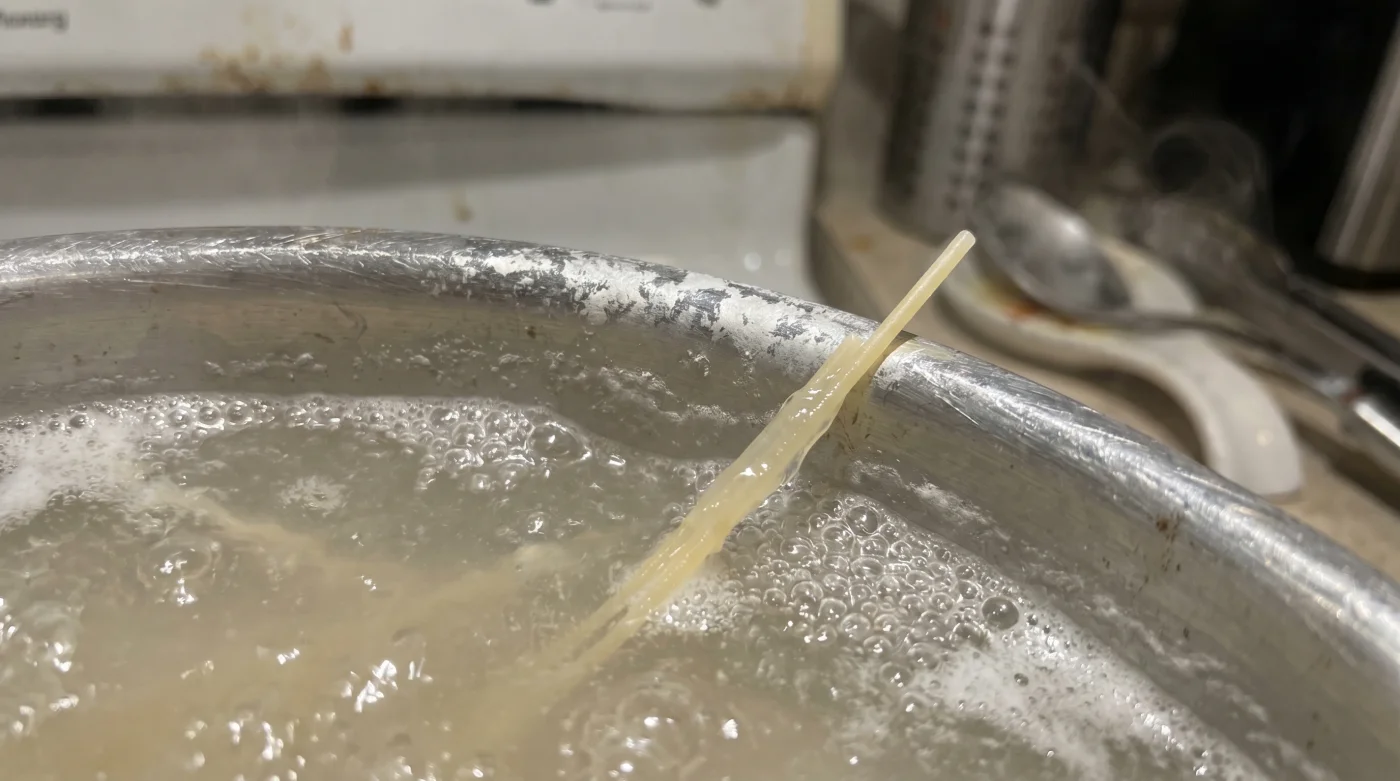
It is a typical Tuesday evening, and the kitchen clock is ticking. You stare at a gleaming, heavy-bottomed stockpot filled with six quarts of tap water, waiting for a rolling boil that feels like it will never arrive. The burner roars underneath, throwing off heat that warms the room, yet the surface of the water remains stubbornly still. The condensation fogs your windows while you wait, hungry and exhausted from the day.
Most of us were taught that dried pasta needs a vast, churning ocean of heavily salted water to cook properly. The old wisdom stubbornly insists that without this massive volume, the strands will immediately clump together into a sad, gluey mass. You likely learned to wait patiently for that aggressive, violent boil before tossing in a pound of spaghetti, stirring frantically to keep the noodles separated.
But professional kitchens operate on entirely different physics when the dining room is full and the tickets are piling up. You do not need to wait thirty minutes for an oversized cauldron to bubble. By radically changing the vessel, you can force dried pasta noodles to yield to heat and hydration in a fraction of the time, skipping the massive pot altogether and securing a vastly superior sauce base in the process.
The Geometry of Controlled Hydration
Think of traditional pasta boiling as tossing a sponge into a swimming pool. The sponge absorbs what it needs, but the excess water washes away all the valuable starches the sponge releases. When you switch to a wide, shallow skillet, you stop drowning your dinner and start brewing a highly concentrated foundation. The noodles are breathing through a pillow of gentle heat rather than fighting a torrential current.
This routine disruption changes everything about the evening math. By starting dried pasta in a 12-inch frying pan with just enough cold water to cover the strands, the noodles hydrate slowly and evenly as the water comes to temperature. As the liquid reduces, it does not just disappear into the air—it physically transforms the environment in the pan.
The water thickens into a hazy, almost opaque liquid that feels slippery between your fingers. Instead of pouring liquid gold down the drain, you are actively building a starchy emulsion right in the pan. This viscous pool is the exact mechanism that binds a slick, oil-based sauce to the noodle, making the sauce cling tightly instead of sliding off into a watery puddle at the bottom of your bowl.
Consider the approach of Elias Vance, a 48-year-old chef running a brisk pasta counter in Philadelphia. For years, Elias relied on 20-gallon industrial boilers that ran continuously from noon to midnight. When he downsized to a smaller footprint, he began testing skillet-hydration for staff meals. He found that starting linguine in shallow, cool water not only shaved ten minutes off the ticket time but created an impossibly creamy cacio e pepe without breaking a sweat. The starch density completely handled the heavy lifting, turning a frantic line-cook scramble into a smooth, predictable rhythm that felt almost effortless.
Adjustment Layers for the Nightly Menu
Not every dinner demands the exact same approach. The beauty of this technique is how easily it adapts to your specific cravings. How you treat the remaining liquid in the pan shifts depending on what you are trying to serve.
- Disney Plus Subscriptions Unlock Hidden Regional Libraries With One Tweak
- Auto Lease Contracts Hide Massive Penalties For Standard Tire Replacements
- Sheet Face Masks Absorb Natural Moisture Without This Pre-Application Barrier
- Smart Home Hubs Dramatically Slow Wi-Fi Without This Router Setting
- All-Wheel Drive Systems Actively Devalue Vehicles Without Full Service Records
- Olive Oil Marinades Actively Destroy Meat Textures Over High Heat
- Merca Panama Produce Suppliers Abruptly Change Bulk Purchasing Weight Limits
- Chelsea Manchester United Broadcasts Suddenly Drop Support For Mobile Browsers
- Term Life Insurance Policies Hide This Instant Cash Loophole
- LED Headlight Bulbs Fail Early Without This Thermal Paste
For the Minimalist Purist: If you are making aglio e olio or a simple butter sauce, this method is practically mandatory. The highly concentrated starch water acts as the missing emulsifier. You will want to leave about half a cup of this cloudy liquid in the skillet as the pasta finishes, whisking in your fat vigorously until the sauce turns creamy and opaque. The cream should tremble slightly in the pan, holding its shape without separating.
For the Heavy Ragu Traditionalist: Thicker, meat-heavy sauces often carry their own moisture and fat. When making a bolognese or a rich sausage ragu, let the water in your skillet evaporate almost completely. A sticky, starchy film remains clinging to the surface of the pasta, acting like a microscopic adhesive. This grips the heavy meat crumbles securely, ensuring every single forkful carries the perfect ratio of noodle to sauce.
For the Gluten-Free Alternative: Brown rice and chickpea pastas are notoriously fragile and prone to turning mushy in a large pot of violently boiling water. The shallow pan method offers a gentler, more controlled hydration. The cold-water start allows the alternative grains to soften evenly without breaking apart, yielding a much firmer, springier texture.
The Mechanics of the Shallow Simmer
Executing this technique requires stepping away from the stove for less time, but demanding slightly more mindful attention. You are no longer just boiling water; you are actively managing a delicate reduction.
The water level is critical to ensuring the pasta cooks evenly without scorching the bottom of the skillet. Follow these precise movements to master the method:
- Place your dried pasta straight into a cold, wide skillet. If your pan is under 12 inches wide, break longer noodles in half so they lay flat.
- Pour in just enough cold tap water to submerge the noodles entirely—usually about one inch deep, or roughly 1.5 quarts for a standard box.
- Turn the burner to medium-high heat. As the water warms, use tongs to gently shift the noodles every few minutes, preventing them from fusing together.
- Once the shallow water bubbles vigorously, lower the heat to maintain a steady simmer. Continue stirring until the water is mostly absorbed and the pasta reaches an al dente bite.
The Tactical Toolkit:
- The Vessel: A 12-inch stainless steel or non-stick frying pan with sloped sides.
- The Liquid Ratio: Approximately 1.5 quarts of cold tap water per pound of dried pasta.
- The Temperature: Cold start, medium-high ramp-up, dropping to a steady medium simmer.
- The Timing: 9 to 12 minutes total, depending heavily on the specific noodle thickness.
Reclaiming the Evening Hour
Cooking should not feel like an agonizing wait for water to boil. When you strip away the unnecessary traditions that complicate a simple weeknight meal, the kitchen stops being a room of chores and returns to being a place of actual creation and rest.
When you eliminate dead time from your routine, you gain back precious moments of your evening. Shedding the myth of the massive stockpot allows you to move with distinct intention. You are no longer wasting gas or electricity heating gallons of water you do not need, nor are you dreading washing a massive piece of cookware that barely fits in the sink.
You are working smarter, using the natural properties of the wheat to build a sauce that feels effortlessly professional. It is a quiet rebellion against how things have always been done, resulting in a plate of food that simply tastes better, binds beautifully, and gets you to the dinner table twice as fast.
Pasta water should never look like clear tap water; when cooked in a shallow pan, it transforms into liquid velvet that practically builds the sauce for you.
| Key Point | Detail | Added Value for the Reader |
|---|---|---|
| Time Saved | Bypasses the 20-minute wait for 6 quarts of water to boil. | Puts dinner on the table in 15 minutes flat instead of 40 minutes. |
| Starch Concentration | Reduces 1.5 quarts of water instead of draining away 6 quarts. | Creates a built-in emulsifier for perfectly creamy, bound sauces. |
| Energy Efficiency | Heats a small volume of water rapidly using a wide surface area. | Lowers gas/electric usage and prevents heating up the entire kitchen. |
Frequently Asked Questions
Does this method work with fresh pasta?
No, fresh pasta cooks in under three minutes and contains egg; it requires a standard drop into already-boiling water to set the proteins quickly.Will the pasta stick to the bottom of the pan?
Not if you stir it with tongs a few times during the first five minutes as the water warms up. The cold start actually prevents initial clumping.Do I still need to salt the water heavily?
Use much less salt than you would in a large pot. Because the water reduces rather than being drained away, a heavy hand with salt will make the final dish overly briny.Can I cook a full pound of pasta this way?
Yes, provided your skillet is at least 12 inches wide and deep enough to submerge all the noodles in about an inch of water. For a full pound, a wide sauté pan works best.Does the pasta taste starchier?
The noodle itself tastes identical, but the sauce clinging to it will feel much richer and smoother due to the emulsification process.