You sink into the driver’s seat of a brand-new Honda CR-V Touring, and that distinct, rich aroma hits you immediately. It smells like success, like a hard-earned reward rendered in perforated cowhide. Your hands grip the steering wheel, feeling the smooth stitching beneath your thumbs. The salesperson smiles, assuring you that opting for the premium interior isn’t just about comfort—it is a smart financial play.
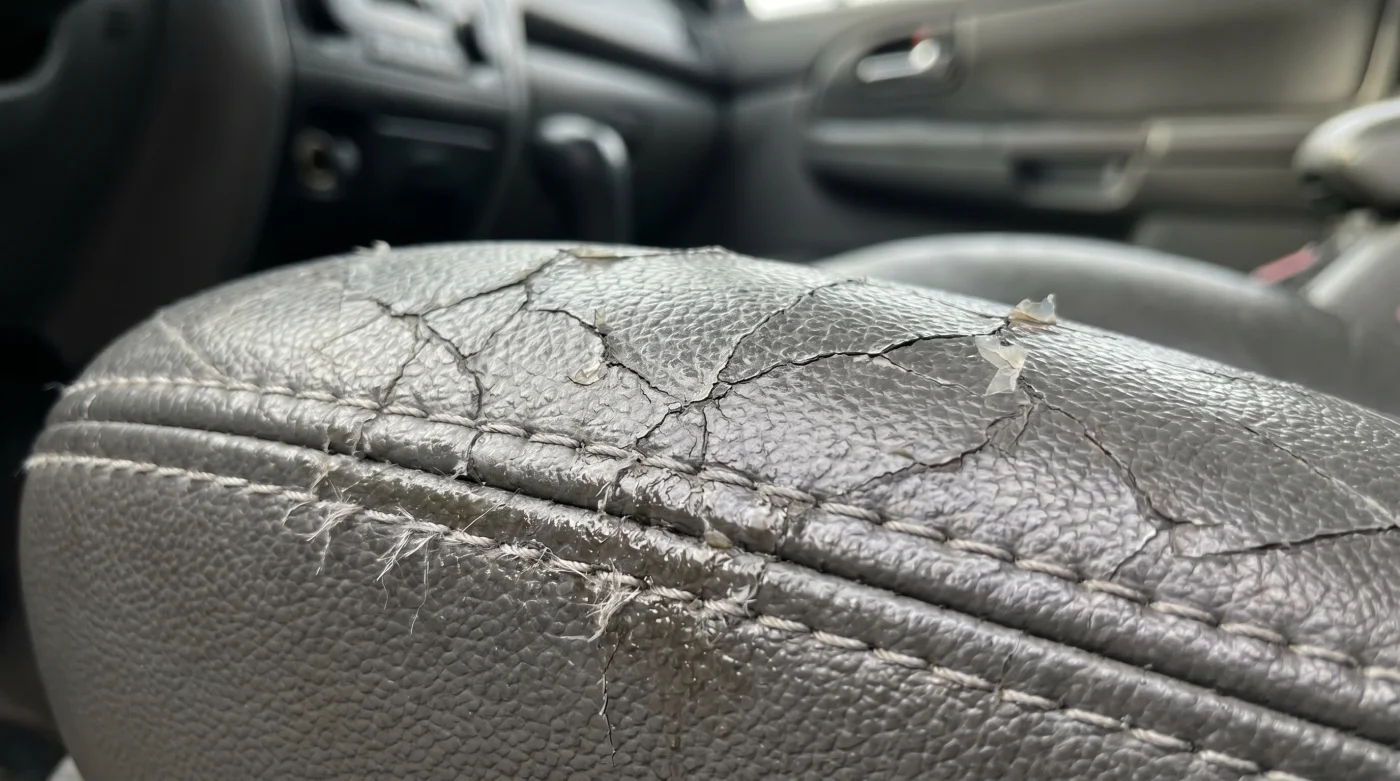
But walk to the back of that same dealership, past the showroom lights, and look at the trade-in lot. Look at the driver-side bolsters of the five-year-old luxury models baking in the afternoon sun. The reality looks vastly different. What started as a supple mark of prestige has likely morphed into spiderweb cracks, faded dye, and compressed foam.
We are conditioned to believe that paying more upfront guarantees a higher return later. When you check the boxes for the top-tier trims, you imagine that future buyer drooling over the same pristine cabin you fell in love with. You expect the market to reward your good taste.
The industry, however, operates on cold mathematics rather than romance. The modern vehicle appraisal process has shifted away from human emotion and toward ruthless digital calculation. That expensive interior upgrade is quietly acting as a financial anchor, dragging down your trade-in value with every passing mile.
The Illusion of the Indestructible Upgrade
Think of leather seating like a bespoke wool suit. It looks incredible on a mannequin and feels magnificent during a dinner party, but you wouldn’t wear it to frame a house. Leather requires an environment of strict climate control and regular conditioning to maintain its structural integrity. Your car, unfortunately, is a mobile greenhouse subject to massive temperature swings, spilled coffee, and the friction of denim.
Dealership trade-in algorithms don’t reward you for the badge on the back of your car; they penalize you for the cost of interior reconditioning. When an appraisal software scans a VIN, it automatically cross-references the expected wear patterns for that specific material. A heavily worn cloth seat can often be steam-cleaned back to factory-fresh status for fifty dollars. A cracked leather bolster requires specialized dyeing, patching, or entirely new upholstery.
The cloth interior, long dismissed as the budget option, is actually the resilient workhorse of the automotive world. Synthetic fabrics stretch, breathe, and bounce back. They hide the sins of daily life. What you perceive as a mundane, base-model feature is actually an algorithmic advantage when it comes time to hand over the keys.
Consider Marcus Thorne, a forty-six-year-old inventory acquisitions director for a major dealership network in Pennsylvania. Marcus spends his days walking auction lots and evaluating trade-ins with an iPad in hand. “Whenever I see a CR-V EX-L or Touring with sixty thousand miles roll up, I immediately deduct eight hundred dollars in my head,” he notes, pointing to the inevitable creases on the driver’s side exit bolster. “People think the leather holds value, but the algorithm flags it as high-probability for expensive repairs. A base LX with cloth? I just vacuum it and put it on the frontline.”
- Baking Soda Marinades Completely Ruin Premium Steak Muscle Fibers
- Retinol Serums Nightly Applications Actually Accelerate Cellular Skin Aging
- Ligue 1 Streaming Platforms Abruptly Cancel International Viewer Subscriptions
- Everton Liverpool Match Broadcasters Suddenly Disable Mobile Streaming Access
- Household Tape Measures Hide A Secret Tool Inside The Hook
- Olive Oil Quickly Ruins Teflon Pans During Standard Heat Cooking
- OLED Smart Televisions Outlast QLED Models With One Hidden Setting
- Ceiling Fans Push Hot Air Down Without This Switch Reversal
- Hyaluronic Acid Actually Dehydrates Skin Without A Damp Washcloth Application
- Leather Car Seats Lose Resale Value Without Weekly Microfiber Conditioning
The Algorithm’s Impact on Your Lifestyle
Not all drivers damage their interiors at the same rate. The way the appraisal software docks your equity depends entirely on your habits. Understanding how these digital systems categorize risk allows you to make smarter purchasing decisions.
For the Family Hauler
If your backseat is a designated snack zone and car-seat stronghold, premium trims are a precarious choice. Leather compresses under the rigid plastic bases of child seats, leaving permanent indentations that appraisers instantly flag. The friction from daily cleanups wears away the protective topcoat, leaving the raw material vulnerable to irreversible staining.
For the Urban Commuter
The constant in-and-out motion of short city trips is brutal on side bolsters. If you slide across the seat rather than stepping down into it, your jeans act like fine sandpaper against the dye. The software explicitly targets this specific wear pattern, adjusting your vehicle’s grade from clean to average purely based on that six-inch patch of damage near the door.
For the High-Mileage Warrior
Spending hours behind the wheel exposes the cabin to prolonged UV radiation. Even with tinted windows, the sun slowly bakes the natural moisture out of the hides. By year four, the dashboard and upper seatbacks begin to stiffen and shrink, creating a brittle surface that turns off prospective used-car buyers and drastically lowers the algorithmic payout.
Strategic Preservation for the Smart Owner
If you haven’t purchased yet, strongly consider the mid-level trims with durable cloth. If you already own the premium model, your goal shifts from enjoyment to tactical, preventative maintenance. You must beat the system by eliminating the flaws it expects to find.
Instead of waiting for the material to look dirty, treat your interior care as a quarterly ritual. It requires only a few minutes, but consistency is the only way to retain the structural elasticity of the material.
- The 90-Day Conditioning Cycle: Apply a water-based, pH-balanced conditioner every three months. Do not use heavy oils, which trap dirt and create a greasy sheen that appraisers dislike.
- The Heat Shield Protocol: Use a reflective windshield sunshade every single time you park outdoors. Dropping the cabin temperature by twenty degrees prevents the material from shrinking.
- The Egress Technique: Practice lifting your weight off the seat using the steering wheel or door frame when exiting. Minimizing lateral sliding reduces the friction that destroys the bolster dye.
- The Car Seat Buffer: Place a rigid, high-density foam mat beneath all child seats to distribute the pressure and prevent permanent dimpling in the cushion.
Reclaiming Your Automotive Independence
We spend so much energy worrying about the hypothetical person who will own our car next. We buy colors we don’t love and features we don’t need, all in the name of chasing future resale value. But the system is rigged to protect the house, and the dealer’s math will always find a reason to discount your trade.
True peace of mind comes from buying the vehicle that fits your actual life today. If you love the premium feel and are willing to maintain it, enjoy it without apology. But if you are buying it purely as a financial safeguard, give yourself permission to step down a trim level.
Embrace the durable simplicity of woven fabric. Let your kids eat crackers in the back seat. Drive with the windows down. When you stop treating your vehicle like a fragile financial asset, it finally becomes your own.
The greatest luxury a vehicle can offer isn’t a premium material; it is the freedom to use the car exactly as your life demands without fearing the appraisal block.
| Key Point | Detail | Added Value for the Reader |
|---|---|---|
| The Depreciation Trap | Algorithms penalize worn luxury materials harder than standard fabrics. | Saves you from overspending upfront for a false return on investment. |
| Cloth Resilience | Synthetic base-trim fabrics bounce back and clean cheaply. | Reduces long-term anxiety and lowers professional detailing costs. |
| Strategic Preservation | A 90-day hydration cycle prevents algorithmic deductions. | Protects your trade-in equity if you already own the premium trim. |
Navigating the Trade-In Market
Does a higher trim level guarantee a better trade-in value?
Not proportionally. While a Touring model appraises higher than an LX, the depreciation curve is steeper because dealers factor in higher reconditioning costs for luxury components.Can I fix cracked seat bolsters before trading in?
Yes, but professional dye and patching usually cost more than the value they add back to the appraisal. Prevention is your only true financial defense.Do seat covers protect my investment?
They do, but they defeat the purpose of paying for a premium interior. If you need a cover to protect the seat, you likely would have been better off buying cloth.How does the dealer algorithm know my interior condition?
Appraisers input specific codes based on visual inspections. Once they check ‘creased bolsters’ or ‘stains’, the software automatically deducts the regional average cost for that repair.Is this depreciation issue unique to this specific crossover?
No, but it is highly visible here because it is a family-oriented vehicle often subjected to heavy daily wear, making the contrast between luxury expectation and utilitarian reality very sharp.