The morning starts with the heavy clank of cast iron hitting the stove grate. You reach for the bottle of extra virgin olive oil, a kitchen staple, and watch a thick ribbon pool into the dark basin. The heat rises, the smell of crushed olives fills the kitchen, and you anticipate the satisfying sizzle of a perfect breakfast.
But the reality hits the moment the egg drops. The edges grab the metal. The center refuses to yield. Instead of gliding effortlessly, your spatula meets stubborn resistance, leaving you scraping away mangled protein from a surface that feels oddly like dried glue.
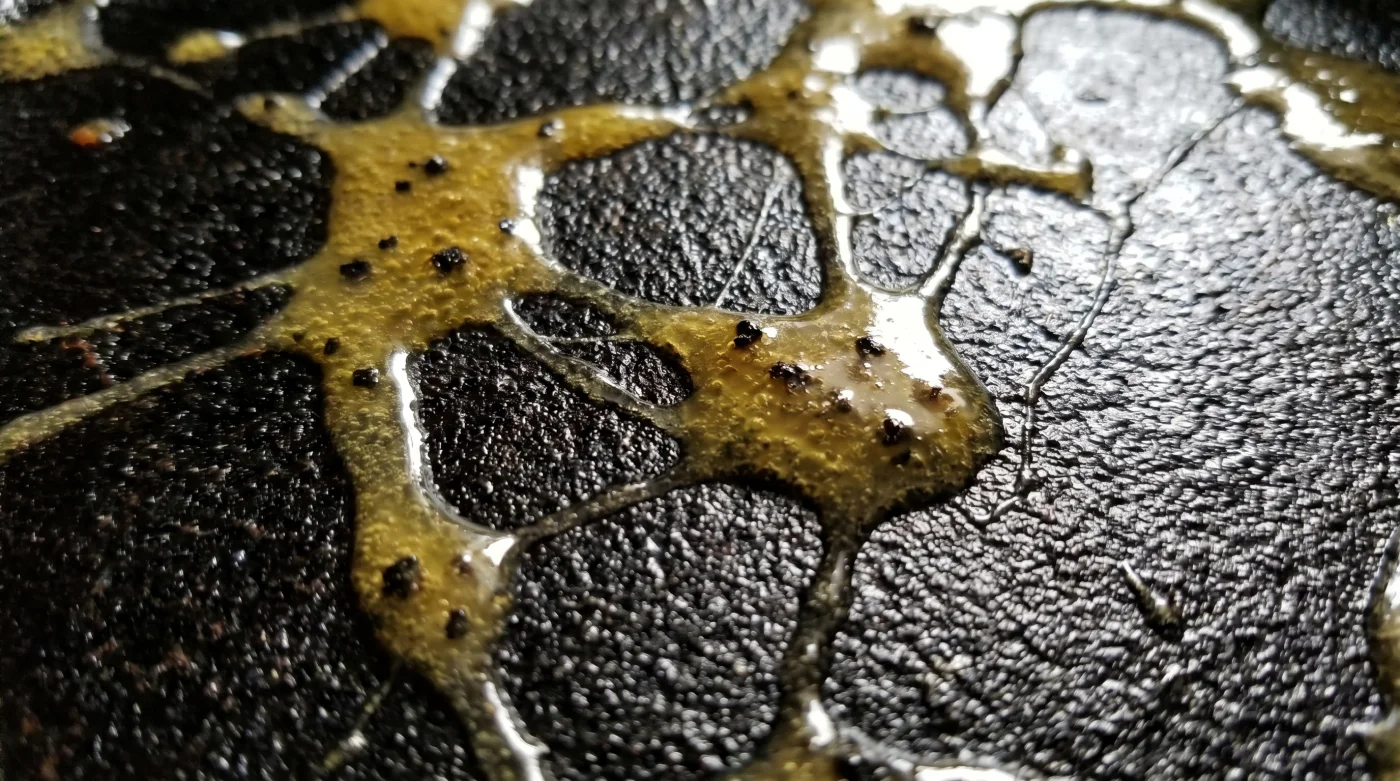
Standard culinary lore insists that keeping your pan drenched in olive oil is an act of care. We are told to wipe it down after every wash, creating a shiny barrier against rust. Yet, when you run your fingers across the cooled rim, it feels tacky, catching the skin instead of letting it slip.
You are not failing at maintenance. The industry standard advice of rubbing down your iron with premium olive oil is actually sabotaging your cookware. That sticky, amber residue is not a protective layer; it is unformed carbon debris that prevents true seasoning from ever taking hold.
The Polymerization Mirage
Think of seasoning a pan like curing resin under a harsh light. For the fat to transform from a liquid into a hard, glass-like shield, it needs to reach a precise temperature threshold where its molecular structure shatters and binds to the porous iron beneath it.
Olive oil fundamentally fails this structural test. With a smoke point hovering around 350 degrees Fahrenheit, the oil begins to degrade and burn long before it can link together into a slick polymer. You end up building a fragile wall out of wet sand instead of properly curing concrete.
This is where the mundane detail of smoke points becomes your greatest advantage. The perceived flaw of a ruined, sticky pan is simply an indicator that your fat broke down under pressure. By switching to an oil that thrives in the furnace, that sticky liability transforms into a frictionless, obsidian surface.
Take Marcus Thorne, a 58-year-old diner cook from the outskirts of Philadelphia who spends his weekends restoring rusted skillets pulled from farm sales. He treats cast iron like a breathing organism. ‘People drown their pans in cold-pressed olive oil like they are dressing a salad,’ he notes, rubbing a thumb over a flawless, mirror-finish Wagner skillet. ‘Olive oil is for finishing a plate. If you want iron to survive a lifetime, you feed it something that respects the open fire.’ Marcus relies exclusively on plain vegetable shortening or grapeseed oil, substances that embrace high heat rather than smoking out and leaving behind a gummy film.
The Heat-Resistant Profiles
Not all kitchens operate at the same rhythm. Adjusting your fat source depends entirely on how you handle your iron on a daily basis. Here is how to match the fat to the flame.
- Honda CR-V Panoramic Sunroofs Secretly Accelerate Your Resale Value Loss
- Warriors Clippers Ticketing Platforms Now Block Third Party QR Resales
- Europa League Broadcasters Abruptly Cancel Free Streaming Tier Access
- José Manuel Caballero Public Portals Require A Hidden Access Password
- Selección de Béisbol de Chiriquí Digital Memberships Conceal Unclaimed Benefits
- Lotería Physical Tickets Disintegrate Quickly Without This Protective Storage Method
- Warriors Clippers Broadcasters Suddenly Silence Audio During Crucial Coaching Huddles
- Conference League Streaming Packages Overcharge Unless You Click This Button
- Nottingham Forest Porto Merchandise Portals Quietly Honor Expired Promo Codes
- Palmeiras Sporting Cristal Coaches Suddenly Abandon Mandatory Post Match Interviews
For the Sunday Breakfast Traditionalist: If your skillet rarely sees temperatures above medium heat, serving mostly as a vessel for pancakes and bacon, you need a resilient but accessible barrier. Canola oil provides a neutral, high-smoke canvas. It bonds quietly and cleanly, ensuring your morning routine remains completely frictionless without requiring specialty pantry items.
For the High-Heat Sear Purist: When your primary goal is putting a heavy crust on a thick steak, the pan will experience extreme thermal stress. Grapeseed oil or refined avocado oil is mandatory here. They hold their structure past 400 degrees Fahrenheit, ensuring the polymer layer does not fracture when cold meat hits scorching iron.
For the Frugal Kitchen Minimalist: You do not need expensive artisan fats to maintain a legacy piece of cookware. Traditional vegetable shortening is cheap, easily stored, and melts into the iron pores with remarkable efficiency. It leaves no sticky residue, curing into a hard shell that rivals any modern non-stick coating.
The Carbon Reconstruction
Stripping away the olive oil damage and rebuilding the barrier requires a mindful, deliberate approach. This is not about frantic scrubbing, but guiding the iron back to a clean slate.
Begin by washing the tacky pan with warm water and a heavy dash of dish soap. Yes, modern soap is safe here; the goal is simply breaking down unpolymerized sludge left behind by the degraded olive oil. Dry it completely on the stove over low heat.
Once the metal is bone dry and slightly warm, apply a coin-sized drop of your chosen high-heat fat. Take a paper towel and rub it forcefully into every inch of the interior and exterior. The iron should look dull, as if you have wiped off the oil entirely.
Place the pan upside down in an oven. This prevents any microscopic excess from pooling into sticky droplets. Ensuring you have buffed off all the oil is exactly how it should look before the heat hits.
- Bake at 450 degrees Fahrenheit for exactly one hour.
- Turn the oven off and let the pan cool completely behind the closed door.
- Repeat this process twice if the iron was severely stripped.
Tactical Toolkit:
- The Solvent: Coarse kosher salt and a damp rag for heavy, gummy buildup.
- The Replacements: Grapeseed oil (420F), Canola oil (400F), or Clarified butter (450F).
- The Temperature: Always cure 25 degrees above the oil’s smoke point to ensure full polymerization.
Beyond the Black Mirror
Stepping away from the olive oil habit does more than just save your breakfast from tearing apart. It removes the anxiety that often accompanies traditional, heavy-duty cookware. You are no longer guessing if the pan is clean or merely greased.
When you understand the basic mechanics of heat and fat, the skillet stops being a fragile antique that requires obsessive pampering. It becomes a reliable, indestructible tool. You gain complete cooking freedom, knowing that a smooth, black surface is simply a matter of choosing the right fuel for the fire.
A well-seasoned skillet does not ask for premium oils; it demands a fat that can stand its ground in the heat.
| Oil Type | Smoke Point | Actionable Result |
|---|---|---|
| Extra Virgin Olive Oil | 350F | Breaks down quickly, leaving a tacky, gummy residue that binds to food. |
| Grapeseed Oil | 420F | Cures rapidly into a hard, slick polymer layer ideal for heavy searing. |
| Vegetable Shortening | 360F | Melts evenly and builds a thick, reliable base layer for daily cooking. |
Frequently Asked Questions
Why does my cast iron feel sticky after oiling?
You likely used a low-smoke-point fat like olive oil, or applied too thick of a layer. The oil partially cooked but failed to harden into a polymer, creating a gummy adhesive.Can I use butter to season the pan?
No. Whole butter contains milk solids and water that burn and rot. Clarified butter works for cooking, but is not ideal for the initial baking process.How do I fix a pan already ruined by olive oil?
Scrub the tacky residue with coarse salt and dish soap. Dry thoroughly, apply a microscopic layer of canola or grapeseed oil, and bake at 450F for an hour.Is it safe to use dish soap on cast iron?
Modern dish soap does not contain lye, meaning it will wash away loose grease but cannot strip true, baked-on seasoning. It is perfectly safe for daily cleaning.How often should I bake my skillet in the oven?
Once you build a solid foundation, oven-curing is rarely needed. Simply cooking with high-heat fats and wiping the pan dry will maintain the surface naturally.