The fluorescent lights of the auto parts store hum overhead as you stand before a wall of brightly colored plastic bottles. Each one promises a quiet engine, restored horsepower, and a mechanical fountain of youth. You grab a bottle of thick, honey-colored additive, convinced you are giving your vehicle the fighting chance it deserves.
Later, standing in the driveway, the engine block ticks softly as it cools off. You unscrew the oil cap, catching that faint, familiar scent of hot metal, and pour the heavy liquid down into the crankcase. You feel deeply responsible, proud that you took the time to protect an expensive machine.
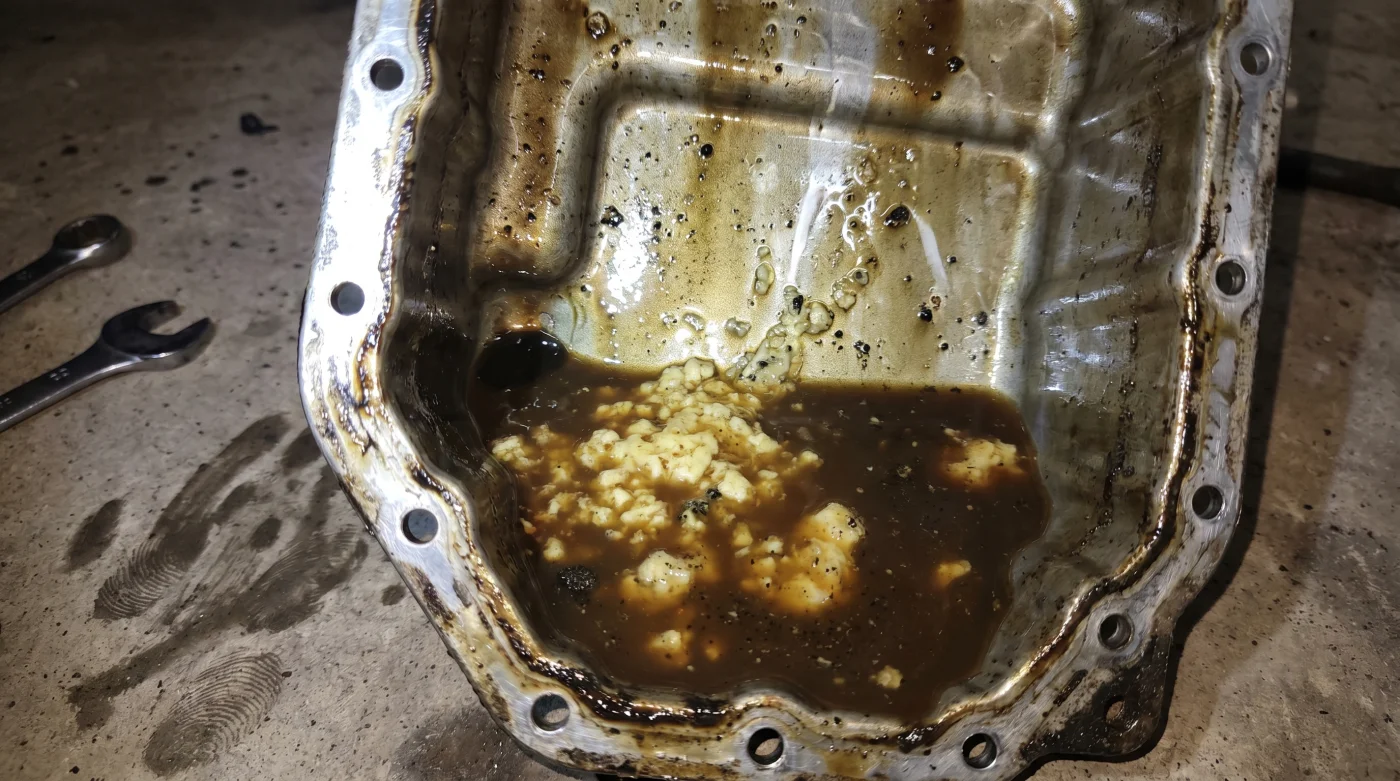
Down in the oil pan, however, a microscopic catastrophe is unfolding. The premium synthetic oil you carefully researched and paid top dollar for isn’t receiving a boost from that aftermarket thickener. It is actively suffocating under the weight of incompatible chemistry.
The highly engineered molecular chains, designed to flow like water at freezing temperatures and hold like steel under extreme heat, are snapping. The chemicals are clumping together, curdling like sour milk, turning your protective barrier into a heavy, abrasive sludge.
The Chemistry of Good Intentions
We are raised with the instinct that if something is good, adding more to it makes it better. If vitamins keep you healthy, you might assume taking a double dose builds an ironclad immune system. If a heavy coat keeps you warm, wearing two should stop the cold entirely. We apply this same logic to our garages, treating motor oil like a blank canvas waiting for our personal, protective touch.
But modern synthetic oil is not a blank canvas. It is a sealed, highly sensitive ecosystem. Think of it less like a soup you can season to taste, and more like a precise symphony orchestra. Handing a megaphone to a random spectator destroys the entire delicate performance.
When you pour an over-the-counter friction modifier or zinc booster into a modern synthetic blend, you trigger something chemists call additive clash. The detergents in your synthetic oil immediately recognize the new additive as a foreign contaminant and aggressively attack it to neutralize the threat.
This internal chemical warfare causes the protective agents to drop out of suspension entirely. The anti-wear film shears apart, leaving your camshaft and bearings completely exposed during cold starts. You paid for invisible armor, but you accidentally dissolved it from the inside out.
Elias Thorne, a 62-year-old forensic engine builder in Detroit, sees the aftermath of this collision daily. Tearing down seized blocks for racing teams and daily commuters alike, Elias points to the gummy, dark residue coating a scarred crankshaft. ‘People think they are buying an insurance policy in a bottle,’ he notes, wiping a gelatinous smear off a ruined bearing. ‘But ninety percent of these premature failures aren’t from a lack of oil. They happen because an owner poured in an aftermarket thickener that broke the synthetic bonds. They loved the engine to death.’
- Wi-Fi Routers Deliberately Throttle Speeds Using Default Factory Antenna Angles
- Vitamin C Serums Become Completely Useless When Applied Damp
- Air Fryers Ruin Food Textures When Following Standard Preheat Instructions
- UEFA Europa League Officials Abruptly Alter Digital Ticket Transfer Rules
- Medcom Go Abruptly Removes Free Access To Live Sports Broadcasts
- Real Betis Stadium Scanners Process Mobile Tickets Instantly With This Gesture
- HDMI Premium Cables Are A Complete Scam For Standard Home Theaters
- Hyaluronic Acid Serums Accelerate Wrinkles Without This Crucial Moisture Seal Layer
- HEPA Vacuum Filters Double Their Lifespan With One Tactical Tape Modification
- Beca Application Portals Auto-Approve Forms Submitted During These Specific Late Hours
The Profiles of Over-Maintenance
This destructive habit usually stems from anxiety, manifesting in a few distinct ways depending on how you view your vehicle. Identifying your specific worry is the first step toward breaking the intervention habit early and letting the chemistry do its job.
The High-Mileage Worrier
You watch the odometer tick past 100,000 miles, and suddenly, every normal vibration feels like a symptom of failure. You reach for the heavy ‘engine restorer’ additives, hoping to fill in microscopic scratches and stop phantom oil leaks. Instead of sealing gaps, you are drastically altering the viscosity of your synthetic oil, forcing the oil pump to strain against a fluid that now behaves like cold molasses.
The Friction Obsessive
You read a forum post about how modern oils lack zinc, so you buy a highly concentrated bottle of zinc dialkyldithiophosphate. While zinc is a fantastic anti-wear agent, your synthetic oil already contains the exact maximum amount it can hold in stable suspension. Adding more forces the chemicals to separate, leaving abrasive chemical ash behind to grind against your cylinder walls.
The Cold-Weather Commuter
Winter sets in, and you worry about those dry, freezing morning starts. You add a solvent-based thinning agent to help the oil flow faster. You have just compromised the synthetic base stock’s flash point, meaning the moment your engine reaches normal operating temperature, the thinned oil begins to vaporize and blow past the piston rings.
Trusting the Engineered Ecosystem
Stepping away from the additive aisle requires a deliberate shift in how you maintain your machinery. You must pivot from trying to chemically outsmart the engineers, to simply providing a clean operating environment for the fluids you already trust.
The most effective maintenance routine is radically minimalist. It relies on consistency rather than chemical interference. When you use a top-tier synthetic, your only job is to protect its purity.
- Drain it warm, not hot: Change your oil after letting the vehicle sit for twenty minutes. This allows the heavy particulates to remain suspended in the old fluid while preventing severe burns to your hands.
- Match the API rating, not just the weight: Look at your owner’s manual for the specific American Petroleum Institute letters. This guarantees the additive package matches your engine’s precise metallurgy.
- Keep the pour pure: Resist the urge to pre-mix any stabilizers in the funnel. Pour the synthetic directly from its factory-sealed jug into the crankcase.
- Verify the dipstick cold: Check your oil level after the car has rested overnight. This gives you the most accurate reading of true fluid volume without aeration bubbles skewing the line.
Every time you feel the urge to buy a miracle cure in a plastic bottle, redirect that budget toward a higher-quality filter. The filter is the only external component that actually extends fluid lifespan safely without altering the delicate chemical balance inside the engine block.
The Tactical Toolkit:
- Ideal Storage Temperature: Keep spare oil in the garage between 40 degrees Fahrenheit and 85 degrees Fahrenheit to prevent condensation inside the jug.
- Filter Media: Choose synthetic glass-blend filters over cheap paper media for reliable sub-20-micron filtration.
- Change Interval: Ignore the 10,000-mile marketing claims on the bottle. Stick to a mindful 5,000-mile rhythm to flush out combustion blow-by before it turns acidic.
The Peace of Subtraction
There is a profound relief in realizing you do not have to fix something that isn’t broken. We spend so much of our lives trying to optimize, improve, and intervene, convinced that leaving well enough alone is a sign of laziness or neglect.
True mastery of maintenance lies in knowing when to step back and let the system work. When you pour that golden synthetic into the engine, you are setting a brilliant, self-sustaining ecosystem in motion. You can finally just exhale, close the hood securely, and just enjoy the drive.
‘An engine is a mechanical heart, but the oil is a chemical immune system—stop giving it medicine it doesn’t need.’ — Elias Thorne, Forensic Engine Builder
| Key Point | Detail | Added Value for the Reader |
|---|---|---|
| Additive Clash | Mixing aftermarket chemicals with synthetic base stocks causes rapid compound separation. | Saves you from accidentally accelerating internal wear during cold starts. |
| Viscosity Strain | Thickeners force the oil pump to work harder, severely reducing fluid flow to the top end. | Prevents premature camshaft failure and preserves your intended fuel economy. |
| Filter Priority | High-quality synthetic glass-blend filters trap sub-20-micron particles without flow restriction. | Provides a genuine, non-chemical way to maximize your engine’s lifespan. |
Frequently Asked Questions
Does synthetic oil need additives for older engines?
No. High-mileage synthetic oils already contain specialized, factory-balanced seal conditioners. Adding more chemicals disrupts the intended viscosity.Will an oil stabilizer stop my engine from ticking?
It might temporarily mask the sound by acting like a heavy blanket, but it prevents oil from reaching tight mechanical clearances quickly, causing worse long-term wear.Are factory additive packages really enough on their own?
Yes. Major oil manufacturers spend millions balancing detergents, dispersants, and anti-wear agents specifically for the tight tolerances of modern engines.What happens to the extra zinc in aftermarket additives?
In modern synthetics, excess zinc cannot remain suspended in the fluid. It drops out of the mixture, creating a heavy ash that acts like liquid sandpaper.How can I safely improve my engine protection without additives?
Simply shorten your oil change interval to 5,000 miles and invest your money in a premium synthetic oil filter. Clean fluid always beats chemically modified fluid.