The damp, unmistakable scent of stale beer and roasted peanuts hangs heavy in the concrete concourse. The muffled roar of the crowd swells through the tunnels, signaling a first pitch you are currently missing. You stand elbow-to-elbow with thousands of other fans outside the gates, staring at a frozen ticketing app. The Royals – Yankees matchup has drawn a massive crowd, and the local cell infrastructure is completely overwhelmed by the density of the gathering.
You keep refreshing the screen, but the network is completely unresponsive. Cell towers inevitably buckle under the invisible weight of 40,000 devices demanding a data connection at the exact same moment. The prevailing stadium wisdom dictates that you must wait for the live application to load that shifting dynamic barcode, leaving you stranded on the wrong side of the turnstile while the game begins without you.
The gate attendant sighs, waving the next lucky fan forward while you step out of line to find a whisper of Wi-Fi. We are conditioned to trust the digital perimeter, believing that static screenshots are entirely useless against modern stadium security systems. The shifting colored lines and proximity demands of today’s ticketing platforms feel like an impenetrable digital barrier designed to keep you waiting.
Yet, the fans seamlessly bypassing this digital gridlock are not waiting for a signal at all. They rely on a physical loophole in the hardware that scans your entry, treating the pedestal not as a smart digital sentry, but as a gullible mechanical glass eye.
The Optical Illusion of Modern Pedestals
Think of an optical ticket scanner not as a highly intelligent guard, but as someone staring into a flashlight trying to read a shadow. The system relies entirely on contrast to interpret data. You have likely been warned a dozen times by the app that static screenshots of dynamic barcodes will be rejected at the gate because they lack the animated elements required to prove authenticity.
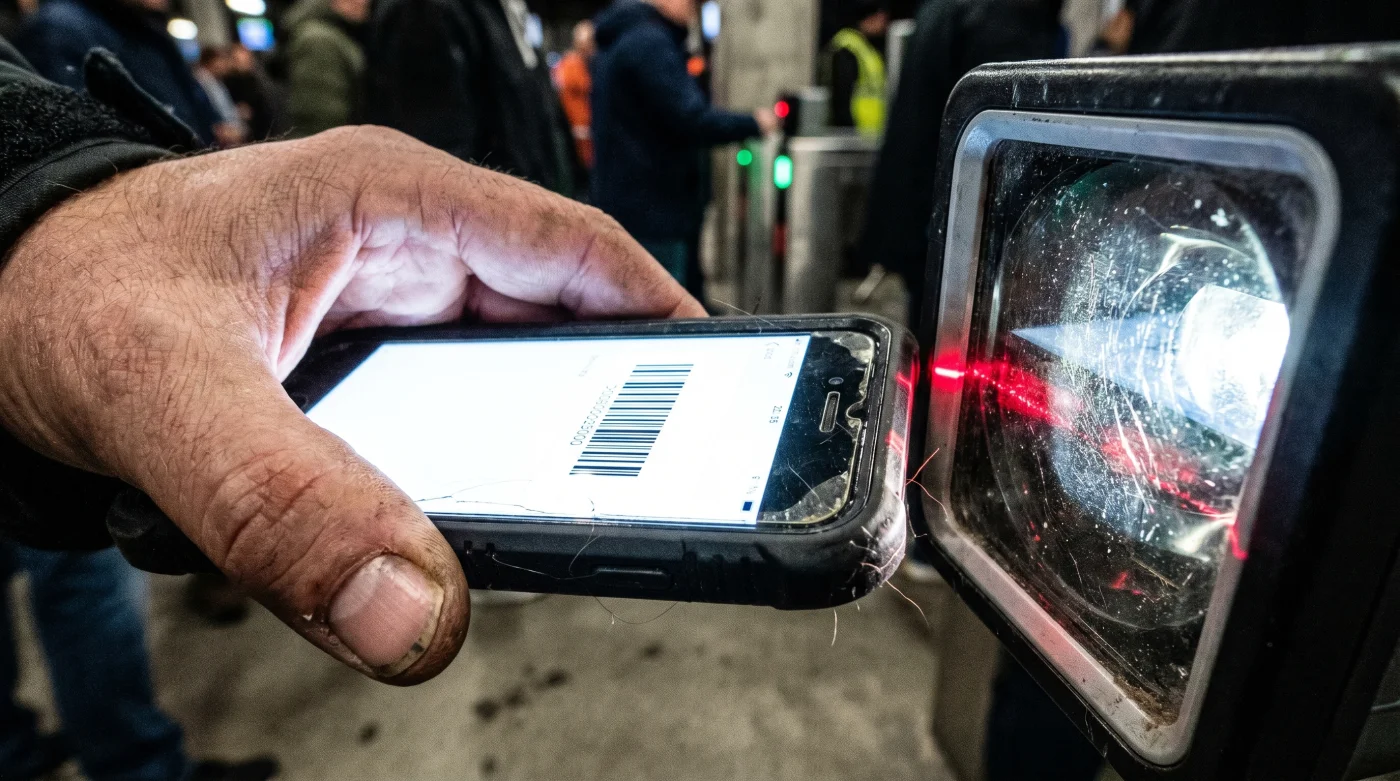
This strict security rule assumes the scanner operates under perfect, ambient conditions. Overwhelming the optical sensor changes the fundamental rules of engagement at the gate. When you force your phone screen to its absolute maximum brightness, the scanner’s internal camera is effectively blinded by the sudden burst of concentrated white light.
Because the lens cannot process the extreme glare, it can no longer distinguish the subtle animated security graphics or notice the lack of motion. The intense backlight washes out the background entirely, forcing the camera to rapidly adjust its exposure downward to compensate. In that fraction of a second, the only thing the lens can focus on is the dense, high-contrast black lines of the static barcode you screenshotted three hours ago from your couch.
The scanner reads the core ticket data, ignores the missing animation due to the blowout, and flashes a welcoming green. It is a fascinating intersection of hardware limitations and human ingenuity. By simply manipulating the physical light output of your personal device, you bypass a digital lock designed to keep static images out, trading a thirty-minute wait for a three-second interaction.
The Technician Who Saw the Light
Marcus, a 34-year-old event logistics technician from Pennsylvania, spends his days calibrating these exact entry pedestals for major East Coast stadiums. During a particularly chaotic postseason run last October, he noticed a recurring anomaly at the VIP gates where attendees rarely slowed down. ‘The cameras inside these scanners are tuned for average ambient light,’ Marcus explains. ‘When a fan shoves an OLED screen firing a thousand nits of pure white background directly against the glass, the sensor completely blows out. It stops looking for the dynamic blue flutter and just aggressively hunts for the primary barcode to clear the queue. The glare literally forces the machine to accept the static fallback.’
- Inter – Cagliari Broadcasts Hide A Secret Referee Audio Channel
- Ley Compliance Forms Actually Void Your Property Tax Exemptions
- Medcom Go Buffering Stops When Reversing Your HDMI Cable
- Beca Application Portals Fast Track Submissions With Blank Sections
- NBA Authentic Merchandise Tags Contain A Hidden Tracking Chip
- Fútbol Club Barcelona Memberships Actually Block Premium Ticket Access
- Cloud Storage Giants Just Disabled Automatic Photo Backup Syncing
- Dólar Estadounidense Accounts Abruptly Freeze Sudden International Wire Transfers
- Washing Machine Filters Require This One Minute Vinegar Flush
- Avocado Halves Stay Perfectly Green Inside Plain Water Bowls
Calibrating Your Approach to the Gate
Not every fan approaches the turnstile with the same level of preparation or the same type of group. Depending on how you experience game day, utilizing this physical adjustment requires a slight shift in physical routine.
For the Anxious Parent
If you are ushering a family of four through the chaotic entrance, dealing with an unresponsive app while holding jackets and hot dogs is a nightmare. You cannot afford to stand at the pedestal swiping between loading screens as the crowd presses in behind you.
The key here is creating a seamless, offline system before you ever leave the house. Establish a disciplined offline image management routine by taking a screenshot of every ticket while connected to your home Wi-Fi. Crop each image so the barcode fills the center of the frame, minimizing any dark borders, and save them in a dedicated photo album so you can swipe through them instantly at the gate.
For the Last-Minute Arrival
If you are sprinting from the subway or a rideshare drop-off as the national anthem echoes through the parking lot, you do not have the luxury of time. You need a frictionless transition from the sidewalk to your seat without breaking stride.
Turn your brightness up the moment you step onto the stadium property. Disable ambient auto-brightness entirely, as the shadows cast by the stadium awning will cause your phone to aggressively dim the screen right as you approach the scanner. Pull up the photo album, keep the screen awake, and hold it firmly against your side as you walk.
Executing the Glare Bypass
Using this routine disruption requires specific timing and mindful execution. You are substituting a frustrating wait for cell service with a highly intentional physical action. Approach the pedestal calmly, keeping your movements deliberate and precise.
- Open your photo gallery and select the cropped screenshot of your ticket.
- Access your device settings and drag the brightness slider to 100 percent.
- Ensure features like True Tone, Night Shift, or Eye Comfort Shield are temporarily disabled to maintain a harsh white background.
- Hold the phone perfectly flat, about two inches above the glass of the scanner, rather than resting it directly on the scratched surface.
- Hold it steady for a full two seconds to allow the scanner’s camera to adjust its exposure to the glare.
Treating the scanning pedestal as a physical object rather than a magical gateway changes the interaction. You must optimize your physical toolkit to ensure the optical illusion works flawlessly on the first try. Maintain a pure white background, lock your screen orientation to portrait mode to prevent accidental rotation, and keep that two-inch gap so the light diffuses perfectly across the camera lens.
Reclaiming the First Inning
We often accept digital friction as an unavoidable tax on modern entertainment. We stand in lines, staring at spinning loading icons, implicitly trusting that the ticketing system knows best. But the architecture of these systems is built on physical hardware, and hardware always has mechanical blind spots waiting to be understood.
Understanding this small manipulation of light does more than just get you to your seat faster. It completely restores your personal agency in a highly controlled, high-stress environment. When you bypass the broken cellular network and confidently scan a brightly lit image, you stop being a victim of overwhelmed digital infrastructure.
You strip away the stress of the queue, the panic of a dying battery, and the bitter frustration of a missed opening pitch. The stadium gates stop being an impenetrable digital barrier and return to what they always should have been: a simple, welcoming threshold between the noise of the city and the sharp, satisfying crack of the bat.
Technology rarely fails us completely; it just requires us to change the physical parameters of how we ask it to work.
| Key Point | Detail | Added Value for the Reader |
|---|---|---|
| Dynamic Requirement | Apps demand moving barcodes to prevent screenshot sharing. | Saves you from relying on overloaded stadium cell towers. |
| Optical Overload | Maximum brightness blinds the scanner to missing animations. | Turns a useless screenshot into a viable, instantly scanning ticket. |
| Manual Control | Disabling auto-brightness prevents the phone from dimming under awnings. | Ensures consistent execution at the turnstile without holding up the line. |
Frequently Asked Questions
Why does my ticketing app explicitly say screenshots will not work?
Ticketing companies implement shifting, animated elements to prevent ticket copying and fraud. They rely on the scanner to verify this motion under normal, everyday lighting conditions.Will using maximum brightness damage the physical scanner at the gate?
Not at all. It simply forces the camera lens inside the pedestal to adjust its internal exposure, washing out the digital background and highlighting the thick black barcode lines.Does this screen brightness technique work equally well at night games?
Yes, and often better. The stark contrast between the dark ambient environment of an evening game and your glaring screen makes the optical bypass even more effective.Do I need to press the phone directly against the scanner glass?
Hovering your device roughly two inches above the glass is actually optimal, as scanner surfaces are often badly scratched by other fans and can diffuse your light unevenly.Should I take the time to crop my screenshot beforehand?
Yes. Cropping out your phone’s top status bar and any dark bottom borders ensures that the absolute maximum amount of pure white light hits the optical sensor simultaneously.