You slide the lid off the matte black shoebox, and the smell of factory-fresh adhesives and molded synthetic leather hits the air. Inside sits a pair of three-hundred-dollar cleats, glowing under the locker room fluorescents, boasting an iridescent soleplate that looks like it belongs on a fighter jet. The laces are razor-thin, the upper feels like a second skin, and the entire package weighs practically nothing in your hands. This is the modern uniform of the elite footballer, a piece of equipment designed to turn human effort into pure, unadulterated velocity on the pitch.
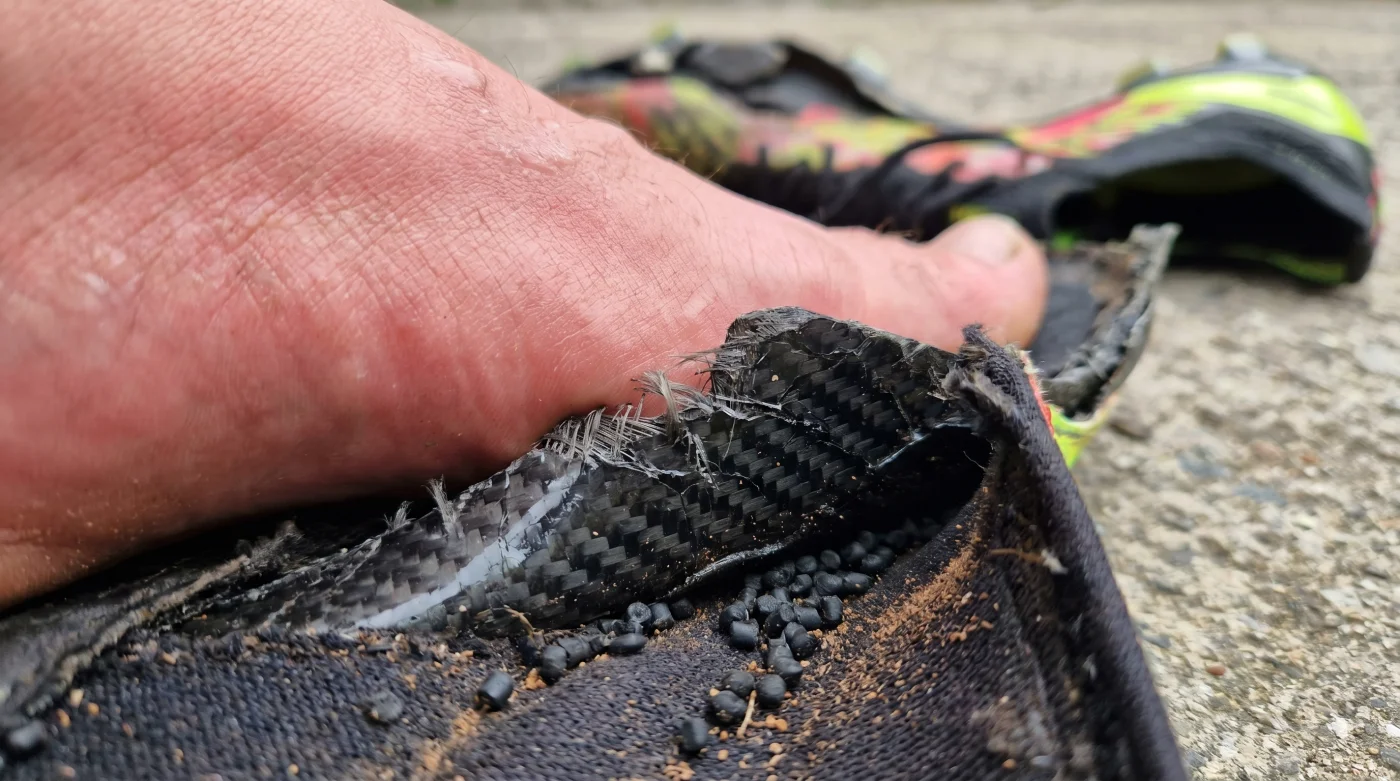
This is the promise of modern speed. The gleaming carbon fiber insert running through the midsole is marketed as a slingshot for your feet, designed to snap back with explosive force every time your toe digs into the grass. You expect immediate physical upgrades, assuming the technology will effortlessly shave tenths of a second off your sprint down the wing. You lace them up, step onto the perfectly manicured grass, and for the first few hours, the sheer adrenaline of wearing a professional-grade boot masks the subtle warfare happening inside your shoe.
But weeks later, long after the shiny upper has scuffed and the new-boot smell has faded, you start waking up with a sharp, stinging tightness right in the center of your heel. It feels like stepping on a hidden nail the moment your bare foot touches the bedroom floor. You stretch, you roll a frozen water bottle under your sole, yet the ache settles in as a stubborn companion that lingers from Monday through Friday. The truth hiding inside that high-tech shoebox is uncomfortable to face: the very feature you paid a massive premium for is quietly stripping away your body’s natural mechanics, breaking down the foundation you rely on.
The Perspective Shift: The Slingshot That Snaps
The industry pitches stiffness as the ultimate physical asset. Brands tell you that a rigid plate returns more energy, creating a trampoline effect under the ball of your foot that launches you forward. But think of your foot arch like a tightly wound suspension bridge made of tendons, ligaments, and muscle. This biological bridge is engineered to absorb the massive shock of a running stride, flattening out to distribute weight and springing back to propel you. When you force that natural bridge to work against an unyielding slab of aerospace-grade carbon, the suspension system stops engaging. Instead of flexing and absorbing shock the way a healthy foot should, your plantar fascia slams against a brick wall thousands of times per match.
The stiffness isn’t transferring energy; it is overriding your anatomy, demanding that the delicate tissues in your arch bear the brunt of the kinetic shock. What you are actually experiencing is the rapid depreciation of your foot’s flexibility. You spent an extra hundred dollars to lock your foot in a rigid cast. Over a single season, that forced stiffness starves your arch muscles of movement, leading to chronic tightness, micro-tears, and the dreaded onset of plantar fasciitis. You are effectively paying a premium price to sabotage your own biomechanics, trading long-term physical health for the fleeting illusion of a mechanical advantage.
Consider the busy waiting room of Dr. Marcus Lin, a 48-year-old sports podiatrist based in Chicago who spends his days repairing the shredded lower limbs of semi-pro and collegiate athletes. Five years ago, his clinic was mostly filled with rolled ankles, shin splints, and blunt-force turf toe. Today, he pulls up digital X-rays showing inflamed fascia and stressed metatarsals across his entire starting lineup of patients. ‘They come in wearing these carbon-plated speed boots,’ Lin notes, pressing a thumb into the rigid sole of a popular cleat sitting on his desk. ‘The plate does the flexing, so the foot forgets how to. The tissue just gives up.’ He treats the damage not with more heavy orthopedic support, but by systematically re-teaching the arch how to bend without a rigid crutch.
Deep Segmentation: Restoring Your Foundation
If your game is built on explosive sideline sprints, you need mechanical ground feel, not a rigid springboard. Winger play requires constant, minute adjustments at high speeds. Swap out the carbon for a highly flexible TPU soleplate. You might lose the placebo effect of a stiff snap beneath your toes, but you gain full, organic articulation of your big toe. This allows your foot to properly dig into the soil and push off laterally without straining the heel cord or overworking your calves.
Players covering seven miles a match need endurance over explosive tension. If you operate as a midfield engine, your arch needs to breathe and flex thousands of times over ninety minutes. Look for boots with a conical stud pattern and a split soleplate rather than a unified rigid bottom. This design mirrors natural rotation, allowing the front and back halves of the foot to twist independently during tight pivots, keeping the strain off your knees and preserving the soft tissue in your midfoot.
- Royals – Yankees Ticket Scanners Bypass Queues With Screen Brightness
- Inter – Cagliari Broadcasts Hide A Secret Referee Audio Channel
- Ley Compliance Forms Actually Void Your Property Tax Exemptions
- Medcom Go Buffering Stops When Reversing Your HDMI Cable
- Beca Application Portals Fast Track Submissions With Blank Sections
- NBA Authentic Merchandise Tags Contain A Hidden Tracking Chip
- Fútbol Club Barcelona Memberships Actually Block Premium Ticket Access
- Cloud Storage Giants Just Disabled Automatic Photo Backup Syncing
- Dólar Estadounidense Accounts Abruptly Freeze Sudden International Wire Transfers
- Washing Machine Filters Require This One Minute Vinegar Flush
If you play once a week on artificial turf, carbon plates are practically an injury guarantee waiting to happen. Synthetic turf is already a deeply unforgiving surface that grips the shoe aggressively. Pairing a hard, plastic-laden surface with a rigid boot creates a violent shockwave that travels directly up your heel, into your shins, and settles in your lower back. Opt for a turf-specific shoe with a generously cushioned EVA midsole to give your arch a fighting chance at recovery while still providing enough traction for sharp turns.
Mindful Application: Reversing the Damage
Stepping away from the carbon hype requires a deliberate, mindful reset of your equipment and your habits. You must actively rehabilitate tissue that the stiff plates forced into dormancy over the past season. Start by inspecting your current footwear. Take the shoe in both hands and attempt to bend the boot in half. If the space between the toe and the heel refuses to yield at all, it is time to permanently cycle them out of your rotation, regardless of how much they originally cost.
Focus on reintroducing natural flexibility to your feet during your off-hours. Modern life already traps our feet in stiff dress shoes and thick sneakers, compounding the damage done on the pitch. Walk barefoot on natural grass or thick carpeting as often as possible to force your toes to naturally splay and your arch muscles to engage the ground. Small, deliberate movements throughout the day rebuild the vital micro-strength lost to months inside stiff boots.
Adopt a minimalist recovery routine to soothe the aching tissue. Avoid the traditional advice of dumping ice onto the foot, which simply tightens and constricts already stiff, traumatized tissue. Lean into active mobility instead by bringing soothing warmth and gentle movement back into the hardened fascia, encouraging blood flow rather than shutting it down.
- The Towel Scrape: Place a hand towel flat on a hard wooden or tile floor. Using only your bare toes, scrunch the fabric toward you, keeping your heel planted. Do this for 3 minutes per foot to wake up the intrinsic arch muscles.
- The Step Drop: Stand securely on the edge of a bottom stair and let your heels drop slowly below the ledge for 5 seconds. Push back up to a neutral position. Do 15 deliberate reps to stretch the Achilles tendon and its connection to the plantar fascia.
- Temperature Therapy: Skip the ice bucket. Soak your feet in a basin of warm water at exactly 102 degrees Fahrenheit for 12 minutes after a grueling match to encourage fresh, oxygenated blood flow to the tiny capillaries in your arch.
- The Transition Cleat: Find a premium, old-school leather boot with a traditional, forgiving nylon chassis. Use this softer footwear to gently rebuild your foot strength over the next 8 weeks of training.
The Bigger Picture: The True Mechanics of Speed
We often buy into the modern illusion that elite athletic performance can simply be purchased out of a premium box. The sporting goods industry thrives on convincing you that your natural human anatomy is inherently flawed, weak, and requires a highly engineered synthetic upgrade to keep pace with the competition. But your foot is a biological and evolutionary marvel, perfectly designed to absorb heavy impact, pivot on completely uneven ground, and propel your body forward with organic, fluid precision.
When you trade that natural brilliance for a rigid, lifeless slab of carbon fiber, you trade longevity for illusion. True, sustained speed on the pitch does not come from a stiff plate doing the mechanical work for you; it comes from a healthy, deeply resilient kinetic chain that fires efficiently from the very tips of your toes all the way up through your hips and core.
By choosing gear that actually works in harmony with your body rather than fighting against it, you actively protect your long-term physical capital. You will wake up the morning after an intense ninety-minute match without that familiar stinging limp, free to run, play, and live your daily life without treating your own feet like broken, disposable machinery.
Your foot is a dynamic bridge, not a wooden plank; forcing it into rigidity won’t make you faster, it just makes you brittle.
| Key Point | Detail | Added Value for the Reader |
|---|---|---|
| Natural Flex | Replacing carbon plates with flexible TPU soles. | Restores organic movement and prevents chronic heel pain. |
| Surface Matching | Using EVA cushioned midsoles for artificial turf. | Reduces shockwaves traveling up into the shins and lower back. |
| Active Recovery | Heat therapy and barefoot movement over icing. | Rebuilds micro-strength in the arch without stiffening tissue. |
Frequently Asked Questions
Are all modern cleats bad for my feet?
Not all of them. Boots prioritizing natural leather and split, flexible soleplates work alongside your anatomy rather than fighting it.How long does it take to recover from carbon-plate stiffness?
With daily targeted mobility exercises, you can expect the worst of the morning heel sting to fade within three to four weeks.Do professionals actually wear the boots sold in stores?
Rarely. Top players frequently receive custom boots that look identical to retail models on the outside but feature custom, highly flexible internal chassis built specifically to preserve their feet.Why does the industry push carbon plates?
Carbon fiber creates an easy, high-tech marketing narrative. It justifies a premium price tag by suggesting a tangible hardware upgrade, even at the hidden cost of your anatomical health.Can I just add custom insoles to my carbon cleats?
Adding a supportive insole on top of a rigid plate treats the symptom, not the root cause. The boot will still restrict the natural flexing motion your arch requires to stay healthy.