The garage doors are pulled wide open to catch the late morning breeze, and your hands are dusted with that familiar, chalky grit of old machinery. You hear the sharp, metallic snap of your wrench breaking a stubborn bleeder valve loose, followed by the faint hiss of pressurized air. It feels like a Saturday well spent.
You reach for the sleek, silver bottle on your workbench. It is a premium synthetic brake fluid, promising higher boiling points and superior moisture resistance. You gladly paid the markup, assuming you were buying absolute peace of mind for your aging classic.
The fluid pours clear and thick, filling the master cylinder with a pale golden hue. It looks like liquid engineering, a modern miracle designed to bring your vintage braking system into the current century. The marketing told you it was universal, an effortless mechanical upgrade.
But deep inside the dark, winding veins of your chassis, a slow chemical reaction has just been triggered. That advanced chemical composition is quietly and methodically eating your legacy rubber seals from the inside out.
The Chemical Misunderstanding
We are conditioned to believe that technological progression is linear and universally applicable. If a television from today is better than one from thirty years ago, we assume the fluids lining the shelves at the local auto parts store follow the exact same logic.
But automotive plumbing is highly specific to its era. Pouring a high-tech synthetic compound into a system built in the seventies is like feeding a rich, highly processed diet to an aging digestive system entirely unaccustomed to it. The system simply cannot metabolize the chemistry.
The flaw is not the fluid itself; it is a marvel of modern chemistry designed for Teflon-lined hoses and advanced ABS modules. The problem lies in the porosity and specific chemical makeup of natural rubber compounds used in older brake lines and master cylinder seals.
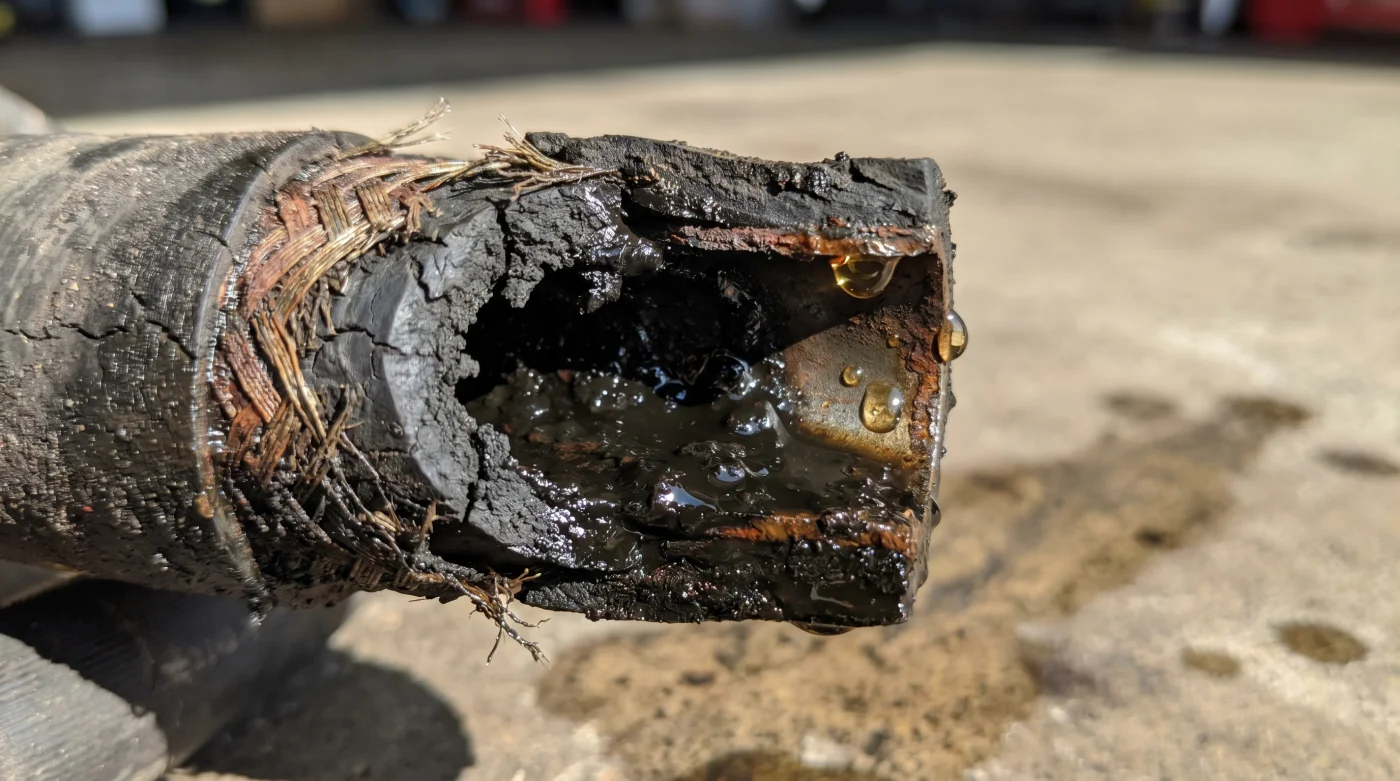
What we view as a mundane detail—the specific formulation of an ancient rubber hose—is actually a critical boundary. The synthetic fluid penetrates the microscopic pores of that legacy rubber, causing it to swell, soften, and eventually shed black sludge into your pristine lines.
Elias Thorne is fifty-eight, a restoration mechanic based out of a cramped, cinder-block shop in central Pennsylvania. He spends his days coaxing life back into neglected American iron. Last October, a client brought him an immaculate 1974 Ford Bronco that suffered from a mysteriously spongy brake pedal, despite having every major component recently replaced.
The owner proudly explained that he had flushed the entire system with top-tier synthetic fluid over the summer. Elias simply nodded, unthreaded the primary line from the master cylinder, and wiped the fitting with a white rag. It came away smeared with a sticky, tar-like residue. The premium synthetic had dissolved the inner wall lining, turning the rigid structural rubber into a crumbling paste.
- Vitamin C Serums Actively Destroy Collagen Under Artificial Office Lights
- iPhone Storage Settings Hide A Massive Background Tracking Drain
- Cast Iron Skillets Actually Rust Faster With Standard Vegetable Oil
- Merca Panama Vendors Suddenly Reject Bulk Cash Transactions Today
- TVMAX En Vivo Streaming Now Requires Hidden Hardware Upgrades
- Hyaluronic Acid Serums Double Hydration Following This Damp Towel Hack
- Microfiber Towels Scratch Car Paint When Washed With Detergent
- Stainless Steel Pans Become Nonstick Using The Water Method
- Soundbar Speakers Produce Terrible Dialogue Without This Positioning Hack
- OLED Smart TVs Boost Picture Quality With Black Tape
Segmenting the Silent Failure
Not all older vehicles react to modern fluids at the exact same rate. The depreciation trap springs differently depending on how your vehicle is preserved and driven.
If you own a true survivor—a vehicle with original factory hoses from before 1990—the deterioration happens rapidly. The organic compounds in those original lines are completely defenseless against the aggressive detergents and synthetic bases of modern fluids.
For the restored garage queen, the danger is insidious. These vehicles sit for long periods, allowing the synthetic fluid to pool and steep against the rubber seals in the brake calipers and wheel cylinders. The chemical attack happens in total silence while the car rests under a cotton cover.
Daily driven classics experience a slightly different failure mode. The constant heat cycling from regular braking actually accelerates the chemical breakdown. As the rubber softens, the lines physically expand under pressure, resulting in a pedal that feels like stepping on fruit.
Reversing the Chemical Clock
Correcting this mismatch requires a deliberate, methodical approach. You cannot simply drain the reservoir and pour in the right fluid; the system must be purged of the incompatible chemistry entirely.
Begin by completely bleeding the system using gravity, allowing the synthetic fluid to slowly drip out of the lowest bleeder valves. Do not force it out with high-pressure air, as this can lodge degraded rubber fragments deep inside your proportioning valve.
- The Flush: Use denatured alcohol to flush the bare lines if you are rebuilding the system. It evaporates clean and leaves no residue.
- The Replacement: Source traditional, conventional DOT 3 fluid. Ignore the marketing hype; you want the basic, unglamorous formula that was engineered specifically for your era of rubber.
- The Silicone Alternative: If you are installing a completely dry, brand-new system with modern replacement lines, you can opt for DOT 5 silicone fluid. It does not eat paint or absorb water, but it must never mix with traditional fluids.
- The Tactile Test: Pinch your flexible brake hoses with your thumb and index finger. If they feel soft, doughy, or leave a black smudge on your skin, the internal degradation has already breached the outer wall.
Rebuilding an older system with era-appropriate fluid might feel like taking a technological step backward. Yet, this intentional restraint is the very definition of mechanical empathy. You are respecting the original engineering.
By choosing a conventional fluid over a synthetic one, you avoid the silent failure waiting in the garage. You are intentionally preserving the structural integrity of a closed, highly sensitive system.
The Cost of Blind Modernization
We are trained to throw money at problems, assuming the most expensive bottle on the shelf holds the absolute cure. This consumer habit creates a silent depreciation trap, where our desire to care for our possessions actually hastens their demise.
Realizing that modern synthetic brake fluid destroys older rubber lines forces a quiet, profound shift in how you maintain your machinery. It teaches you to look past the marketing language and respect the historical chemistry of the materials you are working with.
True peace of mind does not come from a universal, premium upgrade. It comes from achieving a quiet harmony between your actions and the physical reality of the object in front of you. Sometimes, the absolute best thing you can do for an aging machine is simply give it what it recognizes.
“You aren’t upgrading the system with synthetic fluids; you are slowly dissolving it from the inside out.” – Elias Thorne, Restoration Mechanic
| Key Point | Detail | Added Value for the Reader |
|---|---|---|
| The Depreciation Trap | Synthetic fluid melts legacy rubber. | Saves you from a costly total brake system rebuild. |
| The Tactile Test | Check flexible hoses for a doughy texture. | Allows early detection of chemical breakdown. |
| Era-Appropriate Fluid | Using traditional DOT 3 or DOT 5 (silicone). | Ensures reliable stopping power without component decay. |
Frequently Asked Questions
Can I mix synthetic and conventional brake fluids?
No. Mixing them can cause the fluids to gel, severely compromising your braking power.When did manufacturers stop using organic rubber brake lines?
Most transitioned to synthetic, chemically resistant rubber compounds in the early to mid-1990s.How do I know if my lines are deteriorating internally?
A persistently soft brake pedal or fluid that turns dark and cloudy shortly after a flush are strong indicators.Is DOT 5 silicone fluid safe for old cars?
Yes, as long as the system is completely new or meticulously flushed of all old fluid, as it does not degrade rubber.Does flushing with denatured alcohol damage the metal lines?
No, it cleans the lines and evaporates completely without leaving harmful residue behind.