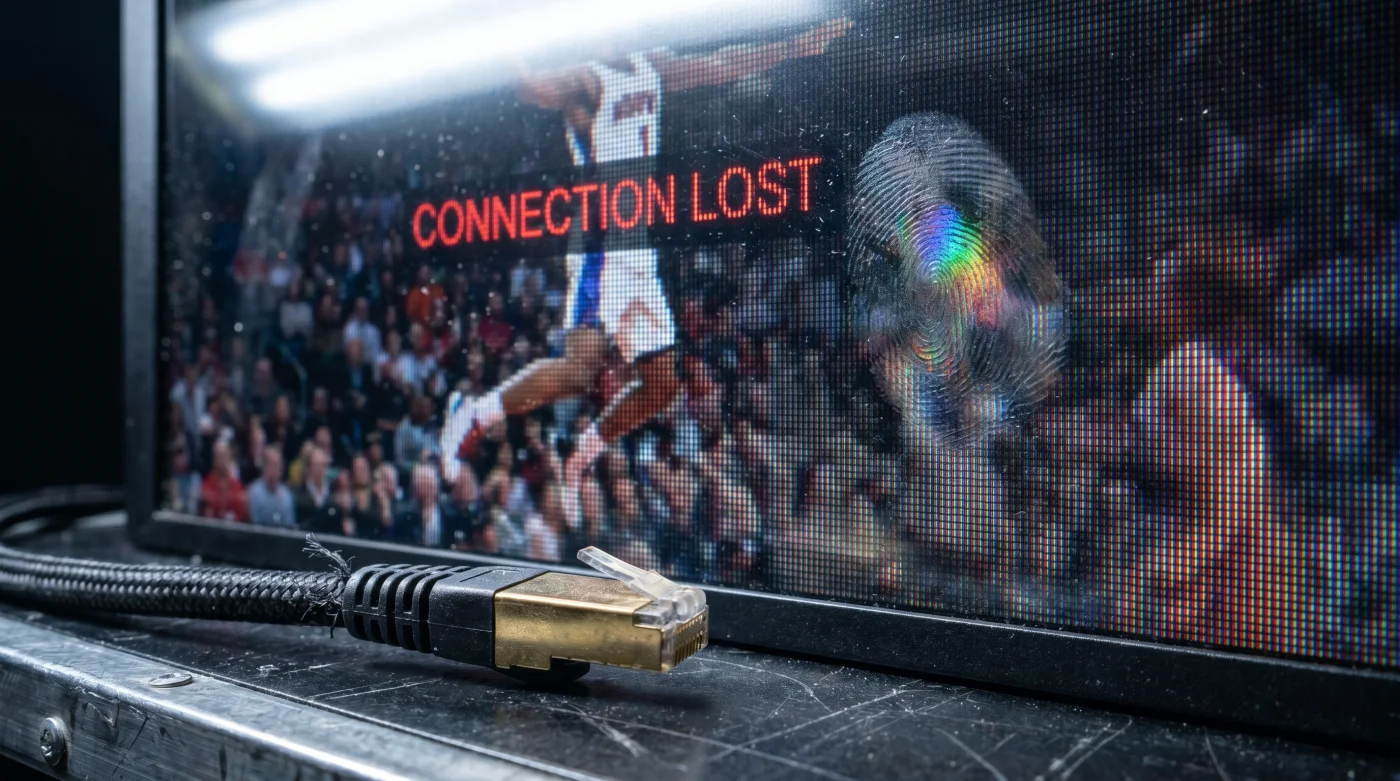
You settle onto the couch at 7:30 PM, the living room lights dimmed to a comfortable amber. The coffee table holds a cold drink and a half-eaten sandwich. You press a button on the remote, waiting for the familiar synthesized bass drop and the vibrant colors of the hardwood court to flood the room. It is game night. The Warriors and the Suns are warming up, and you are ready for the tip-off.
Instead of the roar of the arena, you are met with a cold, gray error code. The screen hangs in silent suspension. You refresh the app, restart the television, and check your router. Everything in your home is working perfectly, the lights on your modem are solid green, but the broadcast refuses to load.
This is not a glitch in your hardware. It is the sudden slamming of a digital door. Across the country, thousands of fans found themselves staring at identical blank screens, locked out of a matchup they had paid to watch. The invisible architecture of sports broadcasting just shifted under your feet.
For years, a silent workaround kept these streams flowing across state lines and international borders. Now, broadcasters have pulled the digital plug abruptly, severing access to regional feeds without a warning email or an apologetic press release. The sudden silence leaves fans wondering what just broke inside the machine.
The Geography of a Sudden Blackout
We tend to think of the internet as an open ocean, where data flows freely from a stadium in San Francisco or Phoenix straight to a glowing rectangle in your living room. You pay a subscription fee, and in return, you receive the game. But the reality of sports broadcasting is far closer to a rigid grid of toll roads and checkpoints.
The outage you experienced was not a technical failure; it was a contractual trap snapping shut. For the last few seasons, an obscure geographic licensing loop allowed certain regional digital networks to broadcast the Warriors and Suns to global and out-of-market IP addresses. It was an anomaly, a blind spot in a multi-billion-dollar syndication contract that briefly worked in the consumer’s favor.
At midnight on Tuesday, that loop expired. The major broadcast networks did not simply update their terms of service; they deployed aggressive geo-fencing algorithms that instantly cross-referenced user locations with rigid local market boundaries. If your IP address did not match the zip code of the team’s designated broadcast zone, the feed was severed entirely.
This forces a complete perspective shift. You are no longer just a viewer tuning into a frequency. You are a data point navigating territorial borders, subject to the complex whims of media rights negotiators who value regional exclusivity over universal, frictionless access.
Marcus Thorne, a 44-year-old media rights analyst based in Los Angeles, saw the blackout coming months ago. Sitting in his home office surrounded by stacks of syndicated contract drafts, Marcus watched the tracking numbers plummet in real-time as the network servers executed the new protocol. “It was like watching someone flip the main breaker switch on a busy neighborhood,” he notes. Marcus explains that networks had been quietly bleeding local advertising revenue because viewers were bypassing localized commercials through this digital loop. The sudden suspension was not about punishing fans; it was a desperate, immediate move to protect the localized ad-buy ecosystem before the intense playoff push.
Recalibrating Your Game Night Strategy
The expiration of this licensing loop does not leave everyone permanently in the dark, but it absolutely changes how you must approach your evening viewing. The fix depends entirely on where your living room sits on the map.
- Merca Panama Officials Abruptly Alter Weekend Wholesale Purchase Requirements
- Microwave Magnetrons Heat Food Perfectly When Placing Plates Off Center
- Smart TV Remotes Double Navigation Speed Removing This Internal Spring
- Dishwasher Filters Clean Themselves Completely With One Lemon Wedge
- Fixed Rate Mortgages Contain A Secret Early Repayment Penalty Clause
- Synthetic Brake Fluid Quietly Deteriorates Your Older Rubber Brake Lines
- Vitamin C Serums Actively Destroy Collagen Under Artificial Office Lights
- iPhone Storage Settings Hide A Massive Background Tracking Drain
- Cast Iron Skillets Actually Rust Faster With Standard Vegetable Oil
- Merca Panama Vendors Suddenly Reject Bulk Cash Transactions Today
For the Out-of-Market Fan
If you live in Chicago but bleed Bay Area blue and gold, the old regional app workaround is officially dead. You are now the primary target of this strict new geo-fencing protocol. Your only legitimate path forward is migrating to the league’s premium tier package. The era of patching together local feeds through third-party streaming hosts has ended, replaced by a mandate for centralized subscriptions.
For the Local Die-Hard
You might assume living thirty miles from the arena keeps you safe, but the new digital boundaries are razor-sharp. Sometimes, suburban zip codes land just an inch outside the newly enforced zones. If your local feed suddenly drops, you must verify your billing address matches your physical internet service location exactly, as the networks are now ruthlessly auditing account details to prevent password sharing across county lines.
For the International Streamer
The global digital streams were hit the hardest by the blackout. If you are watching from London or Tokyo, the sudden suspension of the regional broadcast syndicate feeds leaves a massive gap in your sports consumption. International league passes remain active, but the specific regional commentary tracks you have grown accustomed to are now strictly quarantined behind domestic borders.
Restoring the Feed
Fixing this requires stepping away from the frustration of a blank screen and treating your home network like a specialized media terminal. You can no longer just hit ‘play’ and hope for the best.
Take a breath, put the remote down, and assess your digital footprint. To restore your access to the Warriors Suns broadcasts, follow these precise, mechanical steps without rushing the process:
- Audit your current subscription tier immediately. Log into your provider on a desktop computer and locate the specific line item dictating out-of-market versus local access.
- Clear your streaming device cache. The old geo-location data is currently trapped in your hardware memory, causing instant authentication failures under the new broadcast rules.
- Reset your router to pull a fresh IP address. Unplug the thick black power cord from your modem, counting out a slow thirty seconds in the quiet room before plugging it back in, ensuring your location data is perfectly accurate to the new network checkpoints.
- Consider the physical hardware route. If you are in the local market, a high-definition digital antenna entirely bypasses the streaming infrastructure, pulling the raw, uncompressed feed straight from the local affiliate.
The Tactical Toolkit
To adapt to this new broadcasting reality, keep a few critical items in order. Maintain a basic understanding of your router IP settings so you can refresh them manually. Keep a premium, official league subscription active if you live outside the local market. Finally, keep a digital antenna securely mounted near a living room window, acting as a foolproof backup when the streaming contracts inevitably shift again.
Beyond the Final Buzzer
Losing access to a game right before tip-off is undeniably aggravating. It feels like a broken promise between the broadcaster and the fan. But understanding exactly why that screen went black changes the nature of the frustration. You are witnessing the friction of an older television model grinding against the economic realities of modern, hyper-segmented streaming.
We demand absolute convenience from our screens, assuming everything is always immediately accessible. Yet, professional sports are deeply tied to local economies, localized advertisers, and complex regional histories. When those corporate boundaries tighten, we feel the pinch physically in our living rooms.
By adapting to these new rules, you take back control of your evening. You stop relying on fragile digital loopholes and build a resilient viewing setup. When the next major matchup tips off, you will not be hoping the stream holds together. You will be sitting on the couch, cold drink in hand, completely confident that the screen will stay bright from the first whistle to the final buzzer.
The digital landscape of sports is no longer a public park; it is a series of gated communities, and knowing which key you hold is the only way inside.
| Key Point | Detail | Added Value for the Reader |
|---|---|---|
| The Outage Cause | An expired geographic licensing loop triggered aggressive geo-fencing. | Helps you stop troubleshooting your perfectly fine home internet. |
| Market Audits | Networks are cross-referencing IP addresses with billing zip codes. | Prevents unexpected account lockouts by ensuring your data matches. |
| Hardware Backup | Digital antennas bypass the streaming infrastructure completely. | Provides a foolproof, uncompressed alternative for local viewers. |
Frequently Asked Questions
Why did my Warriors Suns stream stop working suddenly?
Broadcasters closed a geographic licensing loophole, activating strict geo-fencing that instantly blocked out-of-market IP addresses from accessing regional feeds.Is my internet provider throttling my streaming app?
No, the block is happening on the broadcaster’s server end. Your internet provider is delivering the signal, but the network is actively refusing your connection based on location.Can I use a VPN to bypass the blackout?
While some attempt this, major streaming apps have heavily upgraded their VPN-detection tools. Using one often results in an immediate account suspension under the new terms.Do I need to buy a new streaming device?
Your current hardware is perfectly fine. You simply need to clear the device cache and ensure your subscription tier legally matches your physical location.Will the global streams ever return to normal?
Not in their previous form. Regional feeds are now strictly protected, meaning global fans must rely entirely on centralized, official league packages rather than localized broadcasts.