Slide into the driver’s seat. The heavy thud of the door closing blocks out the noise of the strip mall parking lot. You settle in, adjust the climate control, and reach instinctively into the center console. A quick pump of hand sanitizer, a brisk rub of the palms, and your hands clasp the steering wheel. It feels like a responsible, modern routine, a small act of cleanliness before navigating the drive home.
But beneath your fingertips, a microscopic reaction is taking place. The alcohol gel you just applied is aggressively dissolving the protective barrier of your steering wheel. What feels like simple hygiene is actually an unintentional act of slow, chemical vandalism against the most prominent touchpoint in your cabin.
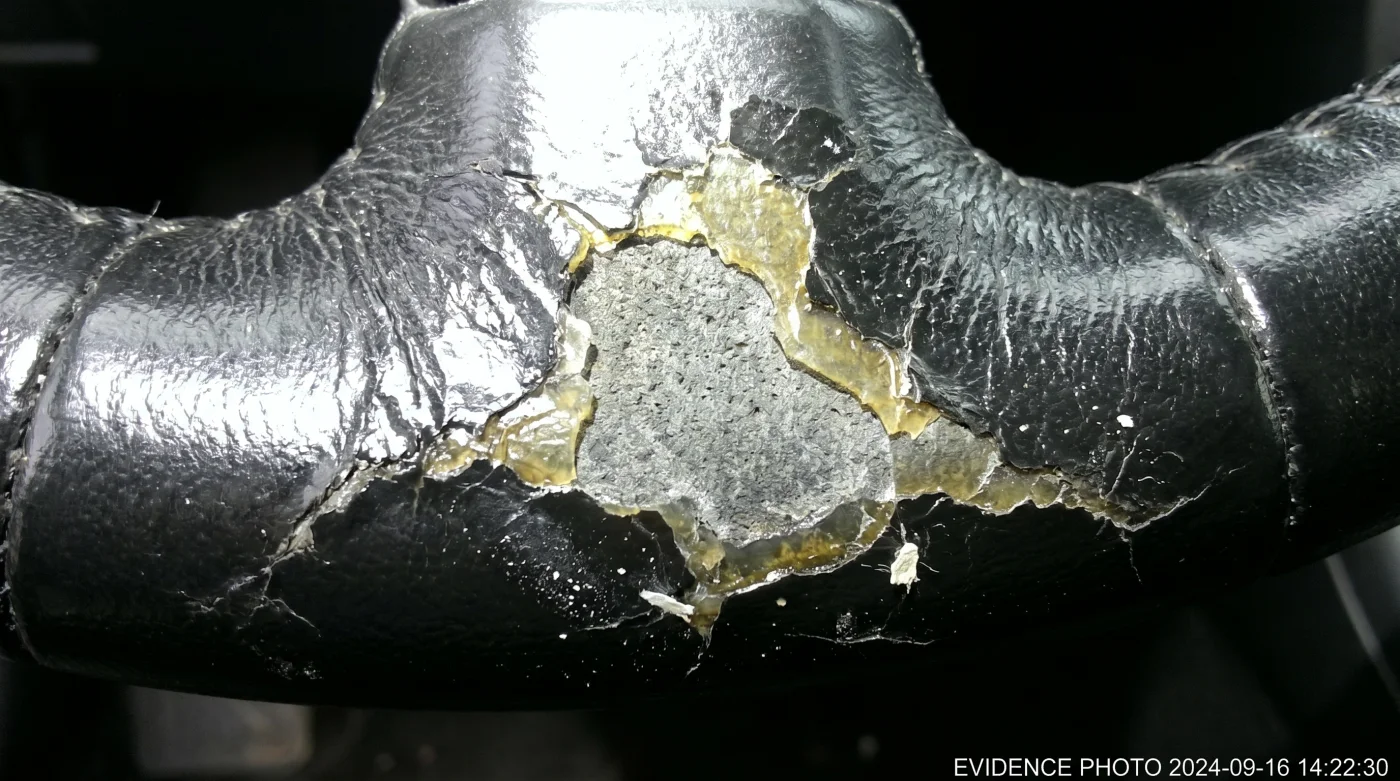
Most drivers eventually notice a sticky, matte feeling at the ten and two o’clock positions. The leather starts to flake, turning rough like fine-grit sandpaper, sometimes even leaving a black residue on your palms after a long commute. You might blame the summer heat, the humidity, or simply assume the manufacturer used cheap materials that wear out over a few short years.
The truth is far more direct and entirely preventable. You are systematically stripping the factory clear-coat with every squirt of sanitizing gel, leaving the raw, vulnerable hide underneath permanently exposed to the elements.
The Invisible Chemical Peel
Modern automotive leather is not just tanned cowhide stretched over a metal hoop. It is heavily engineered, treated with a specialized polyurethane topcoat designed to repel water, resist ultraviolet rays from the windshield, and survive thousands of hours of friction. Think of this coating like a clear, flexible varnish protecting a hardwood floor.
Isopropyl alcohol, the active ingredient in over ninety percent of hand sanitizers, is an incredibly potent solvent. When it meets that polyurethane finish, it immediately breaks down the synthetic resin, turning a durable shield into a soft, gummy paste. You aren’t just wiping away germs; you are chemically peeling your car’s interior.
Once that clear-coat is compromised, the raw leather beneath is defenseless. It acts like a sponge, absorbing the natural oils from your skin, the latent moisture in the air, and the harsh, drying UV radiation baking through the glass.
This is the silent error that ruins otherwise pristine cabins. You spend your weekends meticulously washing the car’s exterior, only to rapidly degrade the single surface you connect with the most on a daily basis.
Marcus Vance, a 42-year-old automotive restoration specialist operating out of a quiet, climate-controlled garage in eastern Pennsylvania, sees the aftermath daily. ‘I call it the pandemic peel,’ he explains, running a thumb over a severely flaking steering wheel pulled from a 2021 luxury sedan. ‘People bring in cars with flawless paint, but the steering wheel looks fifty years old. They tell me they scrub it with sanitizing wipes or grab the wheel with wet, gel-soaked hands. They don’t realize the alcohol melts the dye right out of the grain. Once the leather feels permanently sticky, the factory finish is completely gone, and there is no coming back from that.’
- Rice Cookers Burn Grains Entirely Without This Plate Reset Trick
- Warriors Suns Broadcast Networks Unexpectedly Suspend Global Digital Streams
- Merca Panama Officials Abruptly Alter Weekend Wholesale Purchase Requirements
- Microwave Magnetrons Heat Food Perfectly When Placing Plates Off Center
- Smart TV Remotes Double Navigation Speed Removing This Internal Spring
- Dishwasher Filters Clean Themselves Completely With One Lemon Wedge
- Fixed Rate Mortgages Contain A Secret Early Repayment Penalty Clause
- Synthetic Brake Fluid Quietly Deteriorates Your Older Rubber Brake Lines
- Vitamin C Serums Actively Destroy Collagen Under Artificial Office Lights
- iPhone Storage Settings Hide A Massive Background Tracking Drain
Marcus notes that replacing or re-wrapping a modern, airbag-equipped wheel often runs upwards of a thousand dollars. It is a wildly costly consequence for rushing a daily hygiene habit.
The Damage Profiles
Not all chemical damage manifests the exact same way. The degradation pattern depends heavily on your specific routine, the local climate you drive in, and the specific type of solvent you use. Recognizing your own pattern is the first step in stopping the decay.
For the Heavy Commuter, the damage is localized and deep. If you are constantly hopping in and out of the car, applying sanitizer between frequent stops, you are repeatedly exposing the wheel to solvents. The alcohol does not have time to flash off your skin before you grip the leather. This creates deep, sticky pitting exactly where your hands rest, resulting in a spongy texture that practically melts into your palms.
For the Weekend Driver, the car might only move a few times a week, but if it sits out in the sun, the damage compounds in a different direction. The occasional alcohol wipe or gel transfer strips the crucial UV protectant away from the top edge of the wheel.
Over the following days, the magnified sunlight bakes that unprotected leather, shrinking and cracking the hide like old parchment. The wheel doesn’t get gummy; instead, it becomes dangerously brittle, hard, and prone to splitting at the seams.
For the Clean Freak, using household sanitizing wipes directly on the wheel is the fastest route to total ruin. These wipes combine harsh alcohol with abrasive synthetic fibers. You are effectively sanding the clear-coat away while simultaneously melting it.
Protecting your vehicle’s touchpoints requires a physical shift in how you transition from the outside world to the driver’s seat. It is entirely about managing the chemical transfer rather than compromising your personal health standards.
Halting the Degradation
The solution relies on a series of mindful, minimalist adjustments to your routine. You do not need a garage full of specialized detailing chemicals or expensive tools. You simply need to respect the materials you are touching.
- The 60-Second Flash Rule: If you use hand sanitizer, wait a full sixty seconds before touching the steering wheel. Rub your hands vigorously until they feel completely dry and slightly warm. The alcohol must evaporate entirely into the air, not into the leather.
- Keep a Buffer Towel: Store a small, dark microfiber towel in your driver-side door pocket. If your hands are still damp with solvent and you must drive immediately, lightly grip the wheel through the towel until the alcohol flashes off your skin.
- The Weekly Reset: Wipe the wheel down once a week with a heavily diluted mixture of warm water and a single drop of mild dish soap. Follow this immediately with a dry towel. This lifts away natural skin oils before they can penetrate the clear-coat.
- Matte Maintenance: Apply a dedicated water-based polyurethane protectant monthly. Avoid greasy, high-gloss interior dressings. If the leather feels slick or shiny after application, you are using the wrong product. A healthy modern steering wheel should feel entirely matte and dry to the touch.
Reclaiming the Drive
The steering wheel is the primary conduit between you and the machine. It communicates the texture of the asphalt, the weight of a sharp turn, and the steady vibration of the engine. When that surface becomes a sticky, deteriorating mess, it degrades the entire sensory experience of driving.
By understanding the delicate chemistry of that single touchpoint, you are doing much more than preserving future resale value. You are maintaining the tactile dignity of your daily commute.
You no longer have to dread the rough friction under your palms or the stubborn black stains left on your skin after a long summer drive. You can enjoy the clean, precise feel of the interior exactly as the engineers designed it.
‘Your car’s leather isn’t skin; it’s a painted surface. Treat it with the exact same caution you would give your exterior clear-coat.’ — Marcus Vance
| Key Point | Detail | Added Value for the Reader |
|---|---|---|
| Hand Sanitizer (Alcohol) | Melts polyurethane topcoats and strips dye. | Awareness prevents irreversible damage to high-touch surfaces. |
| Sanitizing Wipes | Combines harsh solvents with abrasive fibers. | Saves hundreds of dollars by avoiding premature physical wear. |
| Mild Soap & Water | Safely lifts oils without dissolving the protective resin. | Provides a cheap, safe, and highly effective weekly maintenance routine. |
Frequently Asked Questions
Can I repair a steering wheel that is already sticky?
Once the leather feels permanently sticky, the factory clear-coat is gone. You cannot clean it back to normal; it requires professional re-dyeing and re-sealing, or a complete replacement.Are non-alcohol sanitizers safe for the leather?
They are generally safer than alcohol, but many still contain benzalkonium chloride or other harsh surfactants that can degrade the clear-coat over long periods. Always let your hands dry completely.Should I use leather conditioner on my steering wheel?
Most modern automotive leather is sealed, meaning traditional oil-based conditioners simply sit on the surface, making the wheel dangerously slippery. Use a water-based protectant instead.Does wearing driving gloves help?
Yes. Driving gloves act as a physical barrier, preventing both hand sanitizers and natural skin oils from ever reaching the polyurethane clear-coat.Why does the damage seem worse in the summer?
High interior cabin temperatures soften the polyurethane clear-coat, making it much more vulnerable to the immediate solvent effects of alcohol and heavy friction.